New Motor Tech: Axial Flux Rotors
New motor technology is rapidly advancing, with new developments and innovations emerging all the time from electric motors that are more efficient and powerful than ever before. By increasing efficiency and reducing carbon emissions, new motor technologies possess the capability to make a substantial effect on the fight against climate change. There is a wide range of new motor technologies, such as axial flux rotors, that promise to revolutionize the way we need and utilize energy. The advancements in motor technology are not just limited to the automotive industry; they also affect several other sectors, such as manufacturing, robotics, and aerospace. With each breakthrough, the potential for greater efficiency, performance, and sustainability grows, paving the way for a cleaner and more advanced future. As we continue to push the boundaries of what is possible, it’s an exciting time to be following the latest developments in motor technology.
What Are Axial Flux Rotors?
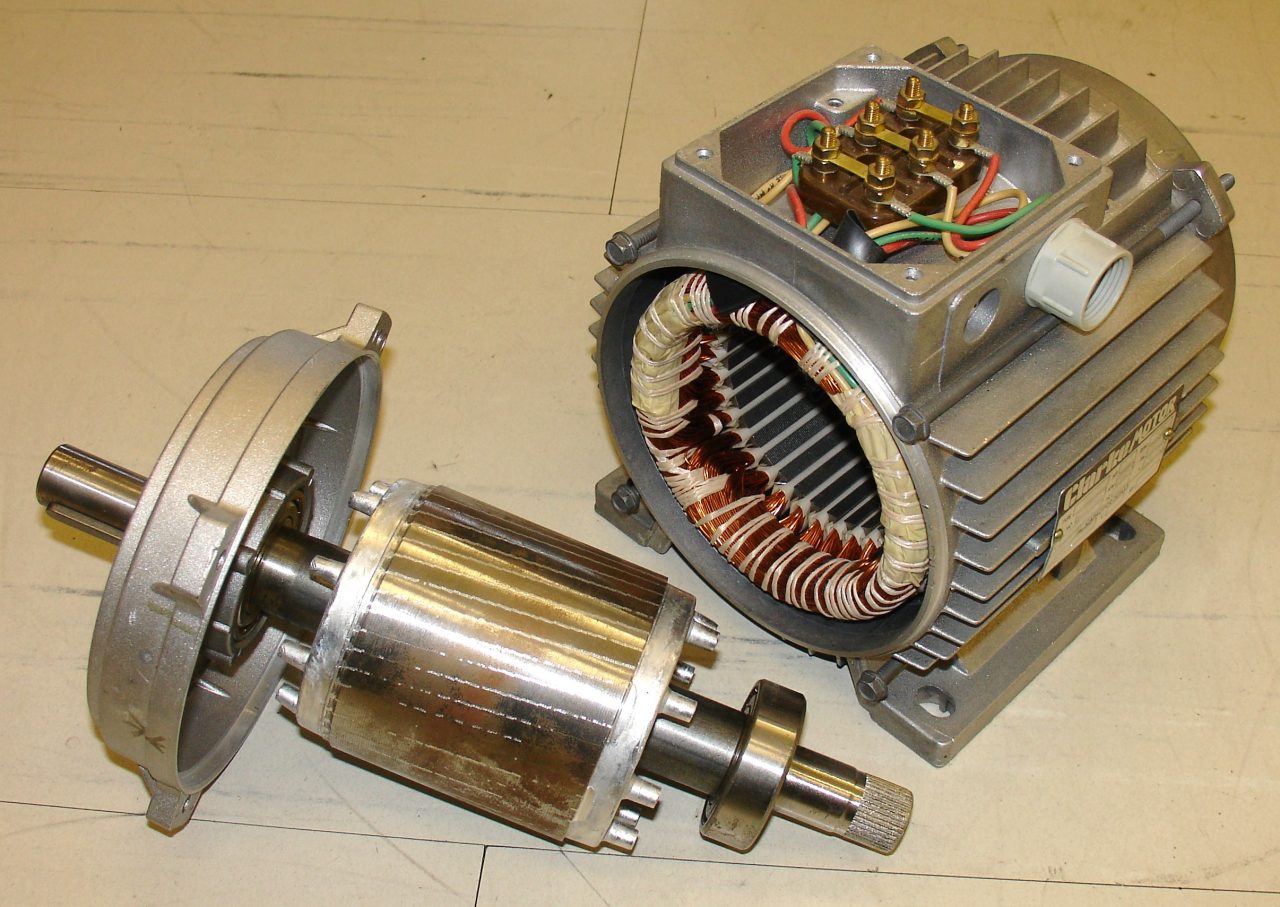
One of the most promising new motor technologies is the axial flux rotor. Unlike traditional radial gap motors, which have a fixed magnetic field that produces torque, axial flux rotors utilize a rotating magnetic field that moves around the rotor. This unique design has several benefits, including increased efficiency and power density.
Although axial flux motors are not new, their application has only grown over the past two decades. For the last ten years, several inventors have tried to enhance the technology. They have been used in many products like airport sleeping pods, electric bikes, electric trucks, electric automobiles, and even electric aircraft. For several years, it was employed in stationary applications like agricultural machinery and elevators.
Axial flux motors utilize several unique design choices to optimize their performance.
- To get the highest possible copper fill factor, a rectangular wire made of copper is used (90 percent).
- To achieve the highest torque-to-weight proportion, rotors of dual permanent magnet rotors can be used.
- Yokeless stator, with shortened flux routes and the least overall weight.
- Using grain-oriented steel can minimize core loss by up to eighty-five percent.
- For the cooling of windings, a novel method to attain the lowest possible stator temperatures.
- Structured windings to get the lowest copper loss possible.
Working Principle
It is necessary to understand the working principle of the motor as we know that a motor has a mechanism that transforms the energy from electrical to mechanical. The magnetic field produced by the magnet and coil of the structure interacts electromagnetically to drive its operation. An axial flux motor is designed with a different orientation of the stator and rotor. Specifically, parallel to the rotation axis, the spacing between the stator and rotor is aligned, which affects the direction of the magnetic flux in the two components.
Electrical Configuration of Axial Flux Motors: AC or DC
The development of axial flux motors has evolved over time, starting with DC brush-based designs and transitioning to AC and fully sealed brushless models that are designed for mass production. Unlike the rotating armature used in DC axial flux motors, AC axial flux motors feature fixed twin rotors and coils with permanent magnets. This innovation has improved the efficiency and reliability of the motor, making it an ideal choice for a variety of applications.
Technical Consideration of Axial Flux Motors Over Radial Flux Motors
The motor’s architecture is a variation that is called an axial gap or axial flux machine. These are sometimes also referred to as ‘flat’ or ‘pancake’ motors due to their extremely less diameter to axial length ratio. They generate more torque, but because of the rotor shape, their speed is restricted. This is among the eminent drawbacks of these motors.
As their names imply, the discrepancy is that although the direction of the magnetic field is radial, it is parallel to the axis of motor rotation in the axial flux motor. Both kinds of motors (radial and axial) offer themselves to alternate placements based just on shape.
The cylindrical shape is also a distinguishing feature of the radial flux motor, while the axial flux motor is shaped more like a biscuit made from tin. This difference in design opens up alternative installation possibilities based purely on shape. A radial flux motor is well-suited for applications where a motor with a longer but smaller diameter is required, such as two wheels mounted on the same single axle. In contrast, the flatter shape of motors with axial flux has a greater possibility to be advantageous in applications where space is limited.
The axial flux motor technology is particularly advantageous for applications where high torque density is required within a limited amount of space. While many people focus solely on achieving high power density through fast speed, the importance of torque density is often overlooked. Relying solely on high speed can result in limited service life and increased noise. In reality, increasing torque density is at the heart of achieving high-speed capabilities, and when it comes to these applications, the axial flux motor will typically be the top choice.
An axial flux motor operates by attracting the rotor magnets towards a rotating field produced by the stator’s electromagnets, as is the case with other types of AC drive systems. While rotating, the switching of magnets can create a minor torque ripple, commonly referred to as “cogging.”
In contrast, the majority of hybridized motors employ a radial flux configuration, in which a rotor containing permanent magnets spins within a stator that is wound. These motors have a small gap between the rotor surface and stator diameter, earning them the name “radial gap” or “radial flux” machines. Because of their ability to run at high speeds, they can generate significant power.
In comparison, axial flux motors are often regarded as superior to radial ones due to several factors that contribute to the higher power and lower weight density. These reasons can be summarized as follows:
Lever
Magnets for axial flux motors are placed at a wide distance from the central axis. Due to this, the center axis gets additional “leverage.”
Windings
Axial flux motors have a large winding benefit over radial motors. It features a more active winding of copper that decreases overhang, allowing it to boost the amount of turns more readily while producing less heat as a result of the final impact. Moreover, the winding may come into contact with metal, that’s a good heat conductor. This results in a more straightforward cooling system.
A radial flux motor usually includes a coil overhang, which is a portion of the windings that remains idle and increases the electrical thermal dissipation, leading to a lower power-to-weight ratio. This is because the coil overhang is positioned externally to the teeth of the stator and is only used to form loops. In contrast, axial flux machines do not have any coil overhang, resulting in a higher power-to-weight ratio. Moreover, in radial machines, heat dissipation occurs through the stator core, which must be made of less thermal conductivity steel.
Cooling
In the situation of radial flux motors, heat should be delivered to the motor outside through the stator. Steel, meanwhile, is the conductor of heat. Since it doesn’t have a direct touch with the motor frame, the “coil overhang” is especially difficult to cool. Because there is direct interaction between the windings and the aluminum shell on the outside, the axial flux motor provides excellent cooling. Due to the high thermal conductivity of aluminum, the windings of axial flux motors are effectively cooled, and the impedance of the copper remains low. This results in much-enhanced performance. These advantages often improve efficiency, which has a large impact on a global scale.
Electromagnetic
Axial flux motors have a unique design that leads to a smaller calculation of winding mass. It doesn’t contribute to torque but generates losses. This is because they contain more materials with high electromagnetic activity compared to radial flux motors. Radial flux motors allow the magnetic flux to move through the initial tooth and from the stator to the magnets. However, in axial flux motors, the magnetic flux follows a shorter route – from one magnet, through a single core, and directly to the other magnet.
Moreover, compared to radial flux machines, the flux path in axial flux machines is only one-dimensional, which leads to lower iron losses as the flux flows through the cores. Furthermore, the use of oriented steel in axial flux machines facilitates the movement of the flux, resulting in an additional efficiency advantage.
Exploring the Potential of Axial Flux Technology
The concept of axial flux motors was first introduced by Nikola Tesla in the 1830s, and they differ in topology from radial flux motors. Unlike radial flux motors, where the flux direction is perpendicular to the rotating shaft, in axial flux motors, the magnets and winding are arranged axially on the rotor and stator discs. This arrangement enables a more compact form factor, making axial flux motors ideal for applications with limited space.
The Role of Axial Flux Motors in EVs
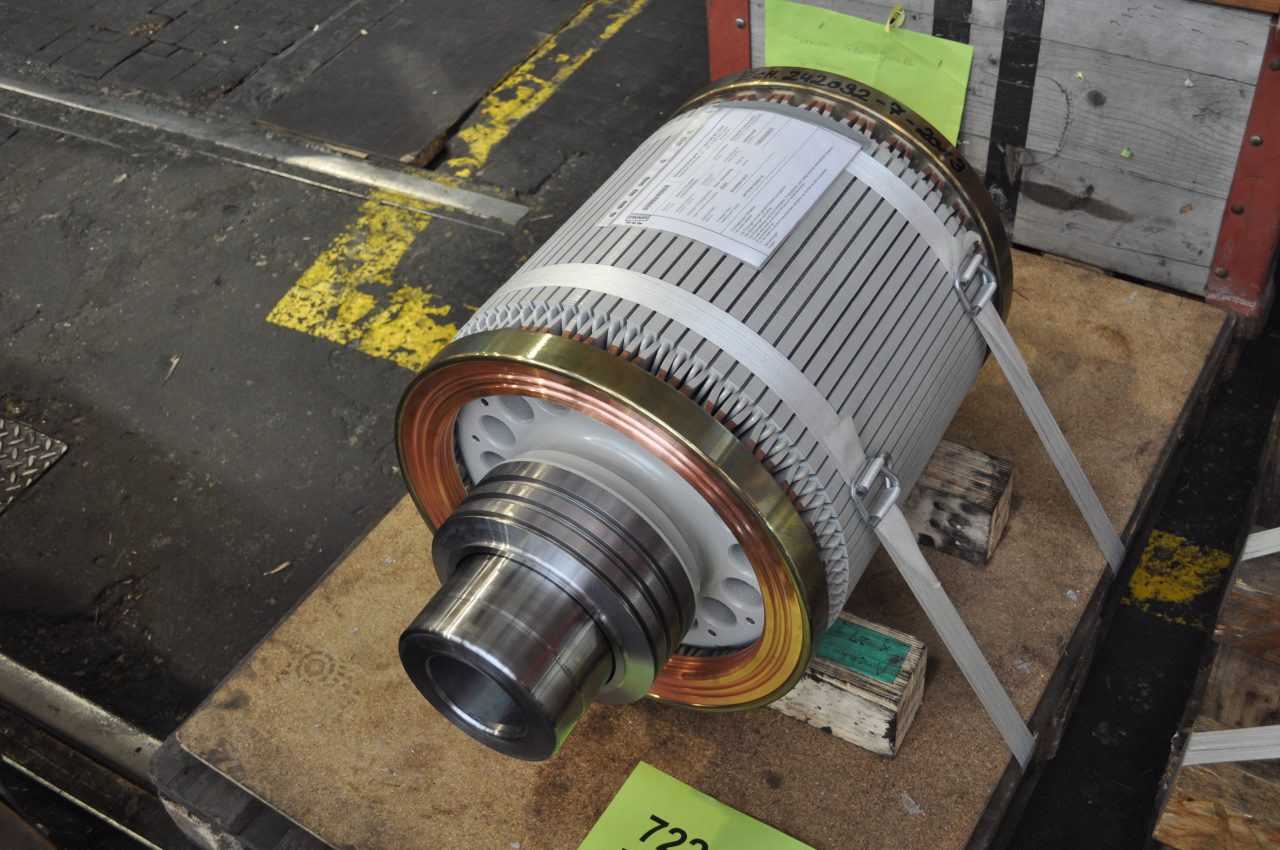
Incorporating axial flux motors into EVs (Electric Vehicles) has become popular, with two types being in-wheel/hub and mid-drive/in-runner motors. The hub motor design is favored for bicycles and some electric cars because it has a rotating outer motor body and a stationary shaft, making tire placement easier. Axial flux motors are better suited for in-wheel/hub motor configurations because they are disc-shaped and require less axial space than radial flux motors, which take up more space. Axial flux motors outperform radial flux motors in terms of torque and efficiency in the same form factor and can provide high efficiency across a wider range of RPMs. Recently, major car companies such as Mercedes Benz and Renault have acquired axial flux technology companies to use axial flux motors in their upcoming vehicles.
Wind Energy Production with Axial Flux Technology
Wind turbines require a generator motor that can provide a substantial level of energy output at low rpm. Achieving high power output at low rpm is challenging because the amount of magnetic flux cutting the stator coil per second is reduced, resulting in less potential difference and current flow. The existing radial motors are unable to solve this problem, and increasing the motor’s size is not economically feasible. The solution lies in the axial flux motor, which can achieve maximum flux change in a given form factor through the use of a dual stator and single rotor configuration. Permanent magnet motors have been utilized in wind turbines for many years.
The Use of Axial Flux Motors in Aviation
Powerful motors with high energy density are needed for larger drones, as they require maximum thrust for a given input power. Axial flux motors offer high power density compared to other types of motors, making them suitable for the aviation industry. Many new companies are using axial flux motors in their drones, and YASA, a pioneer in axial flux motor technology, has recently built a motor for a Cessna aircraft and successfully tested it.
Efficient and Compact Axial Flux Motors for Lifts/Elevators
Elevators require motors that can provide high torque at low rpm. Nowadays, some companies are using axial flux motors for elevators as they are capable of producing more torque compared to radial motors. To achieve the maximum torque at low rpm, a dual rotor single stator configuration axial flux motor could be used.
Axial flux technology has the potential to revolutionize consumer tech by enabling more efficient and compact designs, particularly in applications like fans. Given the large sales volumes of consumer tech, this technology could have a significant impact.
As the technology continues to advance and mature, we can expect to see axial flux motors being adopted in other industries as well. Axial flux motors are on the path toward mass adoption.
Challenges in Axial Flux Technology
Although axial flux motors offer numerous benefits over radial motors, they pose several significant design and manufacturing challenges, which makes them more expensive than their radial counterparts. Maintaining a consistent air space in their rotor and stator is a significant mechanical challenge due to the two components experiencing significant magnetic forces. Cooling the axial flux motor winding is more challenging than in a radial flux direct drive system, as it is located deeper within the stator, which affects its thermal performance. Despite these challenges, axial flux motors’ geometry allows for a significant decrease in the total volume occupied by the machine. Furthermore, axial flux motors, with magnets arranged in parallel, produce magnetic flux over a smaller rotational area, which decreases the rotor’s mass and moment of inertia, making them a viable option in various applications.
Conclusion
With the advancement of the time where the technologies related to motors also evolved and revolutionized, axial flux rotors are certainly the eminent factors related to this domain. Be it greater torque density or higher power, axial flux rotors are the best option available and are gaining huge popularity in industrial regimes. Owing to their unique designs and working principles, they have encompassed a large range of applications and use which are significant needs of this time.
DO Supply Inc. makes no representations as to the completeness, validity, correctness, suitability, or accuracy of any information on this website and will not be liable for any delays, omissions, or errors in this information or any losses, injuries, or damages arising from its display or use. All the information on this website is provided on an "as-is" basis. It is the reader's responsibility to verify their own facts.