Why Soft Starters Still Exist in a VFD-Dominated World
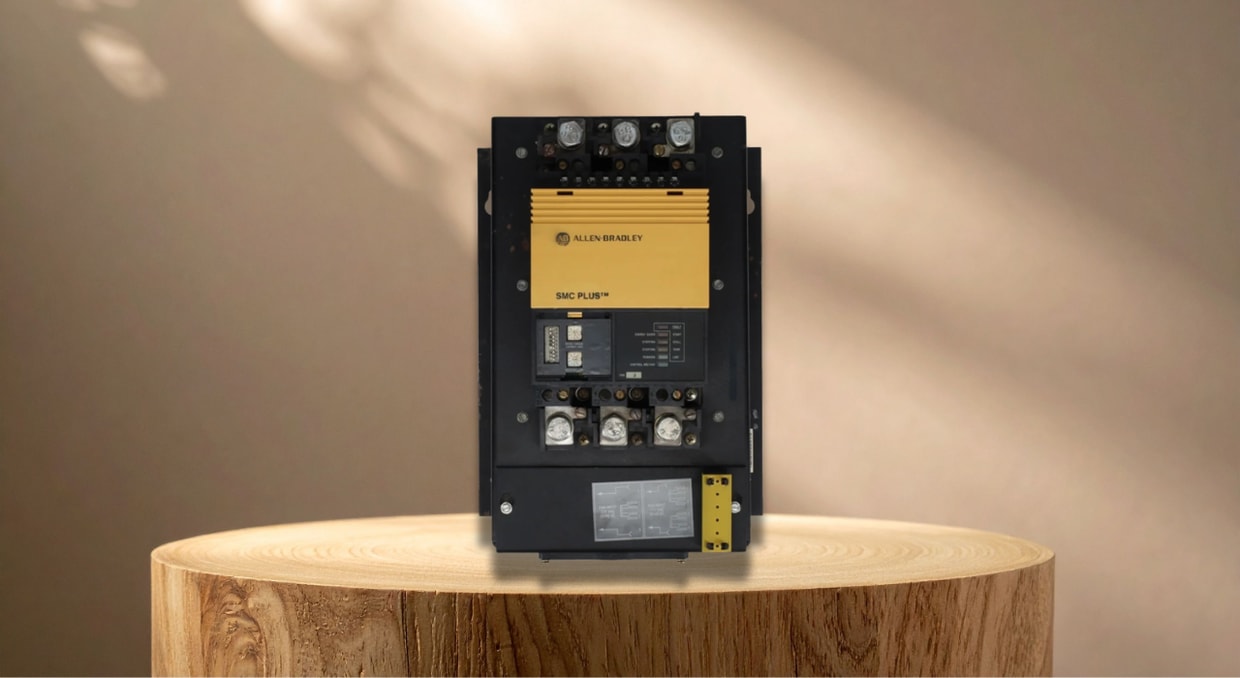
In the modern age, motor control isn’t as simple as it looks. There’s matching nameplate specifications, determining if the load you’re driving needs certain features like regeneration, or even figuring out if it’s worth futureproofing. With VFDs being so common today, it is easy to assume they are always the better answer. But that’s not always the case.
Sometimes, less really is more. If the application only calls for smooth starting and stopping, a soft starter could be the cheapest, simplest, and most cost-effective choice.
How Does a Soft Starter Compare to a VFD?
A soft starter, as the name implies, is a motor controller that gradually and smoothly increases a motor’s speed until its desired RPM, rather than slamming voltage into it all at once. This is a desired feature as its ability to reduce inrush current and limit peak electrical demand on motor start-up reduces mechanical stress on the system and prevents overcurrent scenarios.
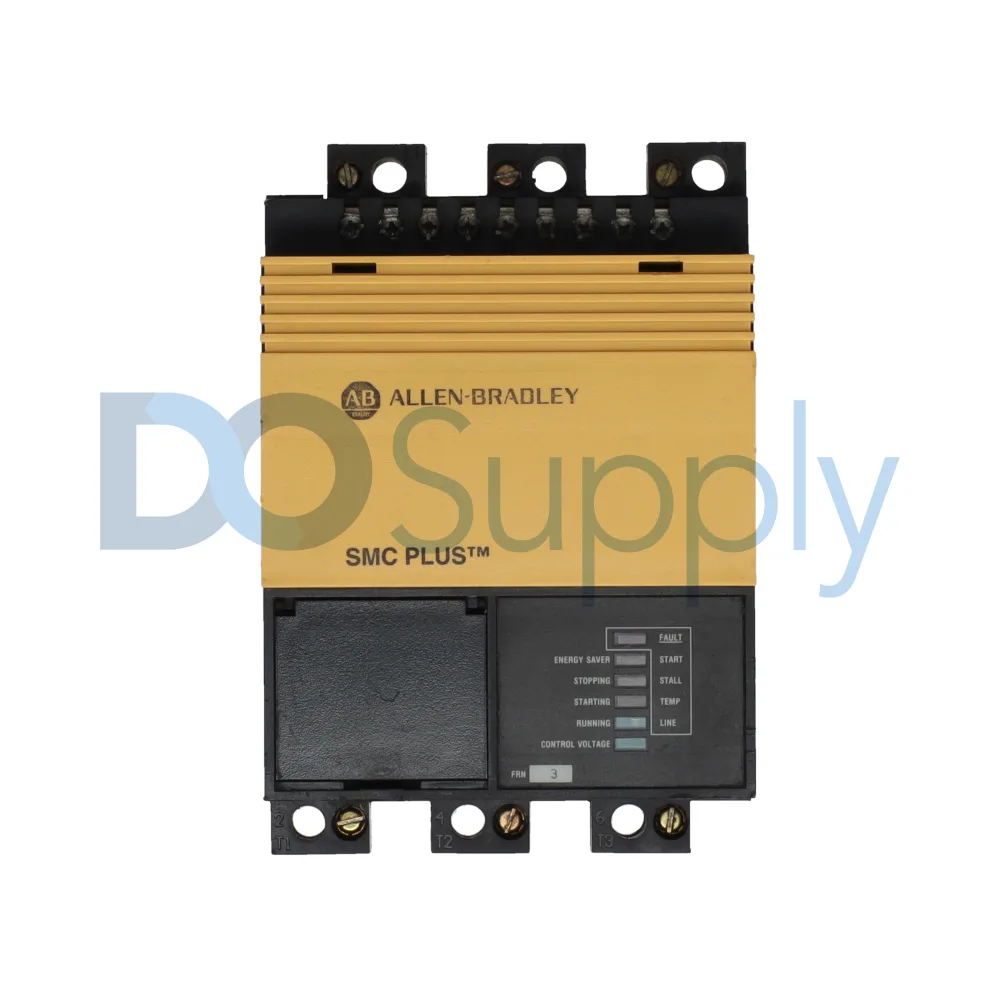
To achieve this, soft starters use thyristors, or silicon-controlled rectifiers (SCRs), to gradually increase the voltage supplied to the motor, resulting in a smooth “soft” start that protects it from inrush current. A control circuit tunes the firing angle of the thyristors to control how quickly the voltage is ramped up during motor start. Once the motor has reached top speed, the soft starter will activate its bypass contactor to bypass the thyristors and supply the motor with full power and minimal harmonic distortion. Soft starters also help loads decelerate, making a smooth, all-around package.
A VFD, on the other hand, will control a motor’s speed and torque throughout operation by directly controlling the output voltage and frequency. Naturally, this allows VFDs to have more configurability and tricks, such as:
- Running the motor at different speeds
- Save energy on variable torque loads
- Control torque precisely
- Reverse the motor electronically
- Handle regenerative loads
- Add more diagnostics and protection
While these features sound great, not every application needs them. This usually becomes the main argument when deciding if a soft starter is the right choice for the application.
The Benefits of Picking a Soft Starter
Building upon the previous idea that a VFD may be too much, the biggest benefit of a soft starter is that they’re simple and reliable. Along with reducing wear and tear on your system, they offer other benefits.
Simple Motor Control
The simplicity of soft starters is one of its biggest selling points. Not every job requires variable-speed control, regeneration, braking resistors, or constant-torque adjustments. Sometimes the motor just needs to start without shaking the whole system as if it insulted its mother.
For instance, a fan, pump, conveyor, or compressor will operate at a single speed all day. A VFD may have more control than the application actually needs. A soft starter will take care of the roughest part of the job, getting the motor started smoothly, and then steps back to let the system do its thing.
The Allen-Bradley SMC-3 is a good example of a soft starter better suited for these applications. It is built for applications that require compact, three-phase soft-starting with overload protection, an integral bypass, and basic motor/system diagnostics. For a simple fixed-speed motor, that can be enough control without bringing in the cost and complexity of a full VFD.
Lower Cost and Complexity
Another major benefit to using soft starters is cost. While VFDs are powerful devices, all of their features come at a premium, not only for the unit itself, but also for the extra hardware, extra setup, and extra design/ventilation considerations. On top of that, the cheaper entry price also carries over when sourcing spares.
Soft starters, by design, are also generally simple to program as they have fewer functions and parameters to configure. Usually, a user can tweak the following settings:
- Start Ramp Time: Controls how long the motor takes to ramp up
- Stop Ramp Time: Like Start Ramp Time, but the opposite
- Initial Voltage / Starting Torque: Determines how strongly the motor starts moving
- Current Limit: Helps control the inrush current during startup
- Overload Class: Protects the motor from overheating under load
- Pump Control Mode: Helps reduce water hammer in pump applications
- Bypass Settings: Controls when the starter transitions to full line operation
Reduced Mechanical Stress
Reducing mechanical stress is important for system longevity and integrity. Hard starts can rattle equipment, snap fan belts, damage couplings, and even deliver a sudden torque shock to gearboxes. Even if the motor gets away unscathed, the rest of the system might not appreciate getting kicked awake every shift.
Repairing these parts can get expensive very quickly, so minimizing the abuse to begin with is an ideal way to prevent premature wear. Soft starters, like the Allen-Bradley SMC Flex, can make sense in these applications. It offers more advanced start-and-stop options than a basic starter, including pump control and braking. In pump applications, that kind of control can help reduce surges, check valve slam, and other issues caused by starting or stopping too aggressively.
Less Heat During Normal Operation
Many soft starters use an integral bypass once the motor reaches full speed. This means that the SCRs are used only for the start-up operation to prevent harmonic distortion during the rest of the application. This also reduces heat inside the starter and provides better efficiency once the motor is up to speed.
Allen-Bradley Soft Starters Worth Considering
When picking a soft starter, it’s best to remember the main reason for choosing this platform over a VFD: simplicity, which matches what your motor actually needs. A small fixed-speed fan does not require the same level of control as a large pump, a loaded conveyor, or a high-duty industrial compressor. This is where Allen-Bradley’s SMC lineup gives a useful set of examples.
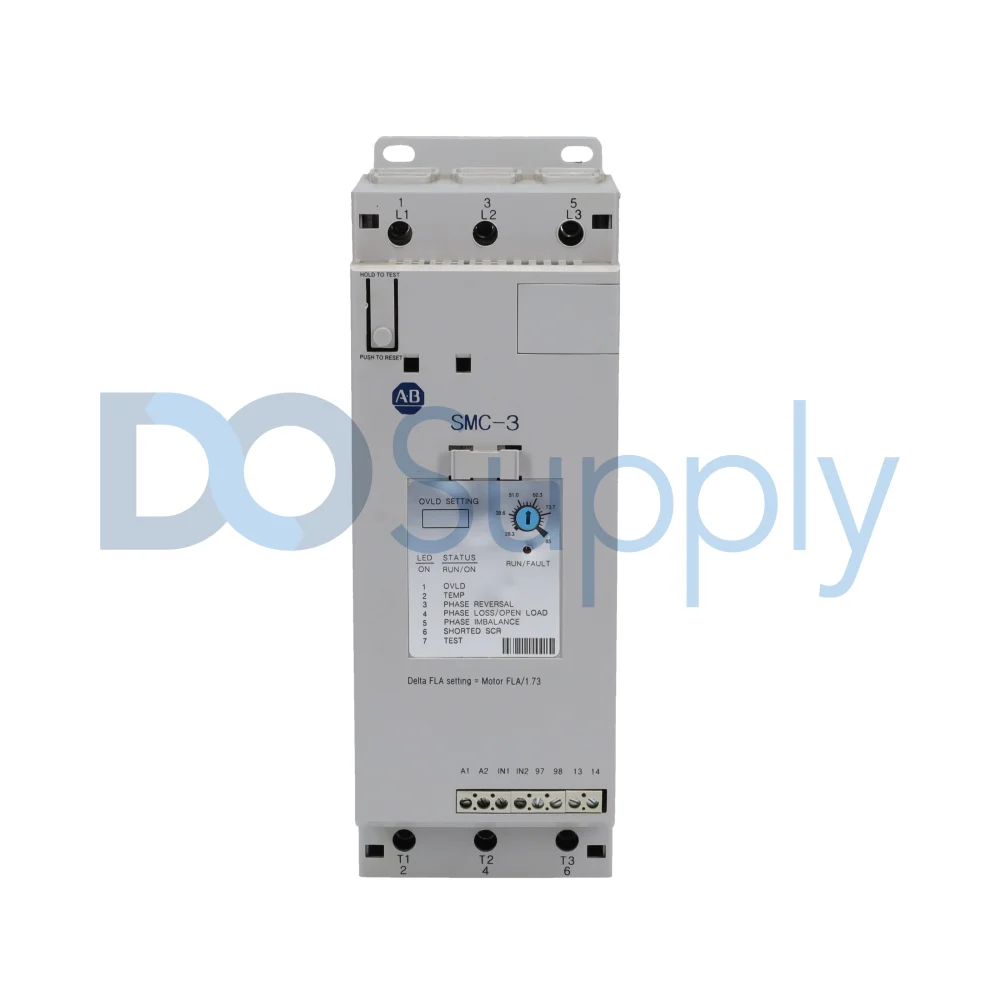
Allen-Bradley SMC-3
For simpler applications, the Allen-Bradley SMC-3 is a great place to start. These soft starters are available with a current range from 3 to 480 Amps and a voltage range of 200 to 690V AC. They are also designed with true 3-phase control, allowing them to work well with smaller pumps, fans, compressors, and conveyors that only need smoother start-and-stop. They even come with overload protection and an integral bypass contactor.
Allen-Bradley SMC Flex
For larger applications, the Allen-Bradley SMC Flex is the stronger option. The SMC Flex can operate standard squirrel-cage induction motors rated from 1 to 1250 amps, or wye-delta motors rated from 1.8 to 1600 amps, with voltage ratings up to 690V AC. It also includes:
- Three-Phase Control
- Integrated Bypass
- Overload Protection
- Metering
- Diagnostics
- Built-in LCD/Keypad
These soft starters can support multiple start and stop modes, such as soft start, current-limit start, selectable kickstart, pump start, pump stop, soft stop, and braking-related options.
You can usually find these soft starters in pump applications to prevent pressure spikes in pipes. This can help reduce water hammer, check-valve slam, and other mechanical issues caused by starting or stopping too aggressively.
Allen-Bradley SMC-50
Another excellent soft starter is the more advanced SMC-50. It is available in solid-state and internal-bypass power structures, with solid-state versions covering 90 to 520 amps and internal-bypass versions covering 108 to 480 amps. It also supports rated voltages from 200 to 690V AC.
This soft starter stands out for its extensive start and stop modes compared to simpler soft starter families, along with advanced monitoring, communication capabilities, motor protection, and energy-saver operation on solid-state models. It’s a more premium soft starter for those who value extra features.
That makes the SMC-50 a better fit for larger industrial systems where maintenance teams want more information from the starter without necessarily needing full speed control. For example, a large fixed-speed pump, compressor, or process fan may not need to vary its speed throughout the day. However, it may still benefit from better protection, diagnostics, and operating data.
Final Thoughts
While VFCs have been at the forefront of motor control, soft starters still absolutely have a place in industrial settings. They fit nicely in simple applications that don’t need the feature suite VFDs ship with, and are wonderful for keeping motor start and stop events smooth, reducing mechanical wear on the system.
Just because a soft starter is less feature-rich than a VFD doesn’t mean that it lacks in that department. The Allen-Bradley SMC-50, for example, offers the operator more options for control and monitoring than a typical soft starter, so it feels less like a compromise and more like a purpose-built unit. If you would like to see how soft starters stack up against VFDs for high-inertia loads, we have an article here!
For either VFD or soft starter needs, let us be your go-to supplier. We carry VFDs and soft starters from major brands you can trust, all tested and backed by our two-year warranty. We also carry legacy equipment, accessories, and even hard-to-find parts. Visit our site today to see if we have what you need, or contact our support team if you need a bit more assistance in picking the perfect motor controller for your needs.
DO Supply Inc. makes no representations as to the completeness, validity, correctness, suitability, or accuracy of any information on this website and will not be liable for any delays, omissions, or errors in this information or any losses, injuries, or damages arising from its display or use. All the information on this website is provided on an "as-is" basis. It is the reader's responsibility to verify their own facts.