The Role of Automation Drives in the Transition to Industry 4.0
The phrase “industry 4.0” refers to the fourth industrial revolution, which involves the incorporation of cutting-edge technology into the production process, including artificial intelligence (AI), the Internet of Things (IoT), robots, and data analytics. Through this connection, the whole value chain can communicate and collaborate better, have more flexible and effective production processes, and boost customization.
Industry 4.0 is developing quickly, and new applications and technologies are continually being developed. The utilization of digital twins, which are virtual reproductions of actual goods, procedures, or systems, is one of the main themes in Industry 4.0. Manufacturers can replicate and improve their manufacturing processes with the help of these digital twins, which can help them spot possible issues early on and minimize downtime. Another trend is using smart factories, which are highly automated and networked facilities that employ cutting-edge technology to optimize output, lower waste, and boost efficiency. To ensure seamless and effective supply chain operations, these smart factories can connect with other factories and suppliers and monitor and modify production processes in real-time. New business models, such as servitization, which includes selling services and results rather than items, are also emerging due to Industry 4.0. Manufacturers may create recurring income streams and establish enduring ties with clients through servitization. Industry 4.0 is developing quickly and will likely continue to change the manufacturing industry in the years to come.
The motor controller drives or Automation drives come in a variety of forms, each with unique functions and advantages. The most typical types include:
AC Drives: These control the speed and torque of AC motors and are often used in compressors, fans, pumps, and conveyors.
DC Drives: These regulate the speed and torque of DC motors, commonly found in lifts, hoists, and cranes.
Stepper Drives: These control the position and speed of stepper motors, frequently used in devices like printers and scanners.
Servo Drives: Used in applications requiring precise control over motor position, speed, and torque, such as robotics and CNC machines.
Now we will look into specific roles of automation drives in the transition to Industry 4.0.
Enabling Precise Control Over Motor Speed, Torque, And Position
Automation drives that offer precise control over motor speed, torque, and position, including servo drives, VFDs, and other motor controllers, are the real trend makers in the ongoing Industry 4.0 revolution. Control over critical parameters is crucial for current industrial processes to be more automated, flexible, reliable, and precise. Automation drives can attain this degree of control through sophisticated control algorithms and feedback systems that allow for real-time modifications to motor performance. As an illustration, a servo drive adjusts the motor’s position and speed in real-time based on data from sensors to ensure precise control over the movement of machines. Similarly, a VFD modifies the voltage and frequency of the motor to change its speed, allowing precise control over the operation of machinery like pumps, fans, and conveyors.
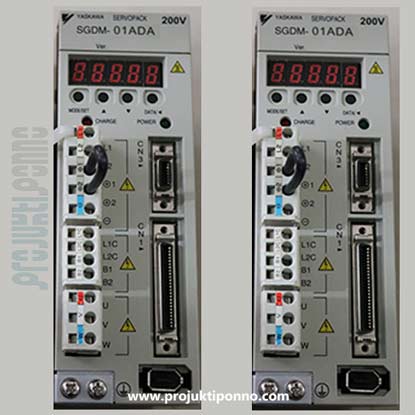
Automation drives for stepper motors provide exact control of the holding torque required to maintain position precision and the step frequency, which defines the motor speed. Automation drives employ vector control algorithms to give AC motors exact control over motor speed, torque, position, and other parameters as well.
Modern industrial processes transitioning to Industry 4.0, which calls for machines to carry out duties with increased accuracy and efficiency, demand high control. Machines can swiftly react to changes in production requirements because of automation drives, which lowers mistakes and boosts efficiency. Automation drives will become even more critical as Industry 4.0 progresses in order to achieve increased automation and flexibility. The Industrial Internet of Things (IoT), which necessitates precise control of motor performance to enable the gathering and analysis of on-field processed data, is one example of an advanced technology that defines Industry 4.0.
Providing Real-Time Data About Motor Performance and Operating Conditions
The use of cutting-edge drive technology has grown in significance with the shift to Industry 4.0. The capability of this technology to deliver real-time information on motor performance and operating circumstances is a crucial feature. By using this data to identify future maintenance issues and improve machine performance, proactive maintenance may be performed without incurring high costs for unscheduled downtime. Motor current and voltage information is a significant part of this real-time data. The load on the motor, the phase movements, and the amount of power being used may all be calculated by tracking these data. These drives ensure that this information is utilized to optimize machine performance by changing variables like motor speed and torque to the application’s needs. This information may also be utilized to spot problems with the motor, including excessive current or voltage fluctuations that can point to a problem that needs fixing.
Another small part of transitioning to Industry 4.0 is temperature monitoring, which we consider a component of real-time data. Monitoring motor temperature makes it easier to see potential problems like overheating, which can cause the motor to fail before it should. Proactively resolving these problems will help you avoid expensive downtime and motor damage. Advanced drives offer a variety of additional information on motor performance and operating circumstances in addition to these characteristics. This might involve data on motor vibration, which could reveal possible problems with bearings or other mechanical parts. By looking at this, it is feasible to acquire insights into machine performance and find areas for optimization and development utilizing sophisticated analytics technologies.
Supporting Advanced Communication Protocols and Interfaces
Facilitating seamless integration with other elements of the industrial automation system using cutting-edge communication protocols and interfaces like Ethernet and OPC UA gives us strong evidence that automation drives are essential to the ongoing transition to Industry 4.0.
Ethernet is a widely used standard for device communication that has evolved into the foundation of industrial networks. Automation drives supporting Ethernet provide a high-speed, reliable, and secure communication channel between drives, sensors, and other automation components. This guarantees seamless and efficient communication, allowing the system to perform correctly.
In the ongoing transition of industrial automation, OPC UA is a widely accepted protocol for data interchange between various devices. By enabling cross-platform communication between multiple automation systems and devices, it offers a streamlined method of exchanging data. Automation drives that implement OPC UA provide a standardized interface for connection with other automation components, allowing easy data interchange and integration across many platforms and devices. The automation system’s integration with communication protocols enables it to collect and analyze data in real-time, enabling effective decision-making and control. Automation drives have become a crucial component of Industry 4.0 by supporting these interfaces and communication protocols, offering a dependable, secure, and effective communication route for data transmission between various parts.
Enabling Closed-Loop Control of Motor-Operated Systems
Automation drives nowadays use closed-loop control. Due to this type of control, the motor system is kept operating at the intended speed, torque, and position by continually adjusting the control system in response to data from the respective sensors. Drives that are revolutionizing Industry 4.0 implement a feedback loop where the output of the motor system is measured, compared to the desired result, and the control system is modified as necessary. Automation drives flawlessly carry out the intricate mathematical calculations and algorithms required for this operation, enabling closed-loop control of motor systems.
As industrial processes become more sophisticated and dynamic throughout the shift to Industry 4.0, closed-loop control of motor systems is becoming increasingly crucial. To streamline the manufacturing process and cut waste, the motor system must be able to adapt in real-time to changing production requirements. The closed-loop control feature has huge importance for the fact that it can deal with customization far better than any other feature. Drives for automation also make it possible to monitor motor performance and spot potential maintenance problems before they collapse as a machine. Automation drives provide predictive maintenance by continually monitoring motor performance, lowering maintenance costs, and raising uptime.
Supporting Advanced Motor Control Algorithms
Automation drives are providing an essential role in the transition to Industry 4.0 by using sophisticated motor control algorithms, such as vector control and direct torque control, which allow for more exact control of the motor operation. The mathematical procedure known as vector control, often called field-oriented control, divides the magnetic field produced by a motor into two parts: the flux and the torque. Vector control offers more accurate motor speed and torque control by individually manipulating each piece. Without the need to detect the magnetic field, a direct torque control algorithm automatically regulates the torque the motor generates. This program precisely controls motor torque, enabling better accuracy in industrial operations, using a mathematical model of the motor and cutting-edge control approaches.
Furthermore, by continually tracking motor performance, these algorithms boost uptime and save maintenance costs by enabling predictive maintenance. In conclusion, automation drives facilitate the employment of sophisticated motor control algorithms that allow for more accurate control of the motor operation, such as vector control, where the direction of motion after a certain phase angle becomes important, and direct torque control, which involves the fluctuations of reactive power according to need. The use of these algorithms necessitates intricate mathematical calculations and control methods, which automation drives flawlessly execute, increasing productivity and decreasing waste.
Enabling Remote Monitoring and Control of Motor Systems
In the ongoing transition to Industry 4.0, the automation drives employ mathematical control techniques like Proportional-Integral-Derivative (PID) control, PI control, and PD control to enable remote monitoring and control of motor systems. PID control allows for accurate control of motor speed, torque, and position, temperature, active and reactive power by continually adjusting motor performance based on real-time data. The PID control method calculates the discrepancy between the target motor performance and the actual motor performance using a mathematical model. The motor control inputs, such as voltage or current, are then modified by the algorithm using this error signal to bring the motor performance closer to the target value. In the current transition, Precision control over motor speed, torque, and position is attained as a result of continuing modification until the required machinery performance is reached.
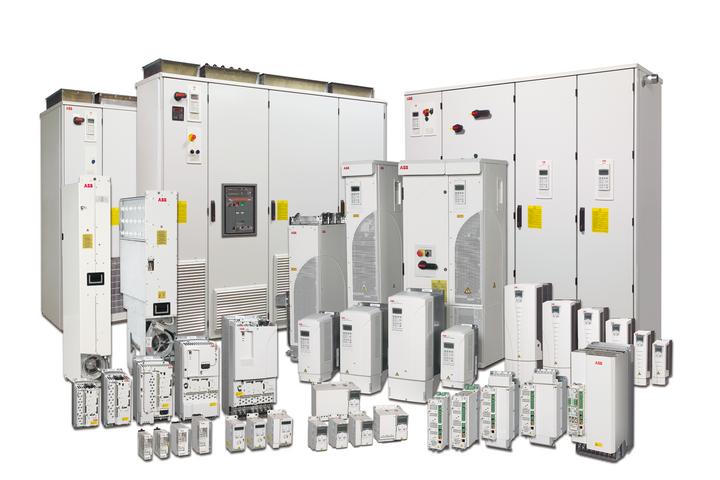
Its actual advantage is that real-time data from motor systems may be gathered using remote monitoring and control systems, which are utilized to guide the PID control algorithm. Along with other performance indicators like temperature and vibration, this data also provides details about the motor’s heat, speed, voltages, and location. This information is used by the PID control algorithm to continually modify motor control inputs, guaranteeing optimum motor performance. For the adoption of new production processes, such as smart factories, in the context of Industry 4.0, remote monitoring via automation drives is crucial. Smart factories may optimize motor performance and enhance overall system efficiency via the application of sophisticated mathematical control algorithms and real-time data analysis, leading to decreased costs and higher output. The remote control algorithm for AC motor drives employs changing frequency and voltage to regulate the motor’s speed and torque. When it comes to stepper motor drives, the control algorithm regulates the motor’s position and speed via a sequence of digital signals.
Supporting Advanced Safety Features
Drives for automation are crucial for implementing cutting-edge safety features In the ongoing transition to Industry 4.0, like Safe Torque Off (STO) and Safe Stop, which are crucial for guaranteeing worker safety in this fast-developing industry. A safety feature called STO makes sure the motor doesn’t produce any torque. A safety relay that separates the drive from the motor is used to accomplish this. T is the torque produced by the motor, and T=0 is the mathematical equation for STO. Similar to the last example, Safe Stop is a safety feature that enables the motor to stop swiftly and safely in an emergency. It is accomplished by utilizing sophisticated control algorithms that recognize and react to changes in the operating circumstances of the motor. Safe Stop’s mathematical statement may be written as dV/data, where an is the maximum acceleration limit and dV/dt represents the change in motor speed per unit of time.
By using actual field data from the sensors like accelerometers and encoders, these drives track the motor’s speed, position, and torque to perform these safety features. The control algorithms utilize this information to identify any irregularities or departures from typical operating circumstances and act swiftly to protect worker safety. By lowering downtime due to accidents or equipment failure, the implementation of advanced safety features like STO and Safe Stop boosts overall system efficiency in addition to worker safety. Sometimes electronic relays can be processed alongside these drives in order to ensure worker safety. STO is accomplished in a stepper motor by turning off the electricity to the motor windings, which causes the motor to produce no torque. The safe stop is accomplished in an AC motor by utilizing an electronic braking mechanism that enables the motor to stop securely and swiftly in an emergency.
In summary, the automation drive’s incorporation of cutting-edge safety features like STO and Safe Stop plays a critical role in assuring worker safety in Industry 4.0.
Supporting Artificial Intelligence (AI) and Machine Learning (ML) Techniques
Automation drives gather and analyze motor performance data using mathematical models and algorithms to facilitate the application of AI and ML approaches in the transition to Industry 4.0. Large datasets may be used to train machine learning algorithms, such as neural networks and decision trees, CNN, and random forest regressors, to spot trends and predict future motor performance. For instance, neural networks may examine data on motor performance to find intricate patterns and connections that can be hard to find using conventional approaches. Based on the input parameters, such as motor speed, torque, and position, these networks may then be used to create models that forecast motor performance, whereas fuzzy logic algorithms can make judgments based on shaky or ambiguous data.
Automation drives can also be utilized in conjunction with reinforcement learning algorithms to enhance motor performance. By modifying motor control settings depending on input from the environment, these algorithms gain experience. A reinforcement learning algorithm, for instance, may be taught to optimize motor speed and torque to reduce energy consumption while maintaining output. In the ongoing transition to Industry 4.0, the drive can relearn the procedure for performing a specific task.
Additionally, automated drives encourage the creation of algorithms for preventative maintenance that employ mathematical models to foresee motor failure before it happens. These algorithms can find patterns and trends in data on motor performance that point to probable failures by using time-series analysis and other mathematical methods.
DO Supply Inc. makes no representations as to the completeness, validity, correctness, suitability, or accuracy of any information on this website and will not be liable for any delays, omissions, or errors in this information or any losses, injuries, or damages arising from its display or use. All the information on this website is provided on an "as-is" basis. It is the reader's responsibility to verify their own facts.