DC Drives vs AC Drives: Which One is Right for Your Application?
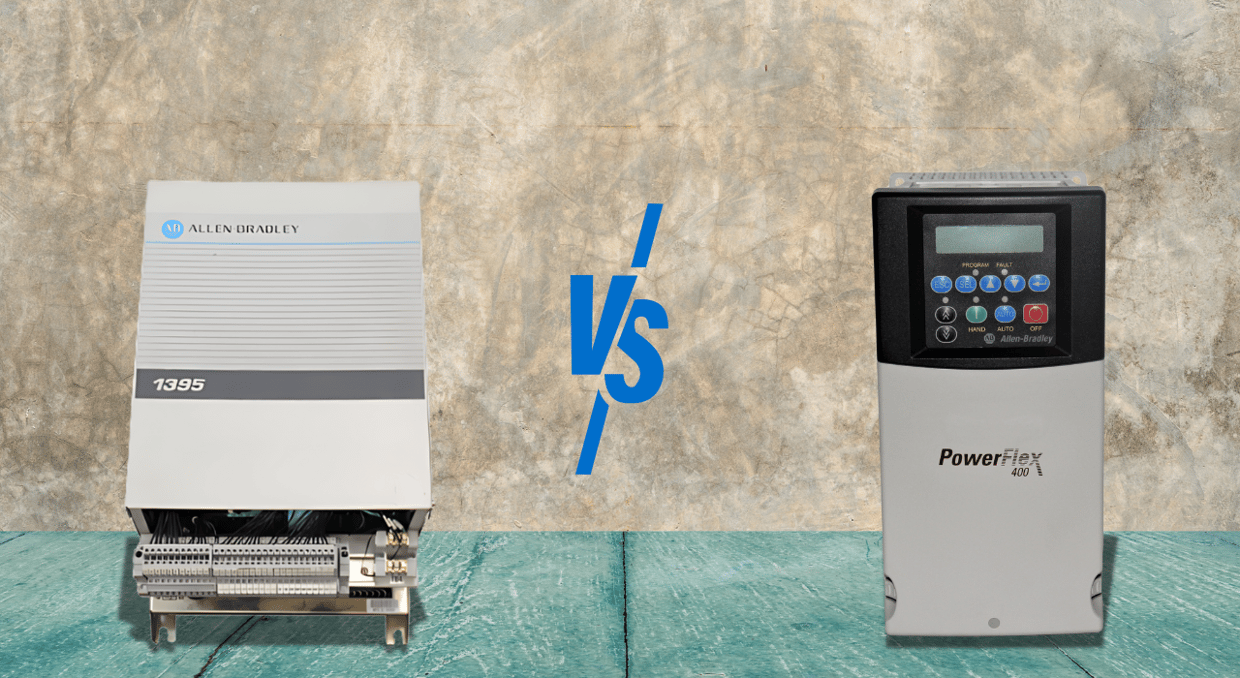
Electric drives are employed in industrial automation, robotics, and motor control systems. They are responsible for regulating the speed and torque characteristics of motors. The drives are majorly categorized as AC drives (Alternating Current drives) and DC drives (Direct Current drives).
The choice of drive for your application depends on various factors, mainly motor type, speed requirements, efficiency, maintenance demands, and cost consideration.
Understanding AC Drives
An AC drive is also referred to as a VFD (Variable Frequency Drive) and is used to control the speed of AC motors, 3-phase induction motors, in particular.
There are two stages for an AC drive operation:
- Rectification of incoming AC supply into DC using a rectifier circuit.
- Inversion of the DC back to AC using an inverter circuit at a frequency desired for speed control.
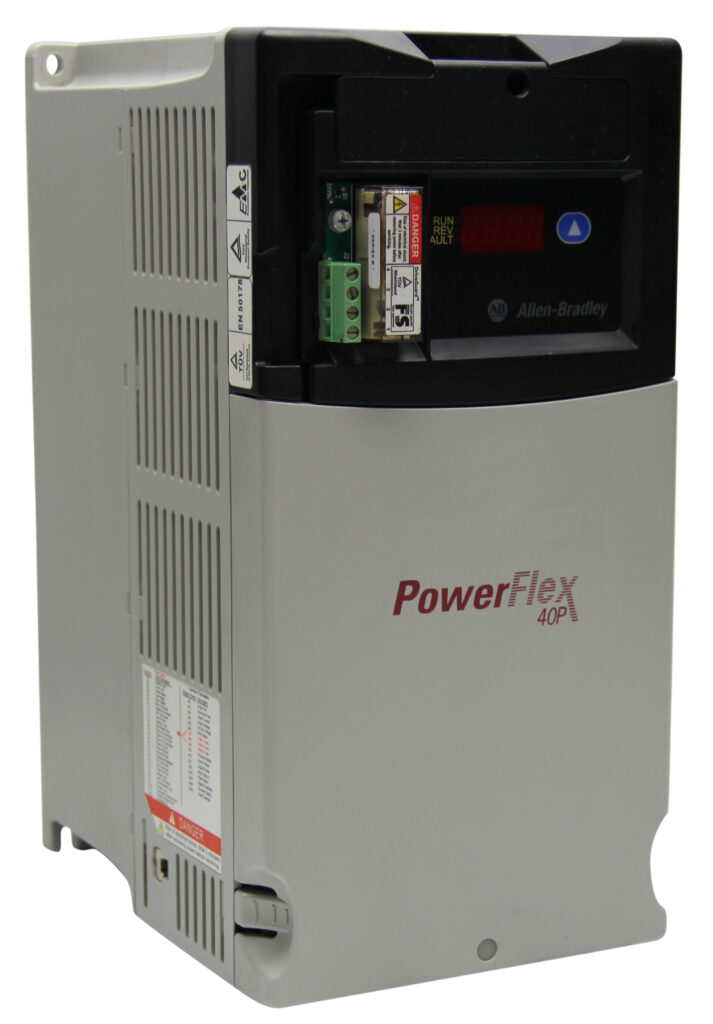
Key Features of AC Drives
- AC drives are used to control Induction and Synchronous Motors, which are commonly used in the industry.
- These drives are available to operate on either single-phase or three-phase AC power.
- Modern AC drives can have efficiency greater than 95%.
- They can have a very fine precision control with advanced control methods such as Vector Control and Direct Torque Control (DTC).
- These drives require minimal maintenance because they do not use brushes or commutators.
Understanding DC Drives
DC Drives are used to control the speed of DC motors. They convert AC input into DC at varying voltages to regulate motor speed.
DC drives come mainly in two categories:
- Analog DC Drives which use traditional control methods such as resistors and potentiometers.
- Digital DC Drives which use microprocessor-based control.
The DC drives also have two stages of operation
- The drives first rectify the AC supply into DC using a rectifier circuit.
- The drive then adjusts the armature voltage or the field current to control the motor’s speed or torque.
Key Features of DC Drives
- The DC drives are used with shunt, series, and compound DC motors.
- These drives operate on DC power sources, such as batteries and rectified AC.
- These drives provide excellent control at low speeds.
- Due to the presence of brushes and commutators, DC drives require more frequent maintenance than AC drives.
Detailed Comparison Between AC and DC Drives
Self-Starting Capability
DC drives are self-starting and capable of starting operation without any additional start mechanism. However, AC drives need another control to start, because induction motors do not self-start under variable frequency conditions.
Power Supply Requirements
AC drives operate on AC power and are thus compatible with the standard industrial power structures. But DC drives need to be powered by DC sources like batteries or rectified AC, which may limit their application in some environments.
Speed Regulation and Range
The AC drives have better speed regulation, as some AC drives may achieve a precision of 1% or better. They cover a broader range of speeds with some motors reaching speeds up to 10,000 RPM. DC drives, although providing decent low-speed control, are limited to about 2,500 RPM and cannot provide the same degree of speed regulation.
Speed-Torque Characteristics
The AC drives are more difficult to adjust for speed-torque curves because frequency interacts with voltage. On the other hand, DC drives provide good speed-torque characteristics and can be more easily adjusted to tailor dynamic performance characteristics to the needs of low-effort demanding applications such as traction drives for on highway vehicles.
Braking Mechanisms
Braking in AC drives is achieved by varying the frequency of the supply which results in the production of regenerative or dynamic braking. In contrast, DC drives employ resistance-based braking to dissipate excess energy via resistors.
Power Consumption and Efficiency
The AC drives are usually more power-efficient and require less input energy because of advanced control algorithms and minimal mechanical losses. Sure, any DC drives are effective, but they consume more power, especially in large systems.
Noise and Sparking
Due to high frequency switching AC drives often have more operational noise. But they are without sparks and safe for the wet or dangerous environments. DC drives are quieter but they cause sparks when the brushes-commutator touches, which limits their use in environments such as petroleum plants.
Maintenance Requirements
Maintenance demands for AC drives remain low since these drives do not incorporate brushes or commutators. The requirement for regular maintenance in DC drives to replace their worn brushes and commutators makes their long-term operational costs higher.
Size and Weight
Additional components such as inverters and filters make AC drives bulkier and heavier in comparison to other drive systems. The compact and lightweight nature of DC drives makes them ideal for applications where space is limited.
Power Rating and Cost
Heavy-duty industrial applications benefit from using AC drives because they have higher power ratings. AC drives come with a higher price tag compared to DC drives. DC drives present a cost-effective solution but function only in low-power applications.
Harmonics and Electrical Noise
The switching activity within inverters of AC drives produces harmonics which negatively affect power quality. DC drives generate minimal harmonics because they utilize rectifiers, yet they occasionally produce electrical noise.
Applications
AC drives are widely used in pumps, fans, and compressors (for energy savings), conveyor systems (for smooth speed control), machine tools and robotics (for precision control). DC drives, on the other hand, are preferred in cranes and hoists (for high starting torque), elevators and lifts (for smooth acceleration), paper and steel mills (for tension control).
Final Thoughts
AC drives are suitable for applications where high efficiency, high speed (greater than 2500 RPM), hazardous conditions, or precise control of speed is required. DC drives will be suited for applications where low-speed torque strength, battery operation, cost sensitivity, or frequent speed change is needed. However, the final choice will depend on your specific requirements for speed, torque, power source, and environment.
DO Supply Inc. makes no representations as to the completeness, validity, correctness, suitability, or accuracy of any information on this website and will not be liable for any delays, omissions, or errors in this information or any losses, injuries, or damages arising from its display or use. All the information on this website is provided on an "as-is" basis. It is the reader's responsibility to verify their own facts.