Using the PowerFlex 40P for Advanced Operations: What can this Drive do?
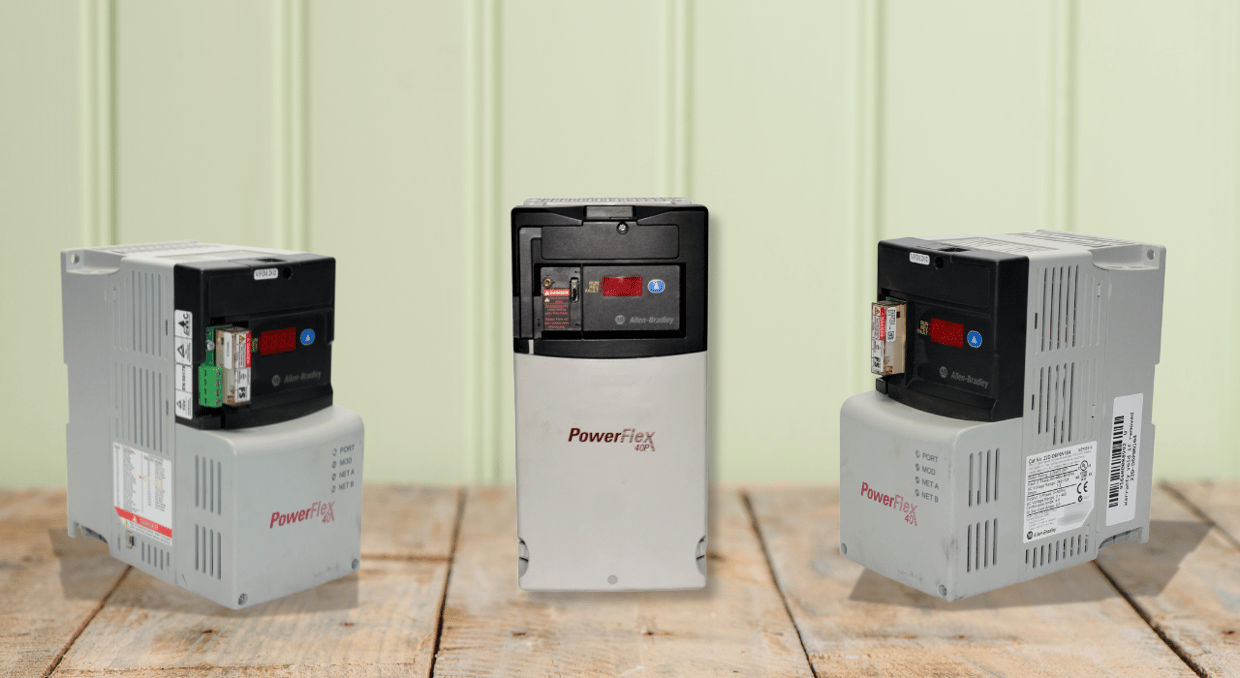
The PowerFlex 40P is an upgrade from the tried-and-true PowerFlex 40. It offers closed-loop feedback, 80:1 speed regulation for finer adjustments, and the ability to use feedback devices like incremental encoders. This also opens the door to more possibilities for motion control that weren’t available to the standard 40 series. While this won’t be a comparison guide between the 40 and the 40P, we actually do have one that you can check out over here.
The PowerFlex 40Ps Features
Before diving into what this drive could do, it’s best to lay out the foundation for the specs and numbers that this drive puts out. Power-wise, you’re looking at 0.4 to 11kW (0.5 to 15 HP) and in voltage classes of 240, 480, and 600 volts. Beyond the power ratings, the 40P also supports vector control with encoder feedback to give you tighter control over torque and speed than the scalar-only PowerFlex 40. This makes the 40P ideal for applications that demand accuracy, repeatability, and where variable loads are in play. While it isn’t a full servo solution, it does bridge the gap between basic V/Hz drives and high-end motion systems, making it incredibly versatile for its class.
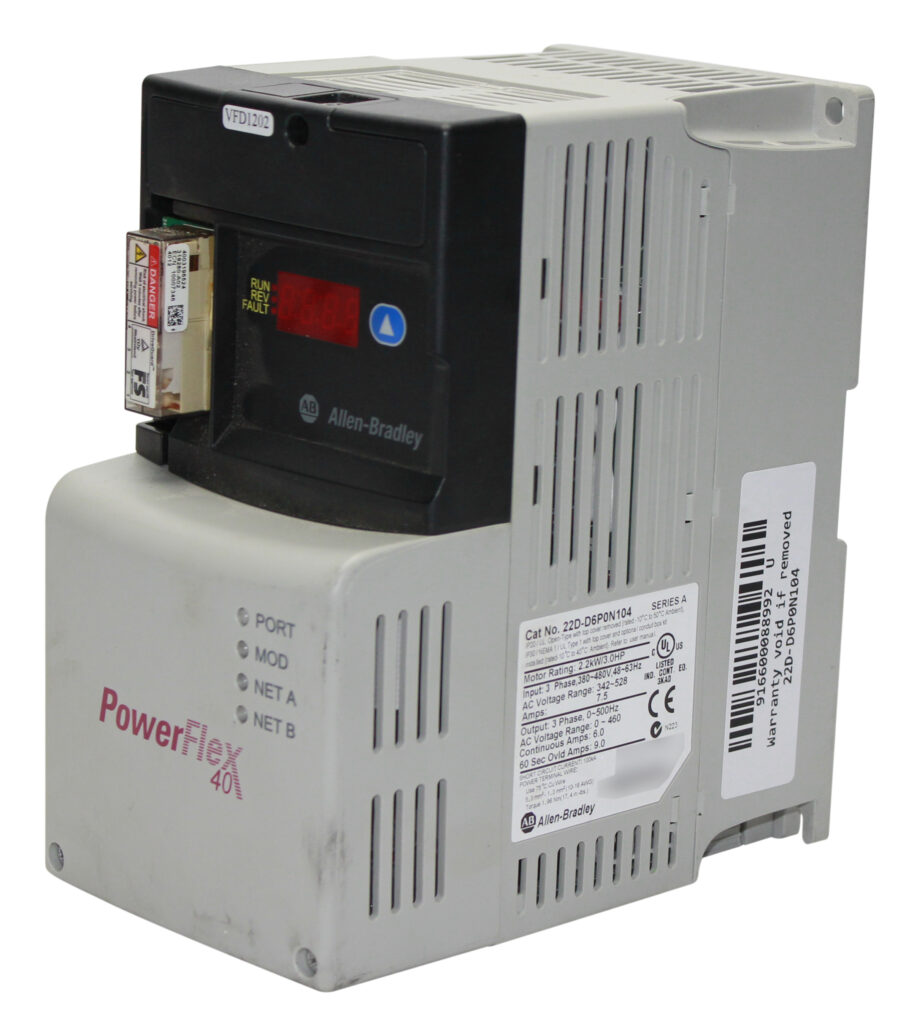
One of the most overlooked features is the built-in PID control. Instead of relying on an external controller, the 40P can directly regulate process variables such as flow, pressure, and temperature using its onboard logic. For example, you can maintain pressure in a pump system without a PLC constantly issuing commands. It reacts to sensor input, adjusts motor speed accordingly, and does so independently.
Communication-wise, the 40P supports a range of options. Out of the box, it supports RS485 (DSI), which can be expanded to support protocols such as DeviceNet, EtherNet/IP, and Profibus through plug-in communication modules. This allows the 40P to slide into existing networked environments without much of a hassle, which is especially handy for upgrades or expansions in plants that already have a preferred protocol in place.
You’ve also got multiple accel and decel profiles (up to four), dynamic braking built in, and 150% overload for 60 seconds or even 200% for 3 seconds. This drive can handle sudden load shifts or heavier start-ups without overspec’d equipment. It also features half-line voltage ride-through, so it can survive brownouts and keep critical processes running when other drives might drop out.
Encoder support isn’t just a checkbox, either. With an incremental encoder, the 40P delivers speed regulation as tight as ±0.3% or even ±0.05% across a 20:1 speed range. That makes it a contender for position-sensitive roles that used to demand servo control.
But the real power of the 40P shows up when you start combining these features. Want to run a simple automated mixing process where speed is based on fluid viscosity? Done. Need to regulate a blower motor based on backpressure? No problem. Have a small positioning task that doesn’t justify the cost of a full motion controller? The 40P can get you surprisingly close, especially with encoder feedback in the loop.
Putting it to work: Palletizing
Palletizing is a classic case of repetitive motion with just enough complexity to need more than basic motor control. You’ve got indexing conveyors, elevators, pushers, occasional turn tables, and even robotic arms, all moving in sync to stack products cleanly, safely, and efficiently. While a full-blown motion system might be the obvious choice, the PowerFlex 40P offers a simpler and more economical solution.
Let’s say you’ve got a production line feeding cases onto a conveyor. That conveyor would need to index forward, stop at precise intervals, and hold position long enough for a pusher to move the box onto the pallet grid. With encoder feedback, the 40P can tightly regulate speed and positioning without drifting over time, ensuring the box lands where it’s supposed to, cycle after cycle. Since the 40P can use encoders, it doesn’t need to rely on external sensors or complicated logic.
The same drive can also be used for the elevator axis, which drops each layer of the pallet down before resetting it for the next one. With vector control and PID, you can ensure the platform holds level and doesn’t bounce or sag under changing load conditions.
If the palletizer has variable load sizes or frequent recipe changes, the 40P can adapt on the fly with programmable parameters or commands from a central controller. It can ramp speed profiles up or down depending on how fast the upstream packaging line runs, keeping everything synchronized without needing to constantly babysit the motor.
So while it won’t replace a servo axis on a high-speed robotic arm anytime soon, the PowerFlex 40P hits the sweet spot for systems like palletizers, where repeatable motion, moderate complexity, and cost control all meet.
Drafting Machines and Coordinated Drive Control
Drafting machines are another spot where the PowerFlex 40P shines. These systems rely on multiple rollers working in tandem to gradually reduce the thickness of fiber or sheet material, whether it’s for spinning yarn, forming paper, or flattening composite layers. The rollers don’t all spin at the same speed, but their motion has to be perfectly synchronized. Any slip between stages and you would be introducing defects, waste, or tension that pulls the material apart.
With the 40P, coordinated control between different zones is far more approachable than you’d expect for a drive in this class. The encoder feedback allows each drive to monitor its motor’s actual speed rather than relying on estimated RPMs. That means the infeed rollers, drafting rollers, and output rollers can all be tuned to maintain the right offset speeds to stretch the material consistently.
What really makes this work is how well the 40P handles low-speed torque. Drafting isn’t a high-speed application but a very precise one. Vector control allows the 40P to keep torque steady even at low RPMs, which is essential when you’re pulling delicate fibers or compressible materials.
Another thing to consider is that many drafting machines have sections that need different control behaviors depending on the product being run. One batch might call for a higher draft ratio or slower infeed speed. Instead of hardwiring changes or fiddling with external controls, the PowerFlex 40P allows you to store and switch parameter sets internally. That means quick recipe changes without a lengthy setup, just a digital input or command from a central controller.
Smarter Conveyors Without the Overhead
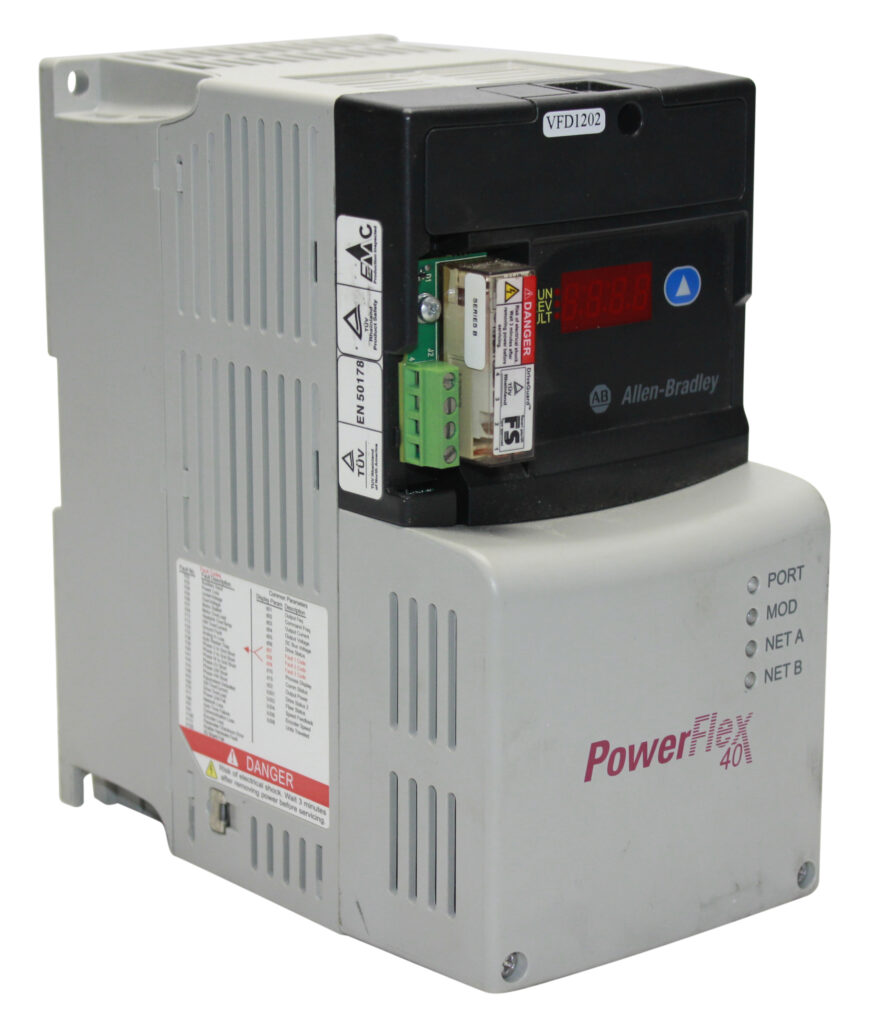
Conveyor systems are everywhere, from packaging lines to assembly cells, and while they may seem straightforward, the demand for more responsive and efficient motion keeps increasing.
Let’s say you need to control a zone conveyor with accumulation logic. With the 40P, you can use local StepLogic sequences to control start/stop behavior based on digital inputs, like a photo-eye sensor triggering when a product reaches a zone. No external PLC required. And with built-in timers and counters, you can fine-tune delays, debounce times, or even set indexing cycles directly in the drive.
Speed regulation is another big win. Whether you’re synchronizing with an upstream machine or maintaining backpressure in a merge zone, the 40P’s closed-loop vector control keeps the motor speed consistent even under fluctuating loads. If you’re running an encoder, you’ll get precise feedback that ensures your conveyor isn’t creeping or lagging over time.
Plus, the drive can be tied into a larger control system using Ethernet/IP, DeviceNet, Profibus, or RS-485, making it easy to swap setpoints, report status, or switch operating modes, all while maintaining tight control at the motor level.
Final Thoughts
The PowerFlex 40P proves its spot as a versatile and economic choice for motion control. Built upon an already tried-and-tested platform, the 40P takes it to the next level without adding any unnecessary features. Since it’s also built on the same backbone as the 40 series, it shares accessories, programming methods, and mounting options to make it easier to scale or upgrade without reinventing the system.
If the PowerFlex 40P sounds like the right puzzle piece for your automation system, we encourage you to stop by our site and see the different models we have ready to be shipped out the same day. We also offer repair services backed by our 2-year warranty. Give us a call today!
DO Supply Inc. makes no representations as to the completeness, validity, correctness, suitability, or accuracy of any information on this website and will not be liable for any delays, omissions, or errors in this information or any losses, injuries, or damages arising from its display or use. All the information on this website is provided on an "as-is" basis. It is the reader's responsibility to verify their own facts.