AC Drives Vs Servo Drives: Where Each Fits
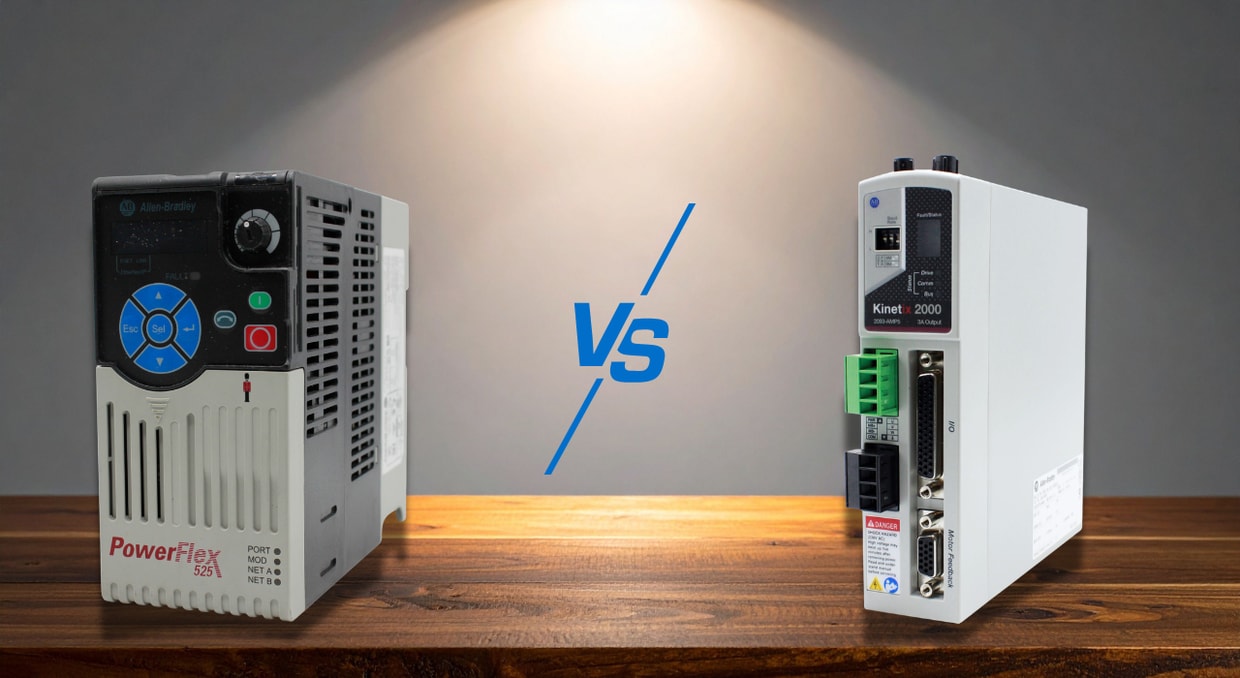
In today’s industrial automation, selecting the most appropriate motion control technology is critical for achieving high system performance, with servo and AC drives leading as the top choices. While they both control electric motors, they operate on distinct principles designed for different industrial applications. AC drives are optimized for energy-efficient, variable-speed, open-loop, or simple closed-loop control of speed and torque. On the other hand, servo drives are engineered for fast response times and high-precision, closed-loop dynamic positioning. Therefore, system engineers need to select a motor control technology that precisely matches the specific requirements of a given application.
This article explores the unique operating principles, key strengths, and specific limitations of AC and servo drive technologies to guide your selection process.
What is an AC Drive?
AC drives, commonly known as Variable Frequency Drives (VFDs), are electronic devices that regulate the torque and speed of AC motors by varying the supply voltage and frequency. They offer improved energy efficiency and flexible motor control, which makes them ideal for a variety of industrial motion control applications. They provide smooth, consistent motor speed regulation because they do not require mechanical gearing or throttling.
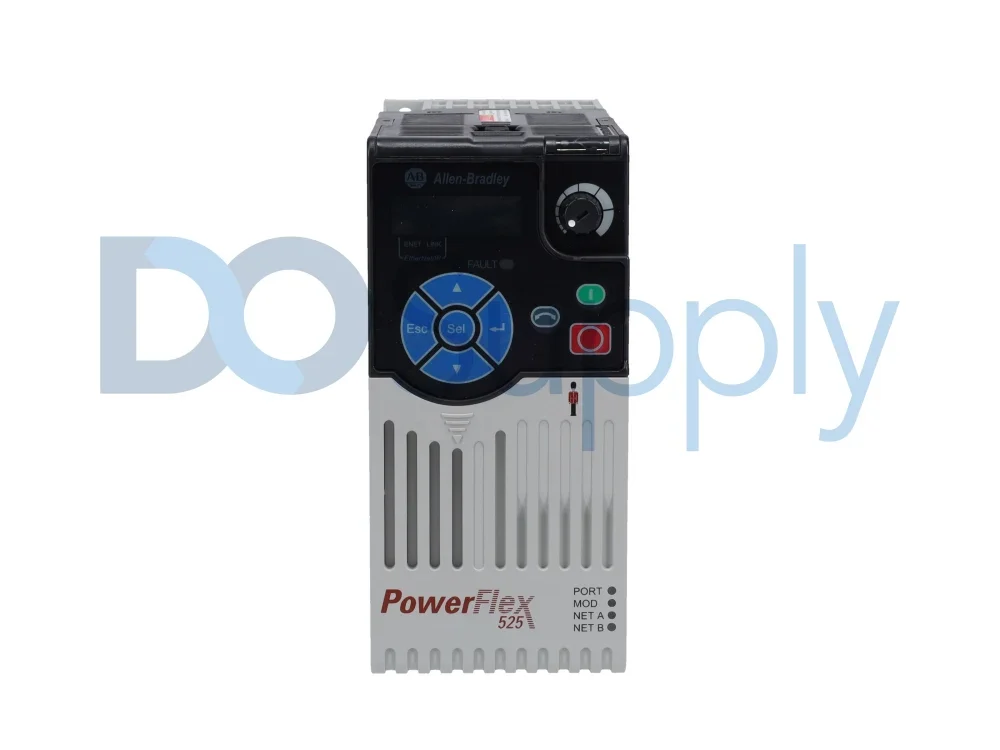
- Operating Principle: AC drives operate by converting incoming AC power into DC using a rectifier, which also smoothens the DC signal. The DC signal is then converted back into a variable-frequency, variable-voltage AC output through an inverter. Adjusting the voltage and frequency of this AC output signal allows for precise control of motor speed.
- Key Functionality: AC drives are widely used to manage speed in many industrial applications, including fans, pumps, compressors, and conveyor belts. They ensure that the connected motors operate at the necessary speeds rather than continuously. This results in reduced energy consumption and improved system efficiency.
- Versatility: A single AC drive can be used to manage multiple, identical AC motors connected in parallel (e.g., in large conveyor systems), which helps reduce wiring complexity and capital expenditure. For applications where speed synchronization is necessary, such as constant- or centrifugal-motor load applications, this approach requires careful drive and motor sizing.
- Energy Efficiency: By matching motor speed to the connected load, AC drives can significantly minimize energy usage compared to constant-speed operation. They are thus a highly energy-efficient and cost-effective solution for variable-torque applications, such as pumps and fans, as they can readily adjust motor speed to match demand without the need for mechanical throttles.
What is a Servo Drive?
Servo drives are advanced motor controllers that provide high-precision regulation of motor speed, position, and torque within a closed-loop servo system. By continuously comparing encoder feedback of the actual motor position or velocity with specified command signals, servo drives can deliver exceptional accuracy and dynamic response in motion control systems.
- Operating Principle: The servo drive receives torque, speed, or position command signals from a motion controller. It then amplifies the received signals into electrical power for the connected motor. By utilizing PID control loops and real-time encoder feedback, the servo drive continuously adjusts its output to the connected motor to ensure the motor’s actual state perfectly matches the commanded state.
- Key Functionality: Servo drives excel at delivering high-precision positioning and exceptional dynamic response.
- Servo Lock Mechanism: One of the key features of servo drives is“servo locking” — the ability to maintain a precise, fixed position even while under applied load. They use the servo lock mechanism to compensate for external forces and maintain the commanded position.
- Low-Inertia Design: Servo drives are often used with servo motors that include a low-inertia rotor that allows for quick cycle times as well as rapid acceleration and deceleration.
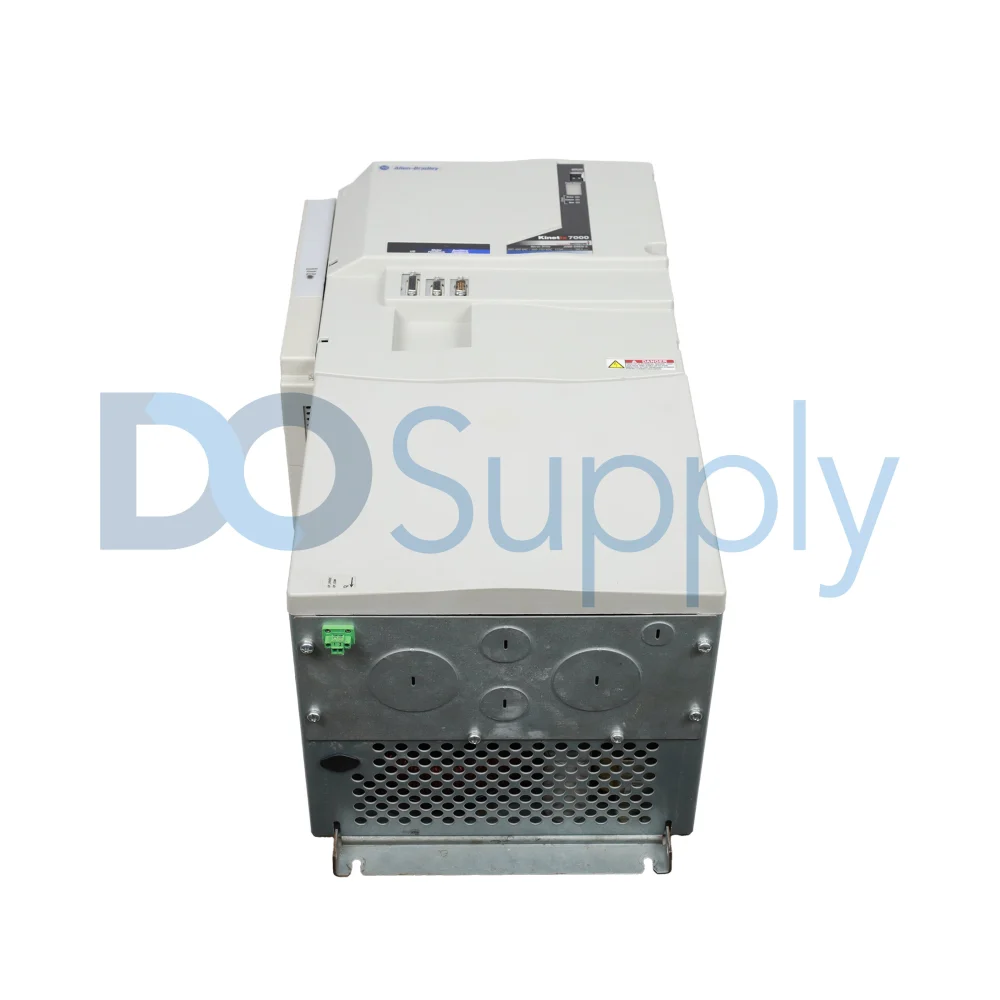
If you would like to see how a Kinetix 7000 drive handles servo motor control, we have an article here for you!
Key Differences: AC Drives vs. Servo Drives
Control Architecture and Feedback
- AC Drives (Open-Loop): AC drives generally operate using an open-loop control architecture, in which they integrate both Vector Control and Field-oriented control (FOC) to control motor speed and torque without real-time, continuous position feedback. They are a robust and cost-effective motion-control solution for general-purpose industrial applications such as conveyors, pumps, and fans.
- Servo Drives (Closed-Loop): Servo drives utilize a closed-loop system with resolvers or encoders for continuous, real-time feedback on the motor’s actual position, output torque, and speed. This enables superior dynamic response and high-precision motion control.
Control Flexibility and System Integration
- AC Drives: AC drives easily integrate into standard industrial systems using simple digital or analog signals. They are more efficient in semi-automated and stand-alone applications.
- Servo Drives: They provide superior integration capabilities with motion controllers and Programmable Logic Controllers (PLCs). They support both multi-axis coordination and complex synchronization for advanced automation systems.
Speed Regulation Accuracy
- AC Drives: While AC drives offer excellent speed control for general-purpose industrial applications, their accuracy is inherently affected by external disturbances and load variations, particularly in open-loop configurations.
- Servo Drives: They maintain ultra-precise speed control despite rapid variations in applied load by using high-resolution resolver/encoder feedback systems. This makes them ideal for applications requiring precise positioning, high dynamic response, and consistent motor speed for high-quality end products.
Cost and System Complexity
- AC Drives: AC drives feature a robust but simple design, offering lower initial costs, straightforward installation, and ease of maintenance. This makes them a cost-effective solution for standard industrial applications focused on variable-speed control and energy efficiency.
- Servo Drives: They include complex, high-precision components, such as advanced controllers and encoders, which result in higher initial costs. Their operating expenses are also substantially high as they require specialized, skilled technicians for setup, tuning, and maintenance. However, these high costs are justified in applications that demand high-precision motion control and improved productivity.
Torque Characteristics
- AC Drives: Conventional AC drives experience reduced torque at low speeds, particularly when paired with induction motors. Enhanced vector-controlled AC drives significantly improve low-speed torque performance, ensuring effective operation across a broader speed range. However, despite improvements in vector control, AC drives are still best suited for applications requiring constant speed/variable torque rather than precise zero-speed position holding.
- Servo Drives: They deliver the full rated torque even at zero speed. This allows them to hold the connected motor load in the desired position without drifting. They are ideal for high-precision applications requiring precise positioning and rapid acceleration/deceleration, such as robotics and CNC machining.
Precision and Dynamic Response
- Servo Drives: They respond instantly to changes in command signals, which makes them ideal for high-speed dynamic applications, precise positioning, and complex motion profiles. They are also essential in applications that require rapid acceleration and deceleration.
- AC Drives: They excel in steady-state operations that prioritize maintaining consistent speed over execution of high-speed dynamic movements. Even though modern AC drives offer enhanced dynamic capabilities, such as improved responsiveness, they are best suited to applications where constant-speed operation is more critical than rapid, high-precision motion.
Where Each Fits
AC Drives Applications
AC drives are widely deployed in industrial systems that prioritize cost-effectiveness and operational reliability over ultra-precise positioning. They are often referred to as the backbone of general industrial automation. By regulating the voltage and frequency applied to AC motors, it is possible to control motor speed precisely. This facilitates accurate, real-time adjustments to process variables, including pressure, flow, and the speed of material movement. The ability of AC drives to match motor output to actual process demands helps to minimize energy consumption significantly. This makes them essential for large-scale operations and continuous-process industrial applications, but not limited to them.
- Fans and Pumping Systems: This is a primary application of AC drives, where they are used to achieve maximum efficiency.In fans and pumping systems, power consumption is directly proportional to the cube of motor speed, as pump and fan loads follow affinity laws. This means that a slight reduction in motor speed yields substantial energy savings. In addition, AC drives do not rely on inefficient mechanical throttling valves or dampers; instead, they control pressure and flow by adjusting motor speed. This helps reduce mechanical stress, increasing the longevity of the overall system.
- Conveyor Systems: AC drives are used to ensure efficient operation in conveyor systems integrated into logistics and manufacturing environments. They manage deceleration and acceleration ramps, mitigating mechanical stress on conveyor system bearings, gears, and belts, and preventing material spillage and product damage due to sudden mechanical shocks. They are also critical for managing high-load applications characterized by rapid start-and-stop cycles. They also enhance process coordination by synchronizing multiple conveyor sections, resulting in enhanced operational efficiency and smoother material handling.
- HVAC Systems: AC drives play a crucial role in both industrial and commercial HVAC systems. They feature a demand-based control strategy that enables the HVAC equipment to operate only at the required capacity, improving energy efficiency. In essence, AC drives significantly reduce energy waste by adjusting the speed of HVAC compressors, fans, and pumps in real time based on actual environmental conditions, rather than running at full rated speed continuously.
Servo Drive Applications
Servo drives are essential components in industrial automation, offering high-precision, closed-loop control over motor speed, position, and torque. Their superior dynamic performance and consistent repeatability eliminate minor deviations, maximizing motion precision and increasing operational efficiency.
- Robotics: Robotic arms that perform functions such as replacing components, painting, and welding require accurate positioning. Such robotic arms use servo drives to achieve high-precision, repeatable, and synchronized motion profiles. These drives are essential in advanced robotic systems due to their rapid response times and ability to handle complex motion profiles.
- CNC Machinery: Servo drives provide precise control over the position and speed of CNC machine tools, such as cutting, milling, and drilling tools. This ensures high-accuracy movement, strict adherence to predefined specifications, and excellent surface-finish quality.
- Packaging Systems: Servo drives enable high-speed, synchronized operations in these systems. They provide the precision required for consistent filling, sealing, and labeling, resulting in high throughput and reduced material waste.
- Electronic Assembly: In surface-mount assembly technology, servo drives ensure high-accuracy, high-speed placement of small electronic components onto circuit boards. This level of precision is critical in electronic manufacturing to achieve higher product quality and yields.
- Inspection Platforms: In high-speed production lines, end products are analyzed, measured, and scanned while in motion. In such applications, servo drives control the precise movement of sensors and cameras, facilitating automated, high-speed quality inspection of products while in motion.
Conclusion
While AC drives and servo drives serve distinct functional roles, they are both essential in modern industrial automation applications. Due to their ruggedness, reliability, and cost-effectiveness, AC drives are considered the industry-standard for general-purpose motor control. They are particularly used to control industrial fans, conveyors, pumps, and HVAC systems, where variable-speed control is required, but high-precision positioning is not.
In contrast, servo drives excel in high-precision, high-performance applications —such as CNC machining, advanced packaging systems, and robotics—that demand rapid, dynamic response, extreme precision, and high torque at low speeds. In complex industrial automation systems, combining AC and servo drive technologies ensures optimal system performance and reliability.
Selecting the right drive really boils down to what the machine needs to do. If the goal is efficient speed control for pumps, fans, conveyors, or HVAC equipment, an AC drive may be the practical choice. If the application needs tight positioning, fast response, repeatable motion, or coordinated axes, a servo drive may be the better fit. No matter what you might run into, we at DO Supply are here to help! We carry a wide range of industrial AC drives, servo drives, and supporting hardware to keep your installation running right and smoothly. All of our hardware is tested before it leaves the door and is backed by our two-year warranty to keep transactions worry-free. Come visit our site and browse our inventory today!
DO Supply Inc. makes no representations as to the completeness, validity, correctness, suitability, or accuracy of any information on this website and will not be liable for any delays, omissions, or errors in this information or any losses, injuries, or damages arising from its display or use. All the information on this website is provided on an "as-is" basis. It is the reader's responsibility to verify their own facts.