Energy Losses in DC Motor Systems and How to Reduce Them
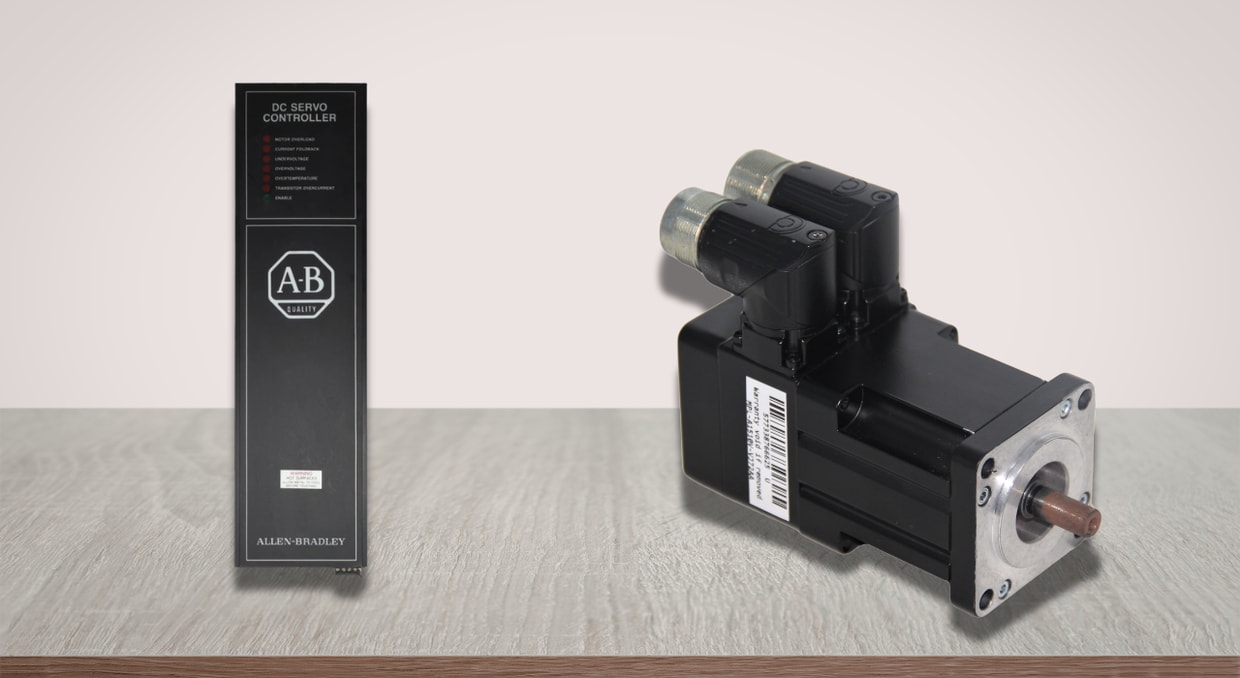
DC motor systems remain deeply embedded in industrial infrastructure. Steel rolling mills, paper machines, mine hoists, crane drives, and extruders continue to operate on DC drives, where their precise torque-speed controllability justifies retention. Yet these systems carry a well-documented efficiency liability: energy losses distributed across electrical, magnetic, mechanical, and power conversion pathways that compound significantly at partial load. Regardless of the application, even small reductions in DC motor losses can yield significant gains in overall process efficiency, motor life, and cost-effectiveness. Understanding each loss mechanism at the parameter level and matching it to a specific DC drive mitigation strategy is the foundation of any credible energy optimization program in a DC-driven facility.
Armature Copper Losses
Armature copper loss is the dominant electrical loss in any DC motor system. These losses are proportional to the square of armature current and are expressed as Ia²Ra, where Ia is armature current, and Ra is armature resistance, accounting for approximately 30–40% of total full-load losses. Since developed torque equals KφIa, any condition demanding torque above what the load actually requires forces unnecessary I²R dissipation. Poor speed-loop tuning, current-transient overshoots, and overly conservative current-limit settings are the primary drive-side contributors.
Reducing Current-Related Heat Loss
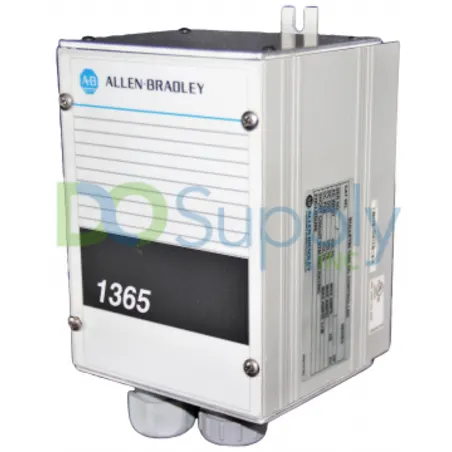
Motor drive losses can be reduced considerably by independently controlling the armature voltage and field current at any torque-speed operating point, allowing the drive to deliver exactly the current the load demands, without excess. On platforms such as the Siemens SINAMICS DC MASTER and ABB DCS880, tightly tuned PI current controllers minimize transient overcurrents. Current limit parameters should be set to the minimum value consistent with process torque requirements, rather than left at the factory-default maximums, thereby directly reducing average I²Ra dissipation.
Field Copper Losses
Field copper losses, expressed as If²Rf, are routinely treated as a fixed constant in DC drive energy budgets. In a separately excited machine, however, field current is a fully controllable variable. At the rated load and speed, the full-field current is necessary to maintain the rated flux. During extended light-load periods, however, maintaining full field current dissipates energy in field winding resistance without contributing proportionally to useful output torque.
Matching Field Strength to Load Demand
An optimal control method for minimizing DC drive losses demonstrated that independently controlling the field current and armature voltage reduces energy dissipation. This approach does so without sacrificing drive quality or dynamic response, nor does it significantly increase implementation cost or complexity. Modern digital DC drives support adaptive field controllers that reduce excitation during light-load periods and ramp it back ahead of high-torque demand via feed-forward load signals. This technique is especially effective for winder systems and paper machine drives, where torque demand varies predictably throughout the process cycle.
Iron Losses: Hysteresis and Eddy Currents
Iron losses occur in the armature core due to rotation in the magnetic field. To reduce eddy current losses, the armature core is built from thin laminations insulated from one another by a varnish layer, thereby limiting the closed paths available for eddy current circulation. Hysteresis loss follows Wh = KhBmax^n·f and eddy current loss follows We = Ke·Bmax²·f²·t², meaning both components are sensitive to the flux level the drive maintains through field control.
Controlling Flux to Reduce Core Heating
When the drive operates below rated armature voltage while holding full field flux during deceleration or low-speed positioning, flux density remains near rated, and iron losses persist despite reduced output. Proportional field-reduction profiles in the speed control loop lower Bmax during extended reduced-speed operation, thereby cutting both components. Additionally, for the field circuit, an ideal DC source is preferred over a half-wave converter because high ripple content in the field excitation current increases the magnetic losses of the motor. A fully controlled three-phase bridge converter produces substantially lower field ripple and correspondingly lower core losses.
Brush Contact Losses
Brush losses occur at the contact between the carbon brushes and the commutator. The voltage drop across a brush set is approximately constant over a wide range of armature currents, typically assumed to be 2 volts, yielding a brush drop loss of 2Ia. On a 250 kW machine at a rated current of 500 A, this is 1,000 W dissipated continuously at the commutator, totaling 8,000 kWh per operating year on a single drive. Beyond direct energy loss, degraded brush contact increases contact resistance, accelerates commutator erosion, and further compounds losses over time.
Improving Commutation and Brush Contact
Having brushes commutate coils in regions of low magnetic flux minimizes heat losses, and using a three-bar contact configuration measurably reduces commutation losses. From the DC drive side, limiting dI/dt via the current controller’s slew-rate parameter reduces commutation-arc energy during transients. Proper interpole commissioning, compensating armature reaction flux in the commutation zone, eliminates the residual flux responsible for commutation sparking and excess brush heating. Modern DC drives include automatic identification routines that set current controller parameters to minimize commutation stress across the full operating speed range.
Mechanical Losses: Bearing Friction and Windage
Mechanical losses include bearing friction and windage, typically accounting for approximately 15% of total losses, arising from friction in moving parts and from air resistance on the rotating armature. Windage losses scale with the cube of rotational speed; doubling the speed increases windage eightfold, making high-speed field-weakened operation particularly penalizing. Bearing friction losses compound over time as friction-induced heat degrades lubricant viscosity, further increasing friction losses.
Reducing Friction, Windage, and Wear
A ball bearing may add approximately 20% to motor cost but deliver 5% higher efficiency and 75% longer service life, even reducing frictional torque by a fraction of an oz-in, which can pay for itself rapidly through efficiency and lifespan improvements. From the DC drive side, controlled acceleration ramp programming eliminates impact loading that accelerates bearing wear. Precise closed-loop speed regulation via tachometer feedback prevents operation above the process-required minimum speed, thereby directly limiting windage dissipation across all operating modes.
Thyristor Converter Losses and Power Factor Degradation
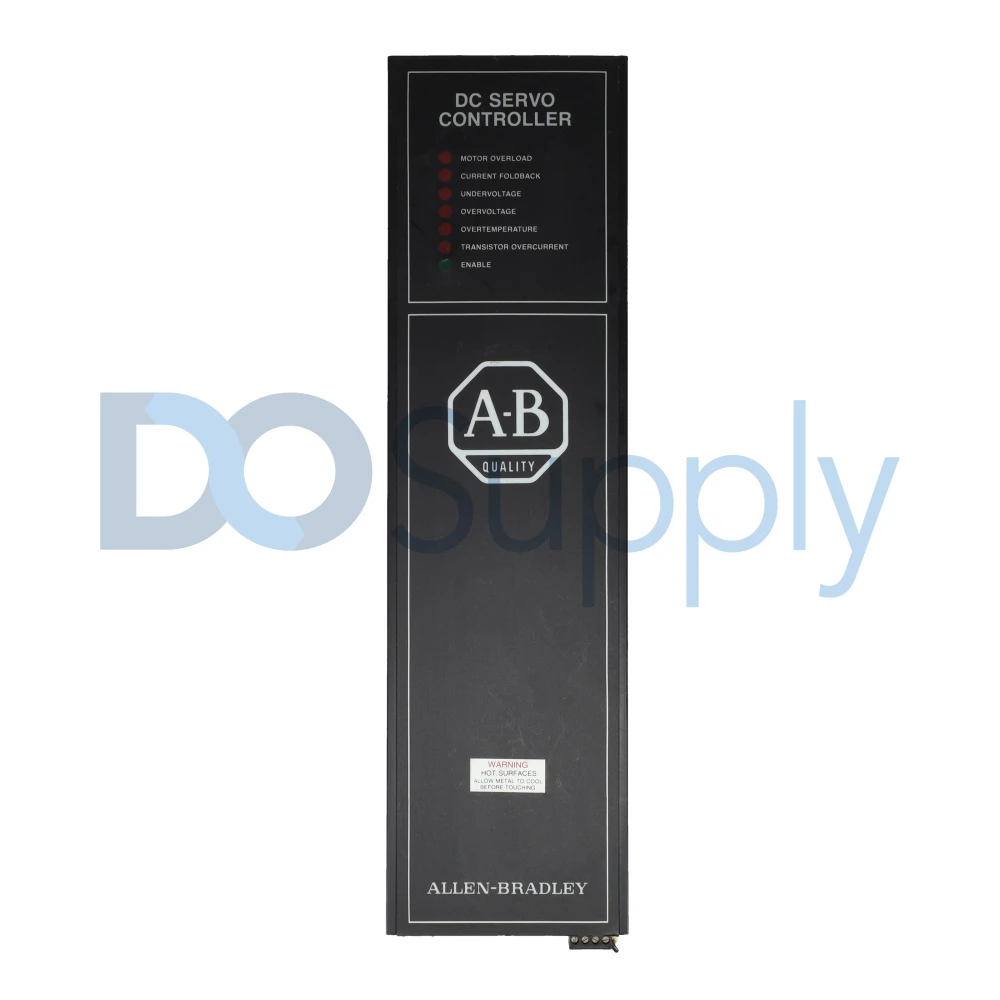
DC drives commonly employ an AC-to-DC phase-controlled thyristor converter that converts the AC supply voltage into a controllable DC output applied to the armature windings, with the thyristor firing angle controlling the output voltage magnitude. Thyristor forward conduction losses, typically 1.5–2.5 V per conducting pair, produce continuous dissipation proportional to armature current. More significantly, as the DC output voltage is reduced by increasing the firing angle, the phase of the AC current lags increasingly behind the AC voltage, thereby increasing reactive power generation and decreasing the power factor.
Improving Converter Efficiency and Power Quality
An improved power-quality converter delivers a near-unity input power factor over a wide speed range, reduces the total harmonic distortion of the AC input supply current, and produces very low ripple in the armature current and voltage waveforms. Active front-end (AFE) rectifier topologies, available on the ABB DCS880 and Siemens SINAMICS DCM as optional modules, replace thyristor phase control with IGBT-based PWM rectification, eliminating reactive power penalty tariffs and reducing supply-transformer copper losses caused by lagging displacement current.
Harmonic Losses
Thyristor-based DC drives generate characteristic low-order supply harmonics, predominantly 5th, 7th, 11th, and 13th in three-phase six-pulse bridge configurations. Using power electronics devices for DC motor control causes power factor and total harmonic distortion problems that negatively affect the AC supply system. These harmonic currents increase I²R losses in transformer windings, elevate eddy current losses in transformer cores, and produce additional motor winding heating beyond what the fundamental current alone would generate.
Reducing Supply-Side Harmonic Distortion
Twelve-pulse converter configurations, two six-pulse bridges supplied from a common transformer with star/star and star/delta secondary windings, cancel the 5th and 7th harmonics, reducing supply THD below 10% without active hardware. This is standard practice on DC drives above 200 kW. For existing six-pulse installations, active harmonic filters (AHF) installed at the AC supply terminals inject equal and opposite harmonic currents, recovering transformer and supply losses attributable to harmonic circulation across the full load range.
Regenerative Braking Energy Losses
In DC drive systems without regenerative capability, all kinetic energy stored in the rotating motor-load system during deceleration is dissipated as heat in dynamic braking resistors. On a 500 kW crane drive performing hundreds of lowering cycles per shift, this represents a substantial recurring energy waste that is fully recoverable with the correct converter topology.
Recovering Braking Energy Instead of Wasting It
Regenerative braking allows kinetic energy recovery during deceleration, capturing the high power density available during the braking transient and returning it usefully rather than dissipating it as heat. Four-quadrant DC drives with dual-converter configurations enable full regenerative operation across all speed and torque quadrants. Advanced regenerative systems employing adaptive control algorithms can capture up to 92.5% of kinetic energy during deceleration, directing it first to supercapacitors for rapid storage and then gradually to the primary energy supply, reducing thermal losses and extending system life.
Final Thoughts
In conclusion, energy losses in DC motor systems span eight distinct physical mechanisms, each directly addressable through targeted DC drive parameter configuration, control strategy selection, and hardware topology. Armature and field copper losses respond to adaptive current and flux control; iron and brush losses are reduced through ripple minimization and interpole commissioning; converter losses are mitigated by AFE topologies and twelve-pulse configurations; and regenerative braking converts a pure heat sink into a measurable energy recovery asset. Applied systematically, these measures routinely reduce total system energy consumption by 15–30% in existing DC drive installations without motor replacement. If youre interested in a more indepth comparison between DC drives and DC servo drives, we have an article here that goes over that!
Looking to reduce energy losses in your DC motor system? We at DO Supply can help you keep your existing equipment running efficiently with replacement DC drives, motors, and industrial automation components from trusted manufacturers. We also offer repair services and back our products with a 2-year warranty, giving you a practical path to improve uptime without replacing an entire system. Give us a call today to find the right parts or repair support for your application.
DO Supply Inc. makes no representations as to the completeness, validity, correctness, suitability, or accuracy of any information on this website and will not be liable for any delays, omissions, or errors in this information or any losses, injuries, or damages arising from its display or use. All the information on this website is provided on an "as-is" basis. It is the reader's responsibility to verify their own facts.