When CompactLogix is the Better Choice
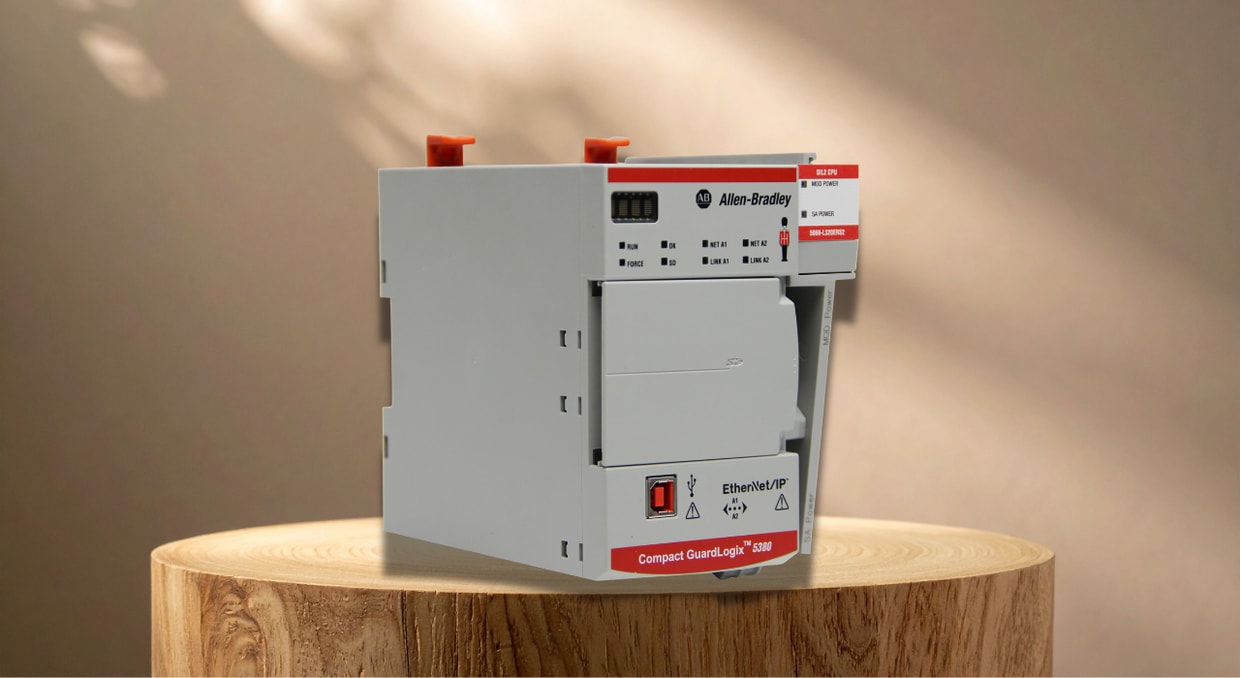
Allen-Bradley CompactLogix and ControlLogix controller platforms play a key role in modern industrial automation. ControlLogix controllers are configurable for safety, standard, Logix SIS, and redundancy applications, facilitating faster system performance, high I/O capacity, enhanced productivity, and improved security for enterprise-level and large-scale automation systems. CompactLogix platforms offer the same core processing capabilities as ControlLogix platforms, but for cost-sensitive, mid-range, or standalone automation applications — often at a fraction of the total ControlLogix investment.
Selecting the correct Allen-Bradley controller between the ControlLogix and CompactLogix platforms requires balancing cost, I/O capacity, performance, complexity, and scalability to avoid oversized control panels, redundant programming complexity, and inflated hardware costs. This article explains the technical differences between the two platforms and provides a clear selection criterion for when the CompactLogix is the best choice.
CompactLogix Architecture
Integrated Design
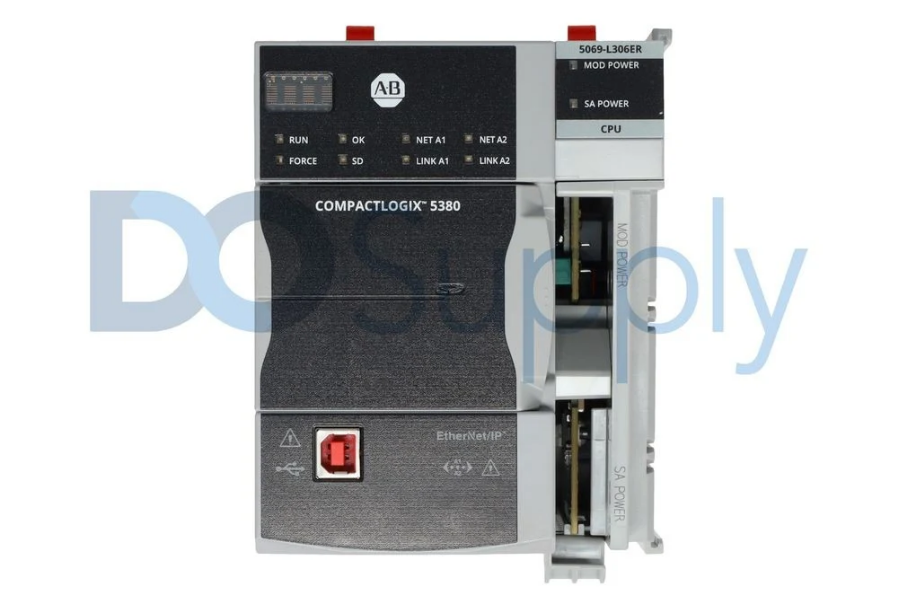
Unlike ControlLogix, the CompactLogix controller integrates I/O, CPU, and communication into a single and compact unit. This drastically simplifies installation and reduces the required panel space. When it comes to ControlLogix, you have to purchase and assemble a processor module (1756-L8x), a 1756 chassis, an Ethernet bridge module , and a separate power supply.
By comparison, CompactLogix controllers, like the CompactLogix 5380, feature a USB programming port, dual Ethernet/IP ports, and an integrated processor, all in a single 2.2-inch unit. This eliminates the need for separate communication modules and backplane configuration, saving both time and money. In addition, when working with a 24×24-inch enclosure, a ControlLogix system with three I/O modules can occupy nearly half of the available panel space. In contrast, a similar CompactLogix system cannot consume more than 15% of the available panel space. This stark contrast in panel space requirements enables fast assembly times, lower cooling demands, and a smaller enclosure.
Scalability
CompactLogix controllers can support up to 8, 16, or 31 local modules, depending on the model type. For most mid-range automation systems, a standard CompactLogix controller platform is usually sufficient. For example, the CompactLogix 5069 series supports the direct attachment of 30 to 31 local I/O modules to the CPU. They can also accommodate up to 180 remote Ethernet/IP nodes, depending on the model. Each node can host multiple racks of 1734 point I/O, 5069 compact I/O, and Flex I/O. You can also scale modern Allen-Bradley CompactLogix systems to handle thousands of I/O points across a distributed Ethernet network. Full expansion of the CompactLogix system can support 500 analog channels and 3,000 digital I/O points.
In contrast, a single ControlLogix chassis can typically hold a much larger density of local I/O modules. For mid-range standalone machines requiring under 500 total I/O points, such as printing presses, packaging lines, and robotic work cells, a CompactLogix system would be a highly efficient choice. It offers a practical advantage by avoiding the higher fixed-cost premium of the ControlLogix platforms. As such, the advanced scalability of ControlLogix platforms is unnecessary for the aforementioned applications.
Communication
Both controller platforms support EtherNet/IP communications, with CompactLogix models featuring built-in dual Ethernet ports and embedded Ethernet switch technology. This allows for the setup of Device Level Ring (DLR) topologies and daisy-chaining without external switches in small-to-medium EtherNet/IP network architectures. Conversely, ControlLogix platforms require a separate communication module (1756-EN2TR or 1756-EN2T) to accomplish the same DLR or daisy-chain functions
Distributed I/O over Ethernet/IP allows for flexibility in small networks. The CompactLogix controllers can control up to 8 remote I/O racks over a single EtherNet/IP connection. This feature is sufficient, particularly in a small production cell consisting of two satellite I/O stations and a single main enclosure. Additionally, distributed I/O over EtherNet supports standard CIP safety, allowing GuardLogix Compact (SIL 2) safety I/O to be placed remotely. It also facilitates its communication as standard I/O over the same Ethernet cable. In essence, CompactLogix controllers simplify network configuration by embedding the scanner functionality into the base CPU. In contrast, though the ControlLogix series also provides a similar distributed I/O capability, it usually requires an expensive communication module for the remote adapter.
When CompactLogix is the Better Choice
Ideal for Standalone Automation Machines
CompactLogix is the ideal choice for mid-range, standalone automation applications such as small robotic cells, conveyors, and packaging machines, as the ControlLogix would be excessive. While both platforms have the same core processing capabilities, the ControlLogix provides a redundant, chassis-based architecture intended for plant-wide control. This would be excessive for standalone automated machines, as they don’t rely on plant-wide coordination to operate. They report their feedback to a higher-level ControlLogix via the EtherNet/IP receiving start/stop signals from dry contacts or local HMI.
ControlLogix systems run in independent or rack-mode configurations, so for these applications, they would not utilize their redundancy and high-availability features. They would essentially utilize only 15% of their potential capacity. The end result is that the ControlLogix consumes four times the power and three times the panel space of a CompactLogix for similar applications.
Best Suited for Mid-Sized Control Systems
CompactLogix controllers can deliver adequate performance at low cost in automation systems with fewer than 2000 I/O points. Results from scan time analysis indicate a 2000 I/O threshold as an engineering rule of thumb. It takes approximately 8 to 12 milliseconds for a CompactLogix 5380 controller to scan 1250 words of input and output data. An additional 50 ms of logic execution time results in an estimated 60-70 ms of scan time. This readily satisfies the requirements for batch processing, pump sequencing, and conveyor control.
On the other hand, the ControlLogix scan time for 2000 I/O points is 6-8 milliseconds. In applications involving mechanical actuators, the difference of milliseconds is insignificant. But ControlLogix provides a practical advantage only in very fast registration and when there are more than 5000 I/O points.
Delivers High Processor Performance
A standard CompactLogix controller can efficiently handle recipe management, servo synchronization, and barcode monitoring. To accomplish this, a standard ControlLogix platform requires a larger processing architecture. CompactLogix controllers also feature built-in dual EtherNet/IP communication ports that streamline connectivity with industrial robots, HMIs, servo drives, and SCADA systems. Because EtherNet/IP networking capabilities are often embedded directly into the CompactLogix processor, additional communication modules are not needed, thereby reducing hardware complexity and cabinet space requirements.
CompactLogix controllers are also deployed in decentralized machine control systems, where multiple controllers operate independently to manage different production sections. This decentralized approach helps improve fault isolation and reduce network congestion. CompactLogix is thus well-suited for use with OEM machines compared to ControlLogix.
Efficient Solution for Limited Panel Space
The CompactLogix series features a compact size, making it ideal for enclosed spaces. Due to their depth and width, most industrial machines, such as offshore rigs, mobile machinery, and retrofits of legacy control panels, have significant space limitations. A ControlLogix controller would require a minimum panel depth of 8 inches and an additional space for power connectors.
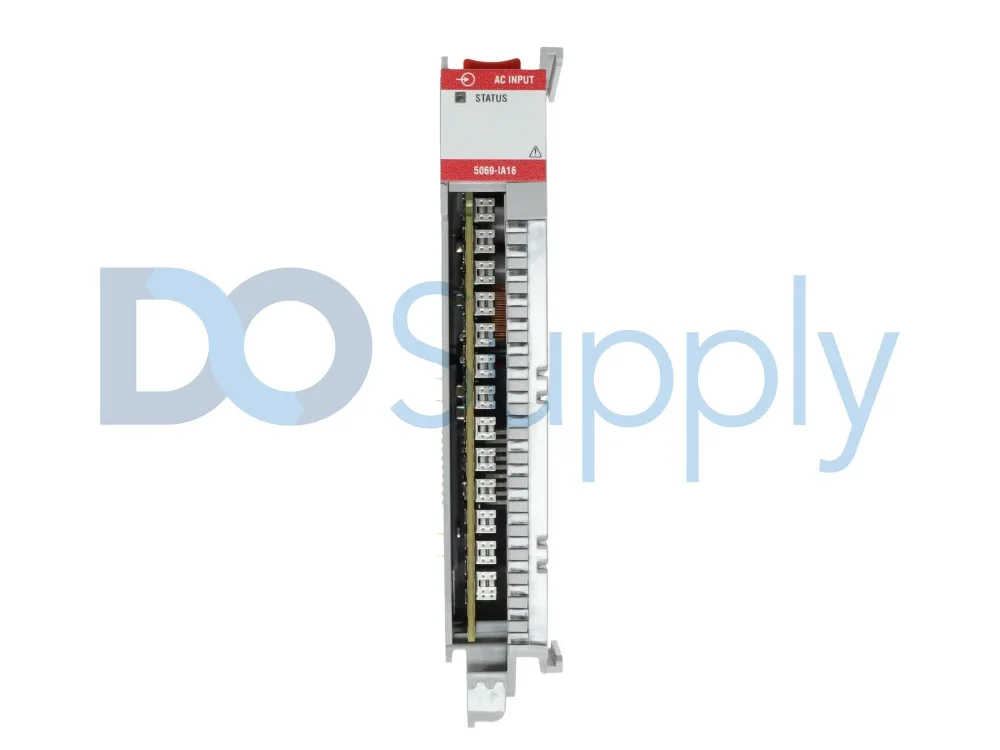
In contrast, the CompactLogix 5380 would only need a minimum depth of 4.5 inches. As such, it is easier to mount CompactLogix 5380 controllers in 6-inch-deep enclosures. Its width is also significantly minimized. In addition, a CompactLogix setup takes only about 6 inches, while a standard ControlLogix platform requires up to 11 inches of space. This means that every reduced inch of panel space minimizes enclosure costs and shipping volume.
Reliable Performance in Moderate Motion Control Systems
CompactLogix controllers are ideal for light robotics, printing, and packaging applications, as they support multiple axes of motion, with the number of supported axes varying by model. For instance, the CompactLogix 5380 series can support up to 32 axes, while the CompactLogix 5480 can support up to 150 axes of CIP motion over EtherNet/IP, seamlessly integrating with servo drives such as the Kinetix 5700 and Kinetix 5500.
ControlLogix controllers support up to 512 synchronized motion axes. This capacity is tailored for massive synchronized production/assembly, such as autobody assembly lines that require more than 200 servo welders or newspaper printing machines that require more than 40 printing heads. While typical packaging lines utilize only 4 to 12 servo axes. In addition, motion applications such as delta robots, indexing conveyors, and flying cutoff saws require 1 to 32 axes of motion.
For these mid-tier motion control applications, a CompactLogix controller is ideal, as it would require only a third of the ControlLogix hardware cost to handle trajectory planning, cam profiling, and electronic gearing functions with exactly the same precision.
Industrial Applications for CompactLogix Controllers
Food & Beverage
CompactLogix controllers are extensively deployed in the food and beverage industry for applications such as packaging, batch control, and recipe management. These applications often require compact, stainless-steel enclosures with washdown ratings, which makes the compact, rackless footprints of CompactLogix controllers ideal for such hygienic settings. ControlLogix controllers mainly manage CIP systems and large pasteurization vessels in dairy processing plants. While the CompactLogix controllers manage localized filling and packaging machines, including capping machines, labelers, fill lines, and case packers.
With such a distributed architecture, wiring requirements are drastically reduced because every machine-level CompactLogix controller communicates with the supervisory ControlLogix via EtherNet/IP. If a network jam occurs in one of the filler lines, the local CompactLogix controller will safely stop that machine while the rest of the production facility continues operating. This ensures higher system availability and improved production throughput.
Pharmaceuticals
CompactLogix controllers are a great choice for machine-level control in sterilization, labeling, and packaging systems. They enable adherence to GMP (Good Manufacturing Practices) through integration with MES. The pharmaceutical sterilization process involves monitoring blister packs and bottles across multiple stations. This is followed by the serialization process, which entails printing 2D data matrix codes, code verification, aggregating blister packs into cases, and finally sending feedback to the site server.
The CompactLogix controller communicates with vision systems using EtherNet/IP for real-time sequencing. ControlLogix controllers offer higher processing and memory capacity to manage vast serialization datasets for large-scale track-and-trace deployments.
Automotive
CompactLogix can be used in conveyors, robotic welding cells, and sub-assembly stations. The high availability and redundancy of ControlLogix are applicable in automotive plants and final assembly lines, such as general assembly, paint shop, and body shop. This is because a single downtime event can cost up to $20,000 per minute. The individual stations, such as the engine-sub assembly and door assembly, that supply the final assembly line are standalone cells. This means any cell can stop operations without affecting the main assembly line.
In these cells, CompactLogix controllers can exchange real-time data with the central ControlLogix via consumed tags. The dual design reduces downtime and hardware expenses. ControlLogix is crucial for mission-critical tasks that require high system availability, whereas the CompactLogix is sufficient for localized control tasks where the primary priorities are cost efficiency and a smaller footprint.
Water/Wastewater
CompactLogix controllers are highly effective for remote-control sites in wastewater/water treatment plants, distributed control networks, and pump-station applications. A central ControlLogix can connect to 20 remote pump and lift stations in a municipal water treatment system to manage heavy processing. The CompactLogix-controlled remote sites communicate with the central ControlLogix over fiber optics. They monitor water levels in wet wells, record flows, and schedule pumps. To operate reliably in extreme environmental conditions, such as -20°C to +60°C temperatures and high humidity, the CompactLogix controllers require conformal coating. Even though the ControlLogix series is engineered for extreme environmental ratings, it is very costly.
OEM Machinery
The CompactLogix is the widely preferred Allen-Bradley controller by OEMs for material handling, printing, and packaging equipment. This is because it provides a cost-effective and highly efficient solution to OEM-unique issues such as the need to hit aggressive price points, minimize field service calls, and support global customers. With a predictable, stable hardware platform, CompactLogix controllers help address these issues efficiently.
For example, a technician can replace a failed CompactLogix CPU and restore a program within minutes because CompactLogix controllers feature a readily available SD card for program recovery. Even though ControlLogix controllers also support SD cards, their modular chassis can make diagnosis difficult due to multiple potential failure points, including the Ethernet module and power supply.
Conclusion
CompactLogix is the premier, cost-effective solution for mid-range and standalone industrial automation systems, such as mid-sized robotic cells, OEM machinery, conveyors, and packaging lines. It provides efficient motion control and robust computational capabilities— such as CIP motion, high-speed task execution, electronic camming, and servo coordination—without the overly complex control framework, redundant communication modules, and full-scale chassis hardware of the ControlLogix. This allows for reduced power consumption, minimized panel space, and simpler electrical layout. Nevertheless, the ControlLogix family remains essential for enterprise-level automation, high-availability redundant systems, and extremely large, distributed machine control systems. If you happen to be migrating from an SLC 500 to a CompactLogix system, we have an article here going over what you may not know.
Not every control system needs a full chassis-based platform to get the job done. For standalone machines, compact panels, OEM equipment, and mid-range automation systems, CompactLogix can offer the right balance of performance, footprint, and cost. We at DO Supply can help you source replacement CompactLogix controllers, I/O modules, and compatible Allen-Bradley hardware to keep your machines running without overbuilding the solution, all backed by our two-year warranty. Give us a call today and let us be your one-stop shop for your automation needs.
DO Supply Inc. makes no representations as to the completeness, validity, correctness, suitability, or accuracy of any information on this website and will not be liable for any delays, omissions, or errors in this information or any losses, injuries, or damages arising from its display or use. All the information on this website is provided on an "as-is" basis. It is the reader's responsibility to verify their own facts.