When a Soft Starter Is the Wrong Choice
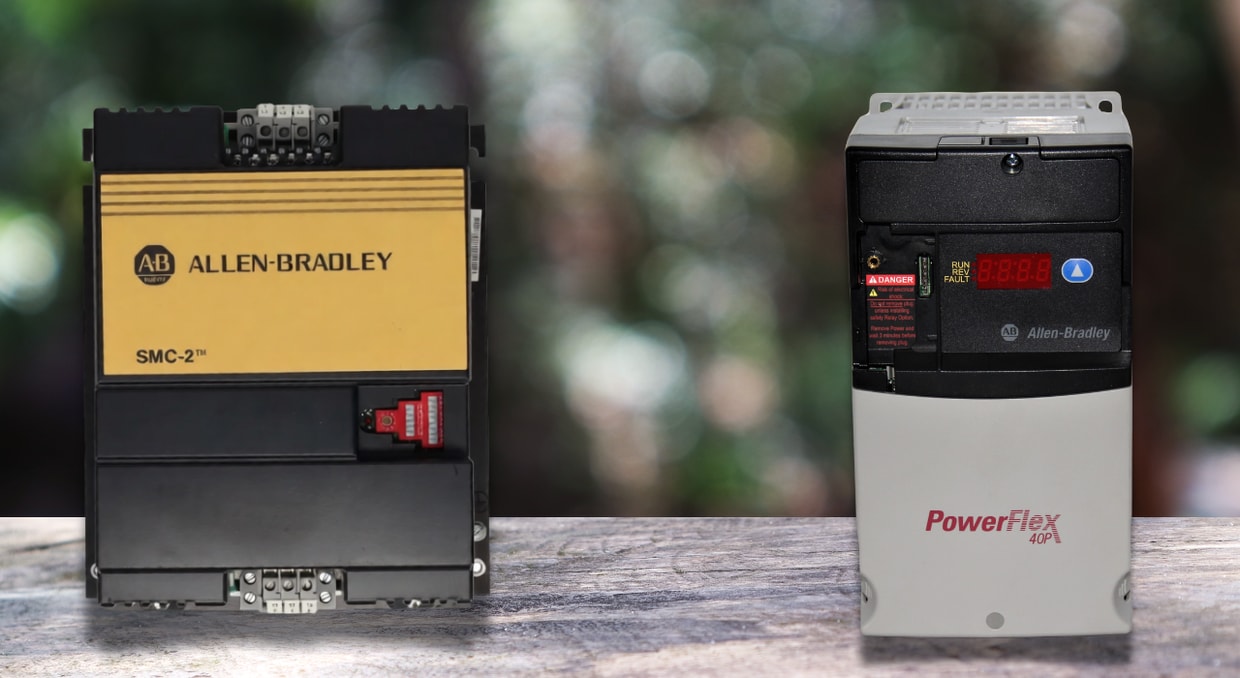
Motor control comes in all different shapes and sizes depending on its use case and feature set. Soft starters, for example, are a fantastic solution when the goal is to bring a motor up to speed gradually without subjecting your equipment to the sudden shock of an across-the-line start. By gradually controlling the power delivered to the motor during startup, they can reduce starting current, limit mechanical shock, and provide a smoother acceleration.
However, they aren’t a fit for every motor application. The biggest limitations usually appear after the motor starts. Once acceleration is complete, a soft starter typically supplies the motor at full line conditions, often through a bypass contactor, and provides far less continuous motor control than a variable-frequency drive.
There are also applications where a soft starter adds complexity and expense without providing much benefit. Understanding these situations can make the difference between choosing a controller that fits the application and forcing one into a job it was never designed to perform.
For Continuous Speed Control
The most incompatible situation for a soft starter is when the application requires changing motor speed during normal operation.
A standard soft starter operates by gradually ramping the voltage supplied to the motor until it accelerates to speed, then, if applicable, gradually slowing the motor back down when it needs to stop. However, between these events, the soft starter is out of the equation and cannot vary the motor speed on command.
This is where a variable-frequency drive (VFD) fits best. A VFD works differently. It converts the incoming AC power and produces an adjustable-frequency output, allowing motor speed to be increased or decreased as needed by the process. This makes a VFD a much better fit for applications where the required output changes during operation, such as:
- Pumps that need to maintain changing flow or pressure
- Fans that need adjustable airflow
- Conveyors that operate at different production speeds
- Mixers or process equipment that require multiple operating speeds
However, there are some exceptions with more advanced soft starters. For example, the Allen-Bradley SMC-50 includes a slow-speed function that can operate a motor at roughly 1% to 15% of normal speed for applications such as positioning or system setup. However, these specialized modes are not a substitute for the broad, continuous speed control provided by a VFD.
When the Load Needs Heavy Torque Control at Low Speeds
A difficult or heavily loaded start doesn’t automatically disqualify a soft starter. In fact, there are many heavy-duty soft starters on the market, such as Schneider Electric’s Altivar ATS480, which can meet applications up to 1200hp. These controllers offer features such as current limiting, torque control, and kickstart, which can help motors accelerate loads requiring substantial starting torque.
The problem arises when the application demands that torque after startup, especially while operating continuously at a reduced speed.
This is where we recommend a VFD again. They are suitable for maintaining these low speeds while providing sufficient torque to move a load along a conveyor. Examples include indexing conveyors, mixers, winding equipment, and other machinery in which low-speed operation is part of the normal process rather than simply part of startup.
For Applications Requiring Precise PLC Speed Reference
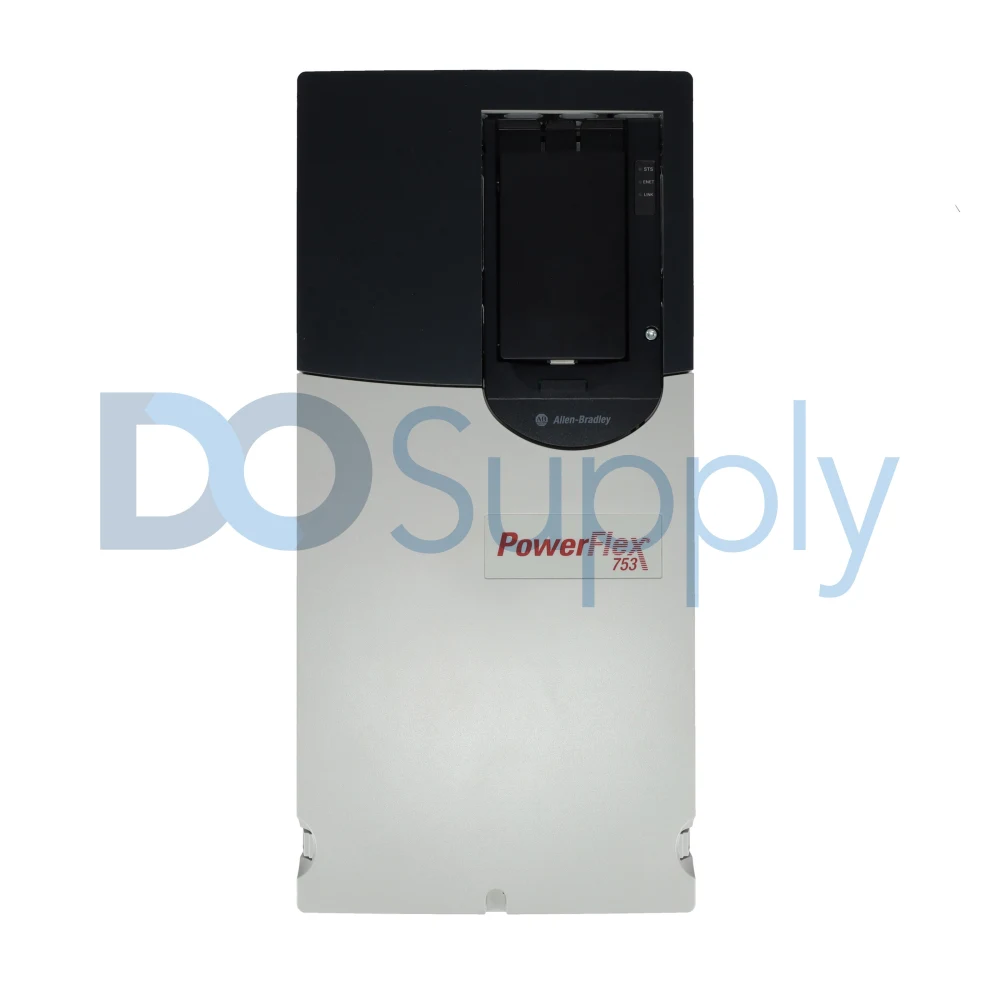
PLC integration isn’t a problem for modern, high-end soft starters. The SMC-50 and the SMC Flex from Allen-Bradley, for example, can communicate via Ethernet/IP with a 20-COMM-E adapter, which allows them to be started and stopped from multiple sources and to provide diagnostic information.
The issue is not PLC control, but the type of control the soft starter can provide. The connected PLC can supervise, start, or stop the motor, but it cannot use the soft starter as a continuously adjustable speed-control device as it can with a VFD. That being said, VFDs are more suitable for applications where the PLC needs to command motor speed continuously through:
- Closed-loop PID control
- Fieldbus speed references
- Analog speed commands
- Multi-speed presets
- Automatic speed changes based on machine state or process demand
Examples of this could be a PLC-controlled pump needed to increase or decrease motor speed to maintain a pressure setpoint. A conveyor might also need several commanded speeds for different production stages. So while a soft starter can be fully integrated into a PLC system for start-stop control and monitoring, it doesn’t offer the same level of in-depth control as a VFD.
When Fast or Controlled Braking is Required
Getting a motor up to speed is only half of the motor control equation. In many machines, how the motor stops is just as important as how it starts. Think about it: if a heavily loaded conveyor or a high-inertia machine were allowed to coast, it may continue moving for several seconds or even after power is removed. This can result in unpredictable positioning and even pose safety concerns.
In terms of soft starters, some models can stop in the opposite way they start: by reducing voltage and torque until the motor is deenergized. Some advanced soft starters do offer additional braking functions, but applications that regularly require rapid stops, tightly controlled deceleration, or repeatable stopping performance may be better suited to a VFD. Depending on the drive and application, braking can be handled through DC injection, dynamic braking resistors, or regenerative operation.
There are exceptions to this. High-end models such as the ATS480 and SMC-50 offer dedicated braking functions, including DC injection or other active braking methods. However, if braking is part of a highly repetitive motion profile, must be coordinated with continuously variable speed, or needs to recover regenerative energy, a VFD or regenerative drive is usually better suited to the task.
So it all boils down to this: a smooth stop and a controlled stop aren’t always the same thing. If stopping performance is an important part of the machine cycle, braking capability should be considered just as carefully as starting performance.
When Energy Savings Depend on Running Below Full Speed
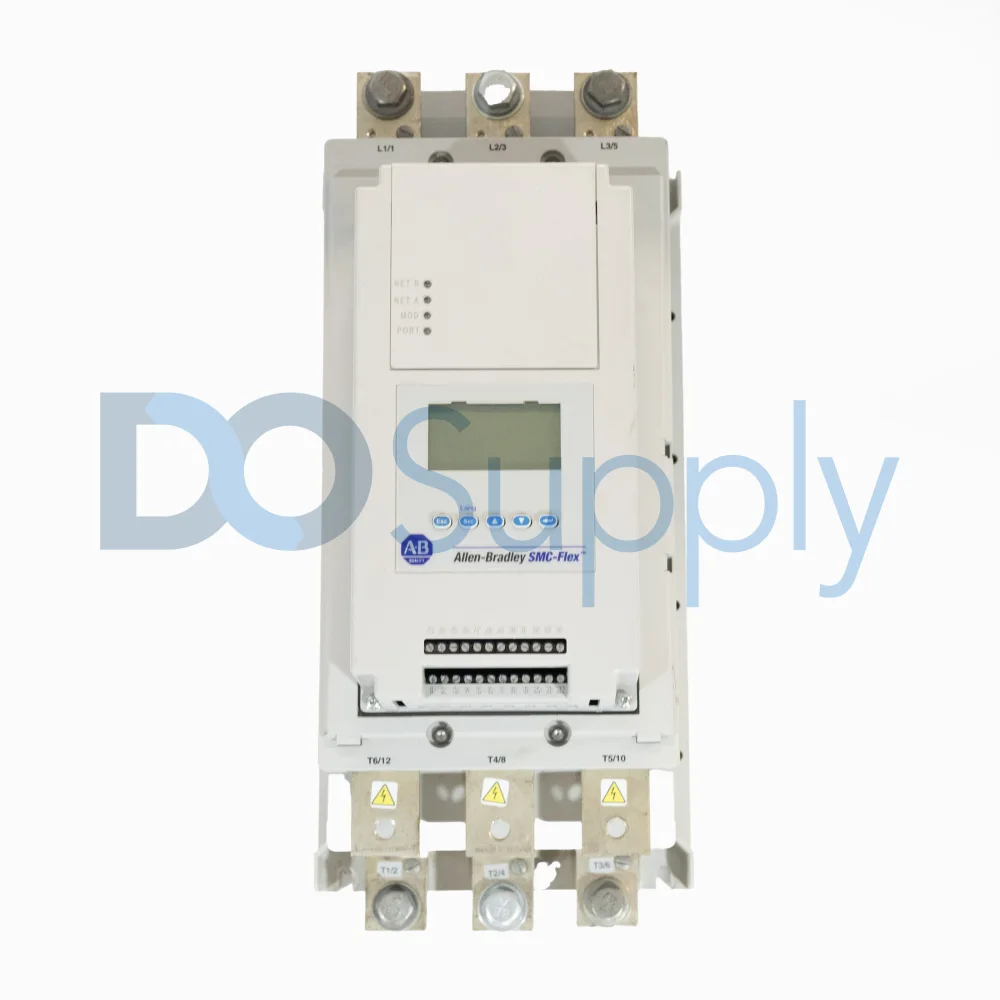
One way a soft starter can save money is by reducing the initial electrical and mechanical stress on a motion system. Still, it doesn’t necessarily reduce the energy the motor uses at full speed.
This can be applied to fans and pumps, as the process might not require maximum output at all times. If a pump only needs to deliver part of its rated flow, or a fan only needs a fraction of its maximum airflow, running the motor at full speed and controlling output with valves, dampers, or bypass systems can waste a significant amount of energy.
At the same time, VFDs are often employed for energy savings, alongside their other benefits. By reducing motor speed to match actual process demand, the drive can reduce the power required by many centrifugal loads. Because of the affinity laws, power consumption of pumps and fans varies approximately as the cube of speed. A centrifugal pump or fan running at 80% speed may only require roughly half the power of the same load operating at full speed, depending on the system.
So for equipment that runs most of the time at its full output, this may not matter. Though if it doesn’t, then the energy savings might just be significant enough to help with the return on investment for purchasing the VFD.
When You Don’t Need a Soft Starter at All
Sometimes a soft starter isn’t a good fit because it’s not needed to begin with.
A soft starter is a solution to across-the-line starts that are harsh enough to damage electrical equipment or inflict substantial shock to the system with each start. But if the motor can start across the line without that excessive mechanical shock or voltage drop, then adding a soft starter may provide little to no practical benefit. This is especially true for smaller motors, lightly loaded equipment, or machines that start only occasionally.
A conventional contactor-and-overload arrangement is simpler, less expensive, and easier to troubleshoot. It also avoids adding another electronic device that requires configuration, cooling, and eventual replacement. This makes them a more suitable alternative to a soft starter or a VFD if controlled motion isn’t required.
Final Thoughts
While soft starters fill an important role in motor control, they aren’t a universal replacement for conventional starters or VFDs. Their real strength isn’t so much motor control as it is in reducing the electrical and mechanical stress associated with starting and, in some cases, stopping a motor.
Problems arise when they are expected to do more than that. When a system calls for continuous speed regulation, PLC-commanded speed changes, controlled braking, and energy savings through reduced-speed operation, a VFD is what it needs instead. On the flip side, a simple across-the-line starter may be the better choice when there is no meaningful need to limit starting current or to reduce mechanical shock.
The key is to match your motor controller to what the motor actually needs to do during operation, not just at start-up. If you need help figuring out which soft starter you need, we have a selection guide to help you pick between basic and advanced soft starters here! If VFDs seem right for your application, check out our guide on what you need to know before buying one. We also have our customer service team on standby if you need help finding the right fit for your application. On top of that, we stock hundreds of different soft starters, VFDs, and contactors, so you know you will get a good fit. Give us a call today and see what we can DO for you!
DO Supply Inc. makes no representations as to the completeness, validity, correctness, suitability, or accuracy of any information on this website and will not be liable for any delays, omissions, or errors in this information or any losses, injuries, or damages arising from its display or use. All the information on this website is provided on an "as-is" basis. It is the reader's responsibility to verify their own facts.