Choosing Between Basic and Advanced Soft Starters
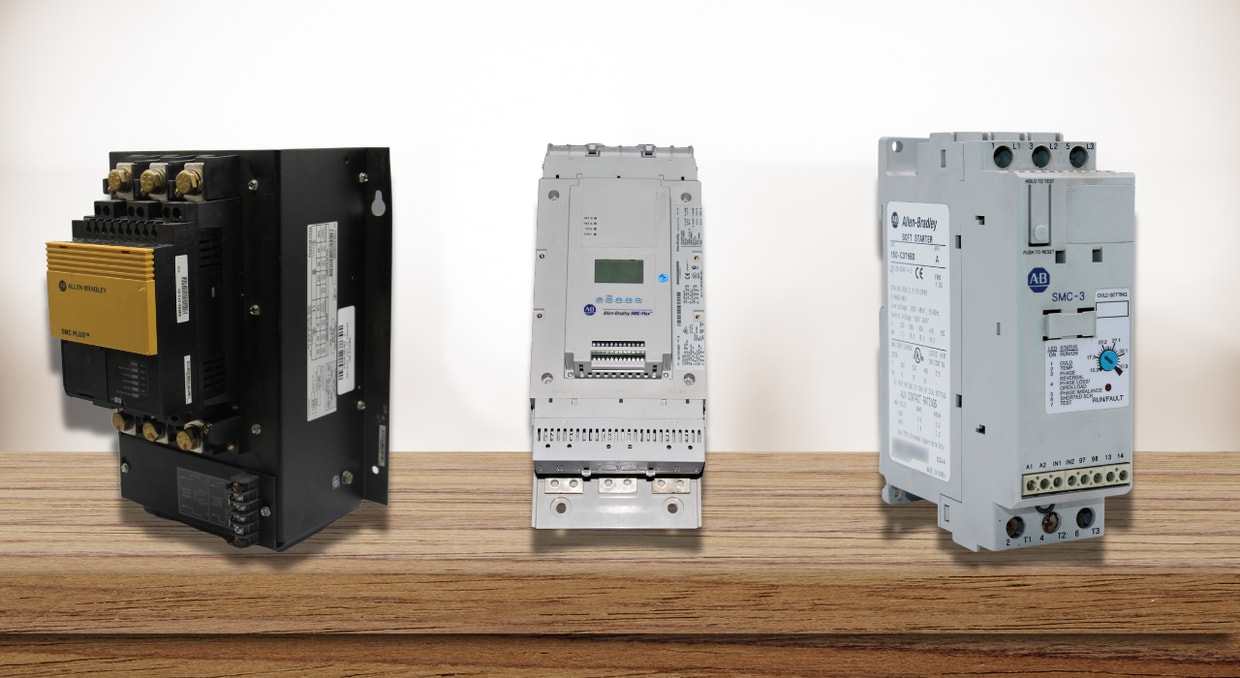
In a VFD-dominated industrial world, soft starters still have their place in motor control. They are a reliable way to protect your motors, the loads they move, and the systems they’re attached to. On top of that, they fit nicely into a budget-conscious build when a facility doesn’t need the extra features or programming that VFDs offer.
Not every soft starter is built for the same job. Some are basic starters designed for simple start-and-stop control. Others are more advanced units with stronger protection features, better diagnostics, communication options, and more control over how the motor starts and stops. Each type has its own advantages, limitations, and best-fit applications.
Why Choose a Soft Starter Over a VFD?
A variable frequency drive, or VFD, is the more common component to pair with a motor for industrial control. VFDs can control motor speed, improve efficiency in variable-speed applications, support advanced diagnostics, and, in higher-end models, offer features such as regenerative operation and predictive maintenance. Drives like the PowerFlex 755T series are a good example of how advanced VFD technology has become.
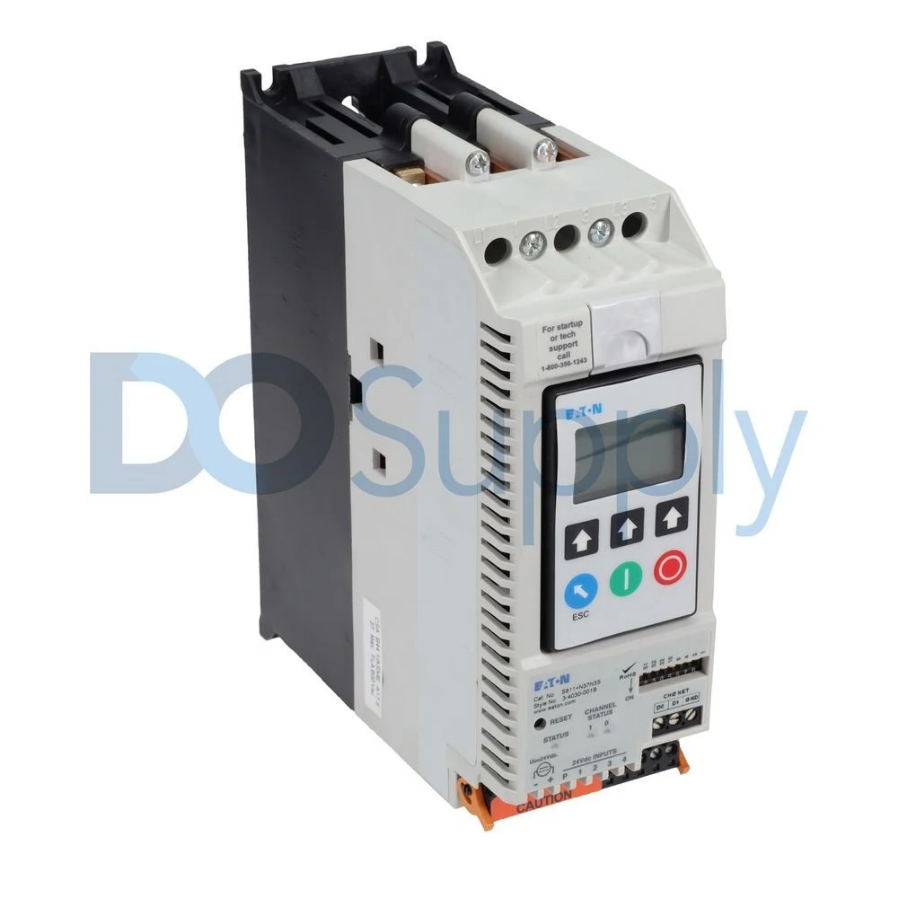
The tradeoff is cost and complexity. These features are valuable when the application calls for them, but not every motor needs full speed control or advanced drive functionality. For simpler applications, such as fans, pumps, compressors, conveyors, and other equipment that mainly need controlled start-stop operation, a VFD may be more than the job requires.
Sometimes the application just needs to ramp up to speed smoothly, avoid hard across-the-line starts, and ramp back down gently when it needs to stop. Perhaps even with a bit more control, for more complicated tasks. In those cases, a soft starter can be the better fit. It gives the facility smoother motor control without adding the full cost, setup, and feature set of a VFD. If you would like to dive a bit deeper into this comparison, we do have a dedicated article here for it!
What Makes a Soft Starter Basic?
A basic soft starter is built around one main job: Helping a motor start and stop more gently than traditional across-the-line starters. Instead of hammering the motor with high inrush current, the soft starter uses its SCRs to gradually increase the voltage during startup. This simplicity is the main idea that brings a wealth of benefits to motor control without overspending on features not needed for the application.
How Simple Soft Starters Work
Soft starters sit between a motor and the facility’s power source. Once power is applied, the three thyristors, or SCRs, within the soft starter act as electronic switches that gradually ramp the power up to your motor. This is what eliminates that large inrush current. Once the motor reaches full operating speed, the soft starter uses a bypass contactor to divert power from the SCRs directly to the motor, ensuring maximum efficiency. Some simple models allow the operator to adjust settings, such as ramp speed and shutdown processes.
Built-in Protection
Simple does not mean bare-bones. Many basic soft starters still include important protection features such as:
- Overload protection
- Phase loss detection
- Phase reversal protection
- Stall detection
- Shorted SCR detection
The difference is that these features are generally more limited than what you would find in a higher-end soft starter. For example, the Allen-Bradley SMC-3 is a good example of a compact, cost-effective soft starter for simpler applications. These little guys range from 3 to 480A, offer true three-phase control, and include overload protection, an integral bypass, and motor diagnostics.
Where Basic Soft Starters Fit
As we mentioned before, selecting the right soft starter is very application-dependent. Typically, an ideal scenario for a basic soft starter is a motor that starts, runs at full speed, then stops without needing speed changes or advanced process control. These applications include:
- Pumps that need reduced water hammer
- Fans that need smoother acceleration
- Conveyors that need less belt shock
- Compressors that need lower starting stress
- Chillers and other fixed-speed equipment
- Small and medium machines where cost and simplicity matter
Where Simple Becomes Too Basic
A trade-off with simple soft starters is control depth. While they do come with the necessary features for a motor to start and stop efficiently, they don’t offer the flexibility of advanced tuning, parameter sets, torque control, or diagnostics. Speed control during normal operation is also something you can expect these drives to ship without.
What Advanced Soft Starters Bring to the Table
More advanced soft starters take basic control up a notch by introducing more features while keeping the operating principles the same. It still helps a motor ramp up and down, but also gives operators more quality-of-life improvements and maintenance technicians more diagnostic information. These extra features begin to matter in applications that need to keep downtime to an absolute minimum.
More Features that Matter
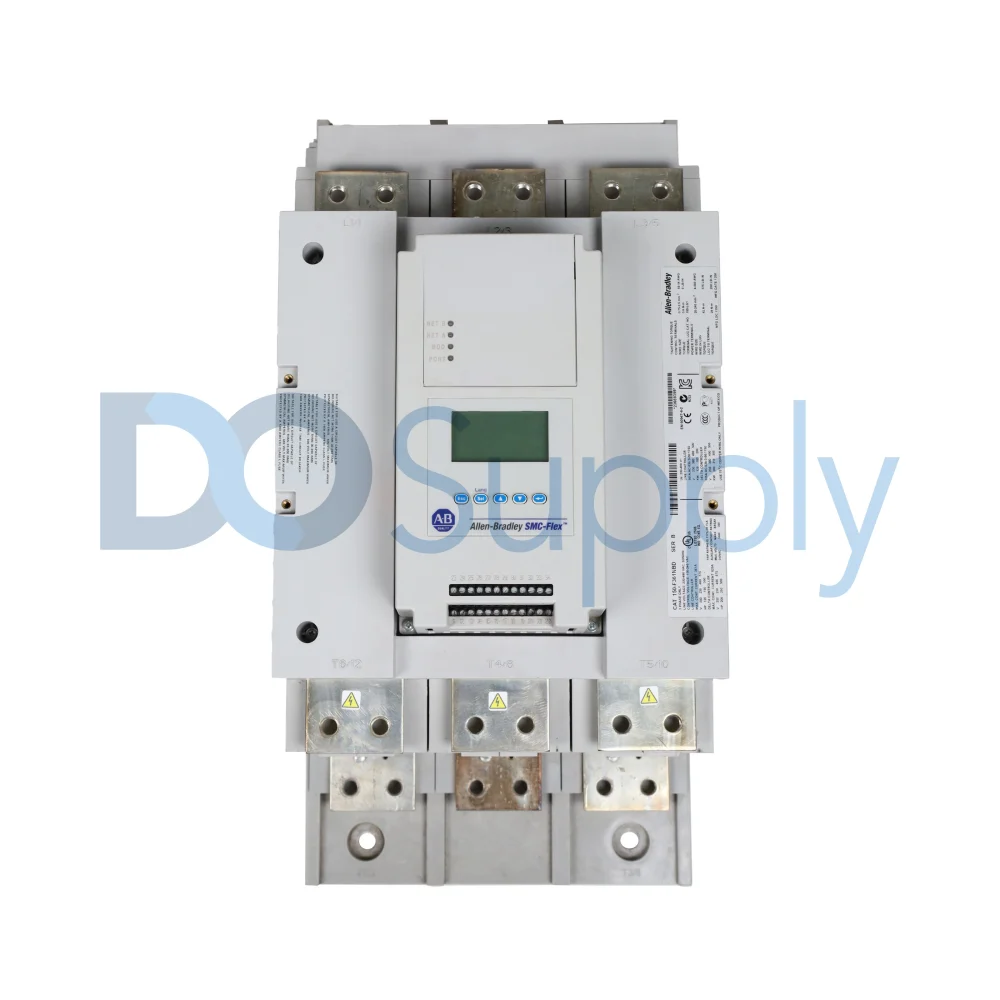
While basic soft starters may offer a simple voltage ramp and soft stop, advanced soft starters take it further. Depending on the model, they offer more control modes, such as:
- Current limit starting
- Torque control
- Pump control
- Braking
- Slow-speed operation
- Tuning profiles
- Communication options
- PLC integration
This control fits into more intricate operations, such as a pump needing to reduce water hammer or a high-inertia load needing braking support to reduce coast-down time. Some more nice-to-have features for soft starters include communication capabilities, energy and load awareness, and LCD and keypad programming.
Stronger Motor and Load Protection
Motor protection is one of the key reasons for buying a soft starter, so why not add more features? Instead of only watching for overload conditions, they may monitor for phase loss, phase imbalance, stall, jam, underload, overtemperature, excessive starts per hour, and other motor or load problems.
These features work together to help protect expensive or hard-to-reach equipment and prevent unplanned downtime. A fault on a small fan may be annoying, but a fault on a large pump, compressor, mixer, or conveyor line can stop a process.
The Allen-Bradley SMC-50 is a good example of a more advanced soft starter packed with features like these. They come with advanced monitoring and protection functions, communication capabilities, an energy-saving mode, and a scalable design to enhance flexibility. Standard SMC-50 soft starters are available from 108 to 480 A, while fully solid-state versions are available from 90 to 520 A.
Better Diagnostics and Visibility
One of the biggest advantages of an advanced soft starter is visibility. A basic unit may only provide a few status lights or a simple fault code. An advanced unit can give maintenance teams more useful information, such as motor current, voltage, power, thermal capacity, fault history, and operating status.
This can help make troubleshooting faster by giving the maintenance team a better understanding of what caused the fault and helping them determine whether the problem comes from the motor, the load, incoming power, or the starter itself.
Where Advanced Soft Starters Fit
Advanced soft starters sit between basic soft starters and VFDs, offering a comfortable middle ground, specifically for motors that run at full speed once started but need better control, protection, and visibility during startup and shutdown.
Pumps
Pumps are among the strongest applications for advanced soft starters. Controlled starting helps reduce inrush current and mechanical shock, while controlled stopping can help limit water hammer. This is especially useful in water treatment, irrigation, cooling systems, and process fluid applications.
Conveyors
Conveyors also benefit from smoother acceleration and deceleration, especially with heavy loads. A soft starter can prevent jerks when starting belts, couplings, or heavily loaded products. This helps reduce mechanical wear, enables more controlled movement, and increases the system’s longevity.
Mixers, Crushers, and Heavy Loads
Heavy-duty loads may need more protection than a basic starter can offer. Advanced soft starters can help detect jams, stalls, overloads, and abnormal load behavior.
Remote or Critical Equipment
For hard-to-reach equipment, it is very helpful to have soft starters that can communicate with other equipment. Communication and diagnostic features also allow maintenance teams to see faults, current draw, thermal status, and operating conditions without relying only on cabinet-level indicators.
Final Thoughts
At the end of the day, the best choice isn’t the most advanced one, but the one that matches the application and your future goals for it. A basic soft starter can be the right answer for simple, predictable loads. On the other hand, processes that need a bit more connectivity or features will benefit from the more advanced soft starters. This is especially true for processes that demand more uptime and motor protection. The key is knowing where the motor lives, what the load demands, and how much control the system truly needs.
If you are comparing soft starter options for your facility or projects, we at DO Supply can help! We carry industrial motor control equipment, including Allen-Bradley SMC soft starters and related components. We also offer our repair services to help extend the life of your existing equipment. So whether you need a simple soft starter for straightforward motor applications or a more advanced unit for stronger protection and diagnostics, give us a call today, and our team can help you pair the right starter to your system!
DO Supply Inc. makes no representations as to the completeness, validity, correctness, suitability, or accuracy of any information on this website and will not be liable for any delays, omissions, or errors in this information or any losses, injuries, or damages arising from its display or use. All the information on this website is provided on an "as-is" basis. It is the reader's responsibility to verify their own facts.