AC Drive Derating: When and Why It Matters
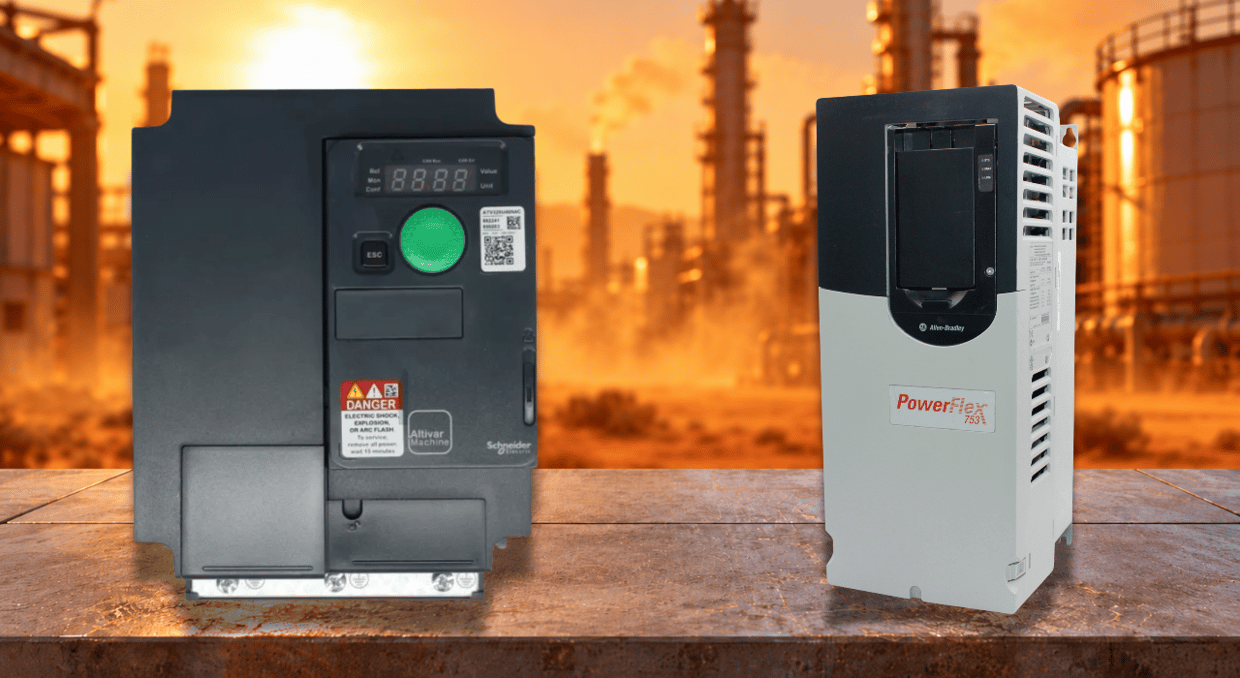
Sizing the right AC drive can be a bit complicated. After all, you’re met with motor nameplates to match, power supply considerations, and environmental parameters. Though for operations in hotter-than-normal temperatures, at high elevations, or even with single-phase power, things get even trickier. These conditions call for derating your AC drive.
Derating an AC drive means lowering its maximum continuous current or output capacity below its nameplate rating due to environmental conditions, such as high temperature, elevated altitude, and phase conversion. Today we will walk you through when it’s appropriate to derate your AC drive and why it is beneficial.
Why Derate an AC Drive in the First Place?
Derating an AC drive is important to keep the system optimized during operation in extreme conditions. It involves lowering your drive’s current or output in increments, depending on the severity of the condition. This will help protect the drive from overheating and extend its longevity at the sacrifice of performance. This design safety net can also be seen in other devices you use every day, such as a computer’s CPU throttling when it’s not sufficiently cooled, or a newer car entering limp mode due to a cooling system malfunction. The difference with AC drives is that the operator usually has to program the VFD specifically for the conditions, rather than expecting it to adjust automatically.
Derating for High Temperature
When it comes to temperature, AC drives typically operate within 0 to 40° C (32 to 104° F) for enclosed systems, sometimes extending up to 50° C (122° F) for open architectures. When temperatures begin to rise, it’s important to match the load % with the temperature the drive will see. Usually, graphs are included in the drive’s manual to help you match the proper derating to the ambient temperature.
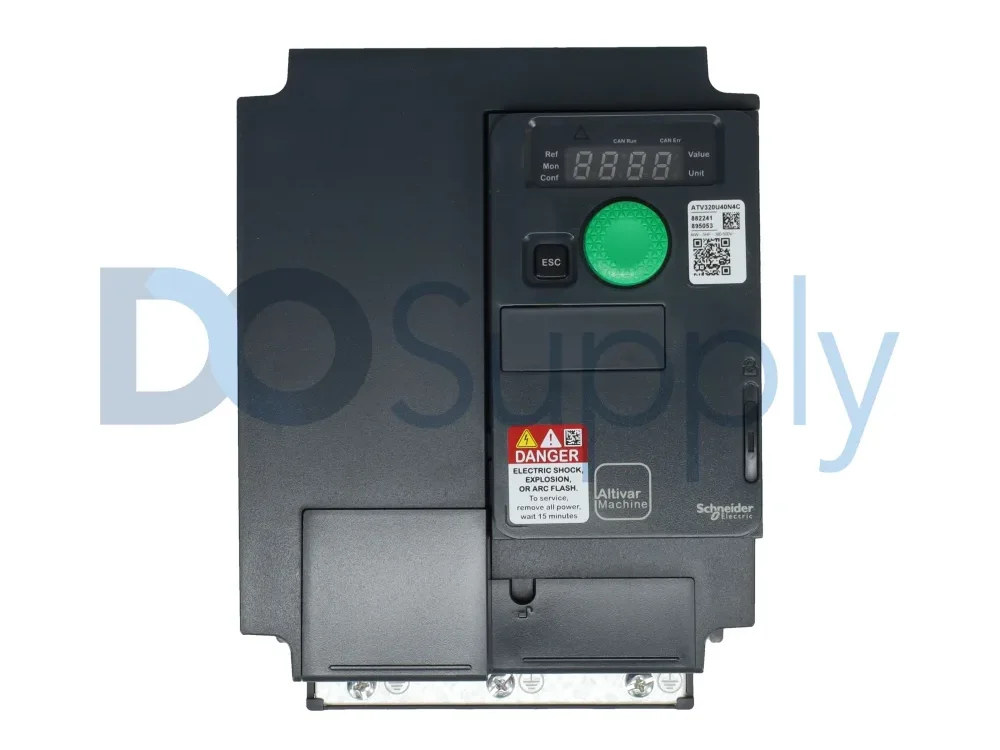
It is important to keep in mind that not all drives are created equal. AC drives, like the Altivar 32/320 from Schneider Electric, are built for temperatures from -10 to 50° C (14 to 122° F), but can be derated up to 60° C (140° F) when following the derating curves based on temperature and switching frequency. Then there is the PowerFlex 755, where temperature derating depends heavily on the enclosure and frame configuration. For example, Rockwell Automation states that a NEMA Type 12 PowerFlex 755 is limited to a maximum ambient temperature of 40°C (104°F) and cannot simply be derated for operation above that temperature. Other PowerFlex 755 configurations may have published temperature/load derating curves, making it important to check the technical data for the specific drive being used.
When measuring the ambient temperature at the installation site, keep in mind that the drive will also produce heat, so the ambient temperature may be higher as a result. Having thermal headroom or extra ventilation during the install will help prevent the AC drive from overheating.
Derating for High Altitude
Derating for higher altitudes is conceptually similar to derating for higher ambient temperatures. As altitude increases, atmospheric pressure decreases, making the ambient air less dense. Because of this, cooling systems with thin air become less effective than they would be at sea level. This causes components to heat up faster than you might expect, so they need to be derated to avoid damage.
Using the same Altivar 32/320 AC drive as in the last section, Schneider Electric specifies a maximum altitude without derating of 1000m (3300ft). You would have to derate the drive’s nominal current by 1% for each additional 100m (330ft), up to a maximum of 3000m (10,000ft).
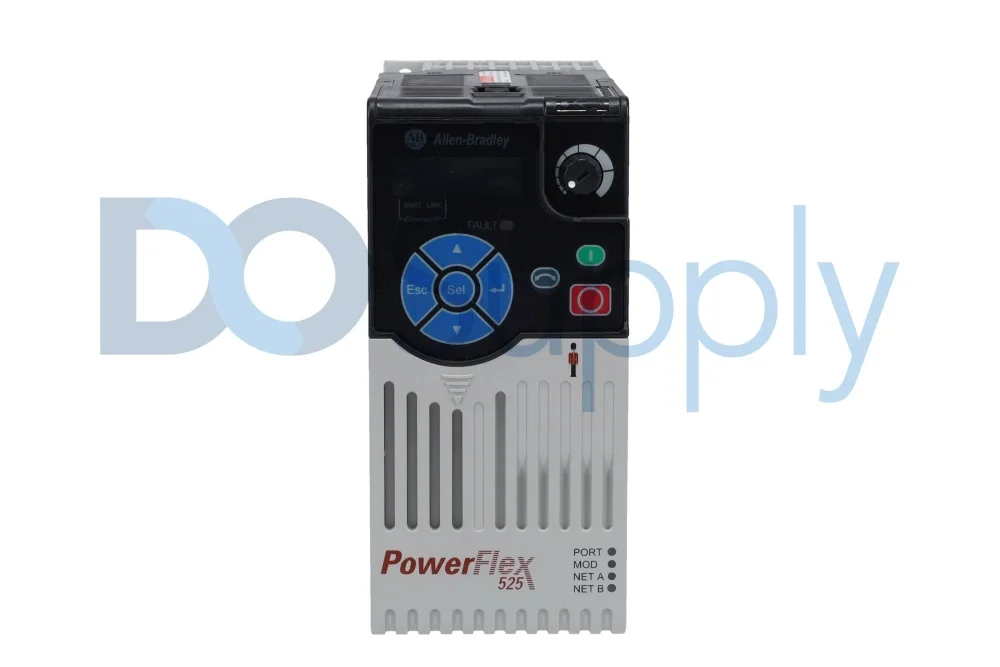
The Allen-Bradley PowerFlex 525 AC drives also tell a similar story. The altitude ceiling before a drive needs to be derated is 1000m (3300ft) as well. They call for two different derating methods if the drive is installed at an altitude higher than 1000m:
- Derate the max ambient temperature by 5° C for every additional 1000 meters.
- Derate the maximum output current by 10% for every additional 1000 meters.
When Derating Calls for Upsizing
To put this into perspective, let’s say a facility at sea level needs to run a 10 HP, 480V motor with a nameplate current of 15 A. They bought a PowerFlex 525 25B-D017N104 because it’s a 480V AC drive with an output current rating of 17 A and a horsepower rating of 10 HP. The system works wonderfully when put together.
Now, due to unforeseen circumstances, this company has to relocate to a warehouse at an altitude of 3,000 m (9,840ft). The technician, who understands the fundamentals of AC drive derating, quickly realized that this drive is no longer suitable for the job. That’s because for every additional kilometer, the drive needs to be derated by 10% of its maximum output current. Since it’s 2 kilometers higher than the altitude ceiling, it needs to be derated by 20%. Quick napkin math shows 17A × 0.80 = 13.6A, which is underpowered for the 15A motor they want to power.
The solution to this problem was to order a 15 HP PowerFlex 525, 25B-D024N104, which has a rated output of 24 A. Applying the same derating math as before: 24A × 0.80 = 19.2A. Now the drive has enough power to run the motor when properly derated, with spare headroom.
Derating an AC Drive for Phase
The last method of derating is a bit more complicated than the last two. Single-phase AC systems are commonly used in residential, small-business, or rural agricultural areas due to their lower power demand or the cost of energy upgrades. Because of this, compromises are necessary if a single-phase system is to run three-phase equipment.
Using Single-Phase Power for a Three-Phase Motor
One solution for a single-phase system is to use an AC drive to operate a three-phase motor from a single-phase source. The drive first rectifies the incoming AC power to DC at the DC bus, then its inverter section creates the three-phase output used by the motor. However, this does not necessarily mean that any three-phase AC drive can simply be connected to single-phase power at its full rating.
Normally, a drive designed for three-phase power distributes the incoming power evenly across all three input legs. When it is operated on single-phase power, the input rectifier and DC bus must work considerably harder. Fewer rectifier diodes are carrying the incoming current, while the DC bus capacitors also experience greater ripple. The result is additional electrical and thermal stress within the drive even though the motor is still receiving three-phase output power. Because of this, significant derating is encouraged to avoid damaging the drive.
For example, the PowerFlex 525 can be used with single-phase power on the three-phase AC drive variants, but only if the drive is derated by a whopping 65% of its rated current. A 20 amp drive, for example, would therefore only be treated as having 7 amps of available output current when used this way. This is due to the drive not having a DC bus choke, which forces the capacitors to work harder to smooth the DC bus ripple from the single-phase AC power, causing them to heat up in the process. A PowerFlex 750 includes these DC bus chokes and is derated by 50%, rather than the 65% seen with the 525 AC drives.
Not every application requires this type of derating, either. Some AC drives are specifically manufactured for single-phase input and three-phase output. Since their input stages are designed for single-phase power from the outset, they can simply be selected based on their published output current ratings rather than using a standard three-phase drive and substantially oversizing it. For example, the PowerFlex 525 series AC drives have dedicated single-phase input models, such as the 25B-V6P0N104.
Final Thoughts
When designing a system at higher altitudes, in hotter conditions, or for single-phase power, derating the AC drive is an optimal and recommended way to keep it running smoothly and avoid overheating and overstressing its internal components. However, there is no set derating standard across the board. We recommend that you research your specific drive and understand its derating process, if applicable.
For more help finding a drive that’s readily available to be derated for your system, give DO Supply a call today! We carry drives and accessories from popular brands you can trust. We also back them with our two-year warranty to top it all off.
DO Supply Inc. makes no representations as to the completeness, validity, correctness, suitability, or accuracy of any information on this website and will not be liable for any delays, omissions, or errors in this information or any losses, injuries, or damages arising from its display or use. All the information on this website is provided on an "as-is" basis. It is the reader's responsibility to verify their own facts.