Managed Vs Unmanaged Switches in Industrial Automation
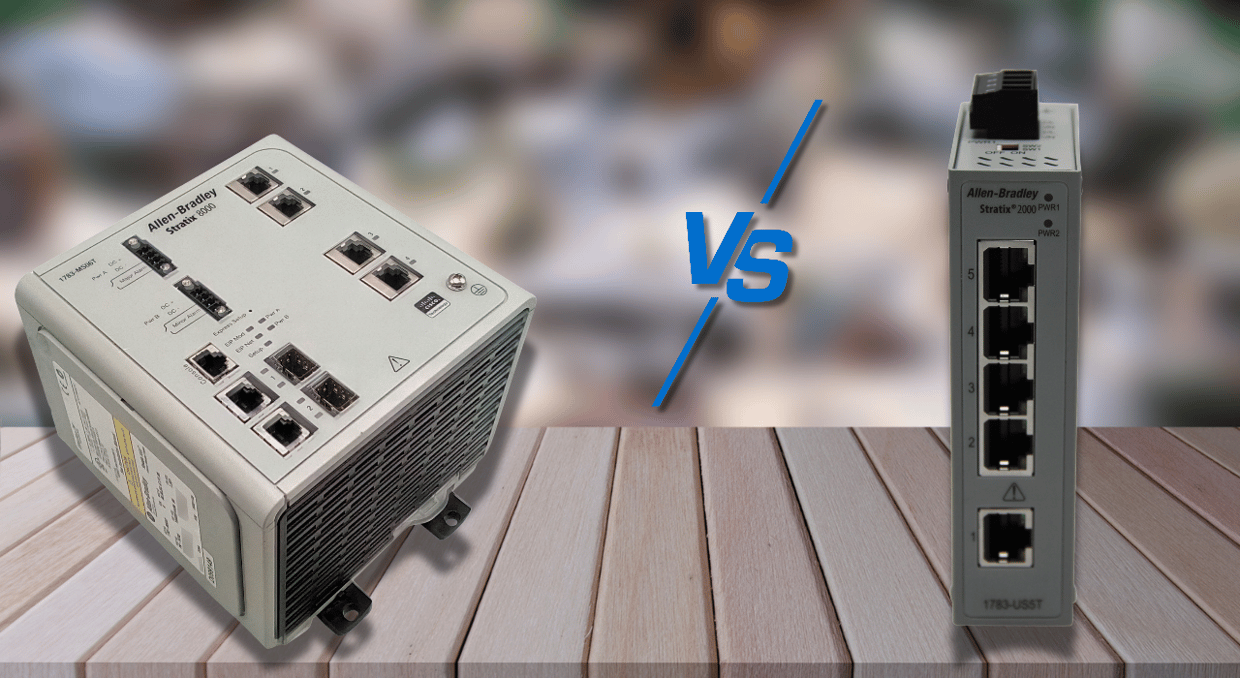
Industrial automation systems rely on industry-grade Ethernet switches to provide reliable communication among Variable Frequency Drives (VFDs), Programmable Logic Controllers (PLCs), remote I/O modules, HMIs (Human-Machine Interfaces), and other networked devices. Selecting the right Ethernet switch is a key consideration when designing, upgrading, or expanding an industrial network.
Industrial Ethernet switches are primarily classified as unmanaged or managed. Unmanaged switches require no configuration and generally provide basic plug-and-play connectivity. These switches are used in small, basic networks that do not need redundancy, traffic control, advanced monitoring, or diagnostic capabilities.
Conversely, managed Ethernet switches offer control over network functionality, providing greater visibility. They also support diagnostic protocols, including the Simple Network Management Protocol (SNMP). In addition, various managed Ethernet switch models do support access control, port mirroring, multicast management, network redundancy, port configuration, virtual local area networks (VLANs), and Quality of Service (QoS) features. Selecting the right Ethernet switch lets control engineers and network administrators quickly detect communication issues, prioritize critical industrial traffic, strengthen cybersecurity, and improve network availability.
Managed Switches
A managed switch gives you full control over your network, enabling informed management, optimization, and adaptability. Network administrators need managed switches to program and monitor network performance in real time, making them a robust solution for large or complex automation ecosystems. They support advanced features like VLANs, which separate data packets for better QoS.
In addition, industrial systems with managed Ethernet switches offer remote management capabilities, allowing administrators to configure settings, update firmware, and troubleshoot networks from anywhere. This matters for IT teams looking to optimize networks for security and performance. Managed PoE (Power over Ethernet) switches also include remote power management, enabling operators to power-cycle and hard-reset individual devices over the network.
Key Features of Managed Switches
Managed industrial Ethernet switches provide advanced configuration, monitoring, diagnostic, and security features that are typically limited or unavailable in smart-managed and unmanaged switches.
VLAN Segmentation
Managed switches are most commonly selected because of VLAN segmentation. To keep traffic isolated within a single physical switch, a VLAN can create a separate logical network by using the IEEE 802.1Q/MAC VLAN protocol for VLAN tagging. This means point-of-sale traffic can run completely independently of guest Wi-Fi in retail or restaurant settings. IoT devices are safely quarantined from primary business workstations in an office environment.
Quality of Service (QoS)
QoS enables critical applications to get bandwidth by letting managed switches prioritize specific traffic types, even during network congestion. By utilizing 802.1p and DSCP (Differentiated Services Code Point) priority tagging, the switch can manage queues and classify data on a per-flow or per-port basis. During a large file transfer, VoIP calls stay clear, and video stream quality is not degraded.
PoE and PoE+ Power Management
Power over Ethernet (PoE) enables the switch to supply electrical power and data to VoIP phones, IP cameras, and access points over a single Ethernet cable, eliminating the need for separate power adapters. Administrators can schedule automated device reboots and configure PoE auto-recovery to power-cycle frozen cameras using managed switches.
Security and Access Control
Managed switches support strict access policies that block unauthorized devices from accessing the network. IEEE 802.1X forces devices to authenticate before accessing the network, while ACLs restrict traffic between network resources and specific hosts. Dynamic Host Configuration Protocol (DHCP) snooping operates by blocking rogue DHCP servers from unauthorized IP addresses. Storm control prevents network performance degradation, while port security limits the number of MAC addresses permitted per interface.
Monitoring, Logging, and Remote Management
Deploying a managed switch at a remote site clearly demonstrates the value of port mirroring, syslog, and Simple Network Management Protocol (SNMP). An administrator can review event logs, troubleshoot a sluggish network, audit logs, and monitor issues right from their laptop.
Limitations of Managed Switches
Despite offering advanced control, managed switches come with distinct challenges, especially when deployed on factory floors. The main drawbacks of managed switches in industrial automation include:
- High Initial Costs: Managed switches require a higher upfront budget than unmanaged options, leading to the inflation of project expenditure for smaller projects.
- Complex Configuration: Engineers require advanced networking skills to manually configure parameters such as VLANs, addresses, and priority queues
- Ongoing Maintenance: They demand continuous maintenance, which includes regular configuration backups, security updates, and firmware patches to block cyber threats and fix bugs.
- Longer Boot Times: It takes several minutes for a managed switch to load its operating system or to fully boot when power is cycled on a machine.
- Over-Engineering Risks: The added complexity in these switches is often unnecessary since some features such as SNMP monitoring remain unused in basic machine cells.
- Cybersecurity Targets: They are open to cyber-attacks because of the web login window and IP address. To prevent unauthorized access, they require constant security monitoring.
Unmanaged Switches
To determine connection parameters, unmanaged switches utilize auto-negotiated ports. This plug-and-play approach simplifies configuration and minimizes manual intervention. They lack a management interface; therefore, unmanaged switches do not support VLANs. Consequently, all the equipment connected to the switch belongs to a single broadcast domain.
To dynamically map each connected host’s MAC address to its port, unmanaged switches usually use a media access control (MAC) address table. This MAC address table minimizes network interference and data collisions by ensuring each port is functioning as an independent collision domain. When two devices try to send data simultaneously within the same domain, they cause a collision.
During a collision, the switch drops both packets, forcing the end devices to retransmit. A broadcast domain is a network segment where every device can receive a broadcast. To manage traffic across network devices, Unmanaged switches function without IP addresses since they forward Ethernet frames based on MAC addresses.
Key Features of Unmanaged Switches
- Plug-and-Play Operation: They do not require any IP address assignment, command-line configuration, or web interface setup. This means field technicians can install them instantly.
- Rugged Industrial Build: As opposed to office-grade switches, the unmanaged industrial switches feature wide operating temperatures ranging between 400C to 750C for harsh environmental settings, DIN rail mounting, and durable metal housing.
- Automatic Negotiation: Auto-MDI/MDIX crossover settings, duplex modes, and port speeds can be handled by internal hardware; thus, they do not require manual adjustments.
- Unfiltered Traffic Forwarding: They act as an enhanced replacement for basic hubs by forwarding data frames to other ports and automatically learning MAC addresses
- Cost-Effectiveness: They offer significantly low sourcing and hardware expenditure because they lack management firmware, microprocessors, and processing overhead.
Limitations of Unmanaged Switches
In contemporary, integrated industrial automation environments, unmanaged switches create performance bottlenecks and present significant architectural vulnerabilities.
- Absence of QoS: These switches can process all frames using a flat first-in, first-out technique because they lack deterministic traffic prioritization. High-bandwidth broadcast traffic in critical EtherNet/IP or the PROFINET control loops can cause packet loss and jitter.
- Zero Network Redundancy: They omit loop-prevention mechanisms such as Media Redundancy Protocol (MRP) or Spanning Tree Protocol (STP). This means that any redundant cable connection or physical loop can cause a crippling broadcast storm that halts PLC communications and overwhelms the bandwidth.
- No Diagnostic Visibility: Unmanaged switches operate as network “blind spots” since they do not require any Simple Network Management Protocol (SNMP) or IP address agent. As a result, engineers cannot perform topology mapping, track packet errors, or monitor port metrics remotely.
- Lack of Logical Segmentation: They do not read or process IEEE 802.1Q VLAN tags; hence, they cannot segregate traffic, forcing all the connected devices into a single broadcast domain, amplifying network noise, and exposing vulnerable field equipment
- Inadequate Security Posture: These switches leave the local Layer 2 fabric entirely open by permitting rogue physical connections and unauthenticated access. They do not support features such as authentication mechanisms, port security, and MAC address filtering.
Key Differences Between Managed vs Unmanaged Switches
- Freedom of Configuration: With managed switches, users can monitor, configure, and manage the LAN. They let users manage traffic, segment smaller devices, and create new LANs. In the event of network or device failure, the advanced features of managed network switches facilitate data recovery. In contrast, unmanaged switches support only fixed network configurations despite their ease of use. This makes them suitable for small, simple industrial networks with basic connectivity requirements and limited data traffic.
- Performance Management: Unmanaged network switches offer built-in QoS services and plug-and-play simplicity. This ensures hassle-free, instant operation. Conversely, managed network switches optimize performance by prioritizing specific traffic channels. They monitor the performance of every device connected to the LAN by leveraging SNMP. Managed network switches use SNMP to manage the connected network and devices remotely, eliminating the need for physical intervention.
- Security Features: Unmanaged switches strictly depend on basic security features like lockable port covers that prevent direct tampering with the devices. Managed switches feature advanced security features that can detect active threats and neutralize them in real time. This safeguards the network administration controls.
- Costs: Owing to the extensive capabilities of managed switches, they command a premium price in comparison to unmanaged switches that are highly affordable.
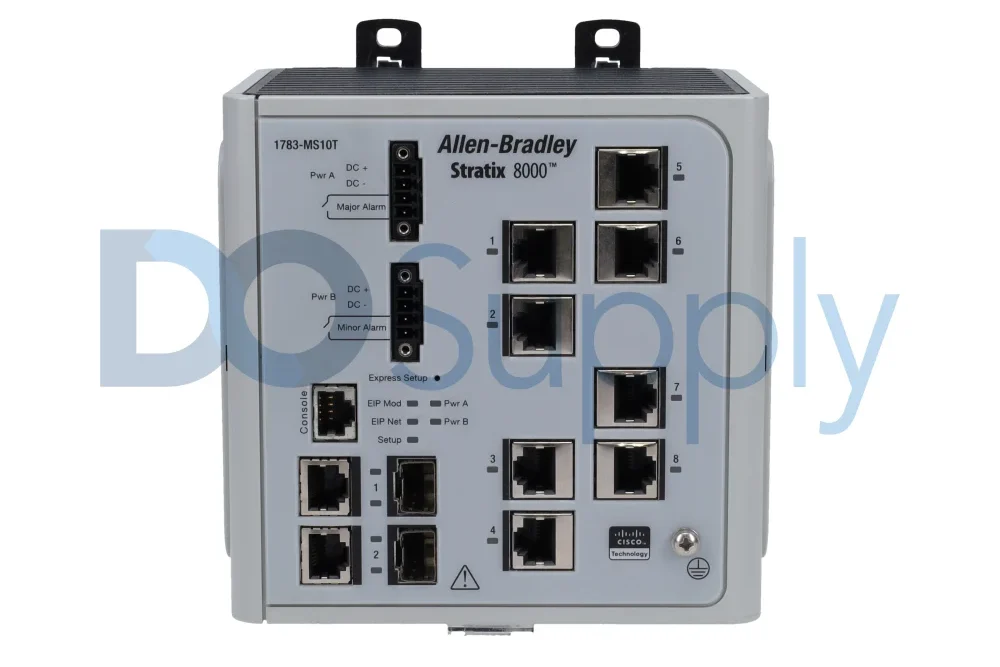
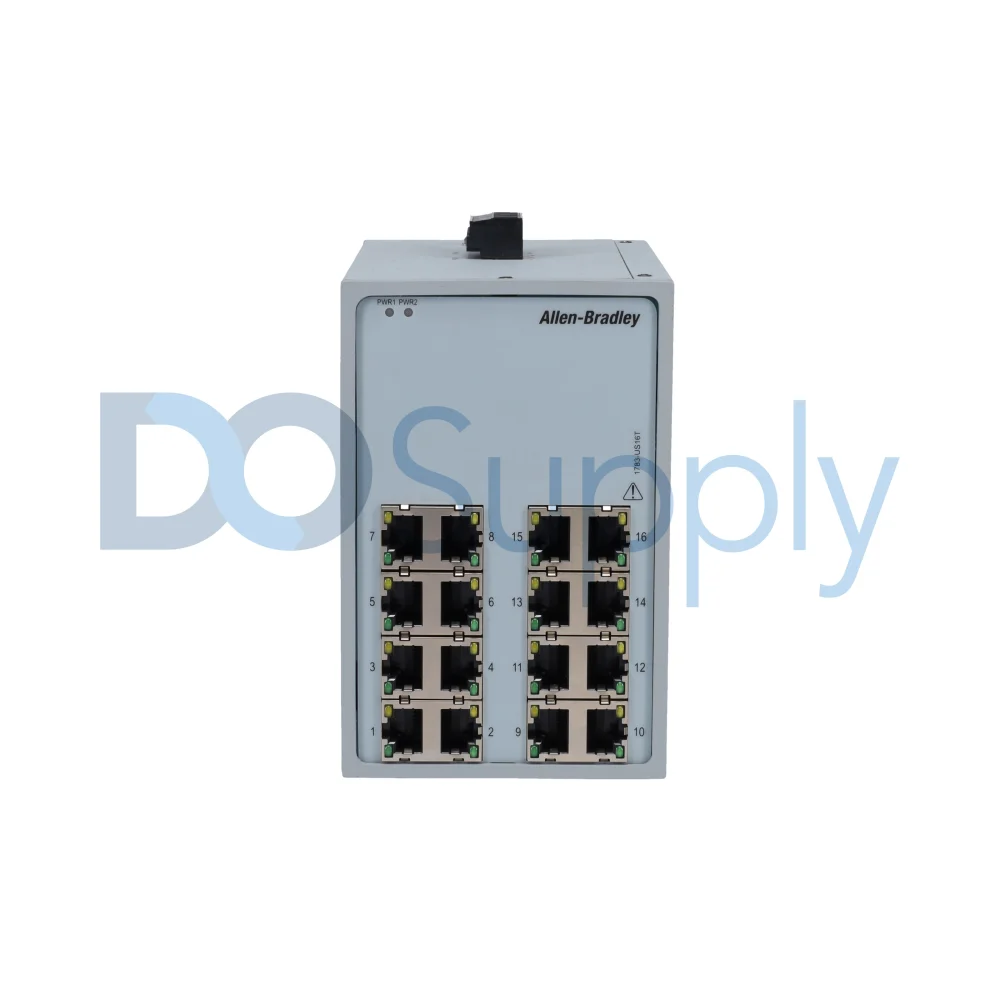
If you are in the market for a new industrial switch, DO Supply has what you are looking for! We stock unmanaged switches, such as the Allen-Bradley Stratix 2000 family, and managed switches, such as the Stratix 8000. We also include a two-year warranty with every product we sell. If you are looking for something specific, contact our customer support team today! If you would like to learn more about Stratix switches, we have a comparison of the Stratix 5900 to traditional industrial routers here.
DO Supply Inc. makes no representations as to the completeness, validity, correctness, suitability, or accuracy of any information on this website and will not be liable for any delays, omissions, or errors in this information or any losses, injuries, or damages arising from its display or use. All the information on this website is provided on an "as-is" basis. It is the reader's responsibility to verify their own facts.