We found 67 posts about Technology Insights from DO Supply, a global automation parts
reseller focused on hard-to-find and obsolete industrial automation products.
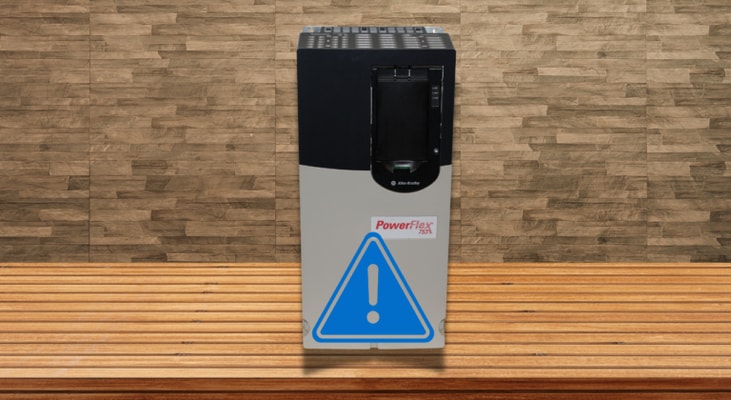
In PowerFlex variable-frequency drives (VFDs), the DC bus functions as the internal power bridge and electrical reservoir between the AC input rectifier and the output inverter stage. Once the incoming AC line voltage is rectified, the DC bus capacitors smooth and stabilize the resulting DC bus voltage by reducing voltage ripple, thereby delivering a steady DC supply to the inverter. They also temporarily absorb the regenerative energy produced during overhauling-load conditions or motor deceleration, reducing rapid voltage fluctuations and improving energy efficiency. This article provides a comprehensive overview of the fundamentals of DC bus voltage in Allen-Bradley PowerFlex drives. Knowledge of pre-charge drive operation, DC bus capacitors, shared DC bus configurations, DC bus regulation, regenerative energy management, and common DC bus-related faults enables engineers and maintenance personnel to maximize the reliability of PowerFlex drives, improve overall system performance...
When it comes to installing motor drives, there are three different ways to do it: Exactly by the book to ensure maximum efficiency, the “yeah, that looks about right” way, and the wrong way. The by-the-book way will go exactly as you would expect. It’s the “about right” way that may lead to unforeseen struggles, such as a hot motor, when the smaller details are overlooked. Believe us, there is no shame in these installs, and if you’re wondering why your motors are getting hot after a VFD install, stick around to find out why. Heat is the leading cause of industrial motor failure. The 10-Degree Rule is a good baseline to calculate motor insulation degradation based on how hot the motor is running relative to its rated temperature: \-20C leads to 4x longer life -10C leads to 2x longer life +10C leads to 2x shorter life +20C leads to 4x shorter life Order Allen-Bradley PowerFlex 525 Drives Here Your motor will have an insulation class rating that indicates the maximum temperature to...
Modern-day electronics have become the new normal within industrial settings. Take a look up in a factory, and you may see rows of LED lights. Turn to the right, and a conveyor line powered by VFD-driven motors could be humming along, while to the left, a robotic arm may be sorting products for palletization. It’s incredibly easy to see this technology on the surface: you plug it in, set the parameters, and watch it go. The problem is that all of this equipment has to live on the same electrical system. Just as drinking dirty water would harm our bodies, electronics receiving dirty power could also show symptoms of their own illness, such as increased heating, lower life spans, and nuisance tripping. Harmonics are among the most common forms of dirty power and are produced by devices such as rectifiers, inverters, fast-switching devices, and more. These are your VFDs, variable power supplies, switch-mode power supplies, PWM-operated devices, and even EV chargers. Before getting into...
For many facilities, uptime is a priority when selecting which equipment to deploy in their line. Because of this, redundancy modules and spares are kept so that high-priority equipment and processes can be repaired with minimal downtime. As you can imagine, this is an effective technique when properly executed. Sometimes these processes are designed so well that they simply chug along for years and years without having to dust off the replacement in the supply cabinet. Drives that have been obtained for replacement now sit on the shelf waiting for the baton to be passed, and it can be years before it does, and plugging them in might just bring more issues. When it comes to storing drives, there is no official expiration date printed on the part, but guidelines for the amount of time a drive can sit without power. This time frame varies across manufacturers: Rockwell’s PowerFlex guidelines specify 2 years, while ABB and Eaton specify 1 year. This is because the electrolytic capacitors...
When a plant experiences a planned shutdown, turnaround, holiday outage, or utility maintenance window, one or more PowerFlex drives fail within minutes or hours of re-energization. This is a distinct, recurrent pattern that maintenance engineers in the heavy industry can quickly identify. After years of trouble-free operation, the drive suddenly malfunctions, trips a breaker, or, in the worst situations, literally destroys an IGBT module. It is a foreseeable result of power electronics deteriorating when idle, contaminants and moisture building up when a drive isn’t producing heat, and a plant’s restart cycle interacting with both. The difference between considering every shutdown-related failure as a mystery and creating a restart strategy that stops it is an understanding of these mechanics. The internal parts of a PowerFlex drive are designed to operate continuously or almost continuously. Long-term proper operation of the DC bus electrolytic capacitors, IGBT gate driver boards...
Although a PLC installed on a vibrating conveyor frame in a steel mill and a PLC sitting in a climate-controlled control room can belong to the same product family, the technical choices made for each installation are very different. Compared to traditional factory automation, industrial control systems utilized in hazardous or toxic industrial environments need to have far more robust designs and better environmental ratings. Corrosive vapors, conductive dust, explosive gases, excessive humidity, loud electrical noise, and extremely high or low temperatures can all be found in these settings. Buying a more costly processor is not the only option when designing a PLC system for these circumstances. Conformal coating, vibration mounting, thermal management, enclosure selection, EMI shielding, and hazardous area classification are all systems engineering tasks that must be completed at different stages of the design process. Understanding the particular environmental stresses the PLC...
To the untrained eye, wiring a motor to an AC drive, more commonly known as a variable frequency drive, may seem like a simple job of plugging the motor in and routing the wiring to make it look clean. The length of the wires might not even be a concern, because in an ideal world with ideal resistance, it wouldn’t. The problem is that we live in a less-than-ideal world, and the rules of physics are nonnegotiable. Whether it’s traces on a PCB or wires during a motor install, the longer the connection point, the higher the resistance, heat buildup, and voltage drop. This matters more than you might expect when it comes to installing AC drives. Before getting into it, if you would like to familiarize yourself with how an AC drive works, check out this article here ! The inherent design of an AC drive is to output fast voltage pulses rather than a clean sine wave. Each time the AC drive switches, a voltage pulse travels down the motor cable to the motor. With a shorter cable, the pulse...
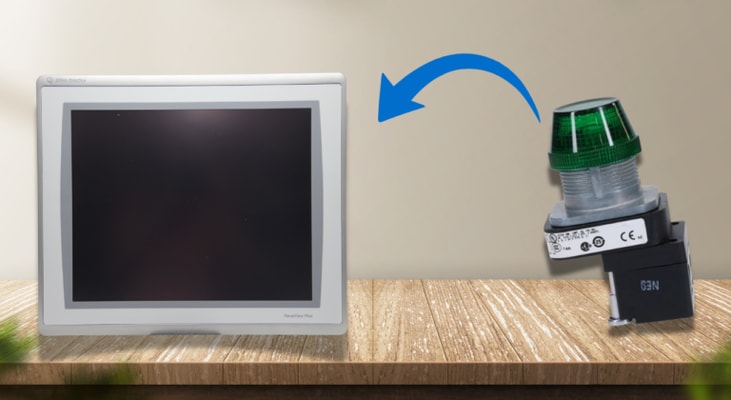
The question of whether to replace the row of pushbuttons and selector switches on the HMI eventually arises on practically every classic machine or control panel. One touchscreen rather than twenty separate devices seems like a straightforward surface-level alternative. The engineering response is far more complex. The way the operator interface is wired, how PLC logic processes inputs, how data is logged, and how alerts are displayed are some of the key changes. Everything else that comes into contact with the hardwired safety circuit must remain unchanged. The difference between a clean migration and one that results in unexplained PLC logic rewrites, or safety compliance problems mid-commissioning, is to formally distinguish between these two groups before the project begins. Before discussing what changes, it helps to be precise about what a pushbutton panel is doing at the wire level. Each pushbutton, start, stop, jog, and mode select wires a physical contact directly to a PLC...
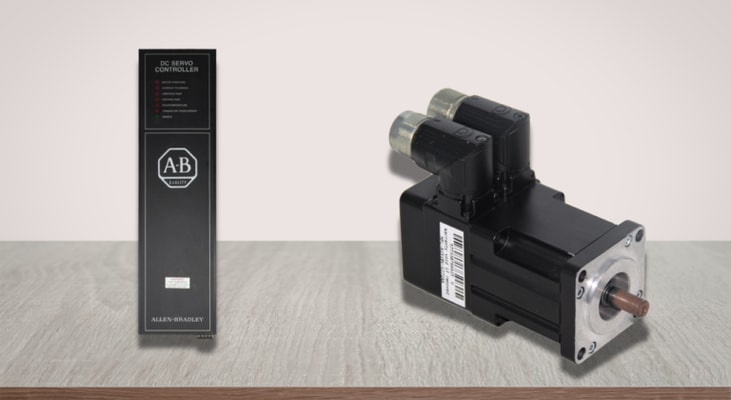
DC motor systems remain deeply embedded in industrial infrastructure. Steel rolling mills, paper machines, mine hoists, crane drives, and extruders continue to operate on DC drives, where their precise torque-speed controllability justifies retention. Yet these systems carry a well-documented efficiency liability: energy losses distributed across electrical, magnetic, mechanical, and power conversion pathways that compound significantly at partial load. Regardless of the application, even small reductions in DC motor losses can yield significant gains in overall process efficiency, motor life, and cost-effectiveness. Understanding each loss mechanism at the parameter level and matching it to a specific DC drive mitigation strategy is the foundation of any credible energy optimization program in a DC-driven facility. Armature copper loss is the dominant electrical loss in any DC motor system. These losses are proportional to the square of armature current and are expressed as Ia²Ra...
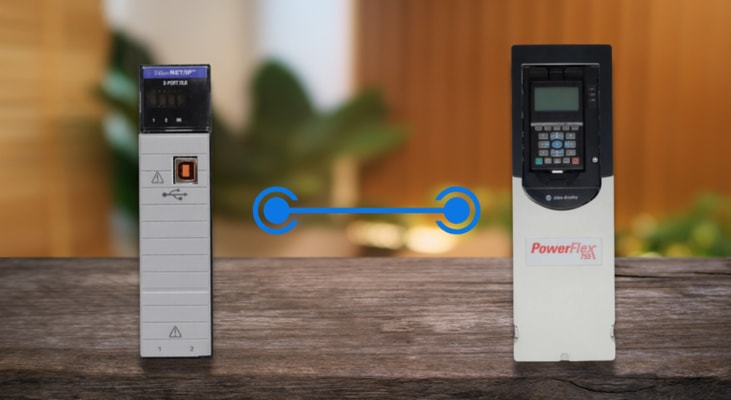
Variable frequency drives and programmable controllers have evolved from loosely connected hardware communicating via hardwired I/O to tightly integrated systems that share tag-based data, diagnostic information, and motion commands over a single industrial Ethernet network. The main point of this architecture in Rockwell Automation environments is the ControlLogix platform, and its integration with the PowerFlex drive family defines how modern Allen-Bradley-based control systems handle motor control from simple pump speed regulation to coordinated multi-axis positioning. This article covers the full integration architecture across hardware, communication protocols, Auto-Device Replacement, CIP Motion, and diagnostic practices. Order PowerFlex 755 Drives Here The PowerFlex drive portfolio spans several product lines, each with distinct integration characteristics when paired with ControlLogix. The PowerFlex 525 (catalog 25B series) is a compact drive rated from 0.5 to 30 HP and...
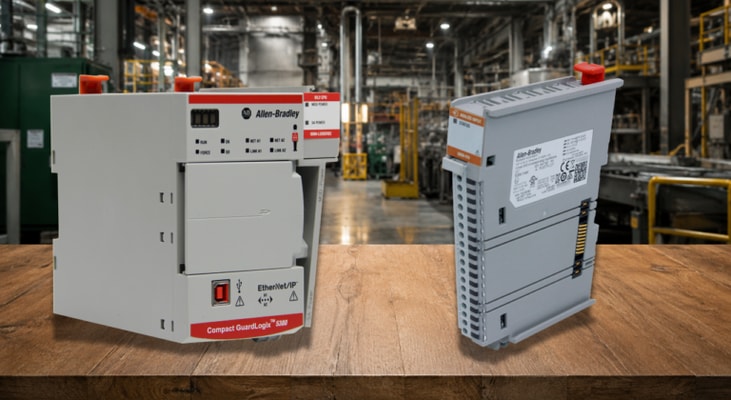
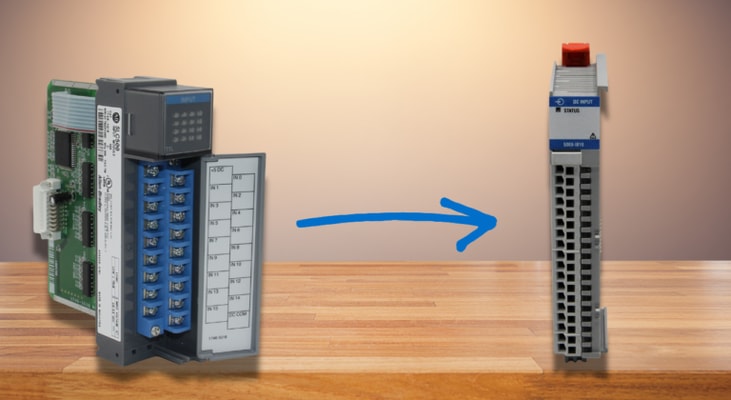
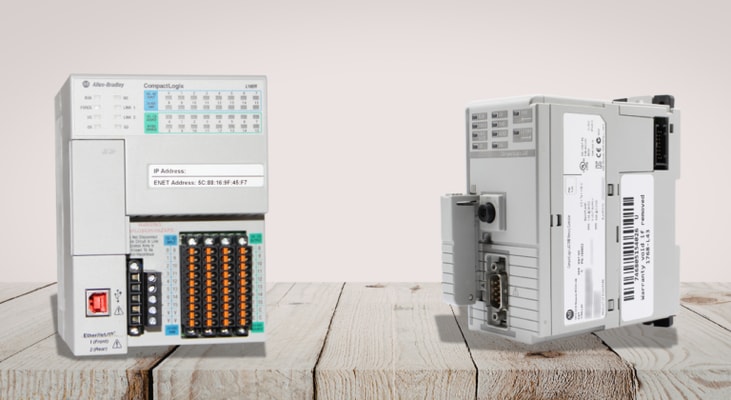
After 35 years of service in industrial automation, Rockwell Automation has officially discontinued the SLC 500 platform . For facilities still running SLC 500 hardware, the question is no longer whether to migrate but how to execute the transition without disrupting production. The recommended migration path leads to the CompactLogix 5380 control system, and understanding both the available tools and the process’s technical realities is essential before any project begins. Here, we will discuss migrating SLC 500 Systems to the CompactLogix 5380 as the latest upgrade. Rockwell’s designation of the CompactLogix 5380 as the SLC 500 successor is grounded in architectural advancements in performance, security, and networking capabilities. The platform is equipped with dual Gigabit Ethernet ports that support fast, reliable I/O and motion control over EtherNet/IP, with motion capability up to 32 axes. Optimized firmware ensures maximum efficiency under demanding industrial conditions...
If you have spent any time reading about automation equipment and how they work, you would come across phrases such as: “Real-time control”, “real-time monitoring”, “operates in real-time”, or “real-time deterministic behavior”. It becomes one of those things that you might be afraid to ask about because it’s thrown around so much that it seems like it’s common knowledge. Alas, we at DO Supply don’t judge and encourage learning opportunities, so let’s get you up to speed on what ‘real-time’ actually means. In the world of industrial control, “real-time” is a more precise engineering term. It means predictable, rather than “fast”. A real-time system isn’t defined by how quickly it responds, but by whether it responds within a guaranteed, bounded window of time, every single time. That guarantee is what engineers call determinism, and it’s the whole reason the phrase gets used so often around PLCs, drives, and industrial networks. To put it in perspective, say a video game you’re...
It is no secret that downtime can be the single leading cause of revenue loss for any factory. In fact, a recent global report from ABB in conjunction with Sapio Research suggests that 44% of industrial leaders report production interruptions by their equipment monthly, 14% of those report stoppages weekly. Every hour that a factory is down, it could be losing anywhere from tens to hundreds of thousands of dollars per hour, depending on SKU value and output expectations. This raises the question of how downtime could become this expensive, what the biggest contributing factors are, and how automation is designed to prevent interruptions. Downtime, often carrying a negative connotation, is when a factory or process halts or significantly reduces operations due to planned maintenance, repairs, or stoppages. Usually, this stems from operator stops, which happen when the operator sees an anomaly and presses that big red STOP button. Other times, the system itself could sense that...
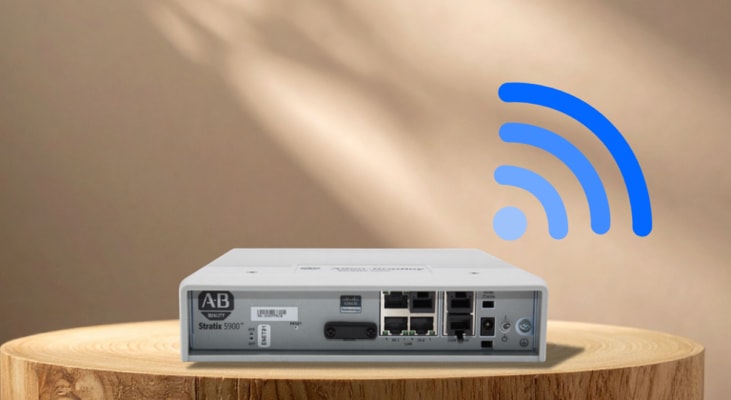
Industrial automation has historically depended on hardwired communication infrastructure. Field devices, controllers, drives, and supervisory systems have been interconnected using copper cables, fiber-optic cables, and structured wiring systems, which require significant installation labor, conduit routing, and ongoing maintenance. While wired communication remains the dominant architecture in most facilities, wireless communication technologies have matured to a point where they are now viable, and in many cases preferred, for specific automation applications. This article examines the wireless communication technologies applicable to industrial automation, the protocols and standards governing their operation, the engineering challenges associated with deployment, and the application domains where wireless communication delivers measurable advantages over traditional cabling infrastructure. The shift toward wireless communication in industrial settings is not driven solely by...
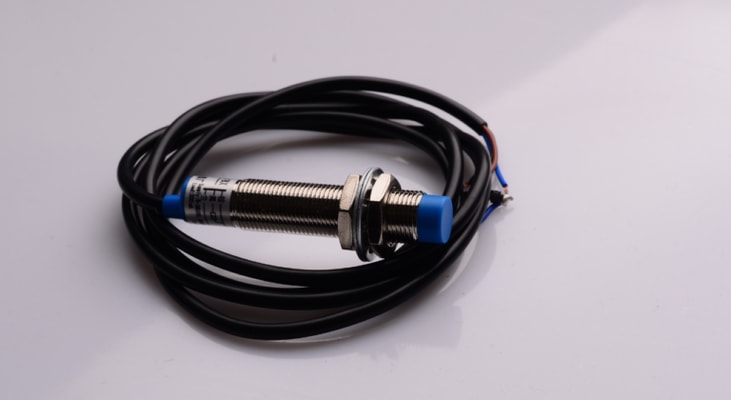
In the modern world, sensors are quite literally everywhere you see. Whether it’s the gyroscope in your phone detecting when you’ve lifted it so it can turn the screen on, or the TPMS in your car’s tires alerting you to low air pressure, sensors constantly translate the physical world into something machines can understand. A sensor, in the broadest term, is a device that connects the physical world to its digital counterpart. It responds to a specific measurand, such as distance, pressure, light, or temperature, to give a usable output. Otherwise, how else would a machine know the temperature of ambient air, or the weight of a package sitting on a scale without elaborate mechanical linkages? While thousands of sensors are used in everyday life, in automation the scope of sensors narrows considerably. On the factory floor, most sensing tasks boil down to one core question: Is something there, and if so, where? In this guide, we focus on the most common and widely used sensor types:...