AC Drive vs DC Drive: Which One Makes More Sense Today?
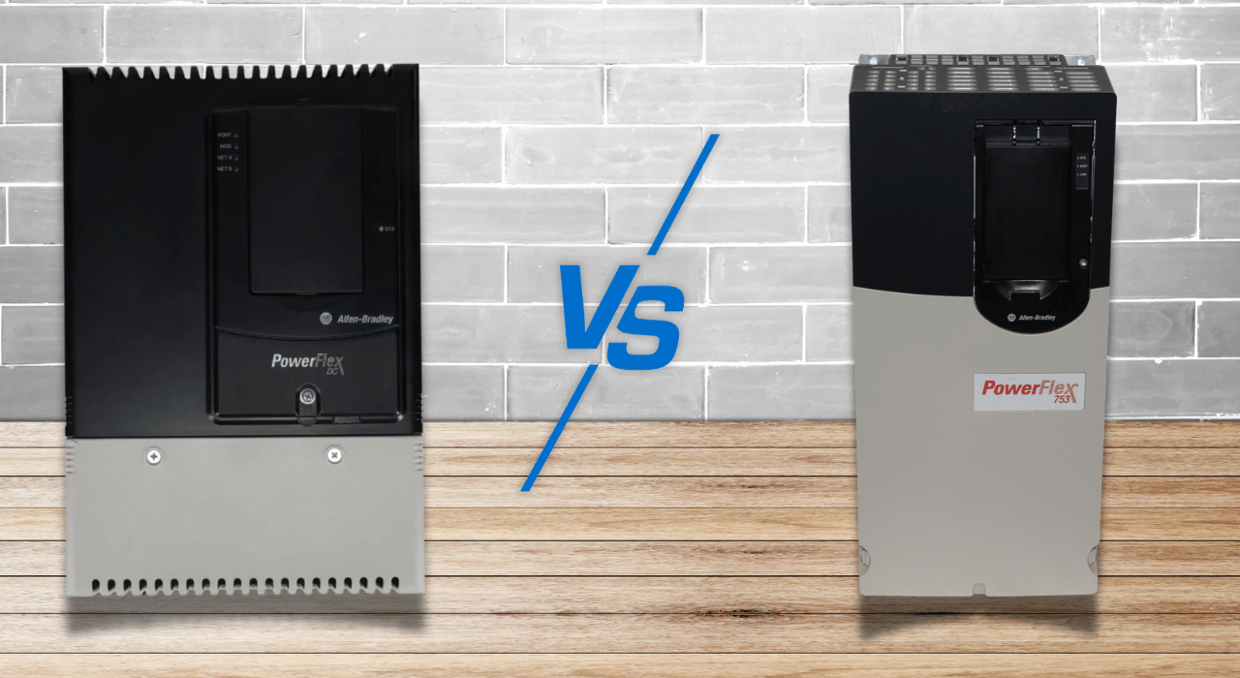
Choosing between an AC or DC drive is no longer a matter of older versus newer technology. Today, it is an economic and engineering choice based on the required speed-torque profile, desired dynamic response, regenerative operation, the condition of the existing DC motor, and total cost. For new installations, in many industrial applications, an AC drive combined with the right AC motor is the correct and practical default. In existing installations, however, if a DC motor needs replacing, the replacement with an AC motor and drive is not necessarily an automatic upgrade. This article compares the AC and DC approaches on speed regulation, torque response, energy consumption, maintenance, and retrofit economics, using ABB’s ACS880 and DCS880 as examples: two product lines that offer a good pairing and starting point because, unlike most suppliers, ABB keeps DC drives in an active state.
AC Drive vs DC Drive Speed Regulation
AC drives vary motor speed by altering supply frequency and voltage according to process demands; this provides flexible control and is one of three reasons they are the practical default for many new installations that need relatively low maintenance or lack expertise. Broad availability and general usability without dedicated expertise for setup and integration were the other reasons.
DC Drive Armature and Field Control
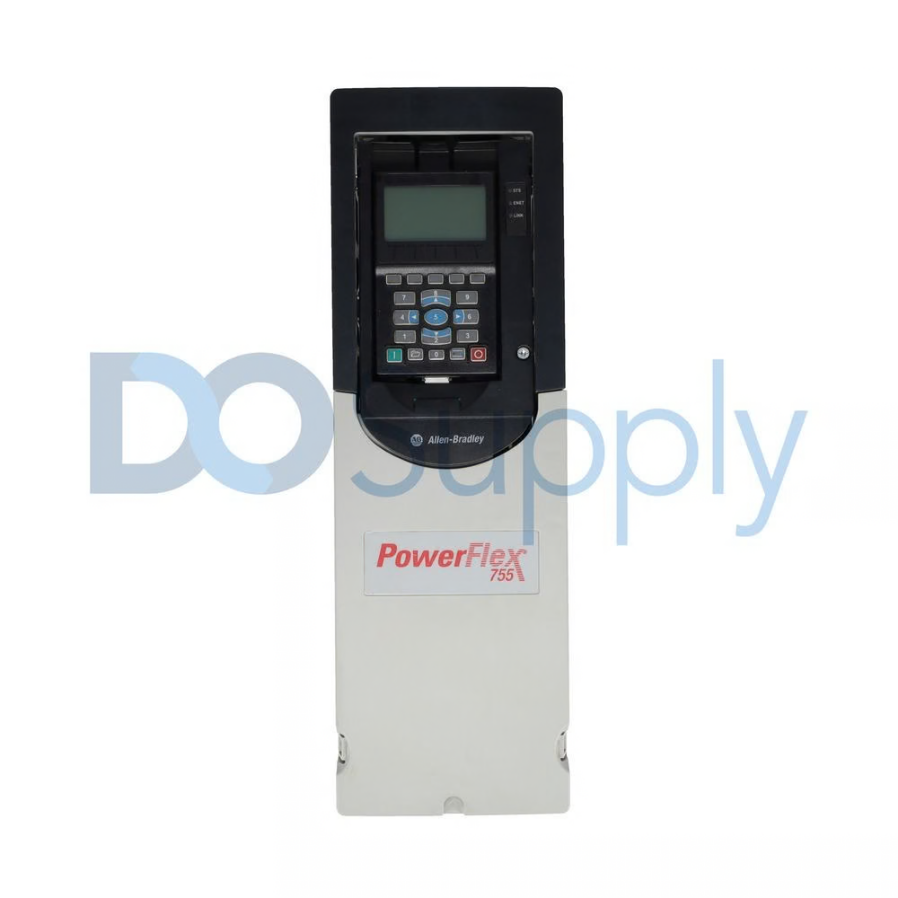
Motor speed control for DC motors is operated via field control and armature voltage; this is the classic role for DC drives, and the DCS880 from ABB perfectly showcases the category. The drive is developed for industrial DC motors, allowing comparison between both approaches from a single manufacturer, as ABB also offers the ACS880, especially designed for demanding motor-control applications.
Torque Response in an AC Drive
Simply regulating motor speed does not resolve the choice, though; torque and the rate at which the motor changes speed in response to an external impulse play another important role, as does the control method. Not all VFDs have the necessary control method and fast impulse response. When it matters, the control mode you choose in your AC drive is vital and not something to assume.
Danfoss offers several models ideal for this purpose, such as the VLT AutomationDrive FC 301/FC 302, specifically designed for industrial machinery. For example, speed control and applications that need an immediate torque response can be categorized as either scalar control or vector control. Vector control, more commonly known as field-oriented control, may be more valuable in specific scenarios like motor efficiency, overall power use, commissioning, or maintenance.
AC Drive Families According to Application
AC Drive for Fluid Handling and Heavy Duty
The Altivar Process range from Schneider Electric demonstrates how tailored an AC drive can be to the process: the ATV600 series targets fluid-handling applications such as pumps, while heavy-duty applications such as cranes, mills, and conveyors require the more powerful ATV900 version.
General-Purpose AC Drives
For any type of general-purpose use, the SINAMICS G120 family from Siemens is well equipped for speed control in specific motor situations and compatibility issues. The GA800 from Yaskawa is another suitable drive, with instructions covering correct operation, commissioning, and error resolution.
AC Drive Energy Efficiency
The potential energy savings of an AC drive stem from its ability to precisely match motor speed to process requirements. This benefit is most significant in applications characterized by variable flow, such as pumping, fan, and compressor duties, which are primary applications for the Altivar ATV600. The claim that every AC drive inherently surpasses every DC drive in efficiency is misleading; total efficiency is determined by a complex interplay of the motor, the drive, the specific operating point, the load profile and the application itself. An efficiency case should be built around the actual duty cycle, not solely the technology label.
Maintenance for AC and DC Brushes
Maintenance stands out as a crucial area of comparison between AC and DC drives. AC motor construction is distinct, and the maintenance needs of AC drives differ from the brush, commutator, and associated servicing demands of DC motors. This difference is fundamental to establishing AC drives as the preferred and economically viable solution for new installations, primarily because they require less motor maintenance. Maintenance at the drive site is not eliminated, and manufacturer instructions such as Yaskawa’s GA800 product instructions, which cover maintenance, troubleshooting, and commissioning, are a handy reference for maintenance teams.
Regeneration and Power Quality
Regenerative operation is an important consideration for applications involving frequent deceleration, lowering loads, or continuous overhauling conditions. Both AC and DC drive systems can support regenerative operation, but the required hardware depends on their power-conversion architecture.
Conventional AC drives may dissipate braking energy through external resistors, while regenerative AC drives use suitable supply-side converters to return energy to the electrical network. Likewise, appropriately configured four-quadrant DC drives can provide regenerative braking and return energy to the supply. Power quality must also be considered for both technologies. AC drives can introduce input-current harmonics and high-frequency electrical interference, while thyristor-based DC drives can produce harmonic distortion and affect supply power factor.
What a Retrofit Must Cover
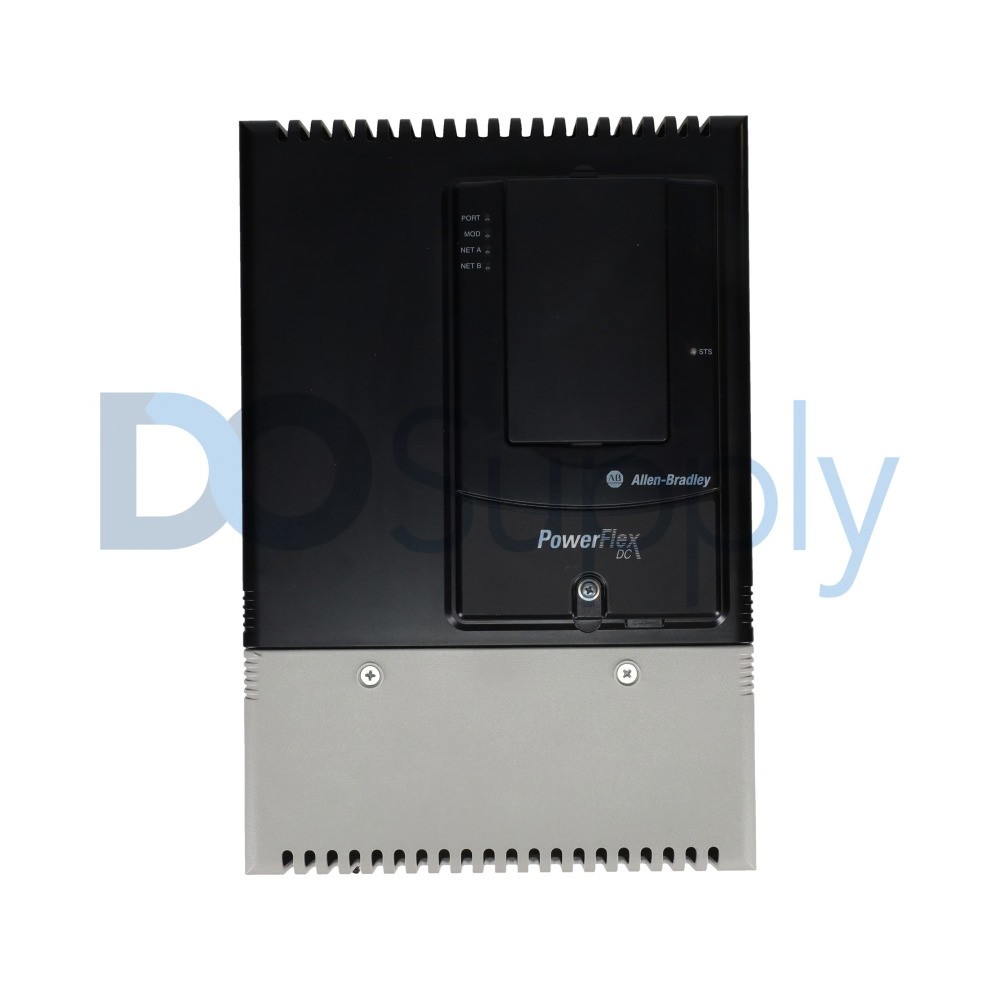
Replacing a DC drive with an AC drive must be treated as a systems modification, not a ‘replace a broken part’ exercise. A valid lifecycle cost analysis should consider the motor in place, mechanical coupling, control system, spares, downtime, and replacements. PLC-to-drive integration, control system architecture, and diagnostics must be planned during retrofit.
When a DC Drive Still Fits
A DC drive remains a reasonable decision when a motor and drive are functioning, and the process already meets requirements and performance. Alternatively, when conversion costs and downtime exceed the benefits of modernization, opting against modernization is not a missed call but a justified engineering option.
Demanding Applications
Demanding applications present no clear favorite choice; the decision depends solely on the required torque-speed curve, dynamic response, regenerative operation, the condition of the motor and drive(s), and the overall economics. A newer or older status of an AC/DC drive does not present any useful selection criteria. Conveyors, cranes, mills, hoists and ATV900 are applications for which such an analysis may well be done.
AC Drive Considerations
There are many great AC drives worth considering. ABB’s ACS880 and DCS880 enable a direct comparison of the two technologies; Siemens SINAMICS and Schneider’s Altivar products cover conventional and general-purpose AC drive applications; Danfoss’ range of drives and Rockwell products provide a wide control range and integration into automation; and Yaskawa’s GA800 provides another general-purpose example. The right product can be selected by comparing motor type, control mode (scalar or vector), torque response type, regenerative operation, EMI prevention, and other electrical considerations, and retrofit needs.
Conclusion
In most new installations, the modern choice is an AC drive, but replacing a functional DC drive with an AC system is an engineering and economic decision, not a mandatory upgrade. Assuming AC for new installations and evaluating older DC systems on their merits in existing plants is a sound approach, as each still have their own place in automation. For AC drives, check out our wide selection from popular brands like Allen-Bradley, Mitsubishi, Schneider Electrics, and more. We also sell motors, PLCs, and other accessories to pair well with them, all backed by our two-year warranty. For those looking to migrate to an AC system, we do have a article on common AC drive parameter tuning mistakes as well.
DO Supply Inc. makes no representations as to the completeness, validity, correctness, suitability, or accuracy of any information on this website and will not be liable for any delays, omissions, or errors in this information or any losses, injuries, or damages arising from its display or use. All the information on this website is provided on an "as-is" basis. It is the reader's responsibility to verify their own facts.