We found 260 posts about Automation Technologies from DO Supply, a global automation parts
reseller focused on hard-to-find and obsolete industrial automation products.
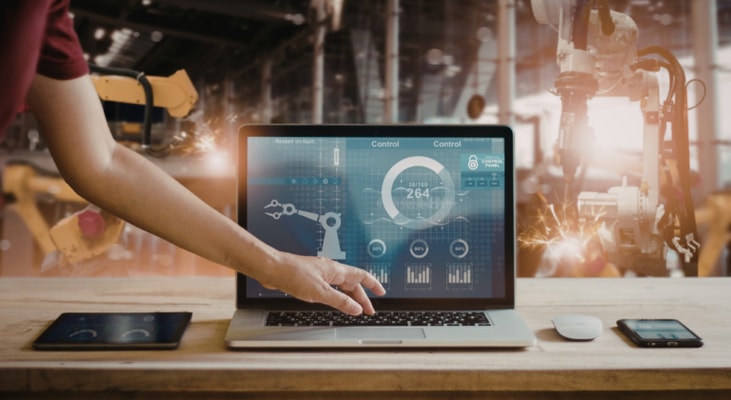
These days, every industry runs on speed and accuracy. There’s a whole field built around creating and running systems that manage and automate everything, from factories to warehouses. This technology keeps things running smoothly. It cuts down mistakes and helps get more done. If you want to really get what makes this world tick, it starts with the companies that make PLCs—the actual hardware at the center of it all. Then come the engineers who figure out how to use that hardware in real-life situations. PLC Controls sit right at the core of modern automation, and PLC manufacturers have played a huge part in how far we’ve come. PLC Controls is all about designing and running control systems that keep machines, processes, and devices working smoothly on their own. Controls engineers use feedback loops, math, and the latest tech to build systems that hit their targets every time, without much fluctuation. Picture a manufacturing plant—an engineer sets up controls so conveyor belts...
It is no secret that downtime can be the single leading cause of revenue loss for any factory. In fact, a recent global report from ABB in conjunction with Sapio Research suggests that 44% of industrial leaders report production interruptions by their equipment monthly, 14% of those report stoppages weekly. Every hour that a factory is down, it could be losing anywhere from tens to hundreds of thousands of dollars per hour, depending on SKU value and output expectations. This raises the question of how downtime could become this expensive, what the biggest contributing factors are, and how automation is designed to prevent interruptions. Downtime, often carrying a negative connotation, is when a factory or process halts or significantly reduces operations due to planned maintenance, repairs, or stoppages. Usually, this stems from operator stops, which happen when the operator sees an anomaly and presses that big red STOP button. Other times, the system itself could sense that...
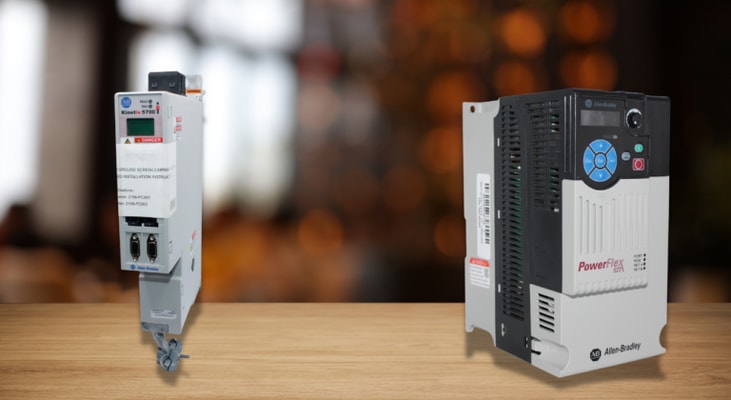
Modern manufacturing has reached a point where traditional CNC machine parts are no longer evaluated in isolation. Their performance is now inseparable from the motion control systems that command them. The Allen-Bradley Kinetix series represents one of the most advanced servo drive platforms deployed in CNC-integrated environments today. Understanding how individual CNC machine parts interact with Kinetix servo drives, amplifiers, and integrated motion controllers is essential for engineers designing high-throughput, deterministic automation systems. This article examines that interaction in a technical sequence: from mechanical axis components to closed-loop drive architecture, from feedback resolution to EtherNet/IP-based command propagation. Before mapping CNC machine parts to a Kinetix-driven architecture, it is necessary to categorize them. CNC machine parts fall into three primary subsystems: mechanical transmission components, actuation elements, and feedback and sensing...
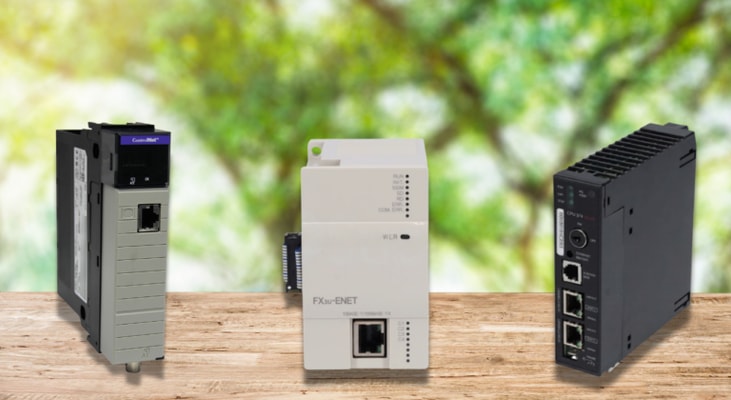
Programmable Logic Controllers play a critical role in today’s industrial automation systems, delivering dependable, real-time, and deterministic control in demanding environments such as semiconductor fabrication, automotive assembly, and chemical processing plants. All PLCs share a common core architecture comprising a power supply, central processing unit (CPU), communication modules, input/output modules, and memory. However, because different PLC manufacturers employ unique design philosophies, the result is substantial variations in PLC hardware, proprietary software, implementation, and ecosystem compatibility. These variations mean that purchasing a specific PLC model is a long-term commitment to a particular programming environment, technological ecosystem, and vendor support. This can significantly affect the integration capabilities, maintenance strategies, future scalability, and available hardware/software migration strategies for a given PLC platform. Therefore, beyond...
Downtime on the shop floor isn’t just about stopping the line—it’s a domino effect. One machine stalls, and suddenly you’re dealing with wasted materials, crews standing around, surprise expenses for repairs, and systems that slowly degrade until something finally snaps. When factories lack real-time monitoring, reliable logs, or a robust network of sensors, a lot stays hidden. Usually, people don’t even realize there’s a problem until they’re scrambling to fix a full-blown breakdown. That’s where modern Human-Machine Interfaces (HMIs) come into play. These systems spot problems early, streamline how people and machines interact, and help cut unplanned downtime in a big way. The days when HMIs were just simple screens are over. Today’s HMIs pack in way more power—they tap into the Industrial Internet of Things (IIoT), handle all kinds of communication protocols, sync up with SQL databases, and push out real-time data using RESTful APIs. So these aren’t just fancy displays; they’re the...
PLCs are the main part of industrial automation systems, providing the real‑time control required for manufacturing, process systems, infrastructure networks, and different building management systems. PLCs help in managing the automation ecosystems. Nowadays, the leading PLC brands do more than just supply simple hardware; they build full‑scale ecosystems encompassing software, communication protocols, add‑on input/output modules, cloud services, engineering software, different partner networks, and digital platforms that enhance performance, connectivity, and lifecycle value. In this technical overview, we investigate how top PLC brands create ecosystems surrounding their controllers. We analyze the functions of hardware modularity, programming platforms, communication protocols, digital twins, edge and cloud integration, cybersecurity, analytics, partner initiatives, and deployment assistance demonstrating how ecosystems facilitate scalability, optimization, and future‑proofing in...
CNC machine parts work together as a precisely coordinated system in modern manufacturing. From ball screws and linear guides to encoders and servo motors, each component plays a critical role, but none more so than the drive system that commands motion. Among the many brands trusted by manufacturers worldwide, Allen Bradley (a Rockwell Automation brand) has become synonymous with reliable, high-performance drive technology. This article explores how Allen Bradley drives integrate with spindle motors and other CNC machine components to deliver the precision and operational uptime that today’s industrial automation demands. CNC machines are complex assemblies of mechanical, electrical, and software components. To understand how drives fit into the architecture, we must understand the major categories of CNC machine parts and their roles. The mechanical backbone of any CNC machine includes: Spindle assemblies: The rotating shaft that holds cutting tools or workpieces Ball screws and...
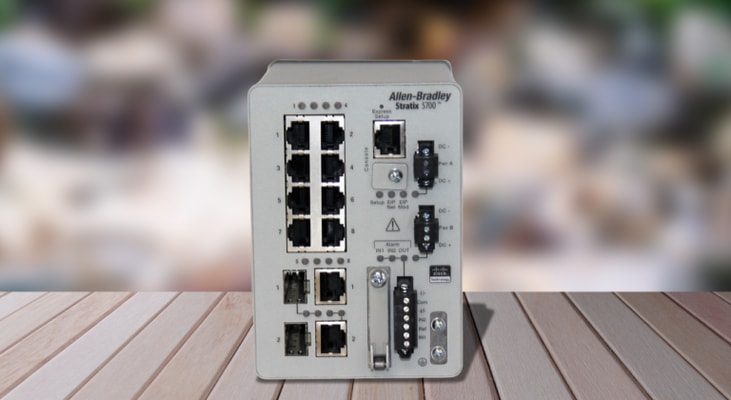
When it comes to industrial networking, the hardware has to be built for a completely different world than that of commercial equipment. Take temperature ranges as a good example: industrial devices must operate between -40°C and +85°C, while commercial units are typically rated only from 0°C to 45°C. Physical environment matters just as much, with ingress protection ratings indicating how well a device can withstand dust, moisture, and oily conditions. If the hardware is going anywhere near active machinery, vibration resistance deserves careful attention, too, since it can cause real problems over time if it’s overlooked. This guide walks through the key hardware categories, including switches, gateways, and media converters, to help you make confident, informed decisions for your application. Industrial switches form the backbone of industrial networks for most plant floors. They connect controllers, drives, sensors, HMI, and supervisory systems while maintaining the deterministic...
Industrial control systems used in hazardous or toxic industrial environments require significantly more rugged designs and higher environmental ratings than those used in conventional factory automation. These environments may contain corrosive vapors, conductive dust, explosive gases, high humidity, strong electrical noise (RFI/EMI), and extreme temperatures. Common examples include combustible-dust facilities, offshore oil and gas platforms, pharmaceutical synthesis plants, chlorine-based water treatment systems, fertilizer production sites, underground mines, and hydrogen processing facilities. Under such conditions, a control system malfunction is not merely a production issue but also a potential safety hazard to personnel, infrastructure, and the surrounding environment. For this reason, Programmable Logic Controllers (PLCs) deployed in hazardous facilities must meet strict environmental and international standards governing functional safety, durability, and explosion...
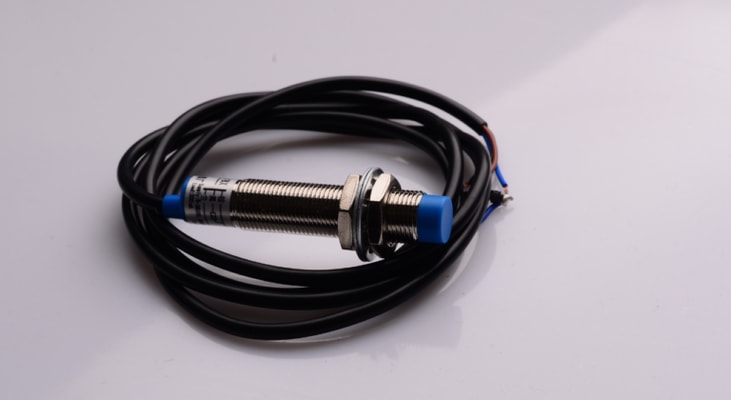
In the modern world, sensors are quite literally everywhere you see. Whether it’s the gyroscope in your phone detecting when you’ve lifted it so it can turn the screen on, or the TPMS in your car’s tires alerting you to low air pressure, sensors constantly translate the physical world into something machines can understand. A sensor, in the broadest term, is a device that connects the physical world to its digital counterpart. It responds to a specific measurand, such as distance, pressure, light, or temperature, to give a usable output. Otherwise, how else would a machine know the temperature of ambient air, or the weight of a package sitting on a scale without elaborate mechanical linkages? While thousands of sensors are used in everyday life, in automation the scope of sensors narrows considerably. On the factory floor, most sensing tasks boil down to one core question: Is something there, and if so, where? In this guide, we focus on the most common and widely used sensor types:...
When it comes to selling products, there are a few marketing terms we’ve all become familiar with. Heavy-duty, military-grade, high-performance, next-generation, and so on. On paper, those phrases sound meaningful, but most of the time, they exist purely to catch your eye rather than explain anything measurable. Automation is one of those areas where this pattern starts to break down. In this space, “industrial grade” is usually shorthand for real design decisions, environmental ratings, and long-term reliability expectations that consumer hardware never has to meet. Though there is much more to it than that, so join us as we unravel the facts between marketing and what truly makes a product industrial grade. To understand why industrial grading is needed, it’s best to start by looking at the industry as a whole. Industrial automation covers a broad spectrum, from marine and offshore plants to chemical and fertilizer plants. Each presents its own set of hazards, some of which are:...
Industrial automation systems in 2026 have advanced to become both extremely uptime-critical and software-defined. The choice of a suitable PLC brand is therefore no longer solely determined by manufacturer/vendor reputation, cycle time, and I/O count. Instead, selecting the right PLC brands is based on compliance with emerging safety guidelines, cybersecurity features, compatibility with cloud computing platforms, extensive lifecycle management, and continued vendor support. Beyond key technical capabilities, comprehensive lifecycle management and long-term vendor commitment are becoming essential when choosing among PLC brands. This article presents a detailed technical comparison of leading PLC brands in 2026, focusing on lifecycle support, cost-effectiveness, and system reliability. The ControlLogix and CompactLogix controller platforms are the most renowned Allen-Bradley PLC brands within North America for industrial automation, though other PLC lines, such as MicroLogix, are...
The accuracy of CNC machining is not a characteristic in itself but rather an overall system that emerges from the interaction and functioning of the machine’s core systems. The micron-level precision and repeatability achieved by the machining system derive directly from design decisions within the core components of a CNC system. The machining system’s accuracy is built into its robust mechanical design, feedback control, and compensation for natural forces such as vibration, friction, and thermal expansion. This analysis will review the core components of a CNC system and identify the specific details within each component. The MCU is the processing hub where the digital model is developed into executable physics. This is the CNC part that, rather than simply executing G-code commands, is responsible for real-time kinematic calculations, which account for simultaneous movements of multiple axes while adhering to correctly programmed feed rates and trajectories. The accuracy aspect...
Automated manufacturing depends on the accuracy and reliability of computer numerical control (CNC) technology. The operation of a CNC depends on the optimal integration of various CNC machine parts. Each part of a CNC machine has a specific function in translating design codes into a physical product with minimal human intervention. This article explains the operational framework of a CNC machine by describing the specific functions of each key part in the automated manufacturing process. The command and monitoring center of the system comprises several major machine components. In a CNC machine, the machine control unit (MCU) serves as the centralized processor. It understands the G-code and M-code programming, determining the movement path and the function of operating all other components in the machine. It converts the data from the programming into electrical signals to actuate the machine’s drive system. The control panel represents the main human-machine interface. The control...
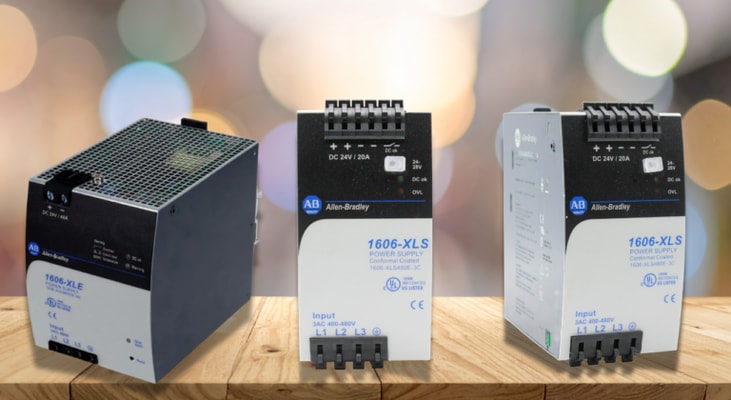
When working on industrial equipment, whether it’s a PLC, a motor starter, or a full control cabinet, integrators almost inevitably encounter 24V DC. It shows up everywhere, quietly powering sensors, I/O, safety circuits, and control logic. What makes this curious is that most of us don’t use 24V DC in everyday life. In the United States, homes are wired for 120V AC, while many consumer devices run on anything from 5 to 12 volts DC through built-in power supplies. That contrast raises an obvious question. If so many voltages already exist and work perfectly well in other environments, why has industrial automation settled so firmly on 24V DC? At first glance, this answer may seem too simple. After all, when compared to 120V AC or even 480V, 24V DC is a lot less scary to work with. Accidental contact is far less likely to result in serious injury, which immediately lowers risk during installation, troubleshooting, and maintenance. In environments where panels are opened daily and...