Why Automation Still Relies Heavily on 24VDC
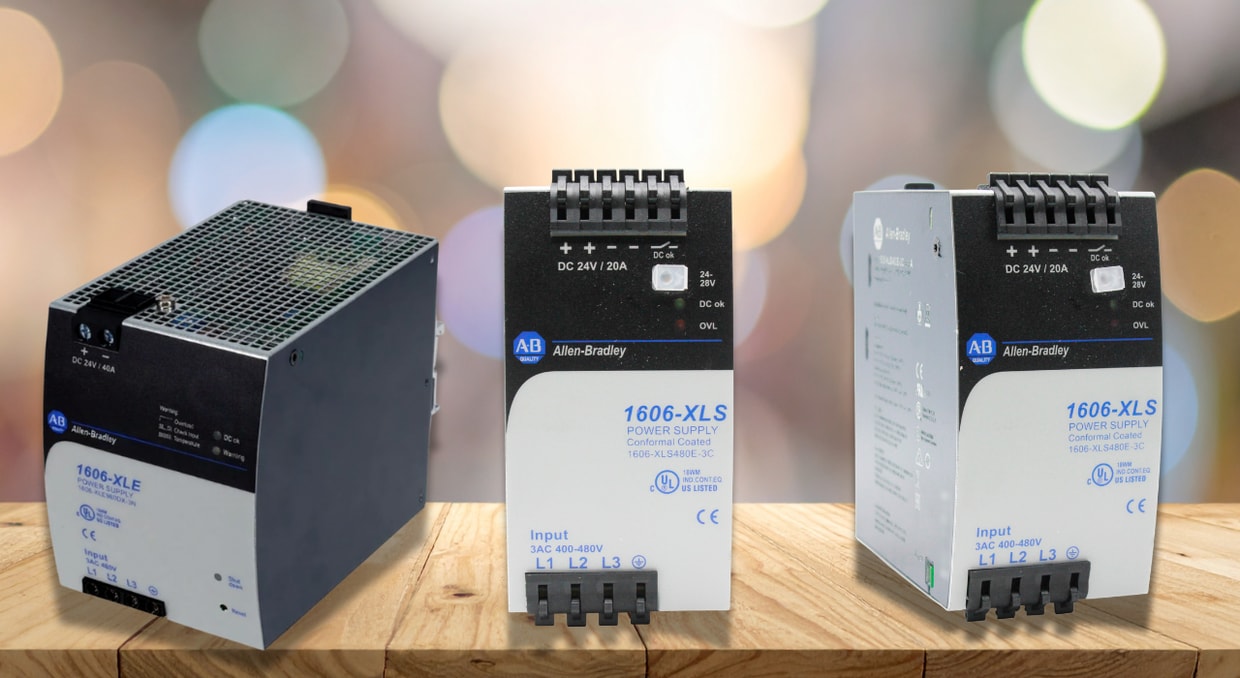
When working on industrial equipment, whether it’s a PLC, a motor starter, or a full control cabinet, integrators almost inevitably encounter 24V DC. It shows up everywhere, quietly powering sensors, I/O, safety circuits, and control logic. What makes this curious is that most of us don’t use 24V DC in everyday life. In the United States, homes are wired for 120V AC, while many consumer devices run on anything from 5 to 12 volts DC through built-in power supplies.
That contrast raises an obvious question. If so many voltages already exist and work perfectly well in other environments, why has industrial automation settled so firmly on 24V DC?
A Safety Sweet Spot
At first glance, this answer may seem too simple. After all, when compared to 120V AC or even 480V, 24V DC is a lot less scary to work with. Accidental contact is far less likely to result in serious injury, which immediately lowers risk during installation, troubleshooting, and maintenance. In environments where panels are opened daily and wiring changes are routine, that difference matters.
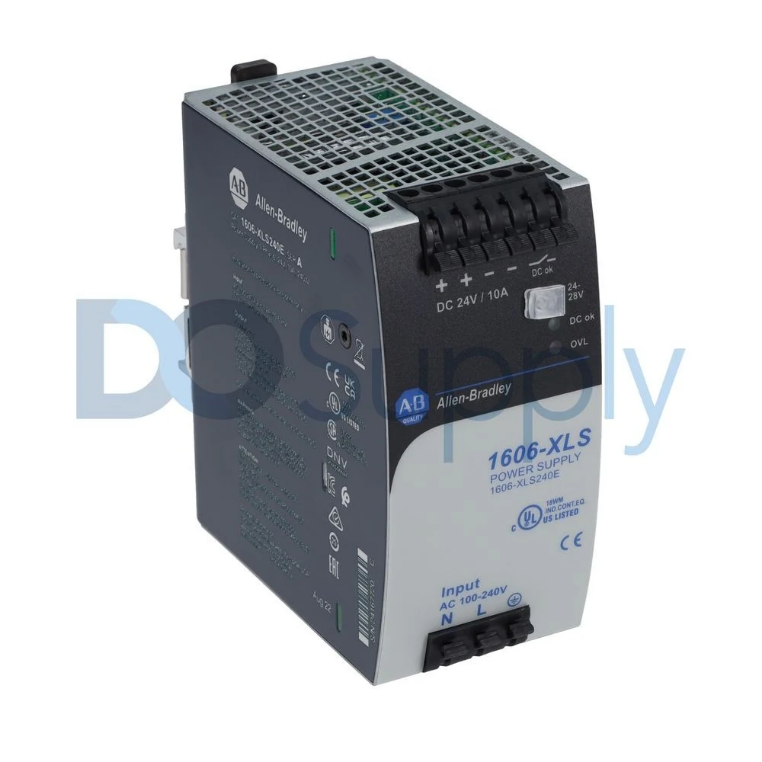
But safety alone isn’t why 24V has taken over; if it were, we’d see lower voltages across the board. The trick is in the balance: 24V DC occupies a narrow enough window where the voltage is low enough to be considered touch-safe under most industrial standards, yet high enough to remain practical for real-world control systems.
Noise and Signal Integrity
While safety is what gets 24V DC into the control cabinet, electrical noise is what keeps it there. Industrial environments are loud, filled with vibrations and dust, and are not the right places for electricity. Motors start and stop, VFDs switch at high speeds, connectors slam shut, and long cable runs alongside power conductors. This all creates electrical interference or noise.
Lower-voltage DC systems, such as 5V or 12V logic, work well on circuit boards and in consumer electronics, but they become far more vulnerable once they leave a controlled enclosure. Small amounts of induced noise, voltage drop, or grounding variation can be enough to cause false signals or missed inputs over longer distances. At 24V DC, the signal has more headroom. Noise that might overwhelm a 5V signal becomes insignificant by comparison.
Predictability is also an invaluable asset in an automation process. When 24V DC experiences voltage drops, loose connections, or partial shorts, the performance degradation is much more noticeable than silent or erratic failures in lower-voltage devices. Likewise, it won’t explode spectacularly as higher voltages would.
Scalable Power Distribution
Beyond safety and signal reliability, 24V DC is great for distributing power across a machine with many different controllers, I/O blocks, HMIs, safety devices, and so on. Often, you will find that lower-voltage DC systems struggle in this role, as 5 and 12V experience noticeable voltage drops even at modest cable lengths. This forces integrators to use heavier conductors, tighter distance limits, or local power regulation. As systems grow, those constraints quickly become impractical.
At 24V DC, the voltage drop is far more forgiving. A few volts lost across a long cable run rarely prevent a device from operating correctly, especially when most industrial components are designed with wide operating ranges. This allows a single power supply to feed dozens, or even hundreds, of devices without requiring excessive wire gauge or complex distribution schemes.
This scalability simplifies panel design and field wiring. Integrators can standardize on common power supplies, fuse blocks, and wiring practices across machines and facilities. Expansion becomes straightforward, and future modifications do not require a complete rethink of the power architecture.
The 24V Ecosystem
One of the strongest reasons 24V DC remains dominant in automation has less to do with the voltage itself and more to do with everything built around it. Over decades of machine design, sensors and actuators have converged on 24V DC as their common operating language. Once that happened, changing it no longer made practical sense.
Proximity sensors, photoeyes, pressure switches, encoders, valve manifolds, and safety devices are almost universally designed to operate from a 24V DC supply. This allows them to share a common power source while delivering clean, consistent signals back to the control system. For integrators, this uniformity simplifies both wiring and device selection. A sensor pulled from stock is almost guaranteed to work on the machine, regardless of manufacturer.
Just as importantly, 24V DC enables flexible signal conventions. Digital inputs can be wired using common sourcing and sinking schemes, allowing devices from different vendors to coexist on the same system. Safety circuits can be implemented without special voltage translation, and expansion modules can be added without introducing new power domains. Over time, this compatibility has turned 24V DC into a de facto standard, not because it was mandated, but because it worked everywhere it was used.
Maintenance, Spares, and Uptime
In industrial environments, the value of a design choice is often measured less by how elegant it is and more by how it behaves when something breaks. From that perspective, 24V DC has a long track record of keeping machines running and making failures easier to recover from.
Because 24V DC is so widely used, replacement parts are almost always available. Sensors, relays, solenoid valves, and power supplies can be swapped without worrying about mismatched control voltages or the need for special conditioning hardware. Maintenance teams do not need to stock multiple variants of the same device, and technicians can replace failed components confidently, knowing they will integrate cleanly with the existing system.
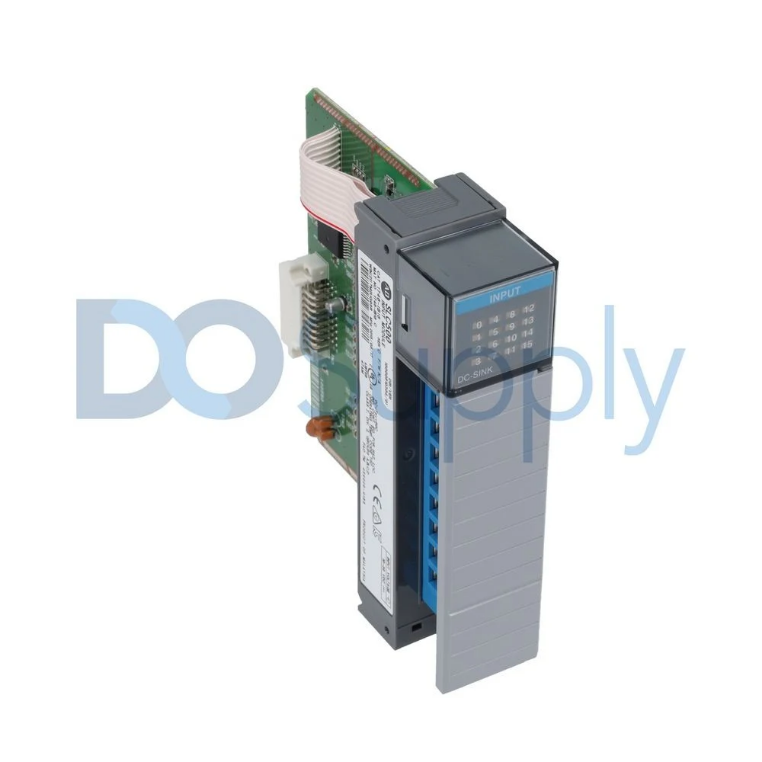
Troubleshooting also benefits from this consistency. A missing or weak 24V supply is easy to detect with basic tools and the symptoms are usually obvious. Inputs stop responding, outputs fail to energize, or indicator lights go dark. These failures tend to be straightforward to trace, allowing technicians to isolate problems quickly rather than chasing intermittent behavior across multiple voltage domains.
From an uptime perspective, this predictability matters. Downtime is rarely caused by failures in complex control logic. More often, it comes from loose wiring, damaged cables, failed sensors, or power distribution issues. When all of those elements operate on a common, familiar voltage, diagnosis and repair become faster and less error-prone.
Over time, this simplicity compounds. Training becomes easier, documentation becomes clearer, and system modifications carry less risk. Machines built around 24V DC are easier to maintain, not because they are simpler in function, but because their control infrastructure is consistent, well understood, and forgiving. In production environments where every minute of downtime carries a cost, that reliability is hard to replace.
Final Thoughts
24V DC has stuck around for quite some time, not only because of its safety ratings but also because of the industry’s stubbornness. Once you adopt a set system, it’s really hard to move away from it when all your equipment, spares, and technicians rely on it. That said, it’s a good bet that 24V DC will stick around for a little while longer.
Here at DO Supply, we offer a wide range of 24V DC components to pair with your existing infrastructure. We also carry PLCs, motors, drives, and more from leading brands such as Allen-Bradley, Schneider Electric, Mitsubishi, and so on. So stop by today and let’s turn your automation solution up a notch.
DO Supply Inc. makes no representations as to the completeness, validity, correctness, suitability, or accuracy of any information on this website and will not be liable for any delays, omissions, or errors in this information or any losses, injuries, or damages arising from its display or use. All the information on this website is provided on an "as-is" basis. It is the reader's responsibility to verify their own facts.