Switches, Gateways, and Media Converters: A Selection Guide
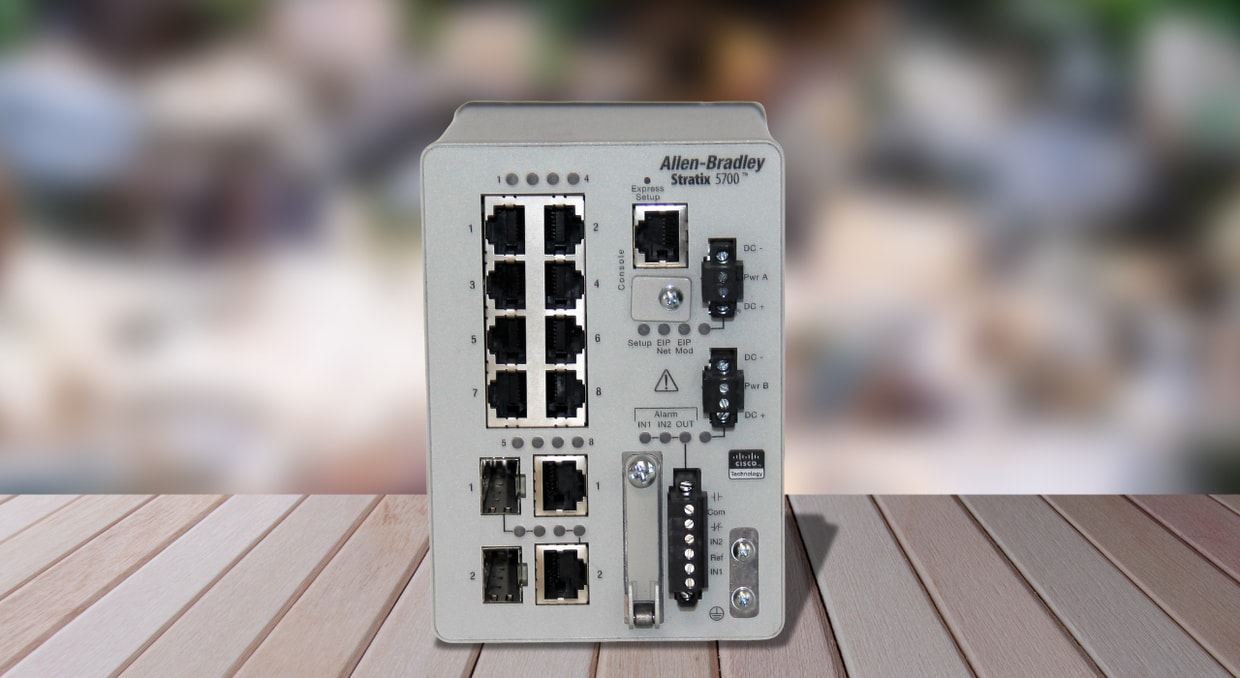
When it comes to industrial networking, the hardware has to be built for a completely different world than that of commercial equipment. Take temperature ranges as a good example: industrial devices must operate between -40°C and +85°C, while commercial units are typically rated only from 0°C to 45°C. Physical environment matters just as much, with ingress protection ratings indicating how well a device can withstand dust, moisture, and oily conditions. If the hardware is going anywhere near active machinery, vibration resistance deserves careful attention, too, since it can cause real problems over time if it’s overlooked. This guide walks through the key hardware categories, including switches, gateways, and media converters, to help you make confident, informed decisions for your application.
Selection of Industrial Switches
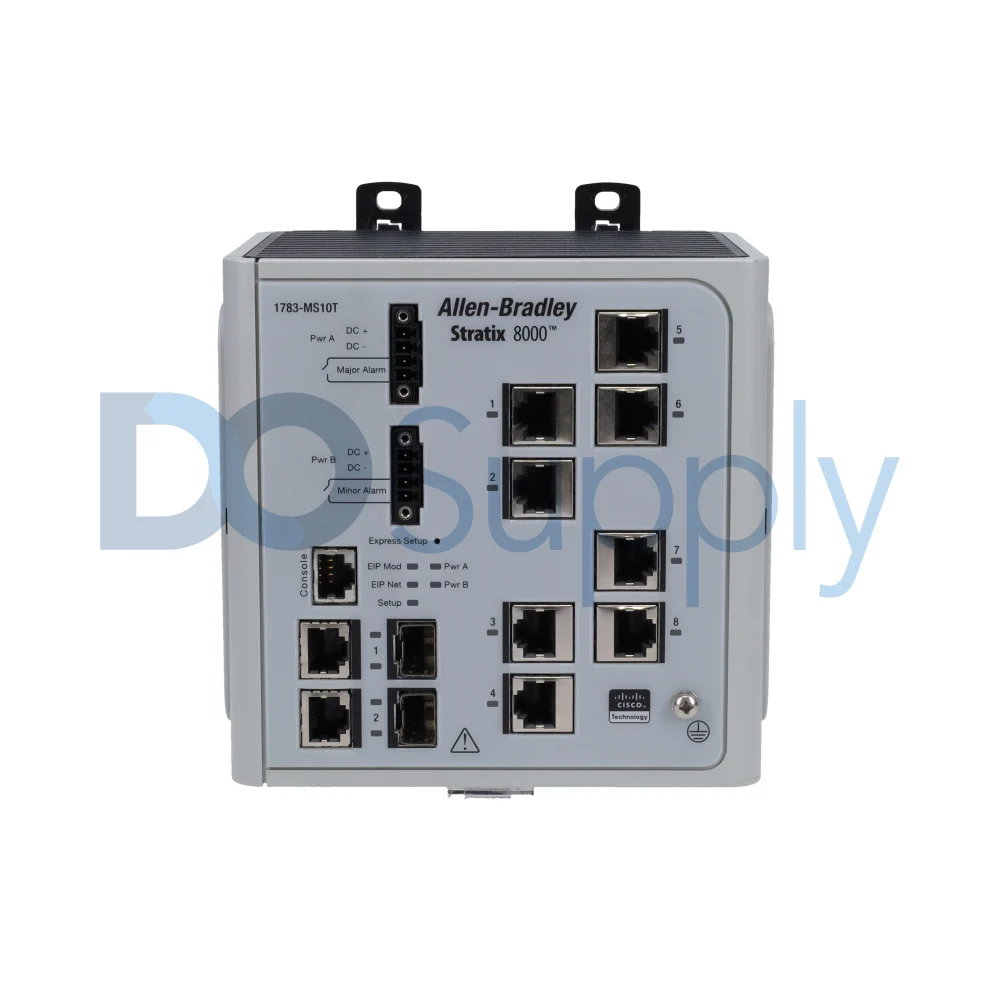
Industrial switches form the backbone of industrial networks for most plant floors. They connect controllers, drives, sensors, HMI, and supervisory systems while maintaining the deterministic communication required for automation. That’s why, when you evaluate a potential switch, several factors will determine whether it performs reliably in your environment.
Hardware Resilience
The quality of an industrial switch comes down to two things: how it’s built on the inside and how it handles heat. Dual power inputs with reverse polarity protection keep the switch running even if one power source fails, which is exactly the kind of redundancy you want in a production environment. A wide input voltage range, typically between 9 and 60 VDC, also means the switch can handle inconsistent power without requiring additional upstream conditioning equipment. Fanless cooling is another feature worth prioritizing, since removing moving parts from the equation means one less failure point in dusty or debris-heavy environments. When you start seeing MTBF ratings above 500,000 hours, that’s a good indicator that the components inside were chosen with longevity in mind rather than just hitting a price point.
Redundancy and Fault Tolerance
Industrial networks need to be operational around the clock, even when the components fail. Power input redundancy has two independent inputs to ensure operation during a supply failure. The ring network topologies that use Rapid Spanning Tree Protocol or Media Redundancy Protocol offer configurable worst-case recovery times of 500 ms, 200 ms, 30 ms, or as low as 10 ms, depending on ring size and profile settings. To provide zero recovery time in the event of a failure in mission-critical applications, switches with the Parallel Redundancy Protocol allow the transmission of duplicate packets on separate paths.
Dynamic Performance Requirements
Deterministic latency is essential in industrial networking used for motion control. Switch forwarding delay should be consistent: cut-through switches typically introduce no more than 10 microseconds of latency. Jitter must be minimized for time-sensitive applications. Time-Sensitive Networking (TSN) switches implementing IEEE 802.1Qbv (Time-Aware Shaper) provide deterministic communication for converged networks by dividing Ethernet traffic into scheduled time slots with guaranteed bounded latency. The credit-based shaper defined in IEEE 802.1Qav complements this by providing traffic shaping for soft real-time streams. Multiple hardware queues supporting priority queuing ensure that critical process data is not delayed by network congestion.
Protocol Compatibility
Industrial networks often include devices from multiple manufacturers, each using its own communication protocols. To make up for this, industrial switches must be able to pass industrial Ethernet traffic transparently without modifying frames. Common protocols that need to coexist on the same network include:
- EtherNet/IP
- PROFINET
- Modbus TCP
- EtherCAT
Support for VLAN tagging (IEEE 802.1Q) allows traffic to be segmented between different functional areas of the network. Combined with Quality of Service (QoS) prioritization, switches can ensure that time-critical industrial protocols receive priority over general network traffic.
Security Architecture
Security in industrial networks extends beyond traditional IT concerns. Unauthorized devices connecting to a network can pose safety and reliability risks as well as cybersecurity threats.
Industrial switches often include several features designed to reduce these risks:
- Access Control Lists (ACLs) to limit communication between specific devices
- MAC address locking to prevent unauthorized devices from connecting to a port
- DHCP snooping to prevent address spoofing attacks
- IEEE 802.1X authentication integrated with centralized RADIUS servers
Broadcast storm control is also important. Without protection mechanisms, excessive broadcast traffic could saturate a network and interfere with real-time control communication.
Management and Scalability
Industrial networks rarely remain static, as new equipment and machines are added or expanded. Having a flexible switch to support this expansion is critical. SNMP version 3 allows confidential monitoring and configuration. Some switches also include online management portals to reduce training. Using switches with DHCP server capabilities simplifies IP address management. The ports range from 5 to 28 to accommodate various density requirements, and combo ports offer media flexibility through SFP slots.
Selecting an Industrial Gateway
While switches handle data movement within a network, industrial gateways connect different systems and communication layers. In most facilities, they serve as the bridge between operational technology (OT) on the plant floor and information technology (IT) systems used for monitoring, analytics, or enterprise integration.
Because gateways often handle protocol translation and edge processing, hardware capability matters. Processor performance, memory capacity, and storage determine how much data the gateway can process locally before transmitting it to higher-level systems.
Application-Driven Requirements
Different industrial applications mean different demands on a gateway. In edge data processing applications, the gateway is expected to filter, preprocess, or aggregate data locally before sending it upstream. This reduces network bandwidth usage and prevents cloud systems from being overwhelmed with machine data.
In remote monitoring deployments, connectivity becomes the priority. Because of this, these gateways often rely on WAN interfaces, such as cellular, to maintain connectivity with remote assets.
Gateways are also frequently used to integrate legacy equipment into modern industrial networks. Older devices may communicate using serial protocols such as:
- Modbus RTU
- PROFIBUS
- CANopen
A gateway must translate these protocols into Ethernet-based communication so that modern control systems or monitoring platforms can interact with them.
Connectivity and Protocol Conversion
Industrial networking gateways are designed to connect many different types of devices while translating between their communication protocols. For example, most gateways include Auto-MDI/X Ethernet ports to connect switches and controllers easily. We also see serial interfaces, such as RS-232, RS-422, or RS-485, to integrate legacy equipment. Additional interfaces may include USB ports for local configuration, digital I/O for direct sensor interaction, and CAN bus connections for machine or vehicle systems.
For remote or distributed applications, gateways may also provide cellular connectivity, such as 4G/LTE and 5G, as well as Bluetooth, for commissioning and maintenance tasks.
Beyond physical connections, gateways must translate among different communication protocols without losing data. Many devices support Modbus RTU, ASCII, and TCP, allowing them to communicate with both serial and Ethernet networks. Some models also include Ethernet/IP scanning capability, while OPC UA servers provide standardized access to plant data for higher-level systems. For cloud integration, MQTT with Sparkplug B is commonly used to efficiently publish industrial data to remote platforms.
Remote Access and Security
Since gateways are often connected to plant networks to external systems, they are the primary attack points by bad actors if not properly secured. Because of this, many industrial gateways include VPN support, which allows them to encrypt connections and enable remote access for maintenance or monitoring without exposing the network to unsecured traffic.
Device identity can also be strengthened through certificate-based authentication, which verifies that only authorized systems can connect to the gateway.
Additional security features are often included:
- Stateful firewalls that restrict network traffic to approved destinations
- Role-based access control for configuration and management
- Firmware verification mechanisms that prevent unauthorized software from being installed
Together, these features help ensure that remote connectivity does not compromise the security of the industrial network.
Selecting the Right Media Converter
Finally, we have media converters, which connect devices using different transmission media. Whether extending Ethernet over long distances, integrating fiber links, or connecting legacy serial equipment, media converters provide a simple and reliable way to bridge these gaps without changing the underlying communication protocols.
Switches (and converters) operate in Layer 1, unlike switches that make forwarding profiles using MAC addresses, which extend network reach with protocol transparency. This simplicity allows distance extension and interference mitigation to be solved at a low cost.
Ethernet to Fiber Converter
One of the most common uses of industrial media converters is extending Ethernet beyond the 100-meter limit of copper cabling. Multimode fiber typically supports distances up to about 2 km, while single-mode fiber can extend links beyond 40 km. Connector types such as SC, LC, or ST should match the existing cabling infrastructure.
Optical power budgets must also be considered to ensure reliable signal transmission across the link. For industrial environments, converters should also support wide temperature ranges, typically –40°C to +75°C, to ensure reliable operation in harsher conditions.
Serial Communication Converters
Serial devices are often necessary for industrial networking. Serial-to-fiber converters extend RS232/422/485 further (up to several kilometers) than its native range and additionally offer complete electrical isolation. The legacy devices are supported at baud rates ranging from 300 bps to 230.4 kbps. Protocol integrity is also preserved by data format transparency.
Fieldbus and Bus System Converters
Some industrial networks require specialized converters designed for specific fieldbus systems. For example, CAN-to-fiber converters extend CAN networks well beyond their native distance limits while preserving timing characteristics required for proper operation.
Depending on data rate, standard CAN networks support distances ranging from roughly 40 meters at 1 Mbps to 500 meters at 125 kbps. Fiber-based converters can significantly extend these limits while providing full galvanic isolation.
Compatibility with CAN 2.0A and CAN 2.0B ensures interoperability with standard CAN devices. Some converters also use single-fiber transmission with wavelength division multiplexing (WDM), reducing cabling requirements in long-distance installations.
Form Factors and Mounting
Industrial media converters are available in several form factors to accommodate different installation environments; the most common is DIN-rail mounting. Compact housings, sometimes as narrow as 25 mm per channel, help maximize panel space in high-density installations. In other cases, converters may be wall-mounted inside junction boxes or installed in rack-mounted chassis that support multiple hot-swappable modules.
Application-Specific Parameters
The final selection of a media converter often depends on the deployment environment. For example:
- Wind turbines may require extended temperature ratings and lightning protection
- Tunnel installations often demand fire-resistant enclosures
- Substation automation systems may require compliance with IEEE 1613 standards
- Oil and gas facilities may require hazardous location certifications such as Class I Division 2 or ATEX Zone 2
Some applications also require higher bandwidth support. For instance, video surveillance systems transmitting uncompressed HD video may place greater demands on network throughput.
Final Thoughts
Selecting the right industrial networking hardware can be summed up by a linear set of evaluations. Start by defining the core requirements of the network, including bandwidth, latency, communication distance, and the number of connected devices. Next, consider your plant’s environment. Temperature ranges, exposure to dust or moisture, and potential vibration from nearby machinery should be noted. Moving on to power needs, available voltage levels, redundancy requirements, and installation constraints, all influence the type of hardware that will ensure reliability over time. Along with the cable, check which type the factory uses and which protocols it’s compatible with.
Finally, it’s important to future-proof. Port density, scalability, and long-term vendor support can make a significant difference as systems expand. Considering the full cost of ownership, including installation, power consumption, and maintenance, helps ensure the selected components remain reliable and cost-effective throughout their service life.
For facilities upgrading existing networks or building new systems, selecting the right switches, gateways, and media converters can significantly impact long-term performance and reliability. If you’re evaluating industrial networking hardware for your application, we at DO Supply can help you identify compatible components and keep your automation systems running smoothly. We also have other blogs covering Allen-Bradley Stratix products, such as this one comparing the 5000 to its competitors.
We offer a selection of managed switches and industrial routers, such as the Allen-Bradley Stratix family, as well as a variety of network and communication adapters for popular PLCs. All of our products are tested and backed by our warranty for a stress-free experience! Come stop by our site and see what we can DO for you!
DO Supply Inc. makes no representations as to the completeness, validity, correctness, suitability, or accuracy of any information on this website and will not be liable for any delays, omissions, or errors in this information or any losses, injuries, or damages arising from its display or use. All the information on this website is provided on an "as-is" basis. It is the reader's responsibility to verify their own facts.