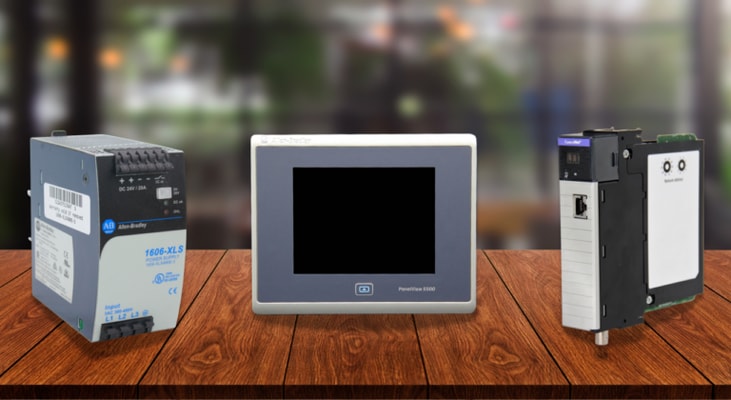
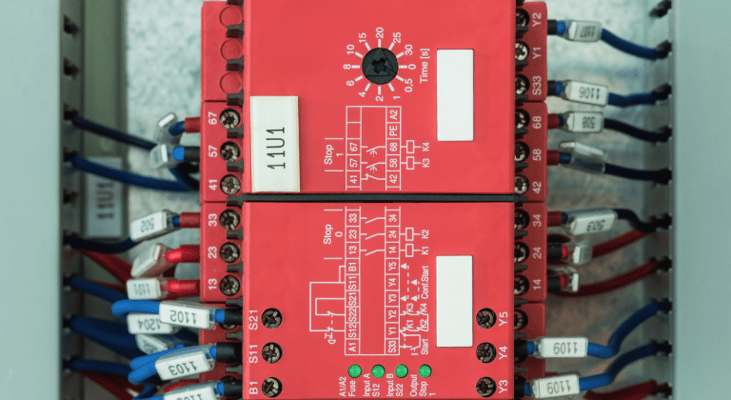
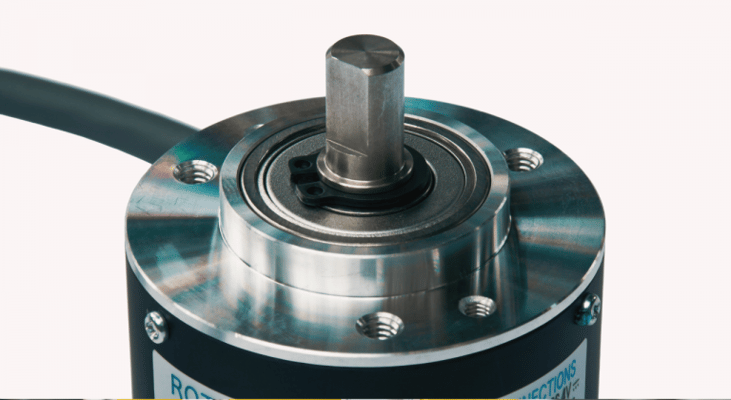
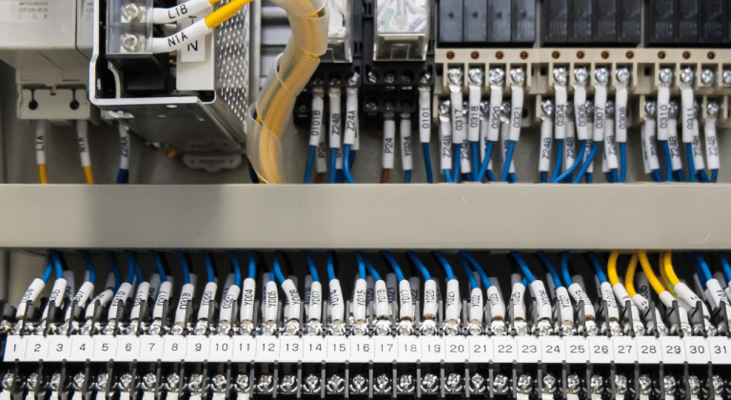
Allen-Bradley is a renowned brand of industrial automation technologies owned by Rockwell Automation, a company that offers a wide variety of digital transformation and factory automation solutions. The Allen-Bradley product line features a broad portfolio of industrial automation and control products like Human-Machine Interfaces (HMIs), Programmable Logic Controllers (PLCs), sensors, DC drives, Variable Frequency Drives (VFDs), and safety devices. All these products are designed for optimal performance, robust, and reliable operation in harsh industrial settings. They enable real-time system monitoring, precise control over machinery, and improved safety within manufacturing and other industrial environments. The PowerFlex DC drive family is a complete collection of high-performance DC motor control technologies. It includes Allen-Bradley PowerFlex DC field controllers, PowerFlex DC drives, and PowerFlex DC stand-alone regulators (SARs). PowerFlex DC drives provide cost-effective...
If you work as a maintenance tech or plant engineer, you know the Allen-Bradley MicroLogix PLC. It’s everywhere in industrial automation, and for good reason; though, even the best equipment needs some care. Troubleshooting and regular maintenance help keep it in working condition. Here’s a guide that cuts through the jargon and turns those official specs into real-world advice you can actually use. The first and by far the most effective ‘line of defense’ against sudden system failures is good old proactive maintenance; after all, a well-maintained MicroLogix controller is just much less ‘likely’ to develop those catastrophic faults that cause so much production loss. All maintenance tasks must be carried out by a qualified technician familiar with the dangers of industrial control systems. Conduct pre-work maintenance when the power of a MicroLogix system is off and disconnected from all sources. Shop for MicroLogix 1000 Series PLCs and Accessories Here! The operating environment...
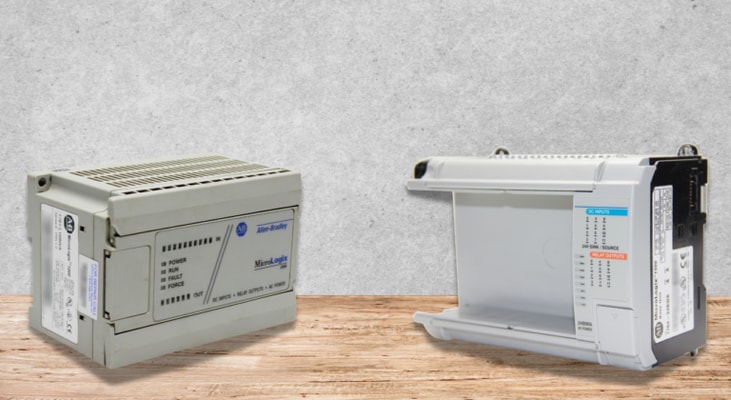
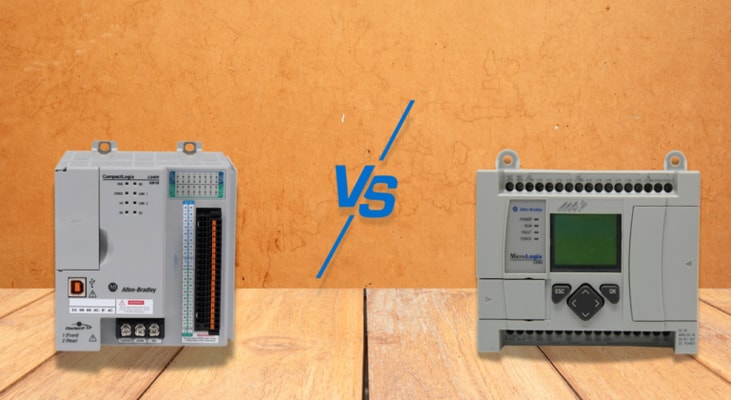
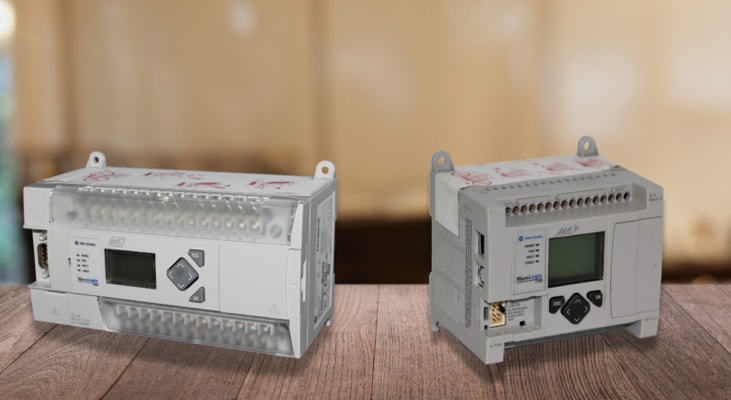
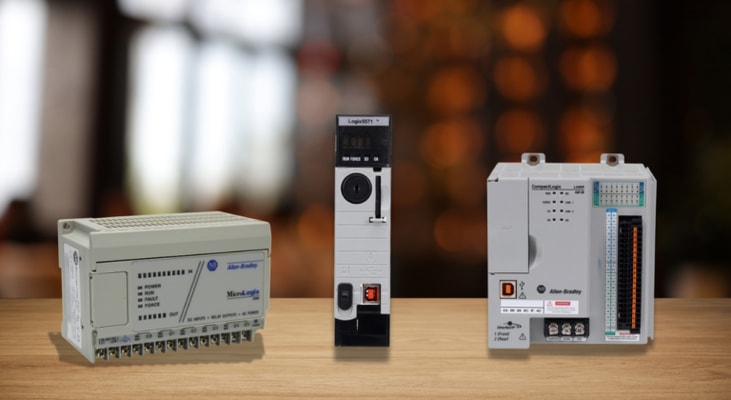
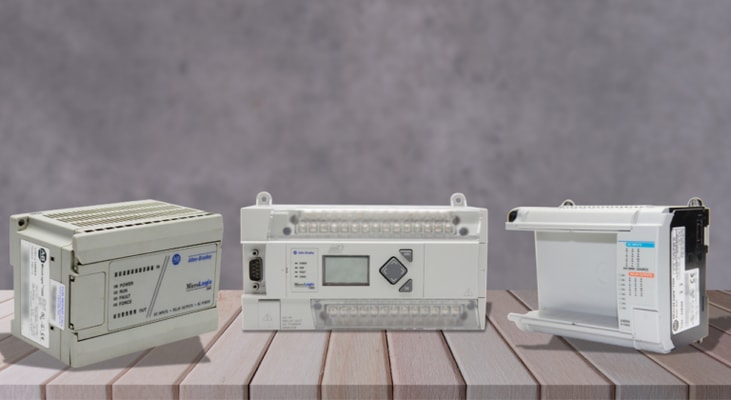
Programmable Logic Controllers are rugged, programmable industrial computers that are designed to control and monitor machinery in industrial settings. They are used for an extensive range of tasks, including material handling and quality control, as well as energy, manufacturing, and assembly line management. By executing user-programmed logic, PLCs are the essential building blocks of industrial automation, enabling greater precision, improved efficiency, and reduced system downtime across automation applications. Rockwell Automation, a global leader in industrial automation, offers two innovative Allen-Bradley PLC families ideal for small and mid-sized industrial automation applications: the CompactLogix and MicroLogix PLC series. The Allen-Bradley MicroLogix series provides five levels of control in an affordable, compact package. MicroLogix PLC controllers (Bulletin 1761-1766) are compact, self-contained PLCs that come with built-in I/O and basic networking capabilities. They are...
Designing an OEM system can be quite an ambitious endeavor. Every wire, sensor, and relay has to serve a purpose. For smaller systems, an additional challenge comes into play. Not only does the machine have to work, obviously, but it must do it without inflating the cost, complexity, or footprint of the control hardware. This is where Allen-Bradley’s MicroLogix PLC family steps in. These controllers are built with the realities of small machine automation in mind: limited space, tight budgets, and the constant demand for reliability. Whether it’s a packaging line tucked in a corner of a factory floor or a self-contained water treatment skid running in a remote facility, MicroLogix controllers simplify control design by combining power, communication, and flexibility in a single, easy-to-integrate package. Let’s get into how the MicroLogix fits the demands of compact OEM designs and tight spaces within machine automation. We can’t start an article about small automation and MicroLogix...
Only a few names have the universal respect and recognition of Allen-Bradley for their reliability, innovation, and solid performance. In a very competitive market, what has made Allen-Bradley PLCs the lasting reference point? It stems from a unique blend of original innovation, a complete and integrated ecosystem, visionary hardware design, and a commitment to fulfilling the industry’s needs. The foresight has allowed Allen-Bradley PLCs to provide industrial control applications uninterrupted to this day, making them the reference point all others are measured against. The historical heritage of Allen-Bradley PLCs would be worthless without a contemporary hardware Portfolio that addresses today’s challenging industrial needs. Rockwell Automation has diversified its products into three separate but cohesive lines of Allen-Bradley PLCs. The ControlLogix family represents the pinnacle of the Allen-Bradley PLC platform. The latest variant, the ControlLogix 5580 (or L8x series), witnesses...
Under Schneider Electric, Modicon has grown from the world’s first PLC into a versatile suite of industrial automation solutions, spanning PLCs, motion controllers, PACs, and integrated networking modules. Designed for everything from small machines to complex, redundant systems, modern Modicon controllers are IIoT-ready, offering edge computing, advanced cybersecurity compliance, and seamless connectivity via Ethernet/IP, Modbus TCP, OPC UA, and cloud platforms. In the context of motion control, Modicon delivers synchronized axis management, high-speed processing, and scalable architectures—but like any technology, it excels in some applications more than others. This guide explores where Modicon and motion control are a perfect fit and where you might want to look elsewhere. Shop for Modicon Equipment Here The Modicon M221 is a compact, affordable PLC built for small to medium-sized machines. Connectivity options include an embedded Ethernet port, Modbus serial link, and USB for...
It’s easy to get carried away by the shiny parts and robotic movements in automation. After all, what’s the first thing you think of when you hear “automation”? Is it a bottling plant? A palletizer, perhaps those robotic floor waxers at your local grocery store? There is so much on the surface looking in that it’s easy to ignore the guts within that make it all possible, especially when they’re designed to be so compact and hidden away. We’re talking about the PLCs, drives, and motors that make it all move, specifically a family of PLCs called MicroLogix by Allen-Bradley. These kinds of PLCs aren’t designed to dazzle with flashy features but are built with a reputation for reliability and compact form factors. They’re exactly the type of PLC you would depend on for moving water from a reservoir, coordinating a conveyor in a warehouse, or even running in pharmaceuticals. Applications where these MicroLogix PLCs could be found are just what we’re going over today. We will break down the...
The industrial complex of our world is always evolving, from steamboats and turbines to assembly lines at Ford. We are now at an age where the industry is shifting to a more connected and digital format. Whether AI is being implemented in our systems, the Internet of Things, where everything is controlled via Ethernet or Wi-fi, or having a system where drives can reliably predict the life cycle of the components it controls. Modicon understood this technological shift when they were developing the first PLC. Decades later, they still hold strong under Schneider Electric, boasting a range from HVAC controllers to safety and networking. Let’s take a look at how they’re contributing to the Industry 4.0 movement! Buy Modicon PLCs Here While we did set the stage of a digitized world filled with online computing and AI, the truth of the matter is that without a robust hardware foundation, this new age of technology simply cannot progress. The new silicon quietly running at the edge that...
Have you ever paused to think about how all the fancy gadgets around us function at their core? It all starts with the humble bit, the smallest unit of data in computing. A bit is like an on-off switch; it can be either a 0 or a 1. These tiny bits are the backbone of every digital communication, from your smartphone’s texts to a car’s sophisticated onboard system. Now, let’s scale it up a bit. Eight bits come together to form a byte. If the bits were solo artists, a byte would be their rock band. This ensemble is crucial because, with bytes, we begin to see the formation of something meaningful, such as a single character on your screen or a command to a machine. For instance, the letter ‘A’ in ASCII code is represented by the byte 01000001. Why does this matter in automation? Well, whether programming a PLC (Programmable Logic Controller) to manage a production line or setting up a network of sensors, every instruction sent and received is composed of these bits and bytes...
Safety PLCs are those overachieving, highly dependable systems that ensure your factory doesn’t turn into an accidental pyrotechnics show. Safety PLCs, or Programmable Logic Controllers, play a key role in maintaining this balance by preventing accidents and ensuring safe operation. Unlike regular PLCs that manage routine control tasks, Safety PLCs add a crucial layer of protection. Their significance in industrial settings is immense, as they help avoid incidents that could lead to expensive downtime or hazardous situations—understanding how Safety PLCs work and their applications reveal why they are indispensable in modern industrial automation. Safety PLCs are Programmable Logic Controllers designed specifically to enhance the safety of industrial operations. Unlike standard PLCs, which primarily focus on automating and controlling machinery and processes, Safety PLCs incorporate additional features that ensure the system operates safely under all conditions. These features include...
In today’s industrial landscape, advanced motor control is crucial for improving efficiency, precision, and reliability across various applications. A DC drive is a speed control system for a DC motor that regulates the voltage supplied to the motor and makes sure the motor’s operation remains at the desired speed. This technology is cheaper, more efficient, and reliable. Additional advantages include relatively easier operation and implementation. DC drives are preferred over AC drives for regenerative applications or applications that demand high power output or very fine motor control, such as robotics and transportation. Although VFDs or AC drives are an alternative solution to DC drives, DC drives are still being used extensively in applications such as hoists and cranes, winders, elevators, paper production machines, spindle drives, and crushers. PowerFlex DC drives by Allen-Bradley, part of Rockwell Automation, offer sophisticated digital solutions for precise control and...
Ever watched a robot arm assemble a car with the precision of a master surgeon and wondered, “How on earth does it do that?” The secret lies in motion control, a key player in the industrial automation game. Motion control ensures that machinery moves exactly as intended, whether it’s positioning, velocity, or acceleration. At the heart of these systems are PLCs (Programmable Logic Controllers), the brains behind the brawn, orchestrating every movement with perfect timing. Motion control is all about getting things to move precisely and efficiently. From robots on the assembly line to CNC machines carving out intricate parts, motion control makes it all happen. It’s powered by key components like servo motors and encoders, all managed by robust PLCs. Allen Bradley, a trusted name in automation, offers a range of products that exemplify how effective motion control systems should function. When machines move with purpose and precision, industrial processes achieve new levels of...
Communication is a trait that can be studied not only in humans and animals but also in machines. Just like the people around you, machines, specifically automation equipment, talk to each other to pass vital information along. This information is then sent to equipment like robot arms to assemble pieces of a product or to PLCs to indicate that a conveyor has stopped. This communication is entirely in a new language developed specifically for the industrial environment: PLC communication protocols. These protocols serve as the foundation of industrial automation, enabling a diverse array of devices to understand each other and work together seamlessly. They dictate how data is formatted, transmitted, and interpreted across networks, ensuring that every message sent is accurately received and acted upon. Without these protocols, the precise choreography of movements and actions that we take for granted in automated systems would be impossible. PLC communication protocols vary widely in...
Within the ever-changing field of industrial automation, the Omron CV500 series stands as a testament to innovation, control, and precision. The Omron CV500 series consists of various modules needed to build programmable controllers. This series has CPU units, which handle processing activities, such as the CV500-CPU01-EV1, and power supplies, which supply power to the CPU and several other parts of the system, like the CV500-PS-221. Expanding modules like the CV500-BC031 and CV500-BI042, specialized Input/Output units, and communication choices like the SYSMAC-NET link make smooth data sharing possible. These programmable controllers are used in many sectors because they provide dependable and flexible Industrial automation solutions. The Omron CV500 series comprises the following modules: CPU backplane module Ethernet module Control module display Host link module Motion Control module Power Supply module Optical Link Module Omron’s CV500-BC051 CPU backplane is particularly made to...
Omron’s CPM2 series is a standout in the dynamic field of industrial automation. It offers various programmable logic controllers (PLCs) adaptable to industrial environments. These PLCs are specifically developed to optimize automation processes. This article is an in-depth guide to understanding the features and capabilities of the Omron CPM2 series modules. The CPM2 series enables professionals and system integrators to improve production lines and increase operational efficiency with its compact design and sophisticated programming choices. In this article, we will list down some of the modules and discuss their different features like programming capacity, operating temperature, power consumption, supply voltage, number of I/O connections, communication protocols, etc. One of the components of the Omron CPM2 Series, the CPM2A-60CDR-A module, possesses several positive qualities. This product has been approved by esteemed regulatory organizations like UL, CSA, and CE, guaranteeing...