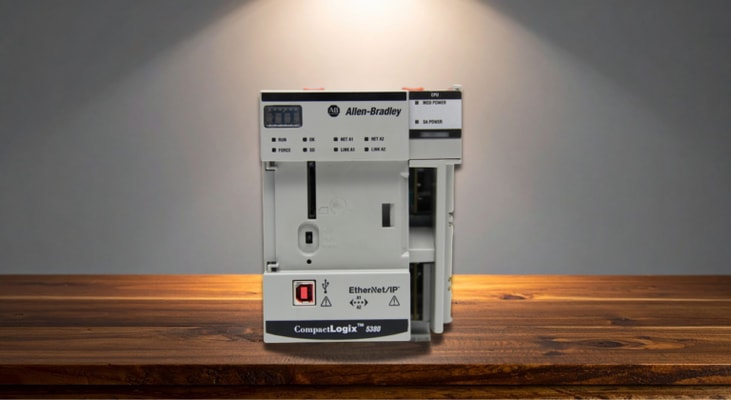
If you open a PLC rack and point to the CPU, most people will tell you it’s “the brain of the system” and then immediately stop talking. Not because that explanation is wrong, but because it usually leads straight into computer science terms that don’t help much when you’re trying to understand what the PLC is actually doing. Really, the CPU is more like a little worker instead of a brain. His main task is to ensure nothing is on fire, read and understand the instructions given to him, tell the rest of the system what to do based on them, and record the results. This happens thousands of times a second without our little worker getting distracted or tired. Once you look at it that way, the CPU no longer feels abstract, and you can follow its thought process step by step to see why timing matters. Though there is more to it than that, so let’s decipher what the CPU does inside of a PLC, all in plain English. You’ll often see the terms CPU and processor used interchangeably, especially...
PLCs are considered the backbone of modern industrial automation systems. From the production of diverse devices to the operation of large, fully automated factories, the need for more precise, cost-effective control systems is stronger than ever. At the forefront of modern technological progress stands the Programmable Logic Controller (PLC), an industrial‑grade computer specifically designed to supervise and control devices, processes, and entire production lines in real time. Nowadays, PLCs have progressed from basic relay-based units to modern computing platforms capable of managing sophisticated motion control, trend and alarm displays, data handling, process optimization, and interfacing with various cloud services. Consequently, the worldwide automation sector now includes many PLC Brands, each offering its distinctive design approach, advantages, and technological breakthroughs to the market. Selecting the appropriate PLC is no longer straightforward. Engineers need to...
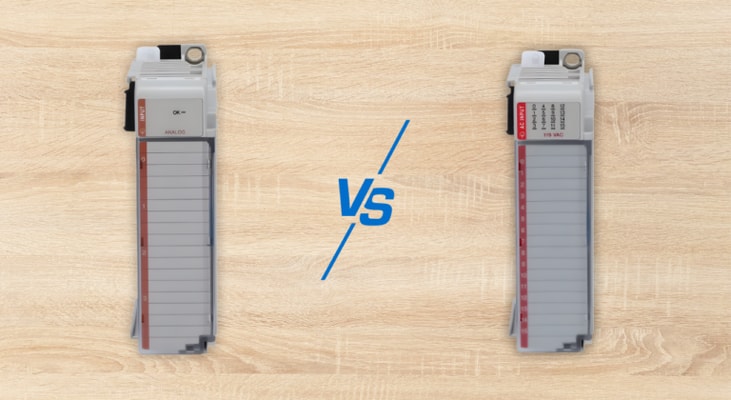
Analog and digital inputs are the primary mechanisms by which automation systems interpret and sense the physical world. Each industrial automation system relies on input signals to measure process variables, monitor states, and provide feedback to the connected controller. Originating from field input devices such as transmitters, switches, pushbuttons, and sensors, these signals are transmitted to input modules and serve as the foundation for all subsequent decision-making and control logic. Input modules in automation systems are engineered to reliably convert electrical signals into usable data while maintaining high accuracy, effective electrical isolation, and immunity to noise. The key distinction between digital and analog inputs lies in how information is represented: digital inputs communicate information in discrete, non-continuous steps, typically representing binary states such as ON/OFF or True/False, while analog inputs utilize continuously varying measurements to...
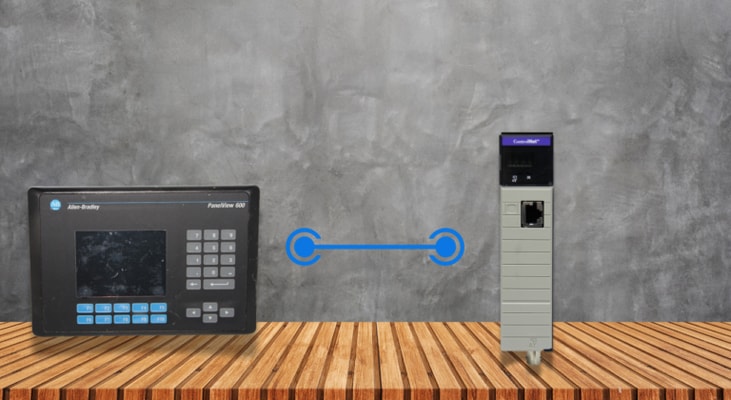
Within industrial automation frameworks, HMIs (Human–Machine Interfaces) serve as the essential link between human operators and the control logic executed by PLCs (Programmable Logic Controllers). Although PLCs handle deterministic, real‑time regulation of equipment and processes, HMIs deliver visual displays, operational command, alarm handling, and system diagnostics. Reliable and sturdy HMI–PLC communication isn’t a matter of chance. It demands thoughtful network layout design, prudent protocol selection, effective tag handling, fine‑tuned update intervals, and solid error‑management techniques. This piece examines tested communication suggestions and best‑practice guidelines that automation engineers can use to achieve lasting stability when linking HMIs and PLCs in industrial settings. HMIs act as the operator‑oriented interface of an automation system. They convert intricate control logic and live process data into user‑friendly graphical displays that operators can readily...
PLC Brands have a pivotal influence on the efficiency, scalability, and dependability of control systems. It is also true that not all PLCs are the same. Different manufacturers concentrate on different industries, environmental resilience, processing rates, and communication standards. Choosing the right PLC family has evolved from a normal buy to a strategic investment as the industry shifts toward Industry 4.0 and IIoT adoption. A manufacturing system’s ability to grow or the need for costly redesigns in the future can be determined by choosing the right PLC brand. This article outlines the most reputable PLC Brands and their premier controller families to assist you in making a well‑informed investment choice. Shop for Allen-Bradley ControlLogix PLCs Here Allen-Bradley from Rockwell Automation consistently ranks #1 among top-tier PLC brands. Allen-Bradley now leads the Micro800TM family (Micro810 , Micro820 , Micro850 , and Micro870 ), in addition to the advanced GuardLogix safety...
In the architecture of modern industrial automation, the common thread that ties everything together is synchronization. This ensures everything operates in real time. The regular and consistent exchange of data among the main control elements, namely Programmable Logic Controllers (PLCs), Human-Machine Interfaces (HMIs), and motor drives, is the nervous system of any automation system. The communication efficiency of the manufacturing, energy, and transport systems determines their impact on intelligence, safety, and efficiency. This article explains the technical nature of this interaction by examining the role of each device, the language they speak, and the physical and logical paths that must be in place for it to work properly. At the center of any control system is the PLC, which is undoubtedly the brain of the operation. These are computer systems that are designed for industrial use. The main task of these devices is to run logic control and deterministic logic control. The...
Assembly lines are the backbone of American industry. It allows factories to produce products faster by using a conveyor belt to move them to different workers responsible for a single task. This idea originated in early meatpacking plants and was revolutionized by Henry Ford in 1913 with the production of the Ford Model T. It was at the core of the second industrial revolution and remains central to the transition to the fourth industrial revolution, or Industry 4.0, that we are experiencing today. The only difference is that robots and other automated technology have now replaced the majority of those workers on the line. Yet, what remains the same between industry 2.0 and 4.0 is the threat of downtime. If something goes awry, parts are misplaced, or a component of the assembly line is out of commission, the line shuts down for repair, and every second lost is revenue. To combat this, factories turn to more robust systems, redundancies, and reliable products. From the beginning of...
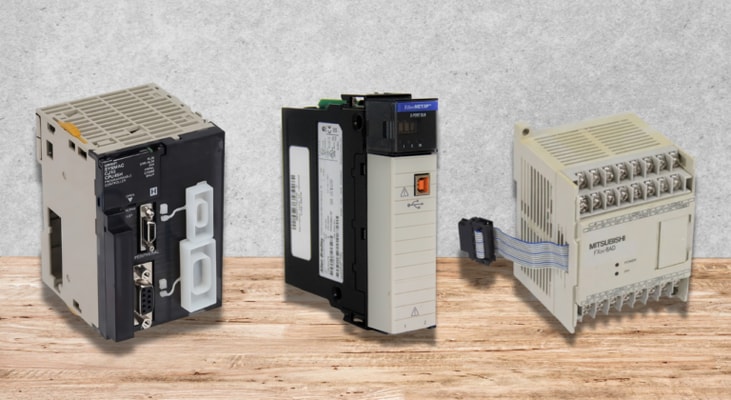
The global manufacturing sector is undergoing a profound shift. The Programmable Logic Controller (PLC), a powerful and intelligent technology meant to control and manage industrial machinery and procedures, is the foundational element of this automation system. Getting the correct PLC Manufacturer is a greater challenge nowadays than ever before. The reason is that so many different PLC manufacturers offer different hardware ranges and features, communication standards, and software frameworks. Selecting a suitable option for your automation system requires understanding both your current automation needs and your future communication strategy. A Programmable Logic Controller is a dedicated industrial computer created for real‑time control. PLCs are designed to withstand vibration, temperature changes, moisture, and dust while operating continuously without fault. They are capable of directly managing digital and analog inputs, executing logic, and driving actuators. PLCs execute a...
Despite the rapid shift to high-performance PAC platforms, IIoT-enabled automation, and industrial 4.0, the MicroLogix Programmable Logic Controllers remain deeply integrated into industrial operations globally. Originally launched by Allen-Bradley (Rockwell Automation) to replace larger, hard-wired relay-logic control systems, MicroLogix PLCs have evolved into robust, reliable, and instruction-rich control platforms capable of handling a wide range of discrete and analog automation tasks. The exceptional balance between reliability, cost, simplicity, ease of programming, long-term deployability, and electrical ruggedness is what makes the MicroLogix family a lasting success, rather than its sheer processing capabilities. In industrial engineering settings where determinism, uptime, and ease of maintenance are prioritized over advanced features, the MicroLogix series remains a reliable, dependable workhorse. This article explores why the MicroLogix series still matters. Despite the...
PLCs have become intelligent brains that control manufacturing processes, process control systems, and infrastructure management worldwide. The choice of the PLC brand is very important for project success, operational efficiency, and long-term cost-effectiveness. This paper will examine the applicability of six primary manufacturers of PLCs: Allen-Bradley, Omron, Siemens, Schneider Electric, and Mitsubishi Electric to small, medium, and large-scale automation projects. The factors that determine the PLC across project sizes are essential before delving into specific brands. These are processing capabilities and performance, power and scalability, software development environment, ease of programming, integration with existing system capabilities, cost impact and base costs, availability of technical support and training, reliability and mean time between failures, and compliance with international standards and certifications. Allen-Bradley, a company within Rockwell Automation, has...
Over the past two decades, Allen-Bradley MicroLogix controllers have been the backbone of many industrial automation applications. In favor of Compact Logix and Micro800, Rockwell Automation has phased out the MicroLogix product line; however, a large worldwide installed base continues to rely on MicroLogix controllers for daily operations. MicroLogix controllers automate countless OEM (Original Equipment Manufacturer) panels, commercial HVAC (Heating, Ventilation, and Air Conditioning) equipment, packaging lines, agricultural machines, and municipal water systems. The majority of MicroLogix installations are now over a decade old, with most of these controllers having been in continuous operation for 10 to 20 years. As such, to ensure operational continuity and reliability, their regular and effective maintenance is vital and no longer an option. Power fluctuations, component wear and degradation, harsh industrial environments, communication errors, and aging/obsolete electronics...
To provide reliable control for small automation systems, Rockwell Automation created the MicroLogix family of compact programmable logic controllers (PLCs). MicroLogix features flexible input/output (I/O) expansion, communication options, and core control functionality in a compact, affordable package that is designed for simplicity and dependability. MicroLogix controllers are designed to perform automation functions for either standalone or networked equipment, including data handling, counting, sequencing, and network communication. With a consistent workflow compatible with other Rockwell Automation platforms, users can effectively manage I/O operations and design ladder logic. MicroLogix also gives engineers the means to automate smaller machines or subsystems without excess hardware or complexity. It fills the space between basic relay logic and large-scale control systems, delivering an ideal mix of performance and simplicity. Now, let’s discuss some of the parameters that...
Given the diverse and constantly advancing landscape of PLC brands, a strategic comparison of each brand’s unique features and capabilities is essential to choosing the best PLC for your application. Evaluating factors such as performance, design, safety, connectivity, scalability, and cost against your specific application needs will lead to the right decision. This article provides a detailed comparison of leading PLC brands:Allen-Bradley, Siemens, Mitsubishi, and Schneider PLCs. Developed through a long history of technological advancements, Allen-Bradley PLC brands, by Rockwell Automation, are smart, high-performance, multi-disciplined control solutions. They leverage robust design and advanced technology to enable more operational efficiency, reliability, scalability, and application flexibility. Shop for Allen-Bradley PLCs Here ControlLogix Series: A high-performance Allen-Bradley PLC brand that offers a powerful combination of integrated safety, high-speed processing, and...
Rockwell Automation offers a comprehensive portfolio of industrial automation products under the Allen-Bradley brand name. The product lines range from motion control solutions, motor drives, power supplies, sensors and switches, Human Machine Interfaces (HMIs), motor controls, circuit and load protection devices, Input/Output (I/O) modules, relays and timers, and safety modules to programmable controllers and networking infrastructure. Allen-Bradley products have a long-standing reputation for robust design, premier integration, exceptional reliability, and advanced features, making them a perfect fit for a wide range of industrial applications. This article features the most commonly used Allen-Bradley products. The Allen-Bradley lineup of PowerFlex Variable Frequency Drives (VFDs)/AC drives provides cutting-edge motor control technology. These drives enable precise control of motor speed and torque, resulting in significant energy savings, reduced mechanical stress, and enhanced...
Smart Manufacturing integrates advanced technologies such as industrial automation, real-time monitoring, the Internet of Things, and data analytics to increase system efficiency. The main component of this smart manufacturing is programmable logic controllers. Among the different PLC brands, Allen-Bradley PLCs, manufactured by Rockwell, stand out as a solid overall choice. These PLCs are the cornerstone of the modern manufacturing and development scenarios in industrial automation. They help systems reach maximum efficiency by enabling seamless control, data management, and real-time monitoring. Today, we will go over how Allen-Bradley PLCs accomplish this, their integration methods, and more. Allen-Bradley PLCs are industrial controllers designed to control logic and manage input and output operations reliably, even in harsh operating environments, helping reduce downtime. In the context of Smart Manufacturing, these PLCs play a vital role as the central intelligence of automated...