From Pumps to Packaging Lines: Everyday Applications of MicroLogix PLCs
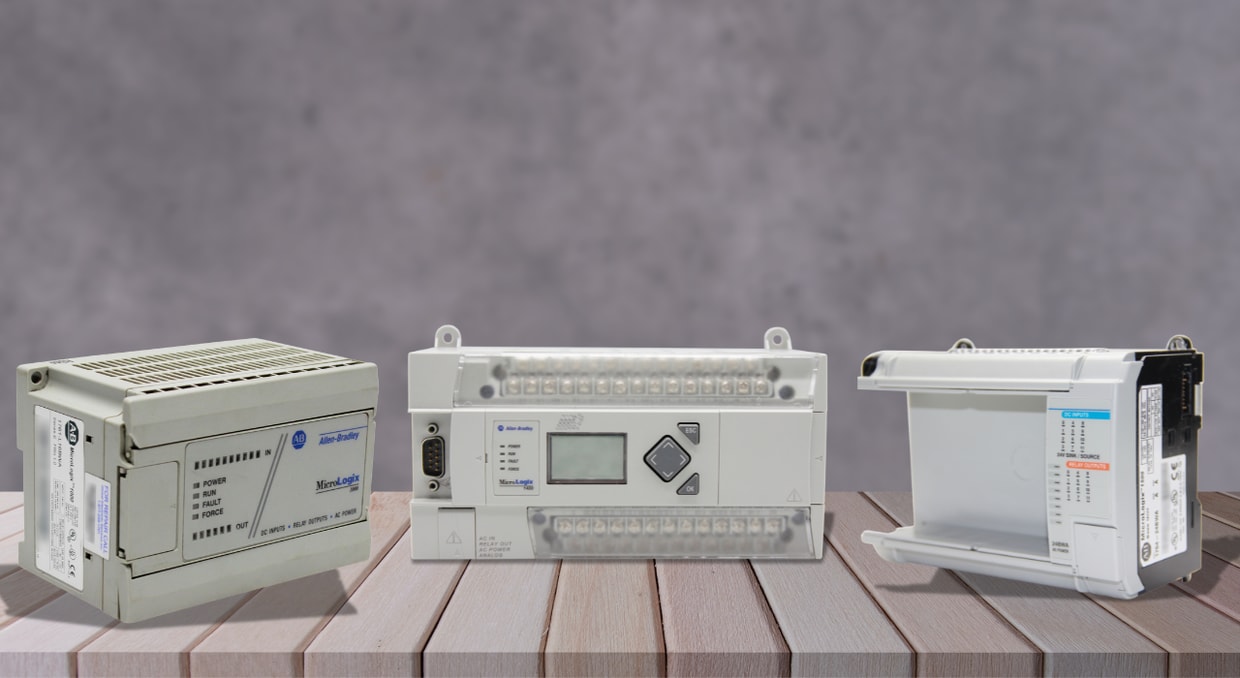
It’s easy to get carried away by the shiny parts and robotic movements in automation. After all, what’s the first thing you think of when you hear “automation”? Is it a bottling plant? A palletizer, perhaps those robotic floor waxers at your local grocery store? There is so much on the surface looking in that it’s easy to ignore the guts within that make it all possible, especially when they’re designed to be so compact and hidden away.
We’re talking about the PLCs, drives, and motors that make it all move, specifically a family of PLCs called MicroLogix by Allen-Bradley. These kinds of PLCs aren’t designed to dazzle with flashy features but are built with a reputation for reliability and compact form factors. They’re exactly the type of PLC you would depend on for moving water from a reservoir, coordinating a conveyor in a warehouse, or even running in pharmaceuticals. Applications where these MicroLogix PLCs could be found are just what we’re going over today. We will break down the families and give insight into how they’re used in industry.
MicroLogix 1000: Small in Size, Big on Utility
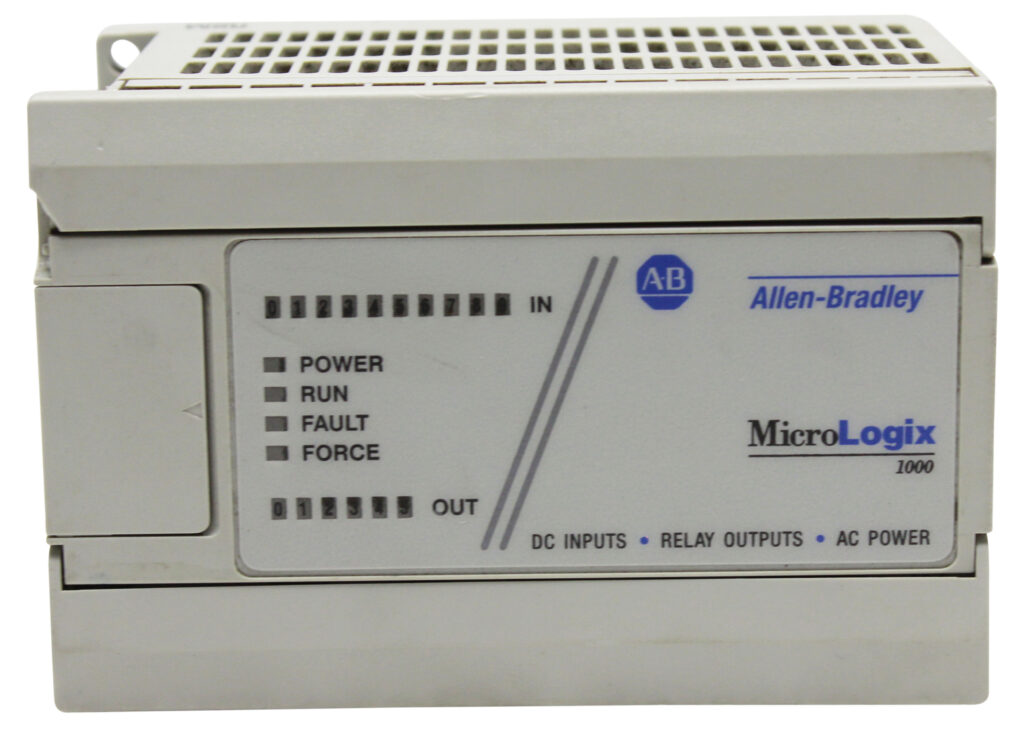
The MicroLogix 1000 is the entry branch of the MicroLogix PLC lineup. While it may be the smallest of the bunch, it sets the tone for what the entire line came to represent: compact, cost-effective control that still packs in real functionality. We’re talking about a 120mm x 80mm x 40mm starting footprint small, and yet it can still handle up to 32 I/O points.
Sure, looks may be deceiving, but the 1000 comes preloaded with 1k of programming and data memory, fast processing times (1.5 ms for a 500-instruction program), and a built-in EEPROM to retain ladder logic even after a power loss. This reduced the reliance on batteries or external modules to keep programs from wiping out.
Another advantage of the 1000 was its flexible I/O options. These MicroLogix PLCs could be ordered with AC, DC, or analog inputs; relay, triac, or MOSFET outputs; and both AC and DC power options. That mix allowed it to fit into a wide variety of applications without forcing major redesigns around the controller. It also supported multiple communication protocols through its RS-232 port, and with the right modules, it could even tie into DeviceNet or EtherNet/IP networks.
This MicroLogix 1000 PLC family shines in operations such as water and wastewater, including small pumping station controls or tank level monitors. Then there’s packaging and material handling, where the 1000’s compact form factor allows it to easily integrate into standalone machines. Think labeling stations, small conveyors, or basic pick-and-place equipment. Even remote SCADA applications benefited from its simple networking options and support for RTU slave protocols.
MicroLogix 1100: Adding Brains and Visibility
The MicroLogix 1100 PLCs took what worked on the 1000 and stepped it up to include a built-in 10/100 Mbps EtherNet/IP port and an onboard LCD screen. This enabled peer-to-peer messaging, SCADA integration, and a way for operators to check its status or tweak values without extra hardware. This is a noticeable step up, and it is worth the upgrade for many engineers.
Those features paid off most in applications where small stations needed to be both independent and connected. Take remote pumping stations as an example. Instead of being limited to local start/stop control, the 1100 could log data, send it over Ethernet, and accept updated setpoints from a central SCADA system. Operators gained real-time insight into flow, pressure, or tank levels without needing to be physically on-site.
Another great example of where these MicroLogix PLCs live is in packaging lines, especially in indexing or feeding applications. With high-speed counter inputs and PTO/PWM outputs, conveyors, filling heads, or feeders could be synchronized to precise cycle times.
Overall, the MicroLogix 1100 PLCs offer a sweet spot between compact and cost-friendly, but with more quality-of-life upgrades than their predecessors.
MicroLogix 1200: Flexibility for Scalability
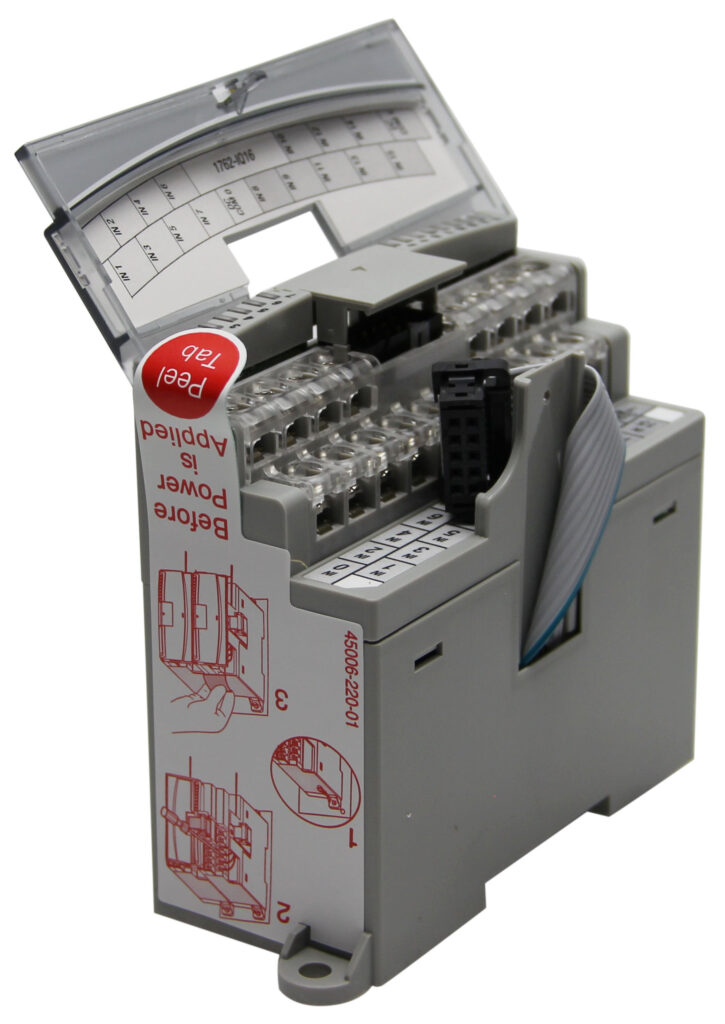
The MicroLogix 1200 stepped it up a notch by adding more I/O and features for applications that the 1100 and 1000 couldn’t tackle. These MicroLogix PLCs are available in 24 and 40-point versions and can expand further with up to six rackless I/O modules. This gives engineers the flexibility to tailor a system without committing to a larger PLC system. Features like a 20 kHz high-speed counter, programmable limit switch functions, and floating-point math support meant it could accurately take on more demanding control tasks.
These MicroLogix PLCs are used in pharmaceutical production because their high-speed counters and interrupt inputs can monitor sensors and actuate valves with split-second accuracy, making them ideal for batching and timing. Add in their ability to handle floating-point values, and they can manage dosing operations without losing precision.
These MicroLogix PLCs also saw heavy use in food and beverage applications, particularly where recipe management and scheduling came into play. With optional memory and real-time clock modules, it could store programs and switch between recipes, while keeping track of time-based operations like shift cycles or cleaning intervals. For a plant running multiple small machines side by side, that capability kept operations smooth without requiring a higher-end system.
Overall, the MicroLogix 1200 found its place where automation needed more horsepower than the entry-level models could provide, but still had to stay compact and affordable. It bridged the gap between simple machine control and more sophisticated systems, making it a favorite for OEMs building mid-sized equipment across multiple industries.
MicroLogix 1400: So Good it Skipped 1300
Keeping up with the trend of growing features, the MicroLogix 1400 takes everything from before and adds the ability to support 256 I/O points, faster high-speed counters, and multiple communication protocols (EtherNet/IP, Modbus, DNP3).
What you get are extremely capable MicroLogix PLCs that are especially valuable in SCADA applications. Municipal water and wastewater plants often relied on the 1400 to tie together remote sites, using Ethernet/IP or Modbus RTU to bring tank levels, pump statuses, and flow readings back into a central control room. Its data logging and recipe storage gave operators historical insight and easy changeover between process configurations.
These MicroLogix PLCs also carved a niche in HVAC and building automation. With their mix of analog and digital I/O, they could control fans, dampers, and compressors while simultaneously communicating with higher-level systems. As you could imagine, facility managers appreciate the fact that one unit could monitor temperatures, drive relays for equipment, and share data over ethernet.
What really sets the 1400 apart is its ability to serve as a bridge between small stand-alone systems and plant-wide control. This balance made it one of the most widely adopted models in the MicroLogix PLC family.
MicroLogix 1500: The Titan of Small PLCs
If you thought 256 points of I/O was fantastic, boy, do we have news for you. The MicroLogix 1500 is expandable to over 512 points of I/O when combined with Compact I/O (1769 series). It also supports up to 14K of onboard, non-volatile memory, scan times of less than 1 millisecond per 1K of user program, two 20kHz high-speed counters, and up to 16 compact I/O modules.
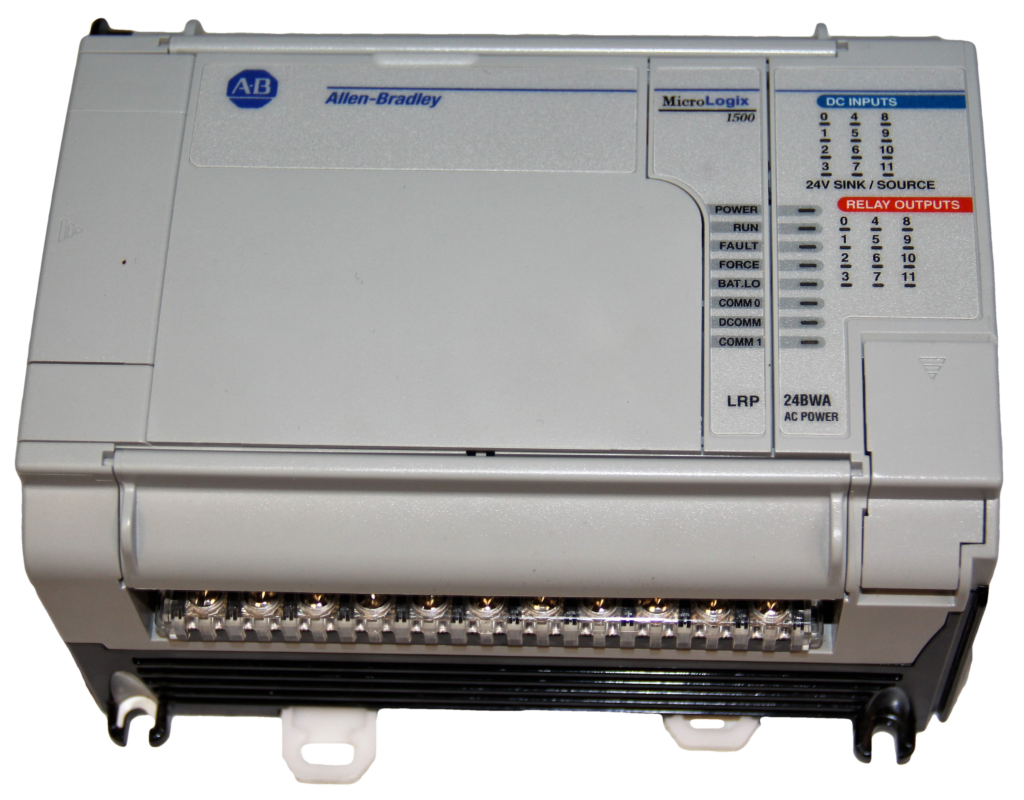
You could see these MicroLogx PLCs in complex packaging systems. Instead of controlling just a single machine, the 1500 could coordinate entire sections of a line: filling, sealing, labeling, and even integrated inspection systems. Its scan times of under a millisecond per thousand instructions kept cycle times tight. With high-speed counters and PTO outputs, it could handle basic motion synchronization alongside logic-heavy tasks.
Another area these MicroLogix PLCs shine in is industrial process control. Think food plants running multiple ovens, mixers, and conveyors all tied under a 1500 or a manufacturing plant using it for distributed control while keeping a small footprint compared to a full CompactLogix setup.
Final Thoughts
We would say that MicroLogix PLCs are everywhere you look, but they’re designed to be tucked away and hidden under panels. They fit in many different applications, from packaging to pick-and-place machines and pharmaceuticals. If they’re just what you’re looking for, you’re in luck. If you would like to see how the MicroLogix stacks up against the Panasonic FP PLC line, we have an article here for you!
We at DO Supply stock MicroLogix PLCs and other Allen-Bradley equipment. We also offer repair services to fix broken PLCs and drives, all backed by our two-year warranty and commitment to excellent customer service. Don’t see anything you like? Call us, and we will help you find what you’re looking for.
DO Supply Inc. makes no representations as to the completeness, validity, correctness, suitability, or accuracy of any information on this website and will not be liable for any delays, omissions, or errors in this information or any losses, injuries, or damages arising from its display or use. All the information on this website is provided on an "as-is" basis. It is the reader's responsibility to verify their own facts.