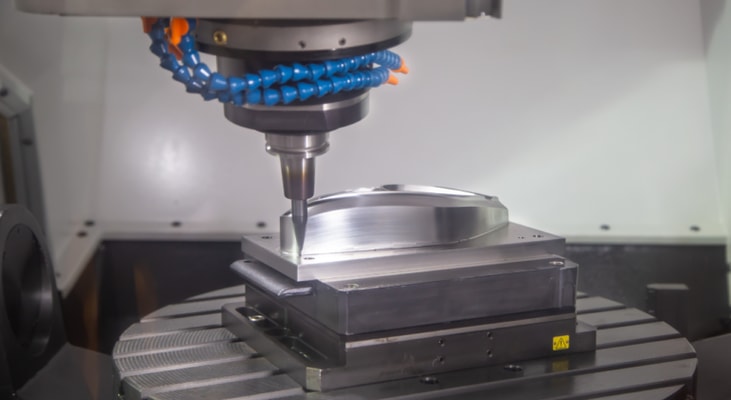
Computer Numerical Control (CNC) machines have revolutionized modern manufacturing, delivering the top-notch accuracy, productivity, and consistency that conventional machining cannot achieve. When applied to different industrial equipment, CNC systems rely on a highly integrated blend of mechanical and electronic components operating together. Understanding the various components of CNC machines is very important for anyone who wants to increase machining efficiency or diagnose problems. This article outlines the key components of a CNC machine, describes their roles, and explains why each component is important for overall machine reliability and production quality. The frame or base forms the backbone of the CNC machine. The structure keeps different parts intact by enclosing them, such as the spindle, table, and axes. Mainly made from cast iron, steel, or a polymer composite, the frame provides hardness and reduces vibration intensity during operation. A solid frame guarantees...
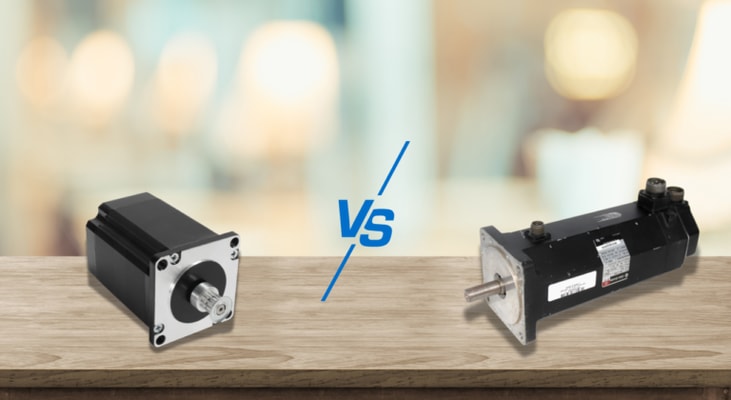
Your core CNC Machine Parts choices are among the most critical factors to determine, from a performance, precision, and cost perspective, for engineers, machinists, and procurement specialists alike. Drive motors are among the most essential CNC Machine Parts. The choice between servo and stepper motors has always been a discussion in the design and selection of a CNC system. Today, we will go over each one and see what applications allow one to shine over the other. Buy Allen-Bradley VPL Servo Motors Here Before delving into the specifics of stepper and servo systems, it is essential to understand their role. These motors are the prime movers, the components that translate digital commands into precise physical motion. The choice between a stepper motor and a servo motor influences every aspect of a machine’s capabilities, from its maximum speed and cutting torque to its positioning accuracy and operating cost. Selecting the correct motor from the vast array of CNC machine parts is...
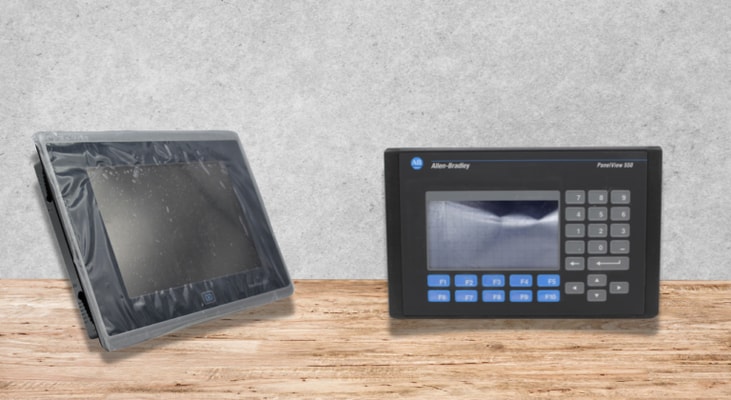
In industrial automation, few changes have been as apparent or as influential as the evolution of operator interfaces. What started as basic, rugged keypads mounted on control cabinets has grown into robust, networked solutions with dynamic touchscreen Human‑Machine Interfaces (HMIs). These interfaces, including well‑known platforms such as HMIs and PanelViews, have not only altered how operators interact with machines but also reshaped plant‑floor efficiency, safety, and the overall approach to process control. The move from physical buttons to user‑friendly digital interfaces reflects broader tech trends. Nevertheless, industrial settings impose distinct limitations, severe conditions, safety mandates, a demand for uninterrupted operation, and a reluctance to modify mission‑critical systems. Consequently, HMIs and PanelViews have developed slowly but with a highly strategic approach. Now, the progression from keypads to touchscreens illustrates a broader narrative of digital...
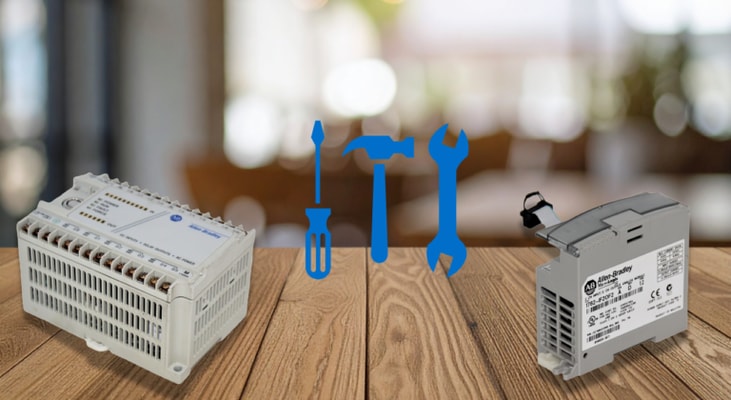
Over the past two decades, Allen-Bradley MicroLogix controllers have been the backbone of many industrial automation applications. In favor of Compact Logix and Micro800, Rockwell Automation has phased out the MicroLogix product line; however, a large worldwide installed base continues to rely on MicroLogix controllers for daily operations. MicroLogix controllers automate countless OEM (Original Equipment Manufacturer) panels, commercial HVAC (Heating, Ventilation, and Air Conditioning) equipment, packaging lines, agricultural machines, and municipal water systems. The majority of MicroLogix installations are now over a decade old, with most of these controllers having been in continuous operation for 10 to 20 years. As such, to ensure operational continuity and reliability, their regular and effective maintenance is vital and no longer an option. Power fluctuations, component wear and degradation, harsh industrial environments, communication errors, and aging/obsolete electronics...
To provide reliable control for small automation systems, Rockwell Automation created the MicroLogix family of compact programmable logic controllers (PLCs). MicroLogix features flexible input/output (I/O) expansion, communication options, and core control functionality in a compact, affordable package that is designed for simplicity and dependability. MicroLogix controllers are designed to perform automation functions for either standalone or networked equipment, including data handling, counting, sequencing, and network communication. With a consistent workflow compatible with other Rockwell Automation platforms, users can effectively manage I/O operations and design ladder logic. MicroLogix also gives engineers the means to automate smaller machines or subsystems without excess hardware or complexity. It fills the space between basic relay logic and large-scale control systems, delivering an ideal mix of performance and simplicity. Now, let’s discuss some of the parameters that...
Over the years, spindle motors have come a long way, from brute-force systems to finely tuned systems that balance torque, speed, and feedback with almost surgical precision. The trio leading this charge is stepper motors, servo motors, and variable frequency drives (VFDs). Each represents a different philosophy of motion: one steps with mechanical certainty, one reacts with sensory feedback, and the last bends AC power to its will. Choosing between these different motors isn’t about picking the latest and most expensive, but rather about what would fit the job at hand. After all, milling aluminum molds, engraving circuit boards, or turning precision shafts all place different demands on torque stability, acceleration, and accuracy. Understanding how each control method meets those demands separates a good CNC build from a great one. Before encoders, feedback loops, and tuning parameters even came into light, stepper spindle motors provided dependable and accurate motion that you...
Given the diverse and constantly advancing landscape of PLC brands, a strategic comparison of each brand’s unique features and capabilities is essential to choosing the best PLC for your application. Evaluating factors such as performance, design, safety, connectivity, scalability, and cost against your specific application needs will lead to the right decision. This article provides a detailed comparison of leading PLC brands:Allen-Bradley, Siemens, Mitsubishi, and Schneider PLCs. Developed through a long history of technological advancements, Allen-Bradley PLC brands, by Rockwell Automation, are smart, high-performance, multi-disciplined control solutions. They leverage robust design and advanced technology to enable more operational efficiency, reliability, scalability, and application flexibility. Shop for Allen-Bradley PLCs Here ControlLogix Series: A high-performance Allen-Bradley PLC brand that offers a powerful combination of integrated safety, high-speed processing, and...
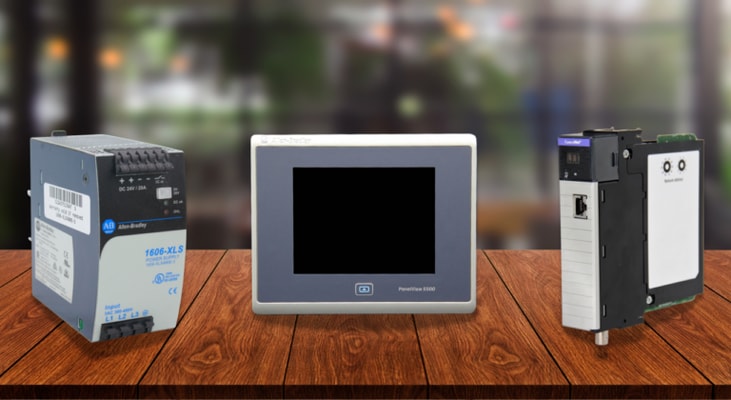
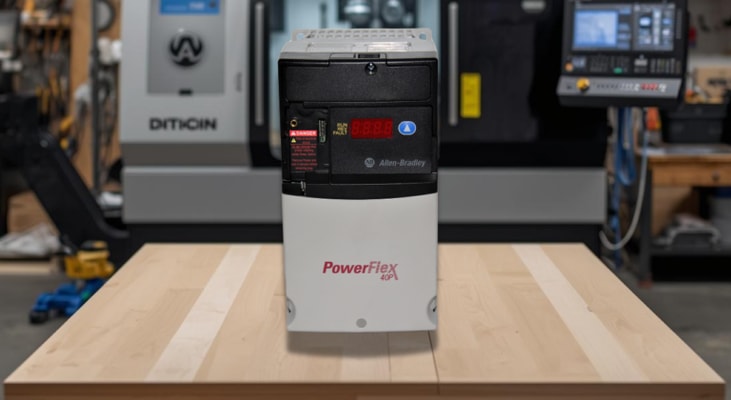
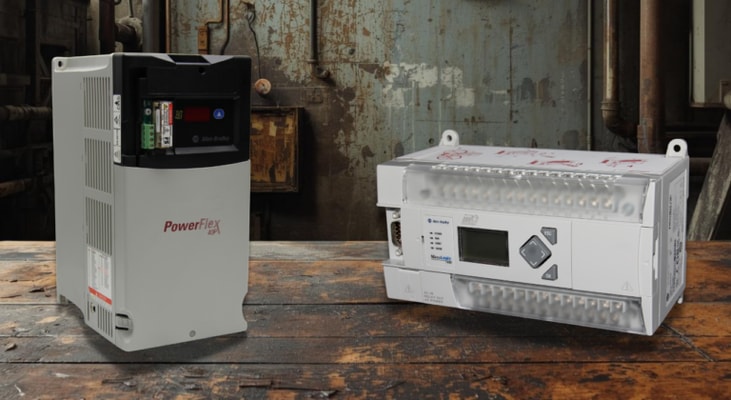
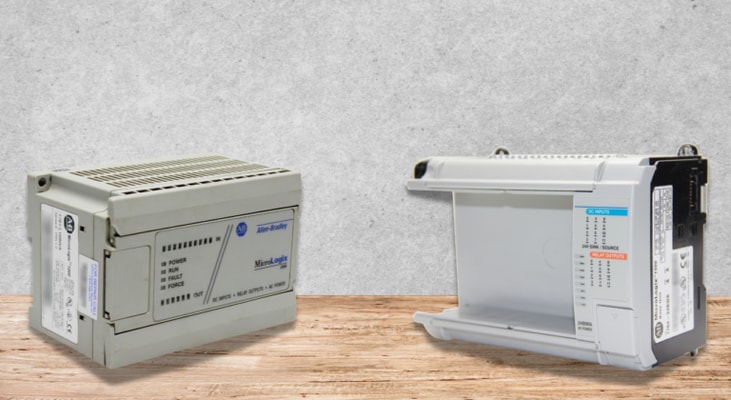
Rockwell Automation offers a comprehensive portfolio of industrial automation products under the Allen-Bradley brand name. The product lines range from motion control solutions, motor drives, power supplies, sensors and switches, Human Machine Interfaces (HMIs), motor controls, circuit and load protection devices, Input/Output (I/O) modules, relays and timers, and safety modules to programmable controllers and networking infrastructure. Allen-Bradley products have a long-standing reputation for robust design, premier integration, exceptional reliability, and advanced features, making them a perfect fit for a wide range of industrial applications. This article features the most commonly used Allen-Bradley products. The Allen-Bradley lineup of PowerFlex Variable Frequency Drives (VFDs)/AC drives provides cutting-edge motor control technology. These drives enable precise control of motor speed and torque, resulting in significant energy savings, reduced mechanical stress, and enhanced...
Smart Manufacturing integrates advanced technologies such as industrial automation, real-time monitoring, the Internet of Things, and data analytics to increase system efficiency. The main component of this smart manufacturing is programmable logic controllers. Among the different PLC brands, Allen-Bradley PLCs, manufactured by Rockwell, stand out as a solid overall choice. These PLCs are the cornerstone of the modern manufacturing and development scenarios in industrial automation. They help systems reach maximum efficiency by enabling seamless control, data management, and real-time monitoring. Today, we will go over how Allen-Bradley PLCs accomplish this, their integration methods, and more. Allen-Bradley PLCs are industrial controllers designed to control logic and manage input and output operations reliably, even in harsh operating environments, helping reduce downtime. In the context of Smart Manufacturing, these PLCs play a vital role as the central intelligence of automated...
Allen-Bradley is a renowned brand of industrial automation technologies owned by Rockwell Automation, a company that offers a wide variety of digital transformation and factory automation solutions. The Allen-Bradley product line features a broad portfolio of industrial automation and control products like Human-Machine Interfaces (HMIs), Programmable Logic Controllers (PLCs), sensors, DC drives, Variable Frequency Drives (VFDs), and safety devices. All these products are designed for optimal performance, robust, and reliable operation in harsh industrial settings. They enable real-time system monitoring, precise control over machinery, and improved safety within manufacturing and other industrial environments. The PowerFlex DC drive family is a complete collection of high-performance DC motor control technologies. It includes Allen-Bradley PowerFlex DC field controllers, PowerFlex DC drives, and PowerFlex DC stand-alone regulators (SARs). PowerFlex DC drives provide cost-effective...
Spindle motors are the main components of any CNC system. The spinning motion of the spindle motors (how fast, how smooth, how steady) determines whether the final workpiece is perfect or flawed. In modern machining, as tolerances shrink and the output expectation rises, you can’t leave your motor control on just the motor and its variable frequency drive. You need smart drives, feedback loops, and precise integration, and that is where Allen-Bradley drives really shine. In this article, I’ll walk you through: Shop for PowerFlex 525 Drives Here! What a spindle motor really does in a CNC setup Why basic drives fall short The Allen Bradley Drive families you should know What advantages do you get with smart drive integration Real-world use cases Tips for selecting and deploying the right spindle drive Now, let’s discuss the role of spindle motors in the CNC Precision with a little detail. Spindle Motor Automation uses a variable-frequency drive to control the motor’s speed and a CNC...
Factories aren’t always clean, calm, or predictable. Some are built beside saltwater ports, where humidity clings to every surface. Others hum deep inside steel plants, where air shimmers with heat and fine metal dust. A few spend their days being blasted with water and cleaning agents strong enough to strip paint. Yet, through all of this, the automation keeps running, or at least, it should. Allen-Bradley has built a reputation on not only control, but for endurance and reliability. These three key qualities is exactly what you need to have equipment that not only works in harsh environments but also thrives and can withstand what you throw at it. But what exactly constitutes a “harsh environment” and how does Allen-Bradley hardware combat it? Today we will be going over that and more. Shop for Allen-Bradley PLCs Here! “Harsh” is a relatively broad word. It could describe the feeling of flying down a dirt path in an old sedan, or maybe even the unrelenting sun in a desert. In...
If you work as a maintenance tech or plant engineer, you know the Allen-Bradley MicroLogix PLC. It’s everywhere in industrial automation, and for good reason; though, even the best equipment needs some care. Troubleshooting and regular maintenance help keep it in working condition. Here’s a guide that cuts through the jargon and turns those official specs into real-world advice you can actually use. The first and by far the most effective ‘line of defense’ against sudden system failures is good old proactive maintenance; after all, a well-maintained MicroLogix controller is just much less ‘likely’ to develop those catastrophic faults that cause so much production loss. All maintenance tasks must be carried out by a qualified technician familiar with the dangers of industrial control systems. Conduct pre-work maintenance when the power of a MicroLogix system is off and disconnected from all sources. Shop for MicroLogix 1000 Series PLCs and Accessories Here! The operating environment...
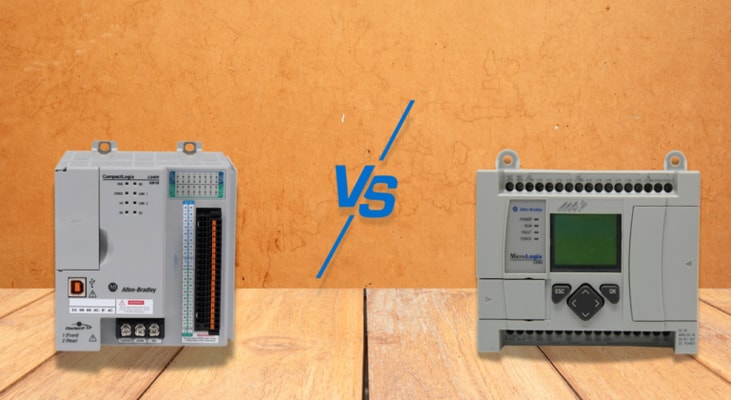
Programmable Logic Controllers are rugged, programmable industrial computers that are designed to control and monitor machinery in industrial settings. They are used for an extensive range of tasks, including material handling and quality control, as well as energy, manufacturing, and assembly line management. By executing user-programmed logic, PLCs are the essential building blocks of industrial automation, enabling greater precision, improved efficiency, and reduced system downtime across automation applications. Rockwell Automation, a global leader in industrial automation, offers two innovative Allen-Bradley PLC families ideal for small and mid-sized industrial automation applications: the CompactLogix and MicroLogix PLC series. The Allen-Bradley MicroLogix series provides five levels of control in an affordable, compact package. MicroLogix PLC controllers (Bulletin 1761-1766) are compact, self-contained PLCs that come with built-in I/O and basic networking capabilities. They are...
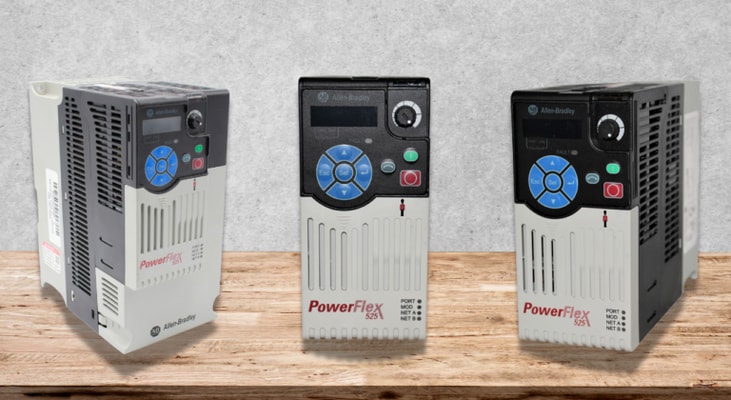
The PowerFlex 525 drive is a dependable workhorse found in many control panels worldwide. It keeps motors moving at the right speed, delivers the torque that you expect, and plays nicely with Allen-Bradley PLCs or just about any SCADA system you have. Though, like any other VFD, it can be temperamental at times. Though when that happens, it does so through a well-thought-out fault and diagnostic system. Understanding what these faults mean and what to do about them turns occasional alarms from stressful surprises to quick fixes. Today, we are here to help walk you through what the more common faults really mean and how to get your drive back on track. Shop for Allen-Bradley PowerFlex 525 Drives Here First of all, let’s discuss the diagnostic framework of the drive series and how it identifies the problem using specific PowerFlex 525 Fault Codes. • The drive maintains a fault history buffer for up to 10 past faults. The three most recent fault codes are usually grouped and can be read...