Kinetix 6000 vs. 6200/6500: When Does It Make Sense to Upgrade?
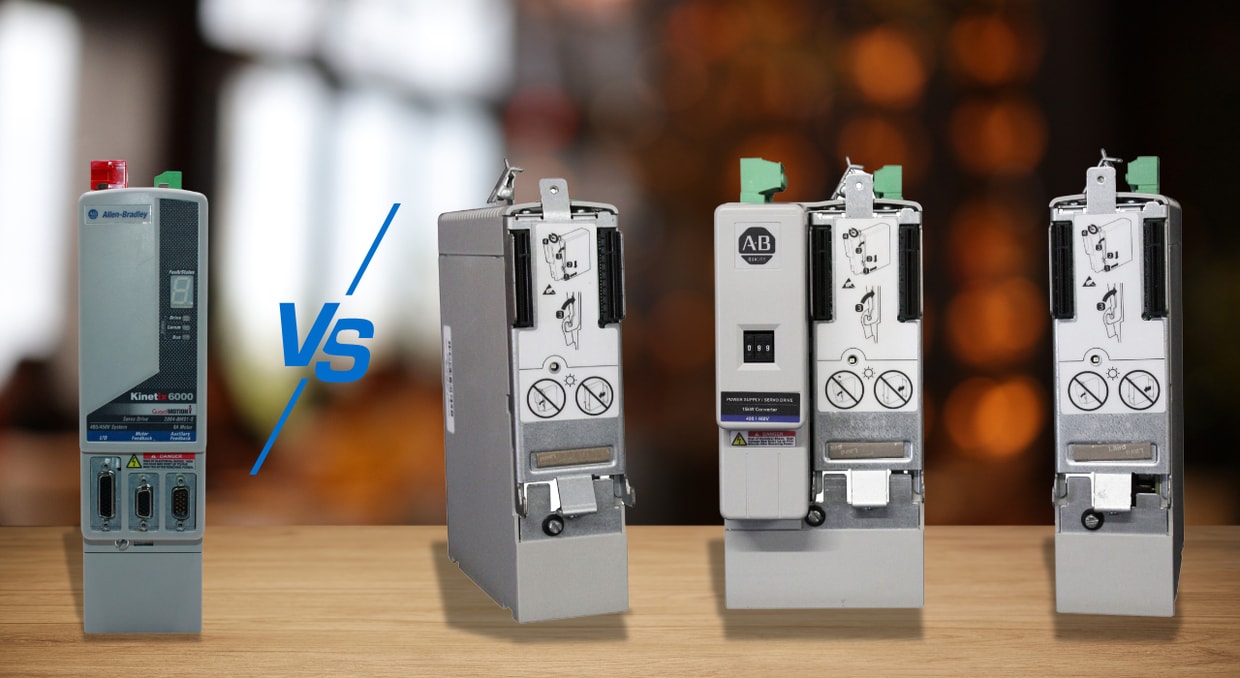
There’s a very important rule of thumb when dealing with equipment, or really anything: If it isn’t broken, don’t fix it. In the case of the Kinetix 6000, they’re built like tanks and just keep working. In fact, no one would be surprised if you find them humming away in plants that haven’t touched a firmware update since flip phones were a thing.
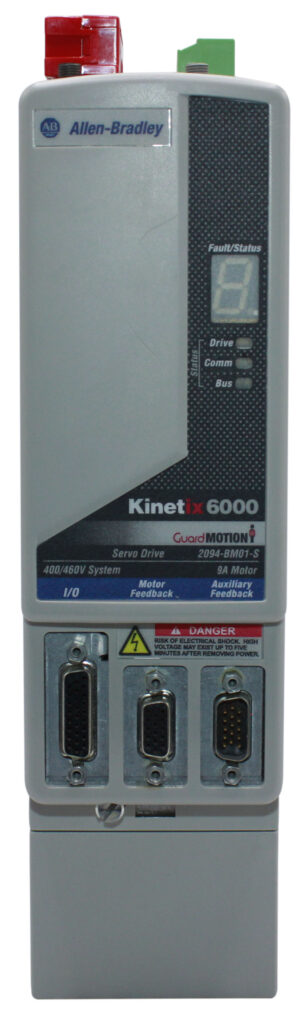
But as technology progresses, whether it be for tighter safety regulations, smarter diagnostics, the shift to Ethernet/IP, or touch screens in the case of flip phones, it’s not a bad idea to start asking: should we just expand what we’ve got, or is it time to move on?
This is where the Kinetix 6200 and 6500 come into play. While they aren’t flashy replacements, they’re more of a logical step forward. With it, you retain the SERCOS backbone and power rail, but add modularity and safety where it matters. The 6500 represents a definitive step forward, offering full EtherNet/IP motion control and integrated safety capabilities over CIP.
So, when does it make sense to keep what you have or upgrade to something new? Let’s find out!
Why You Might Want to Stick with the Kinetix 6000
If your current setup is built around the Kinetix 6000, then you’re probably not in a rush to change, and for good reason. The system has proven itself over years of service, often in environments where uptime matters than bells and whistles. It’s dependable, well-understood, and relatively painless to support, albeit obsolete.
The modular architecture still holds up. Need another axis? Snap it onto the bus. Need to replace a motor? The interface is already there. You’re using SERCOS? So is half the plant. This isn’t outdated technology; it’s just not the latest version.
More importantly, you might already have shelves stocked with replacement parts, technicians trained on it, and a whole wiring cabinet built around how this system operates. Tearing that out just to chase newer hardware doesn’t always make financial or operational sense.
So if you’re looking for the simplest path forward and what you’ve got is stable, staying with the 6000 might not just be the path of least resistance. It might actually be the smart call.
Why the 6200 Might Be the Right Upgrade
Let’s say your 6000 setup is still solid, but there are a few pain points. Perhaps maintenance is becoming increasingly prevalent, or you’re seeking more flexibility in how safety and diagnostics are managed. Ripping everything out isn’t quite in the cards, but you wouldn’t mind bringing a few things into the modern age. This is where the Kinetix 6200 comes into play.
At a glance, the 6200 looks nearly identical to the 6000, but that’s by design. It utilizes the same power rail and SERCOS interface, and integrates seamlessly with existing Logix controllers. However, upon digging a bit deeper, you will find that the 6200 comes with in-field replaceable control modules and a bit more intelligence when it comes to fault handling and diagnostics. So instead of replacing a whole drive when the control logic goes bad, you just pop off the control module.
It also refines your approach to safety. While the 6000 supports STO through specific module configurations, the 6200 offers a cleaner, more integrated approach with dedicated safety-rated modules and easier wiring for compliance. The 6200 also features Safe Speed Limiting functionality, providing similar PLd and SIL3 functional safety ratings for a wider range of applications.
The best part? You don’t have to replace your whole system. You can run 6000 and 6200 modules side by side on the same power rail. That means you can roll out upgrades incrementally, without halting production or rewriting your entire motion strategy. So, if your biggest complaint with the 6000 is maintainability or safety compliance, rather than motion control itself, the 6200 is probably the smoothest way to future-proof without starting from scratch. The 6200 also offers some additional benefits that you can check out on our blog here.
Why the 6500 Is a Bigger Step
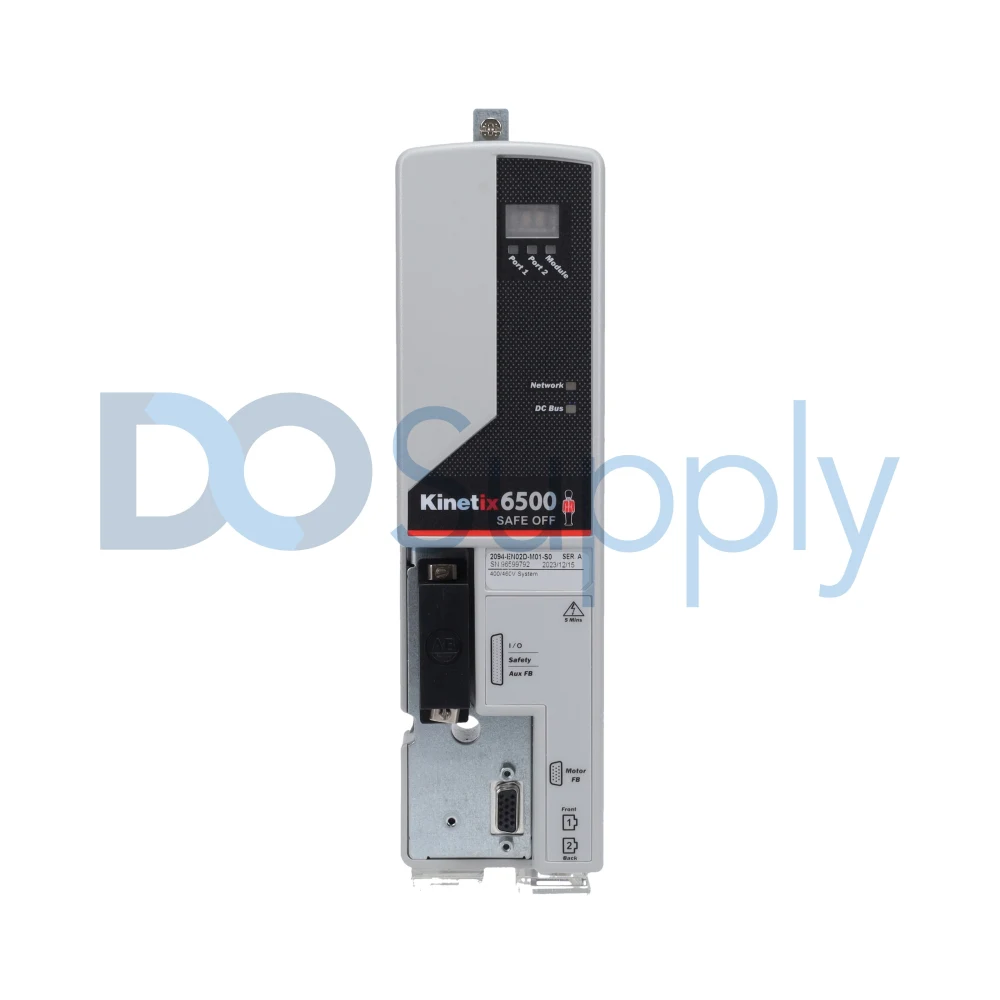
While moving from the 6000 to the 6200 may seem lateral in a few aspects, the move from the 6000 to the 6500 is a generational leap forward. The 6500 completely changes the foundation and steps into a full-blown EtherNet/IP motion control system with CIP Motion and safety over the network. This might seem like a big shift, and it is, but for some systems it’s exactly what’s needed.
The 6500 provides axis-level control with integrated Safe Torque Off and Safe Speed Monitor, similar to the 6200, but it takes it a step further with support for CIP Safety, distributed topologies, and scalable safety zoning. In other words, you’re no longer tied to the power rail. Each axis gets its own IP address and lives on the network, giving you more freedom in how you design, deploy, and maintain your system.
The 6500 also brings a level of flexibility to the field in large or distributed systems, such as packaging lines that stretch across rooms, or modular machines that get reconfigured on the fly. If you have modern Logix controllers that already speak CIP Motion natively, then the diagnostics and commissioning are even easier.
Of course, this also means you’re rebuilding more than just a few drives. Going to 6500 usually involves rethinking your architecture, updating your controller, and reworking how power and communication are handled since EtherNet/IP doesn’t speak to SERCOS. However, if you’re already undertaking a large-scale upgrade or expanding a new section of the line, the 6500 makes more sense than trying to push SERCOS beyond its limits.
While it’s not a drop-in upgrade like the 6200, the 6500 offers a long-term solution to more complex motion control demands, especially when you’re ready to go fully networked and modular.
A more in-depth look at the 6500 can be found here.
Final Thoughts
It’s clear that the Kinetix 6000 isn’t going anywhere soon, and for plenty of setups, it still makes the most sense to leave it right where it is. It’s reliable, expandable, and well understood. If your system is stable and you’re not being squeezed by changing safety requirements or expanding beyond what SERCOS can comfortably handle, there’s no shame in sticking with what works.
Now, when you’re already looking at replacements or trying to cut down on full module swaps and messy safety wiring, then the 6200 makes quite a compelling case. It still uses the same infrastructure while easing future maintenance and giving you a way to get your feet wet with modular upgrades.
Then you have the 6500, which is ideal when you want to perform a complete overhaul for new machines, demanding applications, or long-term scalability. Yet no matter what avenue you choose, we at DO Supply will support you every step of the way. If you need to repair your old 6000s, then that’s absolutely no problem. Send it to us and we will have it fixed and even backed by a two-year warranty. If you are looking for new 6200 modules, we’ve got you covered there as well. And if going full 6500 seems compelling, why not give us a call, and we can help get you exactly what you need.
DO Supply Inc. makes no representations as to the completeness, validity, correctness, suitability, or accuracy of any information on this website and will not be liable for any delays, omissions, or errors in this information or any losses, injuries, or damages arising from its display or use. All the information on this website is provided on an "as-is" basis. It is the reader's responsibility to verify their own facts.