TLY vs. TL Servo Motors
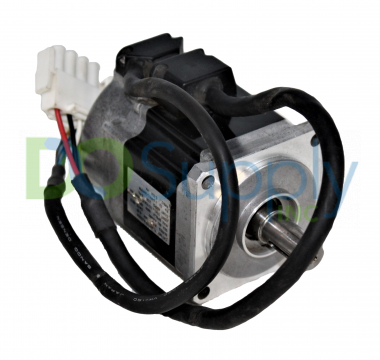
For applications where precision, accuracy, and control of rotation are required, servo motors have been used for a long. Servo motors are those kinds of electromechanical tools that have provided the convenience of feedback based on which the user can monitor the movement of the motor degree by degree. According to the user’s application, different servo motors are available: continuous rotation, linear rotation, and positional rotation servo motors.
TL series servo motors are low inertia servo motors, which means they can control the load’s velocity very well and help control the load’s acceleration and deceleration. The low inertia feature in these servo motors helps them to preserve their state of uniform motion or state of rest longer. These types of servo motors come with different types of frame sizes. The frames are of metric and NEMA standards to make mounting of these motors easy and compact according to the desired applications. This kind of servo motor has a very high torque density. This is due to the superior design of their stator as compared to other servo motors. The size of these motors is also compact; therefore, they can be adjusted into any kind of device when there is a size constraint. TLY series servo motors can provide enough power despite their compact size; this is due to the high-end design of the internal anatomy of this kind of servo motor. These motors can be used in environments where low, compact inertia is required, like in the semiconductor industry, assembling of machines, electronics assembly, and material handling. These industries, assemblies, and processes require precision and accuracy; that is the reason such motors are very reliable.
The main difference between TL series servo motors and TLY series motors is that the TLY series servo motors come up with circular plastic connectors. These connectors make them compatible with Kinetix driver controllers and Ultra servo drivers. Moreover, when TLY series motors are interfaced with Kinetix servo drivers, they support the features of Kinetix Integrated motion. The Kinetix integrated motion provides the accessibility to simultaneously perform synchronized multi-axis motions of different motors using Ethernet or IP interfaces of servo motor controllers. In addition to the difference in connector shapes of this kind of servo motor and their compatibility with servo controllers, there is one more difference. The TLY series servo motor’s frame sizes are in metric format, and they come up with high-resolution absolute encoders. The performance parameters and specifications of TLY series servo motors and TL series servo motors are the same. TLY series servo motors are the sub-branch of the TL series. TL series have variants like TLP series, TLS series, and TLC series. The TL Series (TLY series servo motors specifically) have the following attributes.
- They have connectors with them.
- The grounding and shielding traits available in these (TLY series Motors) allow the user to work in different environments.
- Brake leads are available in power connectors (for emergency stops).
- RoHS Compliance.
Performance Parameter Comparison
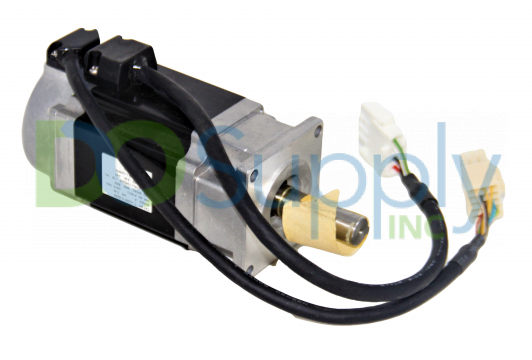
The performance parameters and specifications of TLY series servo motors and TL series servo motors are the same. Both motors have very high output torque density and compact sizes. The intelligent motor technology and low inertia of the rotor make them suitable for precise control and movement applications. TL and TLY series servo motors are based on the technology of AC synchronous servo motors, which provides them with better efficiency, constant speed, and reliability compared to that DC servo motors. These motors comprise 200V-class windings which provide them safety towards high voltage surges. The magnets are also High-energy permanent magnets made up of Neodymium-Iron-Boron (NdFeB) which provide long-term reliability in harsh environments. The communication protocol of the TL and TLY series servo motors is 17-bit serial communication. The TL and TLY series servo motors have an IP65 environmental rating and an optional seal for the motor shaft. This seal can be used when motors work in a humid environment. The speed, torque, and power ratings of TL and TLY series servo motors vary from model to model. They come up with speeds of 4500, 4000, and 6000 rpm, whereas the continuous stall torque varies from 0.086 Nm to 5.42 Nm and the peak stall torque varies from 0.22 Nm to 13 Nm. The rated power output of both TL and TLY series servo motors varies from 0.037 to 2.0 kW depending upon the motor’s shaft loading conditions and model.
Compatibility of TL and TLY series servo motors with servo drivers
The TLY series servo motor is compatible with many servo controllers like Kinetix 6000, Kinetix 300, Kinetix 350, Kinetix 3, Kinetix 2000, and Ultra 3000, whereas the TL series servo motor is only compatible with Kinetix 1500 servo motor controller.
Load Variation in Servo Motors
When selecting a servo motor, two of the most critical parameters which must be kept in mind are the load variations and their effect on the RPM of the motor. TL and TLY series servo motors have different variants when it comes to loading variations, and load variations are of two types radial load variation and axial load variation. Following is the table that clarifies different servo motor models and how they act under different loading conditions.
Table 0.1. Radial, Axial Loading Condition, and RPM of different Servo Motor Series
| Model no | Radial Loading | Axial Loading (Max Radial Load) | Axial Loading (No Radial Load) | |||
| RPM | Kgs / lbs. | RPM | Kgs / lbs. | RPM | Kgs / lbs. | |
| TLY-A110 | 1000 | 11 / 24 | 1000 | 8 / 18 | 1000 | 12 / 26 |
| TLY-A110 | 2000 | 9 / 19 | 2000 | 6 / 14 | 2000 | 9 / 20 |
| TLY-A110 | 3000 | 7 / 16 | 3000 | 5 / 10 | 3000 | 7 / 16 |
| TLY-A120 | 1000 | 12 /26 | 1000 | 9 / 20 | 1000 | 12 / 26 |
| TLY-A120 | 2000 | 10 /21 | 2000 | 7 / 16 | 2000 | 9 / 20 |
| TLY-A120 | 3000 | 8 /18 | 3000 | 5 / 12 | 3000 | 7 / 16 |
| TLY-A220 | 1000 | 27 / 60 | 1000 | 15 / 32 | 1000 | 19 / 41 |
| TLY-A220 | 2000 | 22 /48 | 2000 | 11 / 24 | 2000 | 14 / 30 |
| TLY-A2540 | 1000 | 50 / 110 | 1000 | 18 / 39 | 1000 | 23 / 50 |
| TLY-A2540 | 2000 | 39 / 87 | 2000 | 13 / 29 | 2000 | 17 / 37 |
| TLY-A310 | 1000 | 80 / 177 | 1000 | 24 / 54 | 1000 | 29 / 65 |
| TLY-A310 | 4500 | 47 / 103 | 4500 | 12 / 27 | 4500 | 15 / 32 |
From the table shown above, the following conclusions can be drawn.
- With high RPM, the loading capacity of the motor gets decreased significantly.
- The loading conditions get better as we go higher in series, from A100s to A300s. For example, A310 has better loading conditions than A220 under the same parameters.
- Axial load is better when there is no radial load; when the maximum radial load is applied, the axial load decreases.
- TLY-A310 model servo motor is the best choice for high RPM and better loading conditions.
Motor Control Products
Different motor control products are available to control these TL series servo motors. With the help of these motor control products, features of these motors are increased. The user can choose these products depending on the application in which such motors have been used. For this purpose, the following table shows different products and their features.
Table 0.2. Motor Control Products and Descriptions
| Sr no. | Product | Description | Comments |
| 1 | Kinetix 5100 Ethernet / IP Servo Drives | 0.40 to 2.0 kW operating range. For 120-230 VAC. 3.0 – 15 kW operating Range for 240 VAC. 0.4 – 15 kW operating Range for 480 VAC. STO Standard hardware without any extra wiring. In-built auto-tuning function to control resonance. | Cost-effective servo control drive. It can provide an extended operating range for different inputs. |
| 2 | Kinetix 5300 Single-axis ethernet Drives | Same operating Range as above. Induction Motor Frequency Control STO Standard hardware. Four assignable digital inputs Two fast Input Functions | This controller can drive with the help of Ethernet or IP Network. The main feature is that they can accept incremental feedback from the motor required when TL and TLY Series servos are used as encoders. |
| 3 | Kinetix TLP Power Cables | It can be used as a power cable, brake cable, or feedback cable. PVC Coating for protection EMC and EMI performance metrics are tested. | This cable is used for applications where feedback from the output is required. |
| 4 | Kinetix 5700 DC-bus Power Supply Single-axis and Dual-axis Inverters | DC BUS Power supply 240 / 480 V three-phase operation. Adaptive Tuning, Induction Motor Control, CIP Security Communication between Ethernet Devices. | Where large machine operation is required, this controller is used. When the user wants the safety of the IP Protocols, this module is reliable. |
| 5 | Kinetix 5700 Single axis Inverters | Large operating ranges in the limit of 1.5 kW and 112 kW Zero Stack capability Single Cable Technology | Increases benefits of the previous model, i.e., Kinetix 5700, by increasing power range. |
| 6 | Single Motor Cables | For operation, connection, and feedback. These cables have PVC jackets, making them suitable in a different environment. | A single cable can provide different variations usually coming along with these motors or these controllers. |
Feedback Connector
Feedback connector is an essential concept in TL and TLY series servo motors. With the help of this connector, the servo motor can also act as an encoder. There is a different configuration of pins in these feedback connectors; by setting these pins configuration on the feedback connector, the user can utilize these motors as an incremental encoder or absolute encoder. As the pin configurations are the same for both TL and TLY series servo motors, the following table shows a different configuration of pins in an incremental and absolute encoder.
Table 0.3. Pin Configuration for Incremental and Absolute Encoder in TL and TLY Series Servo Motors
| As an Absolute Encoder | As an Incremental Encoder | ||
| Pins | Signal | Pins | Signal |
| 1 – 5 | Reserved (can be used for multiple purposes like external signal, power) | 1 – 8 | Reserved (can be used for multiple purposes like external signal, power) |
| 6 | BAT+ (positive signal has been applied here) | 9 | AM+ (Adds Increment) |
| 7 – 12 | Reserved (worked as 1 – 5 pins) | 10 | AM- (Subtracts Increment) |
| 13 | DATA + (Adds Data) | 11 | BM+ (Adds Increment in binary) |
| 14 | DATA – (Subtracts Data) | 12 | BM- (Subtracts Increment in binary) |
| 15 – 21 | Reserved (work as 1 – 5 pins) | 13 | IM + (Adds increment in position) |
| 22 | EPWR 5V (external power to run encoder) | 14 | IM – (Subtracts increment in position) |
| 23 | BAT – (Negative or ground signal of battery) | 15 | S1+ |
| 24 | Shield (to protect from over-voltage and current) | 16 | S1- |
| 25 – 28 | Reserved (work as 1 – 5 pins) | 17 | S2+ |
| 18 | S2- | ||
| 19 | S3+ | ||
| 20 | S3- | ||
| 21 | Reserved | ||
| 22 | EPWR 5V | ||
| 23 | ECOM | ||
| 24 | Shield | ||
| 25 – 28 | Reserved (can be used for multiple purposes like external signal, power) |
General Specification Comparison
Prospective user has to keep many parameters in mind so that any possible application they have to use in the future, should not be compromised. These specifications include maximum achievable RPM, Torque, and current. These factors must be considered so that weight, battery specifications, and external power sources could be adjusted accordingly. Some of the specifications of these TL-series (specifically TLY servo motors) are as follows.
Table 0.4. General Specification of Different Models of TLY Series Servo Motors
| Model | Rated Speed (RPM) | Stall Torque (Nm) Continuous | Stall Current (Amp) Continuous | Stall Torque (Nm) Peak | Stall Current (Amp) Peak | Rated Power Output (kW) |
| TLY-A110 | 6000 | 0.96 | 0.55 | 0.22 | 1.5 | 0.41 |
| TLY-A120 | 6000 | 0.181 | 1.03 | 0.36 | 2.5 | 0.086 |
| TLY-A220 | 6000 | 0.836 | 3.65 | 1.48 | 7.9 | 0.35 |
| TLY-A230 | 6000 | 1.30 | 5.50 | 3.05 | 15.5 | 0.44 |
| TLY-A2530 | 6000 | 2.60 | 10.0 | 5.02 | 21.0 | 0.69 |
| TLY-A2540 | 6000 | 2.94 | 10.0 | 7.10 | 24.8 | 0.86 |
From the above table, a trend has been observed; the observations are as follows.
- Almost all the models have 6000 rpm as maximum speed.
- The current rating depends on the value of the torque. As the motor’s torque rating is higher, a higher current is required.
- Output Power also depends on the torque capability of the motor i.e. higher the torque higher is the power output.
Additional Accessories
While buying these servo motors; other extensions, accessories, and modules are also available which enhance the properties of these motors when combined with them. For this purpose, the following is the table which shows different accessories along with their model number and specifications.
Table 0.5. Different Extensions, Accessories, and Modules of TL Series (TLY Servo Motors)
| Accessory | Model Number | Can be Used for | Comments |
| Feedback Connector | 2090-KFBM6-00AA | All the TL and TLY series servo motors | Used for obtaining feedback directly from the motor to the controller |
| Power Connector | 2090-KPBM6-16AA | All the TL and TLY series servo motors | For supplying power to the motors and to the controllers. |
| Shaft Seals | TL-SSN-1 | TLY-A1XX | Shaft seals are available and can be bought separately depending on the model of your motor. By using shaft seals, they reduce wear and tear |
| Shaft Seals | TL-SSN-2 | TLY-A2XX | Shaft seals are available and can be bought separately depending on the model of your motor. By using shaft seals, they reduce wear and tear |
| Shaft Seals | TL-SSN-3 | TLY-A3XX | Shaft seals are available and can be bought separately depending on the model of your motor. By using shaft seals, they reduce wear and tear |
| Feedback Cable | 2090-CFBM6CN-04AA | All the TL and TLY series servo motors | Used for obtaining feedback from the complete closed loop system. |
| Power and Brake Cables | 2090-CPBM6CN-16AA | All the TL and TLY series servo motors | Provide power and brake (for brake versions) |
DO Supply Inc. makes no representations as to the completeness, validity, correctness, suitability, or accuracy of any information on this website and will not be liable for any delays, omissions, or errors in this information or any losses, injuries, or damages arising from its display or use. All the information on this website is provided on an "as-is" basis. It is the reader's responsibility to verify their own facts.