The Future of Industrial Automation
What’s Industrial Automation?
Industrial automation is the use of information technologies, robotics, machines, and control systems including processors, sensors and actuators to execute production and manufacturing tasks that are normally performed by human workers. Its goal is to improve quality, increase productivity and enhance safety in various industrial applications.
Initially, the goal of industrial automation was to increase productivity (since automated systems can operate 24/7 without tiring) and reduce labor costs in the US automotive industry. However, today, 3D technologies and computer-controlled tools such as CNC machines and Robotics have shifted the focus of industrial automation to increasing flexibility and quality of manufacturing processes. For example, installation of engine pistons in automobiles could previously be performed by human workers with an error margin of 1% to 1.5%, but today the task is carried out by automated machinery with an error margin of 0.00001% – an indication of improved precision.
Modern-day industrial automation includes an extensive range of automation systems and tools such as Programmable Logic Controllers (PLCs), Numerical Control (NC) machine tools, industrial sensors and Computer Numerical Control (CNC) machines. You can integrate these automation systems into stand-alone industrial machinery or into existing production/assembly lines. Automation systems can also be used to gather data for preventative maintenance of manufacturing equipment.
Applications of Industrial Automation
In the recent past, several industries have been adopting industrial automation as a means of achieving greater efficiency, higher productivity, improved quality of end products, safer working environments, and more profitability. Some of these industries include:
- Automobile Manufacturing
- Food and Beverage Processing
- Electronics Assembly
- Metal Fabrication
- Pharmaceuticals
The trend is anticipated to continue as more industries (especially manufacturing companies) seek for new techniques to improve efficiency, productivity, and competitiveness. Also, there are some automated tasks such as planning and decision making, packaging and material handling, quality control and inspection, etc., which are common across different industries.
Industrial Automation Trends to Watch in Future
The first industrial revolution, in the 18th century, was characterized by the invention of the steam engine. This invention brought about mechanized factories and urbanization. Soon after, the discovery of electricity followed alongside other technological developments in the 2nd industrial revolution, leading to mass production of goods. Later on, in the mid-1900s, the 3rd industrial revolution came about with the inception of computers and digital technology. These inventions have since led to industrial automation. Currently, we’re in the 4th industrial revolution, where technology enables transformative changes by integrating Artificial Intelligence (AI), Robotics, Machine Learning (ML), Industrial Internet of Things (IIoT), 3D Printing, Cloud Platforms, etc.
Previously, the industrial automation sector has been resistant to early adoption of innovative technologies, with most players in this segment preferring to leverage well proven automation technologies and standards to warranty consistent and secure operations with time. However, with the emergence of Industry 4.0, there have been drastic changes in adopting new, high-end technologies. Over the last decade, the industrial automation space has been impacted with tremendous technology changes, augmented networking structures, as well as innovative devices and systems.
Today, industrial automation seems to be on the threshold of a new revolution (Industry 5.0), gradually evolving through rapid technological advancements. That being said, what does the future of industrial automation look like? Let’s discuss some of the most influential technology trends and how they’ll impact the future of industrial automation.
1) AI-Based Automation Technologies
Artificial Intelligence (AI) is rapidly transforming industrial technologies. In future, AI-based automation will be an important partner for every industry professional. For example, manufacturers will be using AI algorithms to monitor operating conditions of a production plant, detect production inconsistencies, and implement predictive maintenance of their manufacturing equipment and machinery. Artificial Intelligence will also be increasingly useful in analyzing big data, to help make informed manufacturing decisions based on the needs of millions of prospective customers. In addition, AI algorithms are going be used to test out possible production solutions without risking factory workers or machinery.
2) 5G Interconnectivity
5G is a term used to describe the fifth-generation wireless technology, standard for cellular/mobile broadband networks. It can provide greater capacity, lower latency, and higher transmission speeds– of up to a hundred times faster than 4G LTE networks.
The advent of 5G technology, in addition to the major improvements on today’s 3G and 4G technologies, could allow effective deployment of wireless technologies in industrial control systems, without compromising performance and reliability of existing network architectures. Also, 5G is likely to boost Industrial Internet of Things (IIoT) interconnectivity, further advancing innovations towards the Connected Factory ideal, such as 5G-based collaborative robots and video surveillance industrial systems.
In addition, as local deployment of 5G continues to gain further momentum in industries, low-latency bandwidth and other network constraints will be eliminated, thereby accelerating digital transformation in industrial settings. Moreover, by enabling more reliable industrial connectivity and faster downloads, 5G technology will positively impact decision-making and problem-solving processes across all industries.
The aforementioned applications of 5G interconnectivity in industrial automation are going to demand for new technological advancements such as timestamp and real-time networks, use of AI for failure detection and prediction, remotely controlled robots, as well as high-resolution imaging and analytics. Therefore, to fully harness the capabilities of 5G technology in industrial automation applications, fundamental technologies such as embedded Artificial Intelligence and Machine Learning, functional safety, embedded processing, end-to-end cyber security, and time-critical networking for industrial devices and systems will be essential.
3) Increased IIoT Connectivity
IIoT, or rather Industrial Internet of Things, is the interrelation of smart industrial machines, instruments, actuators, sensors, and other smart devices in an industrial environment. This interconnectivity allows for communication, data collection and real-time analytics, providing valuable insights to potentially improve visibility, efficiency, and productivity of industry operations.
IIoT will play a key role in the future of industrial automation by:
- Providing remote access to industrial equipment and machinery.
- Enabling web-based virtual network connectivity for monitoring and managing HMI (Human-Machine Interface) functions on various IIoT platforms.
- Offering predictive and real-time analytics for identifying potential manufacturing problems and for machine maintenance.
- Allowing monitoring, control, and management of data from multiple automation systems in different locations. All while storing the collected data at a centralized cloud platform.
- Enabling easier accessibility to real-time machine data and related analysis through existing industrial communication networks.
As automation systems evolve, manufacturing plants across the globe will increasingly adopt networked instrumentation via IIoT connectivity. Hence, data from the networked instrumentation will be collected and transmitted to a centralized hub instead of plant operators having to collect it manually on the factory floor. From the central hub, the compiled data can then be readily analyzed for usable industrial purposes.
4) Third-Wave Cybersecurity Technology
The greater interconnectivity in industrial automation applications, such as that provided by 5G technology and IIoT, will present a new set of risks for enterprises that rely on data collection and analysis. All this interconnectedness comes with increased cybercrime threats–unauthorized access to industrial computer systems in an attempt to steal/alter/destroy/expose information or interrupt production processes. Even the most well-resourced companies are prone to security breaches. For example, manufacturing equipment with GPS tracking devices are susceptible to the tampering or jamming of GPS signals.
Thus, the future of industrial automation is expected to demand for advanced cybersecurity technologies to protect industrial control systems from threats posed by cyber attackers. One such technology is the Third-Wave AI or Wave-3 cybersecurity technology. Advances in cybersecurity happen in waves, with the first two waves revolving around data collection and integrating Artificial Intelligence (AI) technology as a means of evaluating and analyzing the collected data. Wave One focused on data-driven cybersecurity, while Wave Two aimed at leveraging Artificial Intelligence and Machine Learning to solve the data overload drawback of Wave One.
However, even as cybersecurity technologies proliferate, massive data collection and incorporating AI are not enough to protect the next-generation of industrial automation systems. Therefore, it’s expected that Wave Three cybersecurity tools will be capable of analyzing data across an entire attack surface i.e. all the industrial systems in a manufacturing plant.
Third-Wave AI-powered cybersecurity is going to be unsupervised and able to automatically master an environment without relying on training data or rules. Also, blind-spots and bias will be eliminated with this technology, enabling it to inspect traffic from all streams including Intel and notices, cloud logs, network traffic, and time-stamped data. This will provide robust security barriers and effective countermeasures against even the most complex cyber-attacks that may come with advanced industrial automation.
5) Open Protocols
Dynamic industrial automation will require open and interoperable networks in many industries, as well as open standards for critical and embedded computing. In the future, Original Equipment Manufacturers (OEMs) and machine builders will not be locked into semi-open or proprietary automation solutions. An open industrial automation ecosystem is one in which all devices are interconnected without protocol restrictions. Such open architectures will give every industry stakeholder the right to customize and use the latest automation technologies, with the ability to easily decommission or add devices within the automation ecosystem.
6) Technologies to Bridge the Tech Skills Gap
All the new capabilities being offered by the industrial automation advancements of the 21st century create a demand for highly skilled industrial personnel. To bridge the skills gap, a much faster and more intuitive training will be required. Several new automation technologies are being developed around this demand. They include:
- Augmented Reality (AR): This is an interactive technology that combines real-world environment and virtual information (computer-generated content). In addition to virtual and real world environments, AR also incorporates real-time interactivity and accurate 3D identification of real and virtual objects. The digital virtual content of AR can range across multiple sensory elements, including haptic, auditory, visual, etc. For example, using a pair of smart glasses or a tablet, users can see a digital overlay projected into their field of natural sight without having to do anything. With this enhanced reality, the details relevant to the user’s training can be made more visible on a screen, in real-time. The primary goal of AR is to highlight particular features of the real world, enhance understanding of those features, and deduce intelligent as well as accessible insights for physical real-world applications.
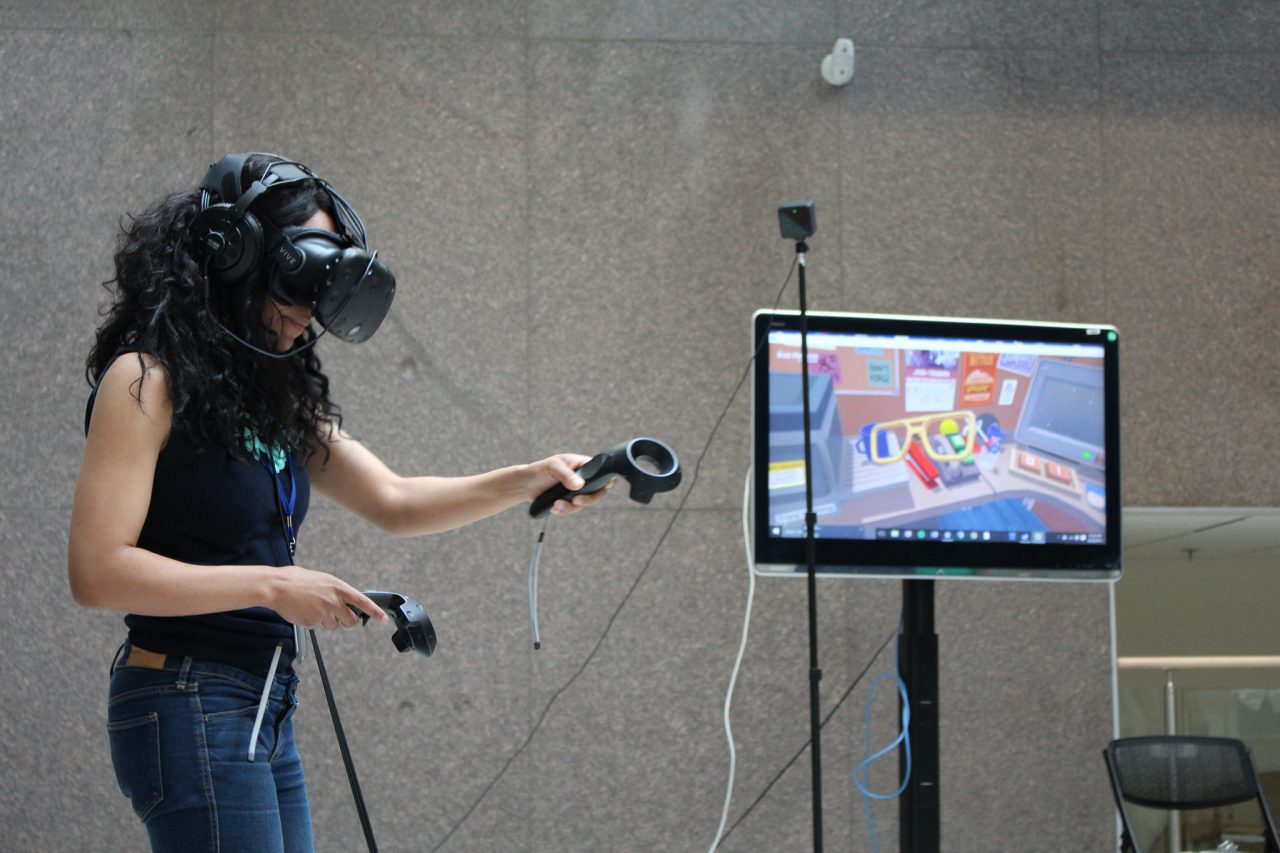
- Virtual Reality (VR): Virtual Reality is an experiential, computer-generated, 3D digital environment with objects and scenes that seem to be real. It allows users to get into an experience, be immersed in their surroundings and interact with a three-dimensional environment that either simulates or completely differs from their real physical world. There are three categories of VR simulations in use today: fully-immersive, semi-immersive, and immersive simulations. The computer-generated 3D environment is perceived through a VR helmet or headset. In relation to the future of industrial automation, Virtual Reality will enable industry professionals to train with a three-dimensional, immersive experience. It will particularly be beneficial for training personnel in industrial settings that are challenging, dangerous, or costly to access, such as nuclear power plants, space stations, and various manufacturing facilities.
- Digital Twins: A digital twin is a virtual model that accurately reflects a physical device or process, enabling data scientists to run simulations, analyze performance and develop possible improvements before actual devices/systems are built and deployed. In essence, the goal of digital twin technology is to generate valuable insights that can then be applied to the original physical device or process. For example, a digital twin can be designed to replicate a wind turbine or jet engine fitted with multiple sensors at its critical areas of functionality. These sensors collect useful data regarding the operating parameters of the wind turbine or jet engine. The collected data is then relayed to a processor and applied to the digital twin to predict how the physical device will perform under such operating conditions. Using the resulting analytics and other what-if predictions, users can optimize the performance of the physical device for maximal efficiency. Integrating digital twins with AI and Machine Learning will be very useful in training industrial robots and guiding plant operators in repairs. Because a digital twin is like an advanced manual with 3-D diagrams and real-time information about an equipment.
7) Converging Technologies
Advancements in industrial automation will lead to a merger of Information Technology (IT) and Operational Technology (OT). And as manufacturers continue to embrace digital transformation, the IT/OT convergence will enable them to increase the scope of connectivity and interoperability of their industrial processes.
Consequently, industrial automation in plant settings will drive an increasing demand for Ethernet-based Fieldbus technologies to replace conventional Fieldbus industrial networks, in an effort to leverage the advantages of Ethernet at the factory floor (field level). Ethernet-based Fieldbus industrial networks are known to provide high accessibility and reliability at affordable costs. They will thus facilitate faster, more secure, and highly-accurate data flow across industrial automation systems. Also, with these converging technologies (Fieldbus and Ethernet), an industrial network will be able to incorporate both wireless and wired automation systems for improved monitoring, enhanced transparency, and streamlined operations. The merging of IT and OT as well as the convergence of Fieldbus and Ethernet technologies will create an avenue for industrial stakeholders take the next leap towards Industry 5.0, where dissimilar industrial automation systems will exchange information, share resources, and operate in synergy. To stay ahead of the game, manufacturers will also have to capitalize on the already existing technologies to accelerate digital transformation and unlock new capabilities. Essentially, the next phase of industrial automation will focus mainly on incremental upgrades with technology continuing to be the key driver for innovation.
DO Supply Inc. makes no representations as to the completeness, validity, correctness, suitability, or accuracy of any information on this website and will not be liable for any delays, omissions, or errors in this information or any losses, injuries, or damages arising from its display or use. All the information on this website is provided on an "as-is" basis. It is the reader's responsibility to verify their own facts.