Thermophotovoltaic Cells
Renewable and sustainable energy has been one of the hottest topics for the past decade. The most popular choices for the United States are all familiar to us: hydro, wind, and solar. While it seems that we have been seeing more progress with renewables every month, our current renewable energy production only supplies 20% of The United States’ total energy demands according to The Office of Energy Efficiency & Renewable Energy. While that figure does seem low, it has doubled in the last decade, proving that there is a considerable amount of innovation and production happening behind the scenes. Solar energy jobs and production have boomed since the last decade with an increase in jobs from about 100,000 workers to over 200,000 while decreasing the average cost of installation on residential homes by $22,000 (SEIA Comms Team). California has since become the first state to mandate all new homes be built with solar panels. If the tides are changing for our renewable energy production and integration, why are our current energy production numbers so low? It all boils down to efficiency and storage, a core problem that researchers at the Massachusetts Institute of Technology are currently working on improving with their latest breakthrough in thermophotovoltaic technology.
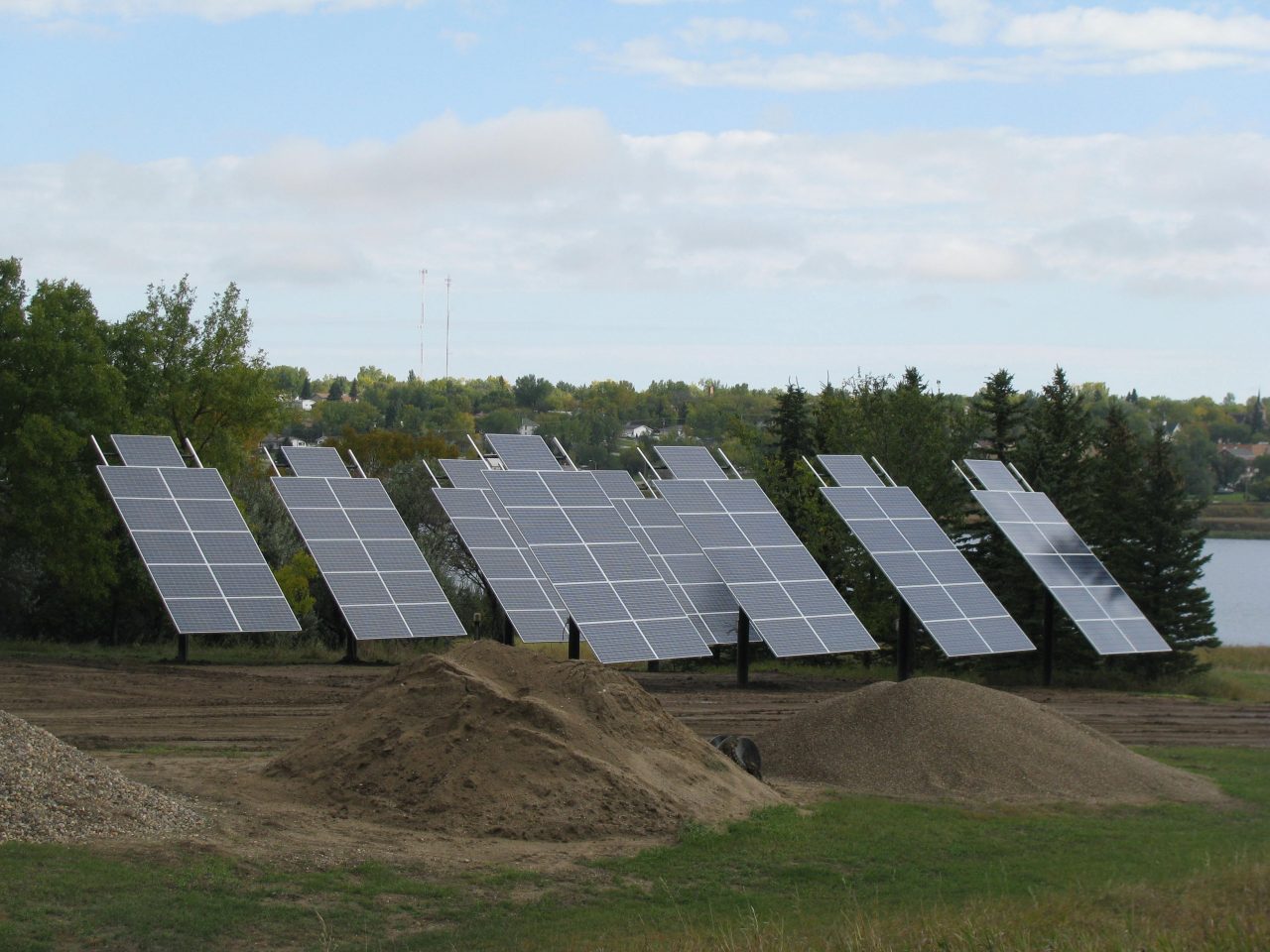
Efficiency is the Achilles heel when it comes to renewable power. While wind and solar energy are the most popular examples of renewable energy, they are heavily reliant on weather conditions and often unreliable (Usman et al. 2022). Concentrated solar power (CSP) harnesses the sun’s light energy using mirrors to focus its heat onto a receiver. That thermal energy is then transferred into a conventional generator such as a steam turbine. The downside to this method is that the efficiency is inversely proportional to the amount of irradiation present at the surface of the CSP (Chen et al., 2016a). Because of this, photons cannot be extracted as they cannot be stored for a longer period (Usman et al. 2022). A solution to this is to add Thermophotovoltaics (TPVs) to the equation to convert the waste solar radiation into immediate useful energy.
Invented at MIT in 1956 by Henry Kolm and popularized by Pierre Aigrain due to his lectures on the subject at MIT, TPV cells work by converting predominantly infrared light emitted by extremely hot objects into energy. These cells consist of two junction devices made from III-V semiconducting materials with electronic bandgaps between 1.0 and 1.4 eV that use mirror surfaces to bounce waste radiation back to the source to reduce overall inefficiency. TPV cells operate from 1,900 °C up to 2,400 °C (4,300 °F), and with a breakthrough from scientists at MIT, can operate at 35-40% efficiency when combined with CSP technology (Henry et al., 2014). Combining the two technologies also Traditionally, steam turbines are the predominant way of turning thermal energy into electricity with a 35% efficiency rating. However, unlike TPV cells, steam turbines have many moving parts and begin to deteriorate around 2,000 °C (3,600 °F). “One of the advantages of solid-state energy converters are that they can operate at higher temperatures with lower maintenance costs because they have no moving parts. They just sit there and reliably generate electricity” says Asegun Henry, the Robert N. Noyce Career Development Professor in MIT’s Department of Mechanical Engineering to further emphasize the importance of a cost-to-performance balance.
TPV cells use gold-plated silicon to reflect 95% of the light it can’t absorb with a 5% loss with every iteration of reflection (Moore 2020). This means that light, on average, only has about 20 chances to be re-emitted in a photon with enough electricity to be turned into usable energy (Moore 2020). Increasing the reflectivity of these mirrors to increase the chances of photons being converted into energy will also allow for cheaper alternative solar cell materials that are more selective about which photon energies they will convert. This could lead to higher voltages with less energy lost all while extracting the most usable photons (Moore 2020). One method of reflecting the light is to add a very thin layer of air between the semiconductor and the gold mirror backing, as gold is much more reflective when the light hits the air rather than coming straight off the semiconductor. The thickness of the air must be similar to the wavelengths of the photons for the light waves to avoid canceling each other out. The main challenge is that the thickness of the air gap must be within a few nanometers in precision to reflect the lower energy photons. Along with it, the semiconductor film, only 1.5 micrometers in thickness, must span over 70 micrometers of air between the 8-micrometer-wide gold beams (Moore 2020). Dejiu Fan, an electrical engineering and computer science doctoral student, was paired with Tobias Burger, who is also a doctoral student in chemical engineering, as well as other collaborators, to take on this task. These gold beams were laid onto the semiconductor and then coated in a silicon back plate with gold to form the mirror. The gold beams were then cold-welded to the gold backing to create that bridge for the air gap. The thickness of the gold beams determines the height of the air bridge to enable near-perfect mirroring. Achieving 99.9% reflectivity would mean that the light reflected would now have 1,000 chances to turn into electricity.
To utilize these TPV cells in their optimal environment, researchers at MIT have come up with a solution that involves massive graphite blocks and wind turbines. First, they propose to have a source of renewable energy to melt a highly conductive metal, such as tin, to store in large graphite blocks. These blocks will act as batteries for storing thermal heat. Inside the facility, Argon gas is to be used to make the environment inert so that the graphite won’t oxidize. Next, they will pump that thermal energy, in the form of liquid tin, into another graphite cell containing a material that can glow bright white under intense heat, such as tungsten. The light emitted from the metal will be used to power the TPV cell and can even adjust its power output by changing the distance of the TPV cell from the metal. To boost the efficiency of the TPV cell, a mirror is placed below the cell to reflect unabsorbed light back into the cell. The TPV cells are equipped with high-flowing, closed-loop liquid-cooled radiators that exchange heat before the water could even vaporize. That liquid then is cooled in a large dry cooling facility to be recirculated once again. The cooled tin is recirculated to be reheated and used for thermal storage once more. While normally an engineer would say that pumping such a high-temperature molten metal is impossible, researchers at MIT have invented a way to use a carbon-based pump to effectively circulate molten tin at 1400 degrees Celsius to an excessive 2000degrees Celsius.
One of the greatest benefits of this technology is how simple it is to scale. The cell used in Henry’s experiment is about a square centimeter; however, he predicts that for a grid-scale thermal battery to work, it would have to be scaled up to about 10,000 square feet (a quarter of a football field) and be housed in a climate-controlled warehouse. In theory, these thermal batteries can be modular and increased as much as the facility manager deems fit. To see 1 giga-watt of energy, which is enough to power 750,000 homes, stored within these blocks to be released from TPV cells is perfectly within the realm of possibilities with this new technology, paving the way for a carbon-neutral future. Cost also plays an important role in this technology’s future. When it was originally established, a molten silicon storage medium was initially thought to be the most effective, but a graphite storage medium proved to be less expensive ($0.5 per kg) and with a projected capital cost per unit energy (CPE) of less than $10 per kWh. To put into perspective how cheap this technology is, the original target cost estimated for thermal energy grid storage (TEGS) was <$20 per kWh, thus proving it to be a competitor to fossil fuels (LaPotin et al. 2022). TEGS could ultimately remove 40% of global CO2 by decarbonizing the current electricity grid (approximately 25% of emissions) and by also replacing current CO2-reliant EV chargers for the transportation sector (approximately 15% of emissions) (Datas and Marti 2017). “Thermophotovoltaic cells were the last key step toward demonstrating that thermal batteries are a viable concept,” says Asegun Henry, shedding light on an alternative solution to other energy storage media, such as lithium-ion batteries. Lithium, as we all know, requires an intensive mining procedure for limited resources to produce batteries that are known to be extremely combustible and expensive. Lithium-ion batteries also suffer from an aging effect where after a certain amount of charging cycles, their maximum charging capacity falls and if a Lithium-ion battery discharges too much it renders itself unusable. Lithium-ion batteries are also known to only have a 50% recycle rate whereas the sources for TPV TEGS systems are plentiful and recyclable. While TPV TEGS seems like the optimal solution, it too has its own drawbacks. The first of which contains graphite blocks in an argon-rich environment to prevent oxidation. The second is building and maintaining pumps to push and pull the molten metal through the graphite blocks reliably. Finally, there is the issue of relying on environmental factors for solar panels or wind farms to produce the energy to melt the metal initially. Overall, these issues are rather minuscule in scale compared to the many benefits that this technology can provide.

While TEGS is a very promising use for TPV technology, there are other applications that we can explore. Combustion-driven TPV generators can be considered for applications from personal power generation to large-scale industrial applications. Some of these applications include portable generators, hybrid electric vehicles, and combined heat and power (CHP). The military had set its sights on TPV technology to phase out noisy diesel generators and heavy batteries. In hybrid vehicles, the exhaust from the combustion engine is used to power a TPV device to recharge the hybrid batteries with enough power to accelerate and maintain cruise speed. As always, efficiency is a hurdle for these sustainable technologies as to maintain a speed of 70 mph, the TPV device would need to be outputting 10kW of power to not use the onboard battery. Another great application for this technology is TPV radioisotope generators for inner planetary solar system missions. Current technology for space travel and satellites relies on radioisotope thermoelectric generators (RTG) to generate power and heat from the radioactive decay of Pu238 or other isotopes. Voyagers 1 and two, launched in 1977, as well as The New Horizon spacecraft, are equipped with this technology, and we are still receiving data from the Voyagers. While this technology has certainly proved itself over time, these systems only operate with efficiencies of only 3-7%. When the photon energy produced from these isotopes is directed to TPV cells, scientists have shown operating efficiencies as high as 19%, proving that TPV cells can dramatically increase the possibilities of space travel and their respective technologies (Crowley et al. 2005).
As new technologies emerge to further expand our list of usable renewable technology, a carbon-free future becomes much more attainable. Not only does this lead to a much better life for the coming generations, but it also provides a source of income as many job opportunities are created to establish this technology. Scientists, engineers, installing crews, and maintenance workers will all be in demand when the next inevitable boom of green technology comes. Development for TEGS TPV is still currently new and plans are made to create a test facility sometime in 2023 to bring this concept to life. Until then we can only watch the development and theorize the many possibilities that can be produced from it.
Citations
Chen, Meijie, et al. “Investigating the Collector Efficiency of Silver Nanofluids Based Direct Absorption Solar Collectors.” Investigating the Collector Efficiency of Silver Nanofluids Based Direct Absorption Solar Collectors – ScienceDirect, 17 Aug. 2016, www.sciencedirect.com/science/article/pii/S0306261916311412?casa_token=Ei0Z3wYpIwwAAAAA:RVw8BJO5O4Hv_sOdJjf9JazCLpmR9rI6CAe3ZAMjepC2VfGLngA0NM2HpMBRwxYrM6tpPr73pA.
Datas, A., and A. Marti. “Thermophotovoltaic Energy in Space Applications: Review and Future Potential.” Thermophotovoltaic Energy in Space Applications: Review and Future Potential – ScienceDirect, 9 Dec. 2016, www.sciencedirect.com/science/article/pii/S0927024816305281?casa_token=bssBVw8uV_AAAAAA:Sj6URAboJT1zGpa2fNF9wMpcz1zsEYTAaN1gY75nnKIIbueGTEbOnh-O9Kq5lf-YbvkHil24bQ.
https://news.umich.edu/mirror-like-photovoltaics-get-more-electricity-out-of-heat/
C. J. Crowley et al, “Thermophotovoltaic Converter Performance for
Radioisotope Power Systems,” AIP Conf. Proc. 746, 601 (2005).
LaPotin, Alina, et al. “Thermophotovoltaic Efficiency of 40% – Nature.” Nature, 13 Apr. 2022, www.nature.com/articles/s41586-022-04473-y.
MIT News Office, Jennifer Chu. “A New Heat Engine With No Moving Parts Is as Efficient as a Steam Turbine.” MIT News | Massachusetts Institute of Technology, 13 Apr. 2022, news.mit.edu/2022/thermal-heat-engine-0413.
Moore, Nicole. “Mirror-like Photovoltaics Get More Electricity Out of Heat.” University of Michigan News, 21 Sept. 2020, news.umich.edu/mirror-like-photovoltaics-get-more-electricity-out-of-heat.
SEIA Comms Team. “A Look Back at Solar Milestones of the 2010s | SEIA.” SEIA, 3 Jan. 2020, www.seia.org/blog/2010s-solar-milestones.
Usman, Muhammad, et al. “Efficiency Enhancement of Thermophotovoltaic Cells With Different Design Configurations Using Existing Photon Recycling Technologies.” Frontiers, 23 May 2022, www.frontiersin.org/articles/10.3389/fenrg.2022.917419/full.
DO Supply Inc. makes no representations as to the completeness, validity, correctness, suitability, or accuracy of any information on this website and will not be liable for any delays, omissions, or errors in this information or any losses, injuries, or damages arising from its display or use. All the information on this website is provided on an "as-is" basis. It is the reader's responsibility to verify their own facts.