Industrial Automation and Social Responsibility: A Discussion on Corporate Responsibility and Sustainability
Introduction
Industrial automation is revolutionizing manufacturing processes with the help of mechanization and data management systems. This advanced technology, known as Industry 4.0, is cost-effective and improves quality, competitiveness, time-efficiency, safety, and control. However, it also adversely affects society, including displacing jobs and impacting the environment, ethics, and economy. Therefore, we must prioritize human well-being over production, sales, and profit. In this article, we will tell you just how to do that.
The Evolution of Industrial Automation
Every day individuals and company owners have long sought novel approaches to increase productivity in routine work. In the past, small machinery, lever, pulley, different hand tools, and working with animals helped our forefathers do most of their work manually. In manufacturing, three categories are characteristic of production processes: Manual, semi-automatic, and automatic.
In the first century BC, to grind grain into flour, water wheels were started to use. Then, from the seventh to the tenth centuries, several mechanical functions were added to windmills. Steam engines, steam mills, and internal combustion engines were also created during the 17th-century industrial revolution.
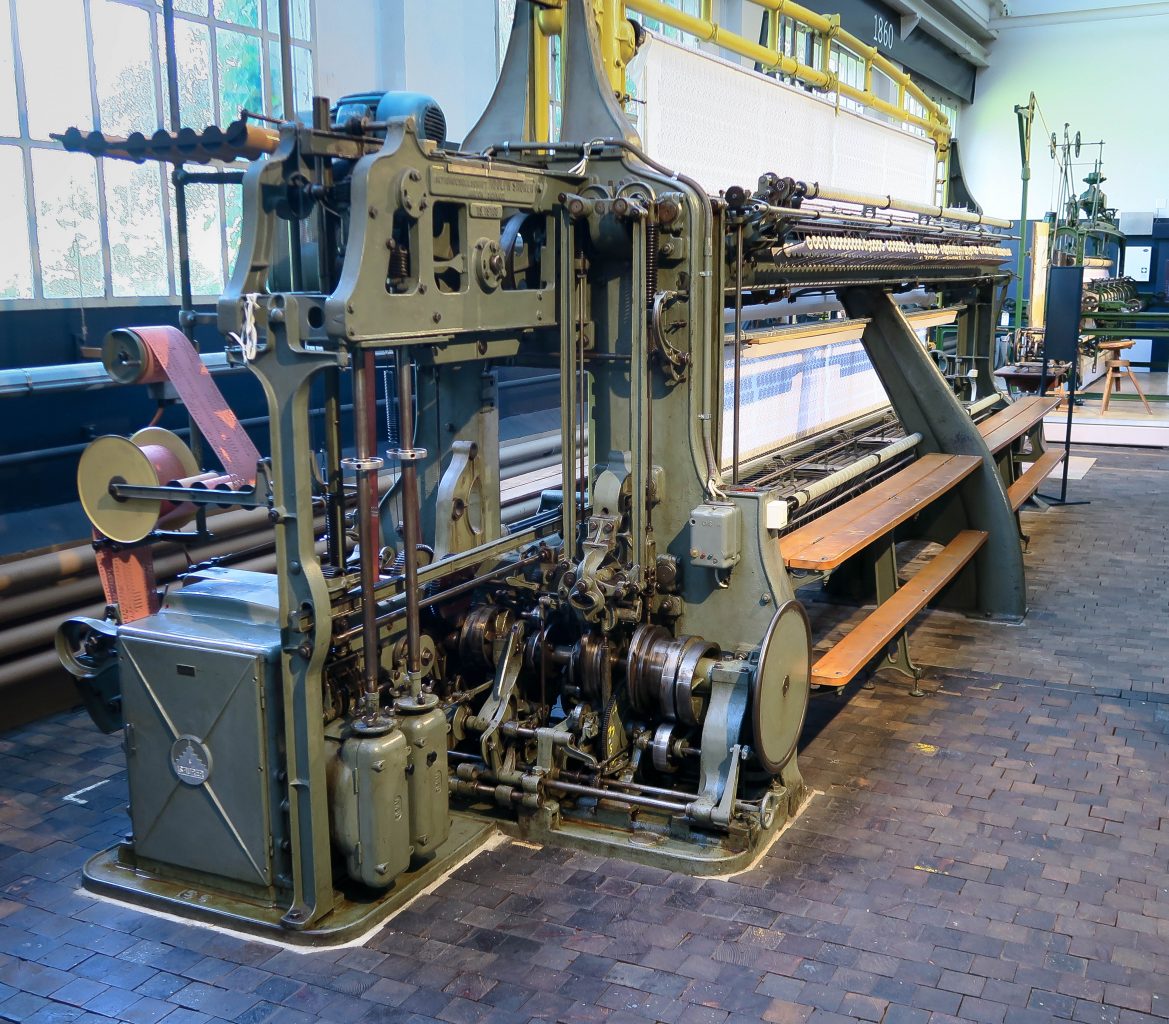
In terms of industrial automation progress, it was a critical turning point. In the 1920s and 1930s, industrial automation advanced more quickly because electric motors and central power plants were used in electrifying businesses; after that, with the emergence of computer processors in 1971 and the Stanford arm in 1969, computers and robotics rose to prominence in the 20th century, which paved the way for robots to carry out increasingly difficult activities like welding and assembling.
Nowadays, robots are used for almost every assembly and manufacturing process, removing humans from hazardous environments and improving efficiency. Automation makes operations like manufacturing considerably faster by lowering the rate of human involvement necessary to complete a job. This evolution of automation has a progressive impact on the industry but also serious concerns for society.
The Concept of Social Responsibility
According to the ethical principle of social responsibility, each person or organization is responsible for carrying out their civic duties, and their deeds should benefit civilization as a whole. The well-being of society and the natural environment must coexist in harmony with economic progress in this manner. Social responsibility is achieved if this balance is maintained.
The following are essential responsibilities to contribute to the betterment of society.
- Corporations must ensure that their operations and supply chains respect human rights and do not support or benefit from human rights violations.
- Contributing to donations can have a significant impact on society.
- Practicing eco-friendly behavior can help to preserve the environment for future generations.
- Supporting sustainable business practices promotes responsible consumption and production. Corporations can achieve this by adopting sustainable sourcing, reducing waste, and implementing energy-efficient procedures.
- Providing employees with safe and healthy working conditions is vital to corporate social responsibility.
- Supporting community initiatives and charitable causes can help to address social issues.
- Advocating for social justice and equality includes supporting policies and initiatives promoting diversity and inclusion.
- Being transparent and accountable in business practices can build stakeholder trust and promote ethical behavior.
Social Responsibility in the Corporate World
The term CSR (Corporate Social Responsibility) is widely used for social responsibility in the corporate world. It is an independent company approach that aids an organization in upholding its social responsibility to the general population and all stakeholders. Corporations may be aware of their effect on the environment, finances, and society. When a company practices “corporate social responsibility” (CSR), It suggests that it utilizes a manner that welfares the environment and culture instead of detracting from it.
Responsibility initiatives are often distributed into four main groups: philanthropic, ethical, economic, and environmental responsibility. Philanthropic activities focus on supporting deserving groups that may not be connected to business; ethical responsibility ensures fair and honest corporate behavior. Financial support for the goals mentioned above is encouraged by economic burden, and environmental initiatives prioritize the preservation of natural resources.
CSR Due to the Environment Impact of Industrial Automation
In industrial automation, “Corporate social responsibility” (CSR) may narrate various corporation acts, such as altruistic behavior and moral business. One of the top objectives of CSR is protecting the environment. CSR aims to reduce any adverse effects that your organization’s activities might have on the environment. Environmental responsibility is the cornerstone of corporate social responsibility based on preserving nature. By conducting its operations as effectively as feasible and lending support to pertinent causes, a corporation may ensure that it returns to the environment in a better condition than when it arrived. Through the following, businesses often demonstrate environmental responsibility.
Energy Consumption: Industrial automation can hurt the environment due to the significant energy consumption required for automated machines to operate efficiently. The maintenance and repair of these machines can also contribute to adverse environmental effects. So, we should balance the benefits of industrial automation and its ecological impact. We can create a more efficient and environmentally-friendly industrial sector by implementing sustainable and responsible practices in industrial automation.
Carbon Footprints: Large datasets are needed in AI for industrial automation to train the algorithms, and big datasets use much energy. One AI model may produce roughly five times as much carbon dioxide equivalent during training as the typical American automobile, or more than 626,000 pounds during its lifetime. A single data center may use as much power as 50,000 houses, and the cloud utilized for data storage has a more significant carbon footprint than the whole aviation sector.
The adverse effects of automation on the environment can be reduced by implementing sustainable practices, such as using energy-efficient technologies and considering the location of data storage. It is also possible to lower energy use and carbon emissions by calculating the carbon footprint of AI models and adhering to best practices like Google’s “4M” practices.
Other CSR Considerations Due to Environment

- Recycling products and goods during its operations, encouraging reuse practices among its customers.
- Cutting down waste, pollution, the consumption of natural assets, and gases emission produced during manufacturing.
- Intentionally selecting means of scattering that have a minimal negative impact on pollution.
- Developing product lines that support these ideals. For instance, a firm that sells gas lawnmowers may create an electric version.
- Minimizing negative impacts by regenerating ecosystems or supporting initiatives that might reduce the company’s contribution. A business that removes trees could offer to replace them with the same number or even more.
Philanthropic Responsibility and Impact of Industrial Automation
“Corporate social responsibility” (CSR) involves considering how a company’s actions impact society. One aspect of CSR is philanthropic responsibility, which concerns how a business uses its resources to contribute to the world positively. Essentially, philanthropic commitment involves deciding how to allocate resources to improve society.
There are two ways to look at how industrial automation affects philanthropic responsibility.
On the positive side, industrial automation can boost efficiency and productivity, improving company profits. If their earnings rise, businesses may devote more funds to charitable endeavors and social causes. Automation may free up human resources, enabling staff members to volunteer and do community service, which can support charitable endeavors.
However, there are also worries about how automation could affect society negatively, for as by displacing jobs and increasing wealth inequality. These difficulties may raise the need for charitable assistance, especially in social welfare, education, and job training.
To fulfill philanthropic responsibility, a company can consider the following actions:
Donating Profits: Even though automation may boost revenues, a business might give a percentage of those earnings to causes or groups that share its values. Direct contributions, grants, or “corporate social responsibility” initiatives may all be used to accomplish this.
Aligning Transactions with Philanthropic Values: A company can also use its purchasing power to support suppliers or vendors who share their charitable values. This can involve assessing suppliers’ and vendors’ social and environmental impact and prioritizing those who align with the company’s values.
Supporting Employee Philanthropic Endeavors: Instead of displacement from jobs, Automation can free up employee time and resources, allowing them to engage in philanthropic activities. A company can support these efforts by offering paid time off for volunteer work or by matching employee contributions to charitable organizations.
Sponsoring Fundraising Events and Community Involvement: Finally, a company can demonstrate its commitment to philanthropic responsibility by supporting fundraising events and being active in the community. This can involve sponsoring charity walks, participating in community service initiatives, or hosting fundraising events for charitable causes.
Ethical Responsibility and Industrial Automation
Numerous employments might be displaced as businesses use automation and artificial intelligence. Researchers at “MIT Technology Review’s EmTech Next” conference concluded that business leaders need to commit to developing systems that foster social cohesion and economic progress while better understanding these technologies’ drawbacks.
The researchers presented a pyramid of progress consisting of four automation levels.
- The 1st level of automation focuses solely on cost and efficiency, with little regard for social responsibility or the impact on human workers.
- The 2nd level involves using automation to improve performance while utilizing human skills and abilities and re-engineering processes and systems to accommodate automation.
- The 3rd level prioritizes human-machine interaction and aims to augment human capabilities rather than replace them with machines.
- The 4th and highest level of automation involves deploying automation to create more and better jobs for humans, promoting economic growth and societal well-being.
However, the reality is that many companies are still at the bottom-most level of the pyramid, focusing predominantly on cost savings or performance optimization. While automation can result in layoffs, companies have a responsibility to manage the process in a socially responsible manner. To achieve this, business leaders must proactively identify new revenue streams and job opportunities as they introduce and improve automation technology. This approach will help promote job-enabling growth and ensure that the benefits of automation are shared with the workforce.
The Economic Impact of Industrial Automation
The economic impact of industrial automation can be significant. Automation also has both impacts positive and negative.
Positive Effect on Economy
Automation may have several positive effects on society at large, along with the advantages it offers businesses. The ease of having more options for products and services has benefited consumers. A relatively straightforward example of automation that allows customers to get cash while banks are closed is the use of ATM cash machines. Cheaper manufacturing costs result in more affordable pricing, which frees up more disposable cash for a broader choice of services. Creates new employment that is more inventive, less monotonous, and allows for more flexible employment options. For instance, young individuals may train as software developers to create the concepts, designs, and processes that the robotics will subsequently use rather than doing monotonous tasks in a factory. Administrations should be able to collect more tax income and spend it on public infrastructure if businesses are more lucrative. To continue to compete globally, automation is necessary. Production will go to nations that automate if one government doesn’t, giving them a competitive advantage.
Adverse Effects on the Economy
Some people will gain a lot from automation, including the owners of increasingly successful factories and developers of software. However, people who lose their jobs due to automated technology may find it challenging to find other work.
In Western nations and the United States, male underemployment and inactivity have increased recently. One explanation for these greater fundamental rates of joblessness, particularly among unskilled male employees, has been attributed to globalization and automation. People seeking employment often discover that they are in a gig economy with zero-hour agreements with low pay and unpredictability. Despite a stronger GDP, this has led to unease about the economy’s path.
The growth in inequality in the US and the UK coincides with the development of automation. There are various causes for the growth in inequality, but one of the main ones is that certain individuals stand to gain more from automation than others.
Corporate profit may rise due to automation, but median salaries may not. Real GDP has increased since 2008, but median earnings have stayed the same. Although company profits have risen, the amount of taxes paid by businesses has not.
The most popular technology companies might have more monopolistic power thanks to automation. It helped Amazon and Apple to increase their share of the market.
For instance, a person announcing train schedules may crack jokes and amuse the audience. A robotic, automatic computerized announcing system lacks humanity and compassion. Uber makes use of an automated pricing system. This meant that during a crisis, the cost of Uber skyrocketed. It seemed from this that Uber was making money off tragedy. (Uber will arrive later, but surge pricing will be limited).
Conclusion
The industrial sector has seen substantial changes due to industrial automation, which has improved productivity, safety, and efficiency. However, these adjustments also bring greater corporate responsibilities, particularly in terms of social and environmental responsibility. The phrase “corporate social responsibility” (CSR) refers to a company’s strategy for honoring its social obligations to the general public and all stakeholders. Companies may lessen the damaging environmental effects of industrial automation by adopting sustainable and responsible practices since environmental CSR is one of the top concerns for CSR. Another “corporate social responsibility” is philanthropic responsibility which is how a corporation behaves and allocates its resources to improve society. They can donate profits, align transactions with philanthropic values, support employee philanthropic endeavors, and sponsor fundraising events and community involvement. In ethical responsibilities, corporate should follow the norms and take care of right and wrong values instead of focusing on profit only. As economically, it has both positive and negative effects. It should reduce adverse effects like unemployment, balance inequalities, and consideration of humanity and compassion.
DO Supply Inc. makes no representations as to the completeness, validity, correctness, suitability, or accuracy of any information on this website and will not be liable for any delays, omissions, or errors in this information or any losses, injuries, or damages arising from its display or use. All the information on this website is provided on an "as-is" basis. It is the reader's responsibility to verify their own facts.