The Future of Industrial Automation in Construction: A Look Ahead
A new era is beginning in the field of construction, where human labour has long been the engine of advancement. The building sector will undergo a dramatic transition in the future because of industrial automation. Robotics, artificial intelligence, and machine learning developments are driving the inexorable march of technology, which is set to transform the construction industry completely. The days of labour-intensive physical labour activities and inefficiencies that plagued conventional construction techniques are long gone. Instead, a surge of innovative automation technologies is expected to change the landscape by bringing in previously unheard-of levels of productivity, safety, and efficiency. It becomes more and clearer as we look forward to this bright future that the building sector is about to undergo a significant paradigm shift.
The future building site will be a highly coordinated and digitally choreographed environment with autonomous construction trucks, intelligent machinery, and robotic systems taking centre stage. By improving their talents and enabling them to concentrate on higher-value jobs while leaving the repetitious and physically taxing work to the robots, these technological wonders will function in perfect harmony with human employees. Construction industrial automation has great potential for the future, not just in terms of accelerated project schedules and cost savings but also in terms of raising industry-wide quality and safety standards. As this period of building automation draws to a close, the stage is set for a stunning transition that will permanently alter how we construct the world around us.
Current Changes Industrial Automation Has Brought Into the Construction Sector :
Prefabrication And Modular Construction
With the introduction of industrial automation, prefabrication and modular construction methods have experienced major changes. Formulas and mathematical ideas are essential for streamlining these procedures to increase production and efficiency. In prefabrication factories, mathematical optimization algorithms are used to decide how to organize and put components in the most effective way. These algorithms take into account things like component size, production capacity, and logistics of transit. The location of components may be optimized to minimize material waste and maximize resource utilization through mathematical models and optimization techniques like linear programming or genetic algorithms. This guarantees an effective assembly process that saves time and money.
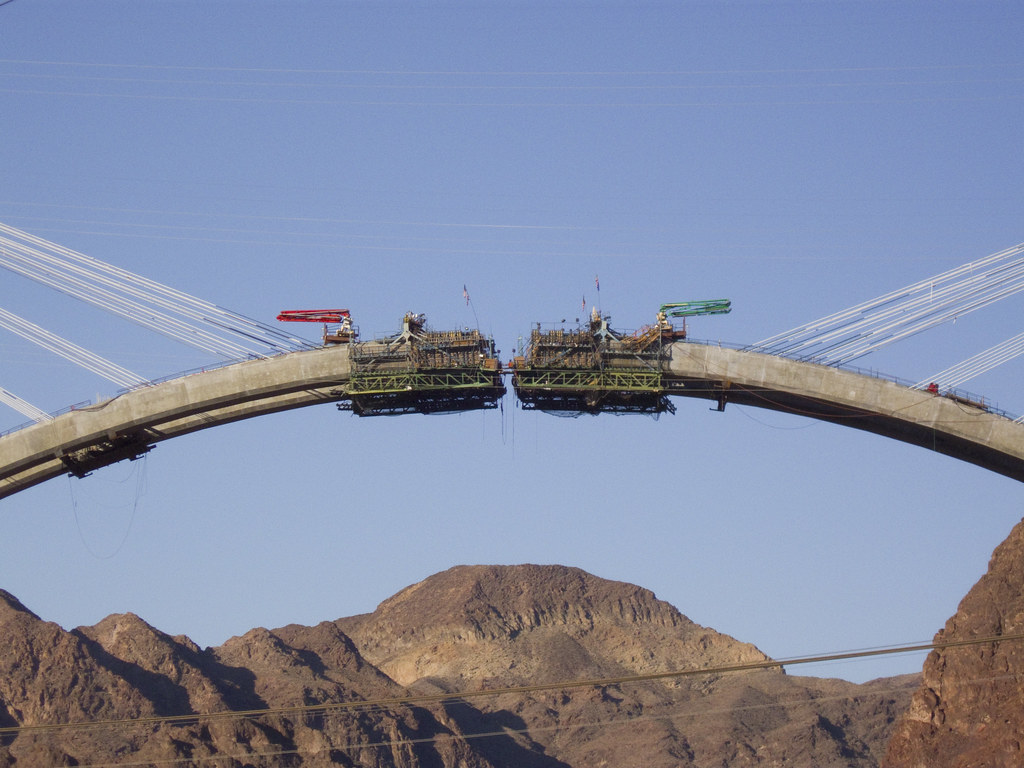
In order to guarantee the correct fit and alignment of prefabricated components, mathematical computations are also used. To precisely position and join modular pieces, geometric principles, including coordinate systems, vectors, and transformation matrices, are used. Because of the accurate dimensions and alignments made possible by these calculations, the prefabricated parts will fit together perfectly when assembled on-site. The calculation of load-bearing capacity and structural integrity also uses mathematical formulae. The right dimensions, materials, and connections for prefabricated components are chosen using structural engineering concepts, such as statics and material strength. The structural stability and safety of the prefabricated elements are guaranteed using mathematical formulae and formulas, such as those pertaining to stress, strain, and load distribution.
3D Printing
With the use of numerous mathematical ideas and formulae, 3D Printing, also known as additive manufacturing, has emerged as a disruptive technology in the building industry. Digital 3D models are divided into layers as part of the process, and these layers are then translated into machine instructions using mathematical methods. The extrusion nozzle or laser of the 3D printer is precisely positioned using geometric transformations and coordinate systems for accurate material deposition. Infill structures are optimized using mathematical calculations based on stress analysis, load distribution, and material qualities, balancing structural integrity with material effectiveness.
In addition, printing pathways for intricate architectural components are optimized using optimization algorithms that take into account print speed and support structures. Mathematical coordination techniques are used to synchronize motions and increase output when 3D Printing is combined with automation and robots. By utilizing these mathematical ideas, 3D Printing opens up previously unimaginable opportunities for the building sector, enabling personalized designs, structural optimization, and simplified production procedures.
Building Information Modeling
The building industry has been altered by the highly technological industrial automation approach known as Building Information Modeling (BIM). BIM uses sophisticated mathematical ideas and algorithms to produce accurate digital models of construction projects. By fusing several disciplines and processes, BIM revolutionizes automation in the building industry. BIM facilitates the production of intelligent 3D models that hold geometric and non-geometric data using parametric modelling. For accurate quantity takeoffs, conflict identification, and cost assessment, this data can be employed. The capabilities of BIM heavily rely on mathematical computations. Building component representation and positioning are precise thanks to algorithms like geometric transformations and coordinate systems. Geometric restrictions and spatial correlations are used by clash detection algorithms to find and fix conflicts during the design process.
BIM can optimize resource allocation, construction sequencing, and energy efficiency by employing techniques like linear programming or genetic algorithms. These improvements make project timelines better, cut costs, and minimize waste. Additionally, BIM connects with sensors and automation systems to provide real-time data interchange. This interface enables data-driven decision-making and remote building process monitoring. Statistical analysis or machine learning algorithms can be used to analyze sensor data, such as structural performance or energy usage, to improve building performance and maintenance.
Future of Industrial Automation in the Construction Sector:
Robotics And Autonomous Systems
Robotics and autonomous systems will be crucial in the future of industrial automation in the building industry, using mathematical calculations and concepts to revolutionize construction operations. The movement of robotic arms will be modelled and examined using kinematics, a part of mathematics, to ensure accurate and synchronized operations. Accurate description and control of robot configurations are made possible by the Denavit-Hartenberg parameters and transformation matrices. Furthermore, the autonomous operation of construction robots will be facilitated by control theory, which encompasses ideas like PID (Proportional-Integral-Derivative) control and optimum control. These mathematical methods will guarantee consistency, precision, and effectiveness in activities like bricklaying, welding, and material handling.
Robots will be able to learn and adapt to complicated building situations thanks to machine learning algorithms that are based on statistical mathematics. Through trial and error, reinforcement learning, for instance, can enhance robot behaviour, enhancing performance and productivity. Mathematical models will make path planning and collision avoidance for autonomous construction vehicles and drones easier. To create secure and effective routes, algorithms like the rapidly-exploring random tree (RRT) and potential field approaches will be used. In this whole change, linear programming and evolutionary algorithms. These algorithms will take job dependencies, time restraints, and resource availability into account, resulting in better project efficiency and optimized construction schedules.
AI-Driven Planning And Design
AI-driven planning and design will fundamentally alter how projects are conceived and carried out in the future of industrial automation in the construction sector. This will be accomplished by utilizing sophisticated mathematical ideas and formulae. Huge datasets will be analyzed by machine learning algorithms, which are based on statistical mathematics and can optimize design parameters and forecast project results. Optimal solutions to challenging design challenges will be found by using optimization approaches like restricted and evolutionary algorithms. In order to direct the design process, these algorithms use mathematical objective functions and restrictions, taking into account elements like cost, energy efficiency, and structural stability.
In addition, mathematical modelling techniques like computational geometry and parametric design will make it possible to generate complex architectural shapes and explore many design options. The interactions between design variables will be defined via parametric equations and geometric transformations, enabling effective design adjustments and iterations. Additionally, AI-driven simulations will examine and improve a variety of building project components using mathematical formulas and numerical techniques. For instance, finite element analysis uses numerical methods and mathematical models to simulate and assess the structural behaviour of intricate architectural systems. Utilizing mathematical equations like the Navier-Stokes equations, computational fluid dynamics simulates fluid flow and optimizes environmental conditions inside structures.
Augmented Reality (AR) And Virtual Reality (VR)
Augmented reality (AR) and virtual reality (VR) will have a significant influence on industrial automation in the construction sector in the future, integrating mathematical formulae and principles to revolutionize building procedures. In order to create immersive visualizations and interactions, AR and VR technologies make use of mathematical transformations and computer vision techniques. AR and VR systems depend heavily on mathematical transformations like perspective projections and coordinate transformations. With the help of these modifications, virtual objects may be precisely aligned and registered with their surroundings in the real world, giving consumers a seamless augmented or virtual experience. The detection and tracking of objects in AR and VR environments are made possible by computer vision algorithms, which are based on mathematical ideas. In order to recognize and track objects in real time, methods like feature detection, matching, and posture estimation rely on mathematical formulations like image descriptors and geometry algorithms.
In addition, mathematical models like geometry algorithms and physics-based simulations improve the realism and interaction of AR and VR applications. Realistic interactions between virtual items and the actual world are possible because of physical simulations, which are controlled by mathematical formulae like Newton’s laws of motion. Additionally, virtual item placement, layout design, and path planning inside building sites may be optimized using mathematical techniques like nonlinear optimization and constraint solving in AR and VR applications. These improvements may take into account elements like ergonomics, efficiency, and safety. Activities like object recognition, semantic segmentation, and scene comprehension may be performed on AR and VR data using statistical analysis and machine learning algorithms that are founded on mathematical principles. These evaluations can offer insightful information for automation and decision-making in the construction industry.
Drones and Aerial Imaging
In the future of industrial automation in the construction sector, drones and aerial imaging will revolutionize operations by integrating mathematical principles. Drones, equipped with advanced sensors and lidar technology, capture high-resolution data for analysis. Photogrammetry employs mathematical triangulation to generate accurate 3D models of construction sites, enabling precise measurements and volumetric calculations. Point cloud data, obtained through lidar sensors, undergo mathematical algorithms like Iterative Closest Point (ICP) for alignment and merging, creating comprehensive 3D representations.
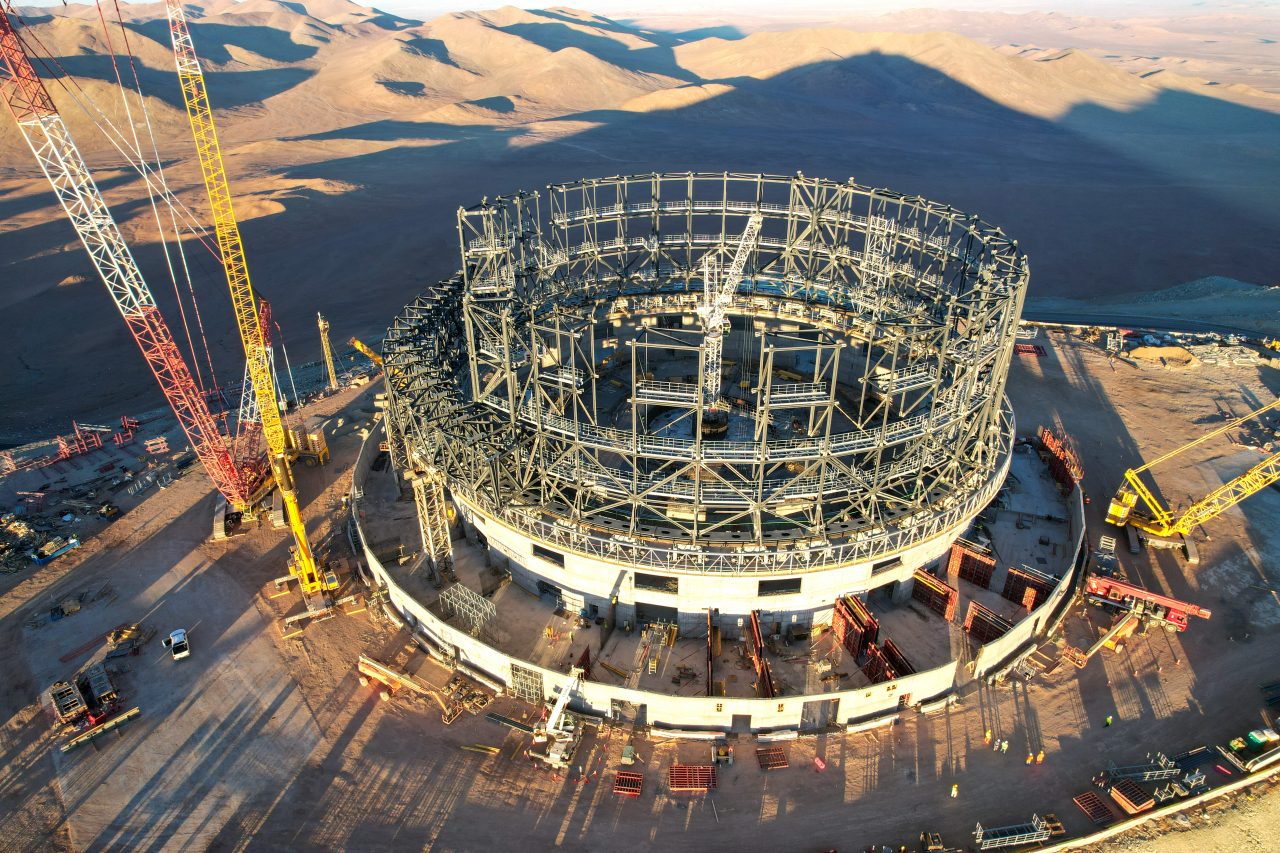
Accurate spatial alignment of aerial photographs with building plans is made possible by mathematical transformations such as coordinate transformations and image rectification. Algorithms for object detection and picture segmentation use mathematical analysis to recognize and categorize building components. Additionally, drones can fly autonomously thanks to mathematical algorithms for path planning and obstacle avoidance, which maximize safety and effectiveness in challenging building situations. Drones and aerial imagery improve the mapping, analysis, and monitoring of building sites by using these mathematical concepts, enhancing productivity and decision-making.
Big Data And Analytics
If we discuss the application of mathematical concepts to operations in the future of industrial automation in the construction industry, Big Data and Analytics will alter operations. The construction industry produces massive volumes of data, and quantitative methods like statistical analysis and data mining extract useful information for decision-making. Predictive analytics for risk management and resource optimization is made possible by regression analysis and time series forecasting, which help identify construction data patterns and trends. Construction schedules and resource allocation are optimized using mathematical network flow algorithms, which lower costs.
In order to analyze and categorize construction data, machine learning techniques, such as neural networks and support vector machines, use mathematical computations. This enables proactive maintenance and quality assurance. Mathematical simulations, such as queuing theory and Monte Carlo simulations, analyze project risks and productivity snags.
Digital Twin Technology
By utilizing sophisticated mathematical ideas and formulae, Digital Twin Technology will revolutionize the industrial automation of the building sector in the future. Using mathematical modelling and simulation approaches, digital twins will evolve as virtual reproductions of actual assets or systems. Accurate models that describe the behaviour and interactions of building components and systems are created using mathematical equations, such as partial differential equations. These models make it possible to analyze intricate fluid dynamics, structural dynamics, and energy transfer.
Digital twins use statistical mathematics and machine learning algorithms to integrate and analyze real-time data. These algorithms scan data streams for irregularities, forecast problems, and enhance performance, guaranteeing effective resource management and minimizing downtime.
Additionally, methods like genetic algorithms improve the Digital Twins’ operational effectiveness. To get the best results in terms of cost, energy efficiency, and productivity, these strategies take into account a variety of restrictions, dependencies, and goals.
Collaborative Construction Platforms
The future of industrial automation in the construction industry is led by collaborative construction platforms, which use cutting-edge technology to improve efficiency and cooperation. New technologies like block chain and decentralized networks make it possible for project stakeholders to share data in a safe and transparent manner, fostering trust and doing away with the need for middlemen. The platform’s resource allocation and work distribution are optimized by using novel mathematical models like game theory and multi-agent systems. These models take into account things like availability, project goals, and skill sets, allowing for effective and equitable collaboration.
In addition, machine learning algorithms analyze huge datasets to offer insights for decision-making and process optimization, including clustering and recommendation systems. In order to improve project planning, risk assessment, and productivity, these algorithms adapt to the available data.
Final Thoughts
In conclusion, industrial automation in the construction industry has the potential to fundamentally alter how projects are organized, carried out, and managed. Robotics, AI-driven planning, 3D Printing, augmented reality, drones, digital twins, and collaborative building platforms are just a few of the cutting-edge technologies that will revolutionize the construction sector and improve productivity, efficiency, and safety. There are several advantages to using these technologies. Automation through robotics and autonomous systems; reduces human error, increases precision, and streamlines repetitive operations. Resource allocation, scheduling, and decision-making processes are all optimized through AI-driven planning and design. The quick and affordable building of complicated structures is made possible by 3D Printing. Collaboration, visualization, and spatial comprehension are all improved by augmented reality and virtual reality. Accurate data collection, mapping, and analysis are made possible by drones and aerial imagery. Real-time monitoring, proactive maintenance, and performance enhancement are made possible by digital twins. Platforms for collaborative building encourage fluid resource management, collaboration, and communication. Looking ahead, it is clear that industrial automation in the construction industry has a bright future. It will modify conventional building procedures, promote sustainability, lower costs, and improve project outcomes. By embracing these developments, construction businesses will be better equipped to handle challenging situations, adapt to changing customer needs, and lead the digital transformation of their sector. The construction industry is well-positioned to take advantage of previously unimaginable prospects and open the door to a more creative, effective, and dynamic future by embracing this era of industrial automation.
DO Supply Inc. makes no representations as to the completeness, validity, correctness, suitability, or accuracy of any information on this website and will not be liable for any delays, omissions, or errors in this information or any losses, injuries, or damages arising from its display or use. All the information on this website is provided on an "as-is" basis. It is the reader's responsibility to verify their own facts.