Omron CPM1 vs CPM2: A Comparative Analysis
Omron CPM1 and CPM2 are popular programmable logic controllers (PLCs) used in various industrial automation applications. While they share some similarities, there are also key differences between them. This article provides a comparative analysis of these two PLC series, highlighting their specifications, features, and strengths to help you choose the best option for your specific needs.
Technical Specifications
In industrial control solutions, the CPM1 Compact Programmable Logic Controller (PLC) series and the CPM2 Brick-Style Controllers emerge as distinct yet formidable contenders, each addressing unique requirements in the dynamic automation landscape.
CPM1 Compact PLC Series- Precision in Compact Form
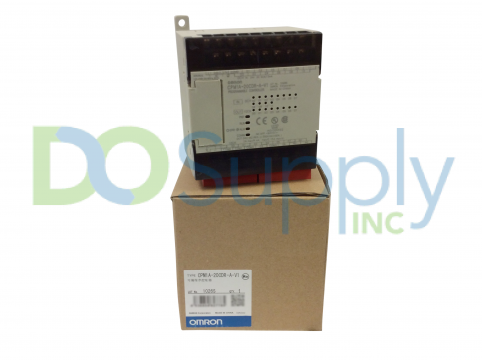
The CPM1 series stands out for its ultra-compact design and economic viability, offering a versatile solution across various industrial applications. Engineered for adaptability, this series accommodates diverse power options, output configurations, and sourcing/sinking requirements, establishing itself as a stalwart player in programmable automation. The AC variant boasts a voltage/frequency range of 100 to 240 VAC at 50/60 Hz, with an operational span from 85 to 264 VAC. Power consumption peaks at 30 VAC (or 60 VAC for specific models) with an inrush current of 30A (60A for specific models). The DC counterpart operates at a steady 24 VDC, featuring an operational range from 20.4 to 26.4 VDC. The series endures rigorous conditions with robust vibration and shock resistance, operating seamlessly from 0° to 55°C. The CPM1 series encapsulates robust engineering, making it a premier choice for precision and efficiency in programmable logic operations.
CPM2 Brick-Style Controllers- Power in Compact Design
In contrast, the CPM2 Brick-Style Controllers carve their niche as exemplars of small-scale control solutions, blending power with a compact design. Renowned for industry-leading capabilities, these controllers provide a versatile range of options, with CPUs offering 20, 30, 40, or 60 I/O points. Supporting both AC and DC power supplies, the AC variant operates within the range of 100 to 240 VAC at 50/60 Hz, with an operational span from 85 to 264 VAC. The DC counterpart maintains a steadfast 24 VDC, balancing power and efficiency. Maximum power consumption for AC and DC power stands at 60 VA and 20 W, respectively, with inrush currents peaking at 60A and 20A. Exceptional performance in challenging environments is marked by noise immunity, vibration resistance, and shock resistance, positioning them as reliable assets. Operational adaptability spans a temperature range from 0°C to 55°C, with storage capabilities from -20 °C to 75°C and humidity tolerance of 10% to 90% RH. CPM2 controllers combine advanced technology and meticulous design, resulting in precise and efficient industrial automation control.
CPM1 vs. CPM2 in I/O Control Systems
The I/O control systems of CPM1 and CPM2 represent cutting-edge solutions for industrial automation, each with distinct features and capabilities.
Control Method and Programming Language
Both systems employ a stored program method, smoothly blending cyclic scan and immediate refresh processing methods. Utilizing the ladder diagram as the programming language, CPM1 structures each instruction with 1 step and accommodates 1 to 5 words per instruction. In parallel, CPM2 follows a similar paradigm, offering a flexible and efficient programming approach with 1 step per instruction.
Instruction Set and Execution Times
While CPM1 boasts 14 basic and 79 special instructions, totaling 139, CPM2 outshines it with 14 basic and an impressive 105 special instructions, reaching 185 variations. This expansion in the instruction set equips CPM2 with a broader range of capabilities. Moreover, CPM2 demonstrates remarkable efficiency in execution times, with basic instructions like LD operating at 0.64 µs, while MOV instructions run at 7.8 µs, showcasing an improvement over CPM1.
Program Capacity and I/O Points
CPM1 supports a substantial program capacity of 2,048 words, with I/O points ranging from 10 for the CPU-only configuration to 100 with an expansion I/O unit. In comparison, CPM2 excels with an expanded program capacity of up to 4,096 words and a more extensive I/O capacity, ranging from 20 to 60 points for the CPU unit alone and expanding to an impressive 120 points with expansion I/O modules. This signifies CPM2’s superior scalability to accommodate larger and more diverse industrial setups.
Memory Backup and Self-Diagnostics
Both systems prioritize memory backup and self-diagnostics. CPM1 utilizes flash memory and a battery backup, ensuring data integrity. However, CPM2 enhances this with an extended battery life of approximately 5 years, offering a more robust memory backup solution. Both systems incorporate sophisticated self-diagnostic functions, with CPM2 identifying additional errors such as I/O bus errors.
Communication and Expansion Modules
Regarding communication capabilities, both CPM1 and CPM2 feature built-in peripheral and RS-232C ports supporting various protocols. Nevertheless, CPM2 stands out with an expanded set of expansion modules, introducing features like analog I/O, CompoBus/S I/O Link, and Temperature Sensor Modules, enhancing its adaptability to diverse industrial requirements.
Bit-Level Operations and Specialized Features
Both series cover comprehensive bit-level operations, timers, counters, and basic interrupts. However, CPM2 introduces additional features such as high-speed counters, synchronized pulse control, and quick-response inputs, contributing to its versatility in addressing complex industrial control scenarios.
CPM1 vs. CPM2 CPU Input Circuits
The input circuits of the CPM1 and CPM2 series CPUs exemplify precision and versatility, each catering to the unique demands of industrial control systems.
CPM1 Input Circuit: Precision and Adaptability
The CPM1 input circuit operates within a 24 VDC input voltage range with a tolerance of +10% to -15%, showcasing compatibility with diverse input configurations. With varied input impedances, such as 2 kΩ for IN00000 to IN00002 and 4.7 kΩ for others, the CPM1 input circuit offers flexibility for various application needs. Current consumption is finely tuned, demonstrating 12 mA for IN00000 to IN00002 and a typical current of 5 mA for other inputs. The ON voltage, set at 14.4 VDC, ensures a precise threshold for an ON state, while the OFF voltage is capped at 5.0 VDC. Noteworthy features include adjustable ON and OFF delays, ranging from 1 to 128 ms, allowing users to customize response characteristics based on operational requirements.
CPM2 CPU Input Circuit: Sophistication and Adaptability
In the CPM2 series, the CPU input module exhibits a sophisticated design tailored for precision and adaptability across a 24 VDC input voltage range with a tolerance of +10%/-15%. The module intelligently manages input impedances, with IN00000 to IN00001 set at 2.7 kΩ, IN00002 to IN00006 at 3.9 kΩ, and IN00007 and up at 4.7 kΩ. Current consumption is meticulously tuned, showcasing 8 mA for IN00000 to IN00001, 6 mA for IN00002 to IN00006, and 5 mA for IN00007 and up. The ON voltage/current characteristics maintain precision, requiring a minimum of 17 VDC and 5 mA for IN00000 to IN00001 and a minimum ON voltage of 14.4 VDC and 3 mA for IN00002 and up. The OFF voltage/current specifications remain uniform at 5.0 VDC maximum and 1 mA. The module also incorporates adjustable ON and OFF delays, ranging from 1 to 80 ms, with a default setting of 10 ms. The input module’s versatility extends to high-speed counter inputs, where IN00000 through IN00002 can be utilized, reaching a maximum count frequency of 5 kHz in differential phase mode and 20 kHz in other modes.
The CPM1 and CPM2 series showcase precision in input circuit design, offering adaptable solutions for industrial control applications. The CPM2 series introduces enhancements in input impedance management, lower current consumption, and extended functionalities, such as higher count frequencies in high-speed counter modes. Both series’ adjustable ON and OFF delays provide users with customization options, aligning the response characteristics with specific operational needs. In summary, while the CPM1 series is a reliable choice, the CPM2 series elevates precision and adaptability, catering to the evolving requirements of advanced industrial control scenarios.
Omron CPM1 vs. CPM2 Serial Communication
The Omron CPM1 PLC employs serial communication, utilizing the Host Link Communication (HLC) protocol to connect with computers and Omron touch screens. This protocol supports two primary communication setups: 1 1 Communication and 1-to-n N Communication. The former establishes a direct point-to-point link, while the latter, utilizing RS 422, facilitates communication with up to 32 external devices. Integration of the RS 232 module, CIF-01, is essential for establishing the communication link and adapting to different standards.
The CPM2 PLC boasts advanced communication capabilities, supporting direct NT Link communication with OMRON NT-Series Programmable Terminals in a 1:1 configuration. This eliminates the need for separate drivers and ensures high-speed data transmission. For Host Link communications, the CPM2 provides flexibility: 1 1 communication involves using the CPM1-CIF01 adapter for RS-232C conversion, while 1-to-N communication allows connections with up to 32 devices using RS-422/RS-485. Optional communication adapters enhance adaptability, making the CPM2 suitable for diverse industrial setups.
CPM1 vs. CPM2 Relay Output Circuits
CPM1 Relay Output Circuit- Reliable Switching Capability
The Relay Output circuit, designated as 43_sp_7_1, plays a crucial role in the CPU and Expansion I/O Unit of the CPM1 series. With a maximum switching capacity of 250 VAC/2 A (cosφ =1) and 24 VDC/2 A (4A/common), it accommodates diverse load requirements, ensuring versatility in industrial setups. The relay demonstrates impressive electrical reliability, enduring up to 150,000 times (at 24 VDC) for resistive loads and 100,000 times (at 200 VAC, cosφ =0.4) for inductive loads. Mechanically, the circuit excels with a remarkable endurance of up to 20 million switching cycles. Both ON and OFF delays are limited to 15 ms for swift and responsive relay operations.
CPM2 Relay Output Circuit- Reliable Switching Capability
The Relay Output component of the CPM2 series, applicable to both CPU and Expansion I/O Module, stands out with reliable switching capability. With a maximum switching capacity of 2 A, 250 VAC (cosφ=1) and 2A, 24 VDC (4A/common), this relay accommodates various load requirements, ensuring versatility in industrial settings. The minimum switching capacity at 10 mA and 5 VDC demonstrates precision even at lower operational levels. The relay’s service life is impressive, boasting electrical reliability of up to 150,000 operations (30 VDC resistive load) and 100,000 operations (240 VAC inductive load, cosφ = 4). Mechanically, the relay excels, enduring up to 20,000,000 operations. Both ON and OFF delays are limited to 15 ms, contributing to swift and responsive relay operations.
The CPM1 and CPM2 series offer advanced control capabilities in their Relay Output Circuits. The CPM2 series introduces enhanced configurability in input modules and additional precision in relay circuits, making it a compelling choice for applications demanding higher flexibility and performance.
DeviceNet I/O Link Unit (CPM1-DRT21)
The CPM1-DRT21 facilitates advanced connectivity by enabling the CPM1 to operate as a DeviceNet Slave in a DeviceNet network. This integration allows for the exchange of 32 input and 32 output bits between the CPM1 and the Master Unit, showcasing a robust system integration within the industrial control framework. Specifications include standardized communication protocols, 32 points allocated for input and output each, and convenient node address configuration through a DIP switch. This unit represents a significant advancement in enhancing connectivity for the CPM1 in DeviceNet environments.
CompoBus/S I/O Link Module (CPM1-SRT21)
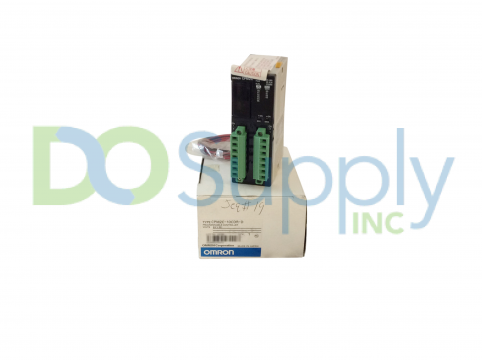
On the other hand, the CompoBus/S I/O Link Module (CPM1-SRT21) empowers the CPM2 to function as a Slave to a CompoBus/S Master Module. This integration establishes an I/O link with 8 inputs and 8 outputs between the Master Module and the CPM2, showcasing adaptability in diverse industrial automation scenarios. Its specifications include 8 input and 8 output bits, 1 input word, 1 output word allocated in the CPM2 I/O memory, and user-friendly node address configuration via a DIP switch.
The DeviceNet I/O Link Unit and the CompoBus/S I/O Link Module are crucial in enhancing industrial connectivity. While the CPM1-DRT21 excels in DeviceNet environments with a focus on standardized communication and a higher number of I/O points, the CPM1-SRT21 offers versatility in diverse scenarios with a focus on CompoBus/S technology and a moderate number of I/O points. The choice between these components depends on specific application requirements, showcasing the commitment to efficient and standardized data exchange.
In conclusion, the comparative analysis between the Omron CPM1 and CPM2 series sheds light on their distinct features and capabilities. The CPM1 Compact PLC series, known for its compact design and economic viability, is a key player focusing on precision and efficiency. On the other hand, the CPM2 Brick-Style Controllers exemplify power in a compact design, catering to a broader range of options with advanced technology and meticulous design.
Delving into their I/O control systems, the CPM2 series outshines with a broader instruction set, efficient execution times, increased program capacity, and superior memory backup. The introduction of advanced features such as high-speed counters and specialized functions positions CPM2 as a versatile solution for complex industrial control scenarios. The comparison extends to input circuits, where the CPM2 series showcases enhancements in input impedance management, lower current consumption, and extended functionalities, setting a benchmark for precision and adaptability.
Serial communication capabilities demonstrate the evolution from CPM1 to CPM2, with the latter supporting direct NT Link communication and offering flexibility in Host Link communications. The relay output circuits further underscore the advancements in the CPM2 series, providing enhanced configurability and precision in relay operations. The analysis of DeviceNet I/O Link Unit (CPM1-DRT21) and CompoBus/S I/O Link Module (CPM1-SRT21) highlights their distinct roles in enhancing industrial connectivity. While the CPM1-DRT21 excels in DeviceNet environments with standardized communication and a higher number of I/O points, the CPM1-SRT21 offers versatility in diverse scenarios with a focus on CompoBus/S technology and a moderate number of I/O points.
The choice between CPM1 and CPM2 depends on specific application requirements, emphasizing the commitment to efficient and standardized data exchange in the evolving landscape of industrial automation.
DO Supply Inc. makes no representations as to the completeness, validity, correctness, suitability, or accuracy of any information on this website and will not be liable for any delays, omissions, or errors in this information or any losses, injuries, or damages arising from its display or use. All the information on this website is provided on an "as-is" basis. It is the reader's responsibility to verify their own facts.