Real Causes of Communication Delays in ControlLogix
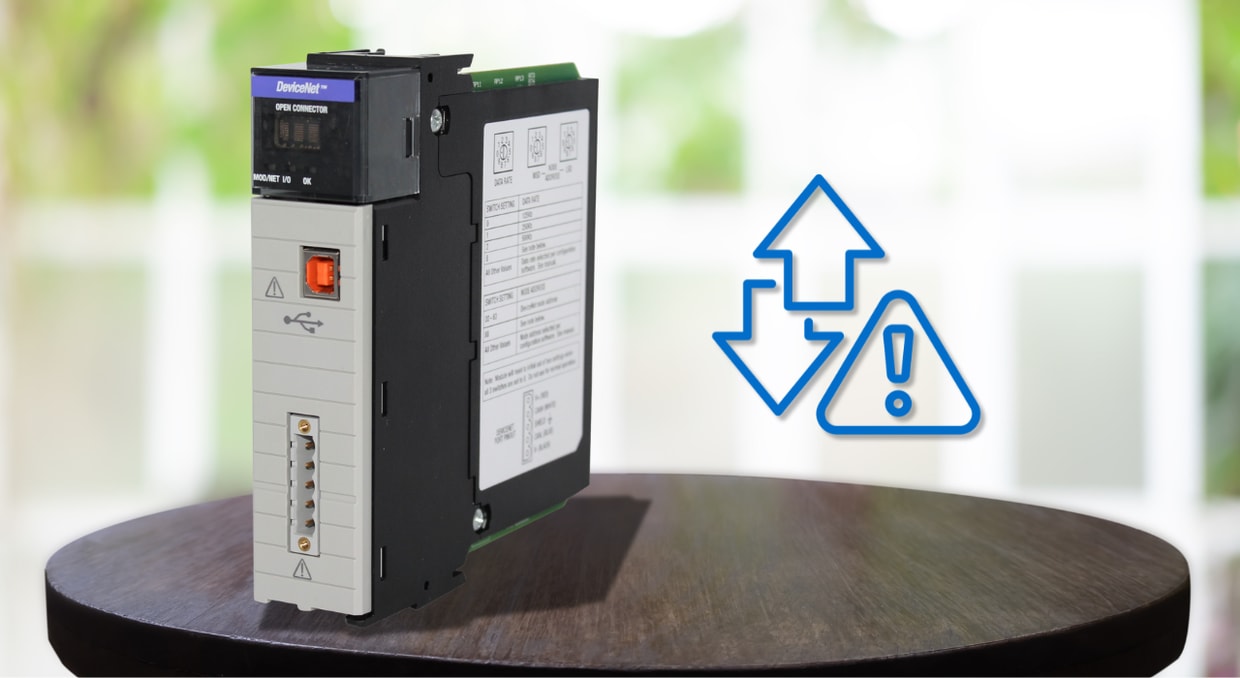
ControlLogix communication delays are often not the fault of a single component. In most field situations, the culprit is not a broken device but a design misalignment among the controller’s capacity, the choice of communication module, and the network built around it. A ControlLogix system is modular, and delays often trace back to a specific design decision: too many nodes on the I/O bus, the use of an antiquated bridge module, or a backplane routing configuration stretched beyond its performance envelope. Getting a strong grip on these mechanics and moving away from thinking of delay as just a generic “network problem” is what will distinguish a permanent fix from a temporary workaround.
Connection and Node Capacity Limits Drive ControlLogix Delay
Every ControlLogix controller has an upper limit on the number of nodes and connections it can support, and exceeding that limit is one cause of communication lag.
Controller-Level Overhangs for Nodes and Connections
A node is any device added to the I/O configuration, and pushing a network beyond that count can cause delays that no amount of small-network tuning will resolve, since the ceiling is set by the ControlLogix controller itself.
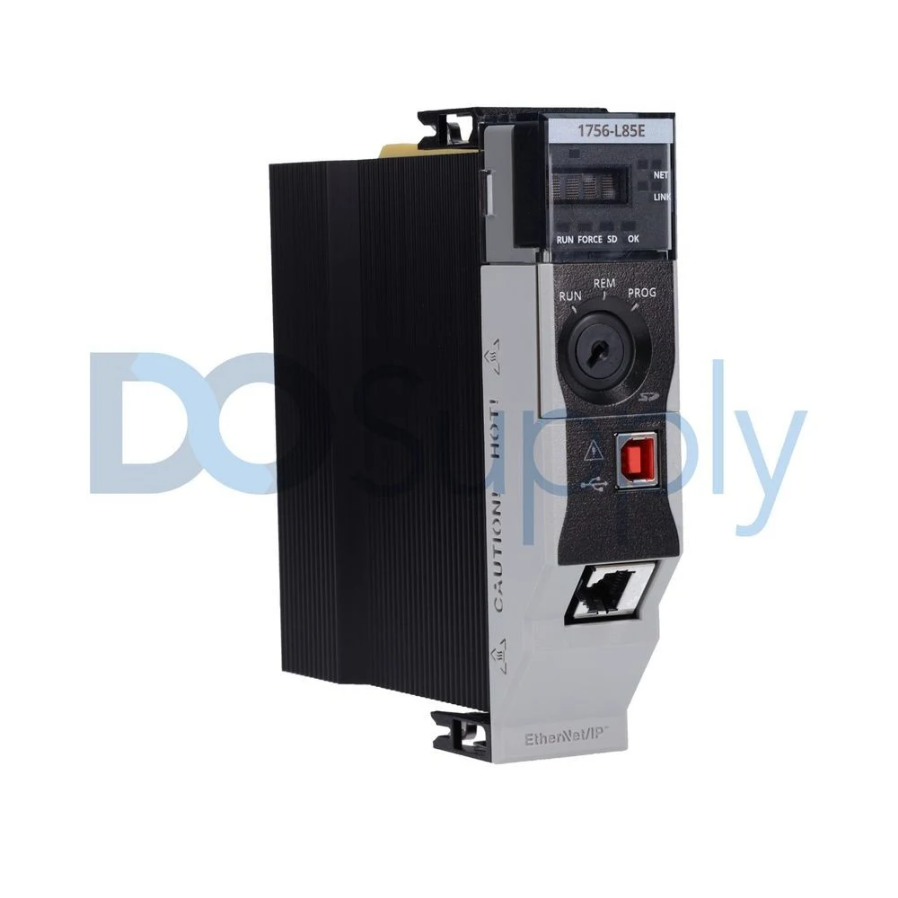
The smallest ControlLogix 5580 processors (with catalog numbers starting with 1756-L81) accommodate as many as 100 EtherNet/IP nodes, whereas the 1756-L82 supports 175 nodes, and the 1756-L83 and 1756-L84 each support 250 nodes, with the 1756-L85 at the top able to connect 300 nodes. ControlLogix 5570 controllers do not have a node-based ceiling; instead, they carry 500 controller connections regardless of processor size.
Module Differences that Cause Network Communication Problems
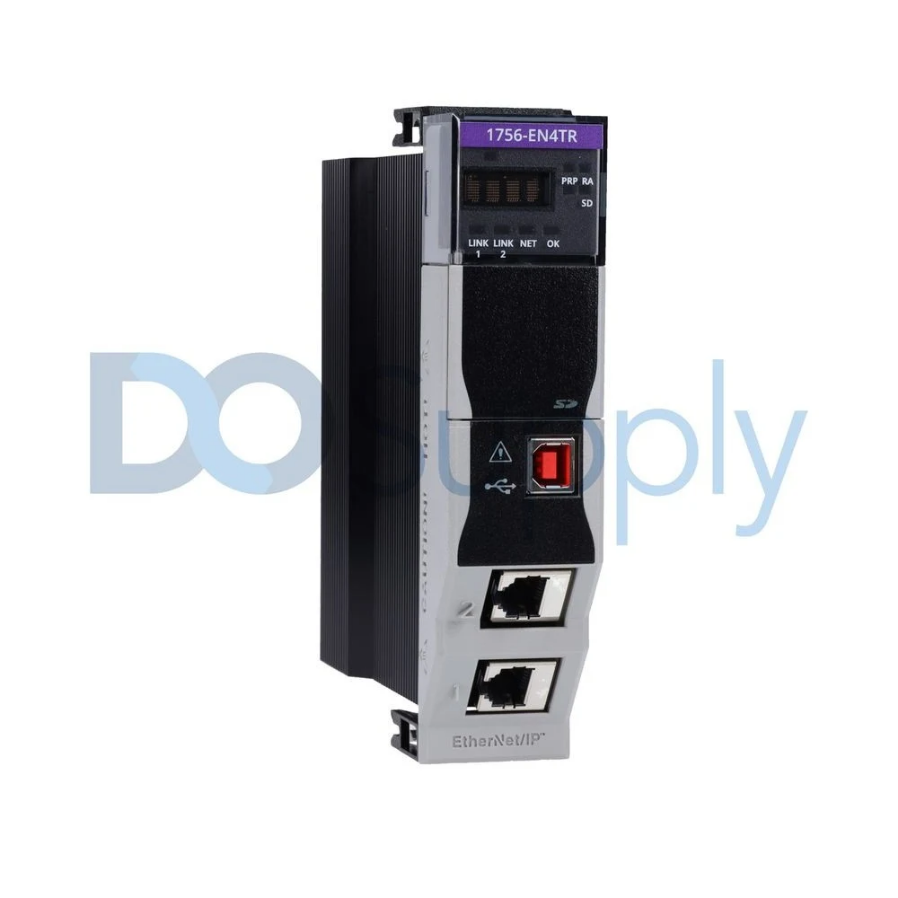
When working with a ControlLogix system, it is essential to understand that communication module connections form on top of those from the controller, creating a tiered limitation that extends across the entire chain. Outmoded equipment proves detrimental here: the 1756-ENBT’s limit is a modest 128 Class 1 CIP connections, with TCP links capped at 64. By contrast, the 1756-EN2T and its corresponding 1756-EN2TR support up to 256 CIP connections and 128 TCP connections, which is double the ENBT on both counts. The newly introduced 1756-EN4TR further increases this to 1,000 Class 1 CIP connections, 528 Class 3 CIP connections, and 512 TCP connections. This makes legacy bridge modules much weaker by comparison: a ControlLogix system that keeps an outdated bridge in place while the rest of the network expands is always vulnerable to eventually exceeding its overall limit, leading to simple-looking timeout errors that seem unrelated to, yet arise entirely from, an old bridge.
Backplane Routing and Chassis Hop Constraints
ControlLogix communication modules bridge or route between networks connected to a backplane, and the route taken carries a hard limit: a message can only be routed through four ControlLogix chassis, which creates eight communication hops. Over large and complex conveyor or process networks where multiple trips through various chassis are required to reach a controller, engineers may hit this hop ceiling without realizing it, accumulating latency at every bridge. Because a ControlLogix controller is not required to be present in every chassis along a bridging path, it is simple and easy to add hops as a system builds out, and just as easy to fail to account for the overall routing depth.
Communication Module Selection as a Root Cause
The choice of EtherNet/IP bridge module affects both connection capacity and communication rate, making it one of the highest-leverage items for delay prevention.
EtherNet/IP Bridges: Legacy Compared to Current Communication Modules
Modules such as the 1756-EN2T, EN2TR, and EN2TP run at 10/100 Mbit/s over copper or fiber connectivity and support motion for up to eight axes through the native EtherNet/IP connection. Motion capacity on the 1756-EN3TR rises to 128 axes, though its connectivity speed remains at 10/100. The 1756-EN4TR features dual-speed 10/100 Mbit/s and 1 Gbit/s connectivity and supports up to 256 axes of integrated motion. Mixing legacy 10/100 Mbit/s-only modules into the same network segment as devices capable of gigabit speeds forces the whole segment to drop to the lower data rate that the legacy models allow – a mistake that is both common and easily missed on large conveyor networks with a large number of drop points, and one that causes delays throughout.
CIP Security: the 1756-EN4TR and the Latency Cost of Security
Beyond its raw connection capacity, the 1756-EN4TR is one of the few ControlLogix bridge modules that feature CIP Security and an embedded switch. CIP Security is a defense-in-depth service added to the Common Industrial Protocol, and its inspection overhead is worth accounting for on a network already running close to its connection ceiling, since security processing and connection-capacity headroom draw on the same module resources.
Network Infrastructure and Topology Considerations
The ControlLogix controller and its communication module account for only half of the delay equation. The switching infrastructure that routes CIP traffic between them is the other half.
Stratix Switch Migration
The Rockwell Automation Stratix 5700 industrial managed switch was discontinued for new designs effective September 1, 2025. It is being migrated out in favor of the Stratix 5200 and 5800 platforms, as well as the Stratix 5400 and 5410 for higher-throughput and layer-3 routing cases. Conveyor networks still being run on Stratix 5700s, or on predecessors like the 8000-series modular switches, sit well outside Rockwell Automation’s currently supported range. This also plays into the communication delay equation: sourcing firmware updates, diagnostic reports, or replacement spares for an end-of-life switch line can easily prolong the mean time to resolution.
Device Level Ring and Flexible Topologies
Star, linear, and device level ring (DLR) are topologies supported by EtherNet/IP networks. Most ControlLogix systems use a DLR topology to connect machine-level segments, in which cabling must loop back to provide communication redundancy. The 1756-EN2TR, EN3TR, and EN4TR all come with a built-in switch to support ring wiring, eliminating the need for a switch at every node. On large machines built from many independent machine networks, module and topology choices compound each other: a daisy-chain of embedded-switch modules adds an extra hop at every device, whereas a neatly segmented star-and-ring topology can effectively reduce the number of nodes between the controller and any given connection.
CIP Producer-Consumer Architecture and Bandwidth Planning
CIP, the Common Industrial Protocol, is the layer on which EtherNet/IP is built. CIP employs a producer-consumer model that is far more efficient than a simple one-to-one communication model. Under this architecture, a device can transmit data once, allowing multiple devices to receive it simultaneously, meaning that connection accounting on a ControlLogix network is never as simple as “one connection per physical cable.” Each CIP connection still counts against the controller’s and module’s connection limits, so communication planning must account not only for the physical device count on a conveyor network but also for the total connection count generated by its I/O, HMI, and drive populations.
Key Takeaways
In almost all situations, communication delay on a ControlLogix network can be attributed to specific, documented capacity thresholds rather than a mysterious network bug. The number of nodes a controller supports depends on its model; older communication modules like the 1756-ENBT offer a fraction of the connection capacity that a current module like the 1756-EN4TR provides; backplane routing is capped at four chassis and eight hops; and outdated Stratix platforms carry no ongoing support infrastructure. Engineers maintaining ControlLogix conveyor networks should assess connection counts against controller and module capacity, check routing depth against the maximum hop count, and verify that network hardware sits on a currently supported Stratix platform before troubleshooting any observed delay from scratch.
Building a secure, reliable, and fast automation network starts with picking the right components. At DO Supply, we carry the ControlLogix line, including controllers, communication modules, and I/O modules. On top of that, all of our products ship fast and come with a 2-year warranty. Give our customer support team a call today, and we can help you find the right product to improve your communication speed. If you would like to continue reading about PLC communication, we have an article here going over what happens when a PLC misses a packet.
DO Supply Inc. makes no representations as to the completeness, validity, correctness, suitability, or accuracy of any information on this website and will not be liable for any delays, omissions, or errors in this information or any losses, injuries, or damages arising from its display or use. All the information on this website is provided on an "as-is" basis. It is the reader's responsibility to verify their own facts.