MDS-C1 vs. MDS-B: Decoding the Differences in Mitsubishi’s Servo Drive Lineup
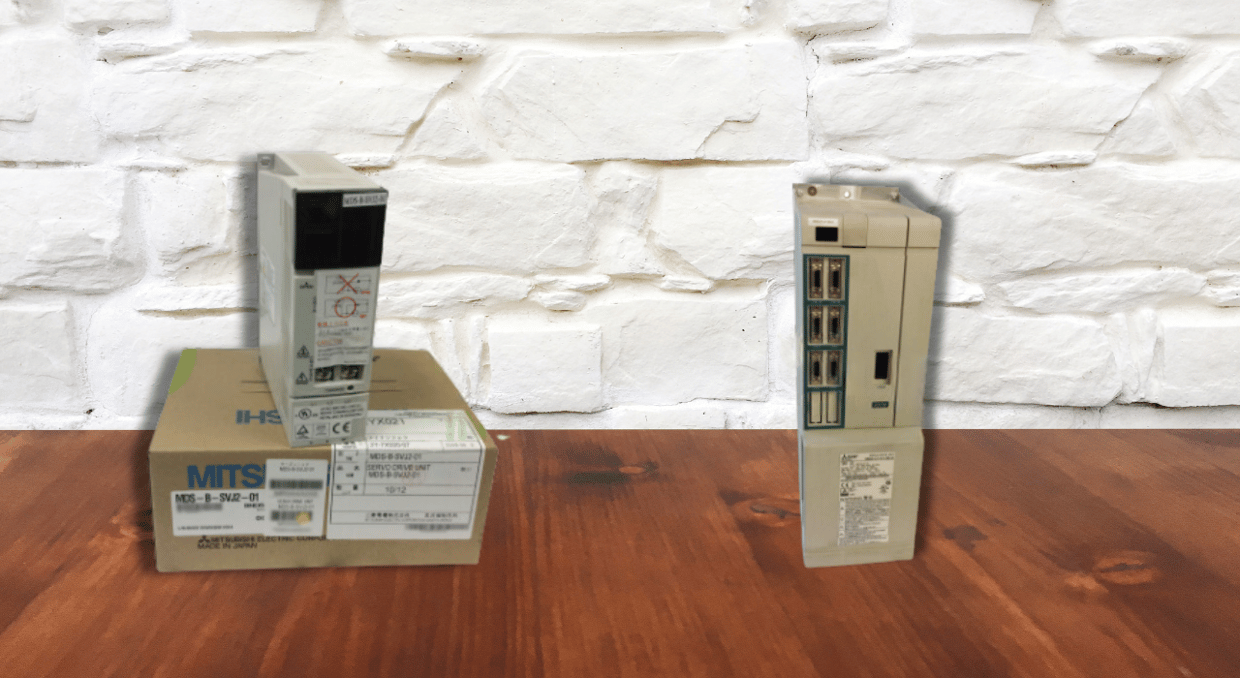
The Mitsubishi’s MDS-C1 and MDS-B servo drive series could be compared to identify important improvements that enhance contemporary industrial automation systems. With its increased power capacity, broader voltage range, sophisticated communication protocols, and better safety features, the MDS-C1 series is designed for high-performance and demanding applications. The MDS-B series, on the other hand, is made for easier, lower-power jobs that require the minimum connection and safety requirements. To assist industries in selecting the ideal drive for their unique needs, this article examines the key distinctions between these two servo drive lines, emphasizing application appropriateness, output current, compact design, and integration.
Comparison of MDS-C1 and MDS-B Servo Drives
Voltage Range
Compared to the earlier MDS-B series, the MDS-C1 series provides more flexibility and adaptability in the context of voltage range. A wider range of voltages may be supported by the MDS-C1, which can normally handle input voltages between 200 and 400 volts. Thanks to its broad range, it may be employed in various industrial situations that call for more accurate control and greater power levels. The MDS-B series, on the other hand, is intended for lower voltage applications and typically operates in the 200V range. The MDS-C1 series’ wider voltage range makes it more suitable for intricate systems requiring high-voltage inputs for high-speed automation and heavy-duty equipment.
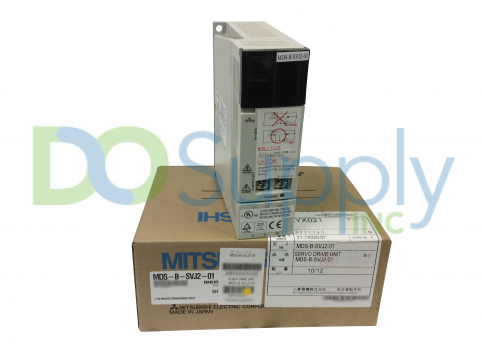
Drives like the MDS-C1-SVJ (400V for high-precision), MDS-C1-SPV (400V for large-scale automation), MDS-C1-SPH (400V for advanced CNC), and MDS-C1-V1-45 (200V for general applications) are all part of the MDS-C1 family. The MDS-B series includes the following models: MDS-B-SP (200V for reliable CNC performance), MDS-B-SVJ2 (200V for CNC), MDS-B-V1-20 (200V for smaller motors), and MDS-B-VR (200V for medium-duty regenerative applications).
Power Capacity and Speed
The MDS-C1 series performs noticeably better than the MDS-B series in terms of power capacity and speed. For example, the MDS-C1-SPH is perfect for high-performance CNC machines since it can attain speeds of 3000 RPM and power levels of up to 11 kW. Similarly, MDS-C1-SVJ provides accurate motion control at high speeds in 400V systems with power output support up to 7.5 kW. With a modest power capacity of 4.5 kW and speed capabilities appropriate for general-purpose automation applications that need speed, the MDS-C1-V1-45 module functions at 200V. On the other hand, the MDS-B-SVJ2 is more appropriate for conventional CNC applications since it has a lower power output of 3.5 kW and speed restrictions of 2000 RPM. With a maximum speed of 1500 RPM, the 2kW-rated MDS-B-V1-20 offers moderate power and is best suited for compact industrial automation systems.
Communication Protocols and Connectivity
In terms of connection and communication protocols, the MDS-C1 series provides more sophisticated and adaptable choices than the MDS-B series, which is now obsolete. The MDS-C1 supports current communication technologies such as Ethernet-based CC-Link IE and high-speed serial connection, enabling smooth integration into complex automation networks. For example, the MDS-C1-SVJ provides a CC-Link IE Field for synchronized control in dispersed automation installations, while the MDS-C1-SPH uses EtherCAT for real-time data interchange in high-precision CNC systems. Modbus TCP/IP is included in the MDS-C1-V1-45 to provide flexible connectivity in moderate-power applications. However, the MDS-B series is only compatible with outdated technologies (such as RS-232/485, which is included in the MDS-B-SVJ2), making it appropriate for less complex systems. Compared to MDS-C1’s more advanced protocols, MDS-B-VR’s usage of MELSECNET limits its connection and real-time communication capabilities.
Safety Features
With more sophisticated safety features than the MDS-B series, the MDS-C1 series stands out and is perfect for contemporary automation applications requiring strict safety rules. Safe Torque Off (STO) and Safe Stop 1 (SS1) features on the MDS-C1 provide prompt motor shutdown in an emergency and guard against mechanical damage. For example, the MDS-C1-SVJ has integrated STO to lower the chance of accidents during high-speed operations, while the MDS-C1-SPH includes SS1 for improved CNC safety. The MDS-C1-V1-45 also has emergency stop and overload protection features. However, the MDS-B series lacks more advanced features like STO or real-time error reporting, which limits its use in critical safety contexts. In contrast, the MDS-B series includes basic safety features, including overheat protection in the MDS-B-SVJ2 and overcurrent detection in the MDS-B-VR.
Diagnostic and Predictive Maintenance
Compared to the MDS-B series, the MDS-C1 series offers considerably improved operating efficiency thanks to its enhanced diagnostic and predictive maintenance capabilities. Using real-time monitoring features, the MDS-C1 makes it possible to continuously measure variables, including voltage, current, and temperature. For instance, the MDS-C1-SPH’s integrated Ethernet-based CC-Link IE allows for comprehensive fault diagnostics, facilitating the prompt detection of problems. Similarly, the MDS-C1-SVJ enables predictive maintenance alerts, studying patterns to detect breakdowns before they occur. Proactive maintenance is ensured by the MDS-C1-V1-45’s integrated error recording and remote monitoring, which further improve diagnostic capabilities. While the MDS-B-VR has limited predictive capabilities and lacks the extensive analytics found in the MDS-C1 series, it is worth noting that the MDS-B series, including the MDS-B-SVJ2, contains rudimentary diagnostic functions with limited fault indications, which ultimately reduces overall dependability.
Compact Design and Integration
In comparison to the MDS-B series, the MDS-C1 series has a more flexible and compact design, which makes it ideal for contemporary industrial situations where space optimization is essential. Because of its simplified shape, the MDS-C1-SPH may be seamlessly integrated into high-density CNC systems without sacrificing performance. In a similar vein, the MDS-C1-SVJ offers strong precision control with a small footprint that makes it perfect for applications with limited space. The MDS-C1-V1-45 optimizes space in automation systems by enabling vertical or horizontal installation, which increases integration flexibility. On the other hand, the MDS-B series—including MDS-B-SVJ2—has a larger shape, making installing it in small spaces more difficult. Even if the MDS-B-V1-20 functions, it is less effective in current production lines with small spaces since it is not as compact and modular as the MDS-C1 drives.
Output Current
The MDS-C1 series performs better output current than the MDS-B, providing greater and more flexible current capabilities suited to demanding industrial applications. For example, the MDS-C1-SVJ supports output currents of 50A, assuring smooth performance in high-speed, high-load situations, while the MDS-C1-SPH delivers robust power for heavy-duty CNC operations with up to 60A. With its more moderate current capability of 30A, the MDS-C1-V1-45 is perfect for a variety of automated jobs requiring medium power. On the other hand, the MDS-B series, including the MDS-B-SVJ2, is often limited to applications that require lower output currents, as it can only sustain up to 20A. Comparably, the MDS-B-V1-20 only offers about 15A, which limits its ability to manage high-power jobs. The MDS-C1 series’ wider current handling provides more adaptability in contemporary industrial systems.
Application Suitability
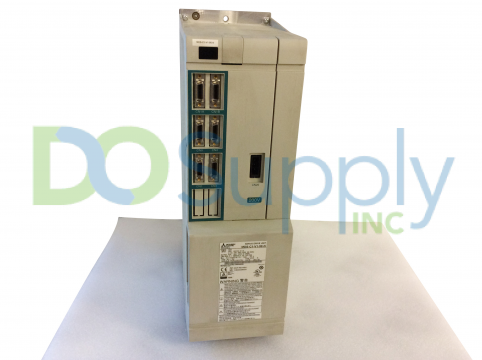
Regarding application feasibility, simpler, lower-power operations are better suited for the MDS-B series, while more demanding, high-performance industrial applications are the intended use for the MDS-C1 series. The MDS-C1-SPH is perfect for the automotive or aerospace sectors because of its high-speed accuracy and superior motion control, which make it an excellent choice for heavy-duty CNC systems. The MDS-C1-SVJ is suitable for high-precision robots and automated manufacturing lines, enabling increased flexibility in high-load settings. The MDS-C1-V1-45 offers reliable performance for medium-power applications like material handling and packing. While the MDS-B-VR is used in basic automation with moderate power needs, such as textile or woodworking machines, where sophisticated capabilities are not required, the MDS-B-SVJ2 is designed for typical CNC applications with reduced power and precision demands.
Conclusion
In conclusion, the MDS-C1 series offers significant advancements over the MDS-B series in terms of power capacity, voltage range, communication protocols, and safety features. The MDS-C1 is designed for high-performance, space-efficient, and complex industrial applications, making it the preferred choice for sectors requiring advanced automation and precision, such as automotive and aerospace. In contrast, the MDS-B series is more suitable for simpler, lower-power tasks with basic safety and connectivity needs. Overall, the MDS-C1’s superior flexibility, output current, and diagnostic capabilities make it a more robust solution for modern manufacturing environments.
No matter which Mitsubishi drive you pick, you really cannot go wrong. We at Do Supply carry an extensive list of both the MDS-C1 and MDS-B Drives that are ready to be shipped out. Call or email us today and we will be more than happy to help pick out the perfect model for your needs. If you would like to see how the MDS-C1 stacks up against the MDS-D, we have an article for that here!
DO Supply Inc. makes no representations as to the completeness, validity, correctness, suitability, or accuracy of any information on this website and will not be liable for any delays, omissions, or errors in this information or any losses, injuries, or damages arising from its display or use. All the information on this website is provided on an "as-is" basis. It is the reader's responsibility to verify their own facts.