Protecting Your Motors: A Look into the SMC Dialog Plus Line
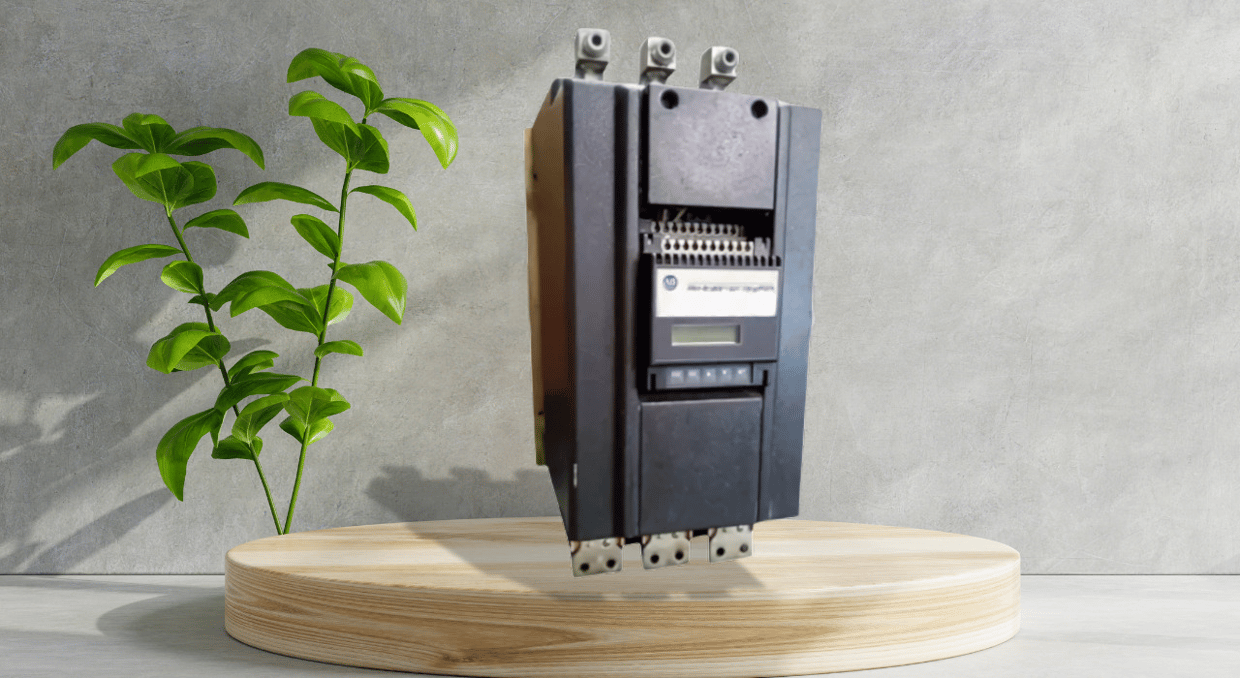
Electric motors are the heartbeat of present-day automated industrial environments, powering virtually every machinery that drives production and manufacturing processes. In fact, more than 50% of the workload involved in today’s industrial processes is completed by electric motors, and this percentage is expected to continue increasing in the foreseeable future. This places a significant premium on ensuring that these motors and their associated circuits are properly protected to increase machine uptime and reduce unplanned downtimes, which can be very costly for companies.
With current motor protection trends moving towards consolidating multiple protective features/functions into a single motor control module, system efficiency, performance, and reliability can be greatly enhanced. Solid-state smart motor controllers, like the SMC Dialog Plus controllers, offer even greater functionality and integration with smaller motor control panels and lower costs for hardware components, control/power wiring, installation, and maintenance.
The SMC Dialog Plus Controller Line
The Allen-Bradley SMC Dialog Plus (Bulletin 150) is a complete line of intelligent microprocessor-based motor controllers from Rockwell Automation. These controllers are designed to meet the control and protection needs of squirrel-cage, three-phase AC induction motors used in many industrial applications, including conveyor systems, centrifugal pumps, blowers and ventilators, compressors, stirrers and mixers, material handling, transport systems, and overhead cranes. They are available for induction motors rated 1 to 1000 A, 200 to 600V AC, or 200 to 480V AC at 50/60 Hz AC input frequency. In addition to controlling induction motors, SMC Dialog Plus controllers can also be used to manage resistive loads.
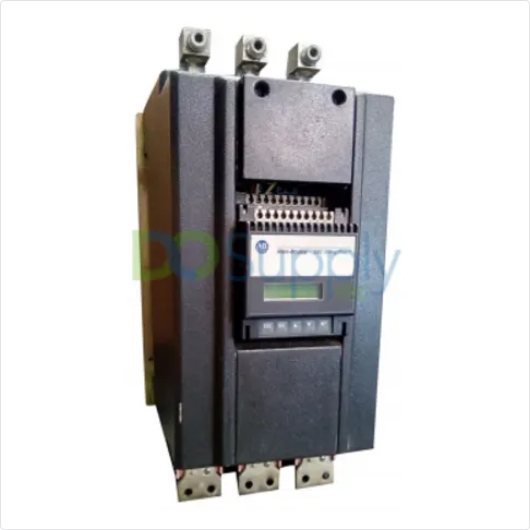
The SMC Dialog Plus controller line provides outstanding reliability for solid-state electronics in a compact design with remarkably fewer components than electromechanical motor controllers. The controller series also offers four starting modes as standard and a variety of control options for slow-speed motor operation, pump control, motor braking, power metering, and soft stopping, providing excellent motor management solutions and exceptional application versatility. In addition, SMC Dialog Plus controllers also include flexible communication capabilities, easy-to-use programming modules, and state-of-the-art motor protection features, such as an inbuilt electronic overload protection, dynamic phase rebalance, stall and jam protection, etc.
SMC Dialog Plus Standard Features
- Energy Saver: This is a built-in feature available with the SMC Dialog Plus controller line as standard. It conserves energy in low-load conditions, where the connected squirrel-cage motor is unloaded or moderately loaded for lengthy periods of time. It requires a simple setup procedure and does not need external wiring or additional panel space.
- Keypad Programming: Each SMC Dialog Plus controller features a five-button keypad on the front end. The keypad’s five buttons are Escape key, Select key, Up/Down Arrow keys, and Enter button. To program the controller parameters, users are only required to enter the appropriate sequence of keystrokes. The parameters are organized in a menu structure and four-level hierarchy for fast access and straightforward controller programming.
- LCD Display: SMC Dialog Plus motor controllers come equipped with an integral 16-character A 2-line backlit LCD provides parameter identification through clear, informative text, allowing quick and straightforward controller setup without the need for reference manuals.
- Integral SCANport Communications: SMC Dialog Plus controllers incorporate a built-in serial interface port, known as SCANport, as standard. The SCANport allows the SMC Dialog Plus motor controllers to communicate with Human Interface Modules (Bulletin 1201) and an extensive array of Bulletin 1203 serial communication modules, including Allen-Bradley RIO (Remote I/O) network, RS-485/232/422-DF1, and DeviceNet modules.
- Programmable Auxiliary Contacts: SMC Dialog Plus motor controllers are provided with three double-throw, single-pole hard contacts as standard. The first two of the three contacts (Aux. Contacts 1 & 2) are user-configurable for Normal or Up-to-Speed. The two contacts are installed in terminals 19, 18, and 20. While the third contact (Aux. Contact 3), which is installed between terminals 29 & 30, is user-configurable for Fault or Normal.
- Dynamic Phase Rebalance: Allen-Bradley SMC Dialog Plus motor controllers include, as standard, an advanced phase rebalance feature that allows for voltage unbalance compensation. It accomplishes this by automatically regulating the controller’s output voltage to balance the 3-phase currents drawn by the connected induction motor. Achieving phase rebalance helps extend the lifespan of the motor while allowing production to continue without interruption.
Note: ThePhase Rebalance is a built-in feature of the SMC Dialog Plus controllers and thus does not need external wiring or a complicated configuration procedure. However, it requires the use of a fanning strip (Catalog No. 150-NFS) and Bulletin 825 converter module. Its performance is dependent on the electric parameters and loading characteristics of the connected motor. For instance, it cannot correct severe voltage imbalances. In addition, when the Energy Saver and Phase Rebalance are both enabled, the latter takes precedence in motor operation.
- Power Metering: Power metering – the ability to monitor and meter various electric parameters that influence motor performance – comes standard with the Allen-Bradley SMC Dialog Plus motor controllers. The metered parameters include:
- Three-phase Motor Currents
- Three-phase Motor Voltages
- Motor Power in kW
- Power Consumption in kWh
- Motor Thermal Capacity Utilization
- Power Factor of the running induction motor
- Motor operation Elapsed Time
Note: With the power metering capability, SMC Dialog Plus controllers provide users with real-time insights into energy consumption and motor performance. This helps enhance predictive maintenance, increase energy efficiency, ensure better motor protection, improve operational reliability, lower maintenance costs, and increase the motor’s lifespan.
Motor Protection and Fault Diagnostics
The Allen-Bradley SMC Dialog Plus controller line provides a variety of protective and fault diagnostic features, which are described below.
Electronic Motor Overload Protection
SMC Dialog Plus motor controllers incorporate, as standard, a built-in electronic overload protection system that provides thermal overload protection electronically using an I2t algorithm. The system calculates the motor’s thermal capacity usage, with an overload fault occurring when the thermal capacity value reaches 100%, which causes the connected motor to stop.
The electronic overload protection system also includes a thermal memory that accurately models the operating temperature of the connected induction motor since ambient insensitivity is intrinsic in the system’s electronic design. When synchronized with appropriate short-circuit protection devices, this system can protect the motor, power wiring, and motor controller against overheating resulting from excessive overcurrent. But during bypass operation, the current sensing ability of an SMC Dialog Plus motor controller is disabled. In such operations, a converter module (Bulletin 825) is required to provide current feedback.
In addition, the trip setting of the electronic overload protection system is user-programmable, providing users with application flexibility. Selectable overload trip classes are 30, 20, 15, and 10, meeting the overload protection requirements of an extensive range of industrial applications. Users can program the trip current by entering the full-load current rating of the connected motor. A programmable overload trip setting simplifies motor start-up and eliminates the need for overload heater elements, thereby reducing inventory investment.
Unbalanced Voltage Protection
The voltage unbalance protection feature in SMC Dialog Plus controllers monitors the magnitudes of the 3-phase supply voltage along with the rotational relationship of the three AC phases to detect any voltage unbalance. The feature includes a neutral voltage sensor that measures phase-to-phase voltage to detect voltage imbalances, and an overvoltage relay that trips whenever the measured voltage unbalance exceeds a certain level.
Users can program the voltage unbalanced trip level from 0 to 25% and the trip delay time from 0.0 to 99.0 seconds. When the measured voltage unbalance reaches the user-specified trip level, the SMC Dialog Plus controller will halt motor operation.
Jam Detection and Stall Protection
Squirrel-cage three-phase induction motors develop immense torque levels and also experience locked rotor currents in case of a motor stall or jam. The two conditions can cause the motor’s winding insulation to break down (dielectric breakdown) or cause mechanical damage to the applied load. To prevent this, SMC Dialog Plus controllers provide jam detection and stall protection features, enabling enhanced motor protection. Essentially, quick detection of a motor jam or stall can prevent equipment damage, motor heating, and unnecessary downtime by allowing for a faster motor restart once the fault condition is corrected.
The jam detection feature allows users to program the motor jam detection trip level as a percentage of the motor’s rated full-load amps (up to 99% of the full-load current rating). To prevent unnecessary tripping, users can also program a jam detection delay period of 0.0 to 10.0 seconds. Programming the jam delay period enables users to select an appropriate time delay before the SMC Dialog Plus controller halts motor operation because of a motor jam. During the specified jam detection delay period, the motor current should remain above the user-defined jam detection trip level. Note that the jam detection feature in SMC Dialog Plus controllers is active only after the connected motor reaches full speed.
The stall protection feature enables users to program a maximum motor stall protection delay time of 0.0 to 10.0 seconds. This stall protection delay period is usually in addition to the user-programmed motor start time, and it begins only after the specified motor start time has timed out. Stall protection in SMC Dialog Plus controllers is activated at the end of the user-selected ramp time once the connected motor has been powered up. If the controller senses that the connected squirrel-cage induction motor has stalled, it will stop operating after the user-programmed delay period has elapsed.
Overvoltage Protection
SMC Dialog Plus controllers use overvoltage protection features to shield connected induction motors from voltage surges that can degrade the motors’ electrical insulation or cause damage, consequently reducing the service life of the motors. With these features, the controllers monitor the three-phase supply voltage to the motors and compare it to user-defined thresholds. If the incoming line voltage rises above the user-specified limit, the overvoltage protection system of the SMC Dialog Plus controller will halt motor operation.
Users can adjust the overvoltage trip level as a percentage of the preset line voltage from 0 to 99%. To eliminate unnecessary trips, users can also program an overvoltage trip delay period of 0.0 to 99.0 seconds. During this overvoltage delay period, the incoming line voltage should remain above the user-specified overvoltage trip level.
Undervoltage Protection
SMC Dialog Plus controllers offer undervoltage protection for squirrel-cage induction motors with user-adjustable Undervoltage trip levels and delay times. The undervoltage trip level is user-programmable from 0 to 99% of the preset line voltage. If the incoming line voltage drops below the user-specified trip level, the SMC Dialog Plus controller’s undervoltage protection system will stop the connected induction motor. To avoid nuisance trips, an undervoltage delay period of 0.0 to 99.0 seconds can also be programmed. The incoming line voltage should remain below the specified Undervoltage trip level during the user-programmed delay period.
Underload Protection
Allen-Bradley SMC Dialog Plus motor controllers offer underload protection by halting motor operation whenever the motor’s operating current drops below a predetermined level. The controllers provide a user-adjustable underload trip level of 0 to 99% of the motor’s rated full-load amperage. They also include a user-programmable underload trip delay period of 0.0 to 99.0 seconds.
The SMC Dialog Plus is absolutely a phenomenal choice of controller! The best part? We carry them here at DO Supply and are able to send them out fast with same-day shipping! We also offer a 2-year DO Supply Warranty on all products, whether bought or brought in for repair. Call us or shoot us an email today and our experts will get you paired with your next perfect drive.
DO Supply Inc. makes no representations as to the completeness, validity, correctness, suitability, or accuracy of any information on this website and will not be liable for any delays, omissions, or errors in this information or any losses, injuries, or damages arising from its display or use. All the information on this website is provided on an "as-is" basis. It is the reader's responsibility to verify their own facts.