PLC Manufacturers and Industrial Communication: Which is Right for You?

The global manufacturing sector is undergoing a profound shift. The Programmable Logic Controller (PLC), a powerful and intelligent technology meant to control and manage industrial machinery and procedures, is the foundational element of this automation system.
Getting the correct PLC Manufacturer is a greater challenge nowadays than ever before. The reason is that so many different PLC manufacturers offer different hardware ranges and features, communication standards, and software frameworks. Selecting a suitable option for your automation system requires understanding both your current automation needs and your future communication strategy.
What is a PLC and Why It Remains More Important Than Ever?
A Programmable Logic Controller is a dedicated industrial computer created for real‑time control. PLCs are designed to withstand vibration, temperature changes, moisture, and dust while operating continuously without fault. They are capable of directly managing digital and analog inputs, executing logic, and driving actuators.
PLCs execute a variety of complex tasks, including Fault Alarm Generation, Trend execution, random event detection and logging, motor control, assembly line task scheduling, sensor value display and control, tank volume and pressure regulation, interlock management, and robot control. PLCs are becoming increasingly important for control, communication, data collection, IoT solutions, maintenance planning, and cloud-based monitoring services as they expand.
The value of PLC communication in modern automation describes how controllers exchange information with sensors, field equipment, remote I/O modules, human-machine interfaces, SCADA platforms, supervisory systems, and even cloud services. As businesses shift toward integrated processes, communication protocols are just as vital as anything else.
Different drives, control network architectures, SCADA systems, and modern technologies like MES and ERP are all simply linked to a PLC. Automation systems’ rapidness, versatility, and scalability are impacted by protocols such as PROFINET, PROFIBUS, OPC DA, SNMP, EtherNet/IP, Modbus TCP, EtherCAT, DDC Suitelink, and OPC UA. For your automation system to be able to adapt, selecting a PLC provider with suitable communication capabilities is essential.
The Leading PLC Manufacturers: Benefits, Industry Compatibility, and Ecosystems
The top PLC manufacturers in the automation industry are listed below. Each has distinctive characteristics that make it appropriate for various sectors and uses.
Siemens
Siemens is ranked among the most famous PLC manufacturers throughout the industry. Their SIMATIC series, featuring PLC modules such as S7-1500, S7-300, and S7-400, has delivered strong reliability and performance across various applications.
Advantages
Siemens PLCs are known for their robust hardware, advanced fault diagnostics, and long-lasting lifecycle support. Siemens systems also thrive in large‑scale industrial applications that demand high reliability, making them ideal for extensive manufacturing facilities, the automotive sector, and process industries, as well as any sector that needs intricate, expandable automation solutions.
Interaction Capabilities
• PROFINET (main protocol)
• PROFIBUS
• Modbus over TCP
• AS-Interface
• Industrial‑grade Ethernet
• OPC UA enabling IIoT connectivity
Allen-Bradley (Rockwell Automation)
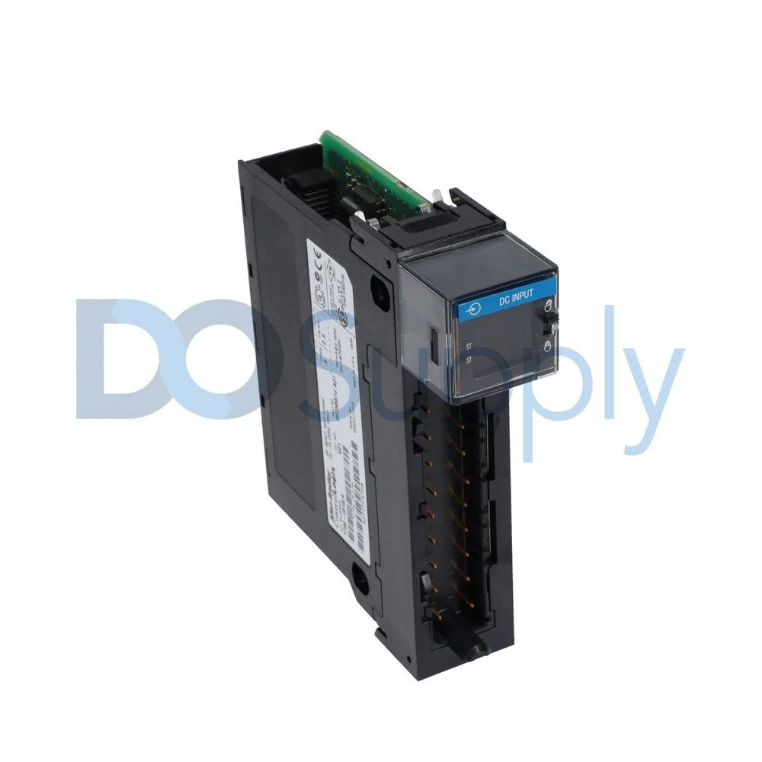
Allen‑Bradley is the leading PLC manufacturer in North America. Its CompactLogix and ControlLogix series are commonly employed across production lines, packaging systems, and machine automation.
Advantages
Allen-Bradley delivers strong integration throughout its ecosystem, encompassing HMIs, drives, and safety components. Allen‑Bradley PLCs are ideally suited for the automotive, packaging, material‑handling, and food‑and‑beverage sectors across North and South America.
Communication Features
• EtherNet/IP (main protocol)
• Device Network
• Control Network
• Modbus via TCP
• OPC UA and MQTT alternatives
Mitsubishi Electric
Mitsubishi stands out as a top PLC producer in Asia, recognized for cost‑effective yet robust automation solutions. Its FX, L‑Series, Q‑Series, and iQ‑R product lines cater to industries worldwide.
Advantages
Mitsubishi PLCs are affordable, simple to program, and well-suited for OEM uses. The company enjoys extensive coverage across Asia, the Middle East, and Africa, ensuring that spare components and local assistance are readily available. Mitsubishi PLCs are ideal for small‑to‑medium enterprises, utilities, machine manufacturers, and cost‑focused automation projects.
Communication Functions
• Ethernet technology
• Modbus RTU and TCP
• CC-Link as well as CC-Link IE
• PROFIBUS (if desired)
Schneider Electric (Modicon)
Schneider Electric’s Modicon PLCs merge automation and energy management, offering a distinct benefit for contemporary industry.
Strong points
Modicon PLCs are configurable, expandable, with intelligent energy tracking on some models. They also provide robust cybersecurity and lasting assistance. Schneider PLCs perform optimally in water treatment, power distribution, intelligent building systems, and high-energy-consumption sectors.
Communicative Capabilities
• Modbus TCP/RTU
• Ethernet/IP
• PROFIBUS DP
• CANopen
• BACnet (perfect for building automation)
ABB
ABB is well recognized for its robust automation technologies, particularly in the process and heavy industries. The AC500 PLC family is designed to deliver dependable performance in tough industrial settings.
Advantages
ABB PLCs provide outstanding durability, high availability, and smooth integration with ABB drives, motors, and electrical systems. Their solutions are especially suited for long‑term industrial operations. ABB is the choice in oil and gas, mining, metals, utilities, and other demanding sectors with mission-critical infrastructure.
Communication Proficiencies
• Modbus RTU and TCP
• PROFIBUS DP
• Ethernet over IP
• CANopen
• Ethernet for industrial applications
Omron
Omron offers highly effective PLCs for machine automation, robotics, and motion control. Its NJ and NX series are well‑known for fast, synchronous applications.
Advantages
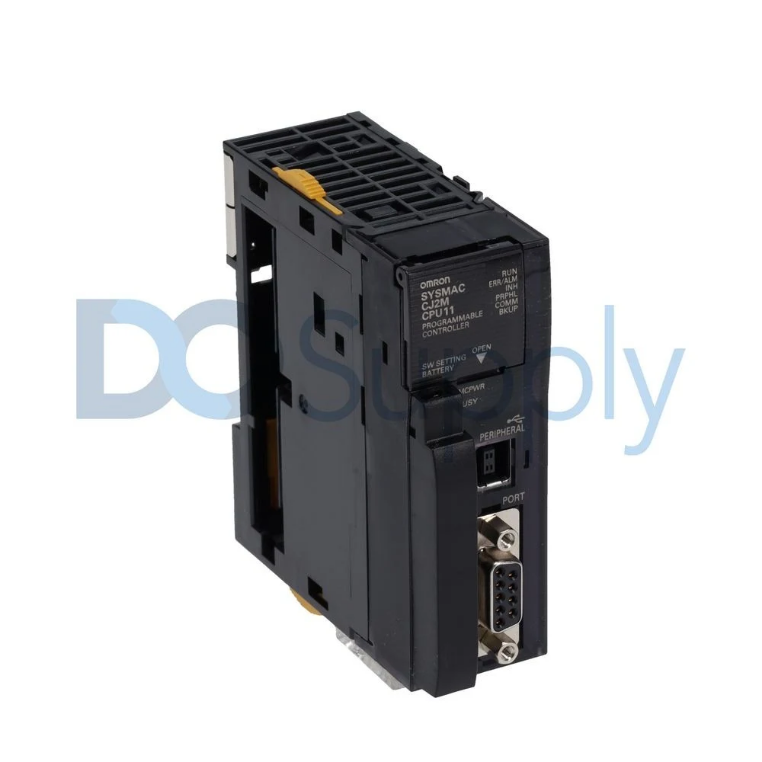
Omron PLCs have compact designs, strong motion performance, and simple integration with robotic systems. Their Sysmac Studio platform is particularly favored in packaging and pick‑and‑place applications. Omron suits machine builders, robotics projects, rapid packaging lines, and basic automation settings.
Interaction Capabilities
• EtherCAT (primary protocol for motion)
• Modbus TCP/RTU protocol
• EtherNet over IP
• DeviceNet
Industrial Communication Protocols to Evaluate
When choosing a PLC supplier, it’s very important to understand which communication protocols you will require to get maximum output from your automation system. While this list is very basic, we do have a full article breaking down the different communication protocols here!
- PROFINET: A real-time industrial Ethernet protocol heavily supported by Siemens. Ideal for extensive networks, rapid control, and synchronized systems.
- EtherNet/IP: Allen‑Bradley’s main protocol is the most commonly employed across the Americas. Suited for modular manufacturing lines and packaging applications.
- Modbus TCP/RTU: A widely adopted protocol compatible with almost all PLC manufacturers. Ideal for sensors, drives, VFDs, and third‑party devices.
- EtherCAT: A fast protocol created for motion control and robotics. Strongly supported by Omron and Beckhoff.
- Profibus Decentralized Peripherals: An older yet dependable protocol commonly employed in process industries, particularly with Siemens and ABB PLCs.
- CC‑Link and CC‑Link IE: Widely used in Asian manufacturing and OEM platforms. Most fully compatible with Mitsubishi.
- OPC Unified Architecture: An impartial communication protocol that supports IIoT linking, cloud data transfer, SCADA interfacing, and automation frameworks prepared for future growth.
How to Pick the Right PLC Manufacturer
Selecting a PLC manufacturer involves assessing essential criteria that impact performance, integration, cost, and long-term reliability.
Sector and Use Category
• Discrete production: Siemens, Allen‑Bradley, Omron
• Process sector: ABB, Siemens, Schneider
• OEM equipment: Mitsubishi, Omron
• Robotic solutions: Omron, Siemens
• Intelligent structures: Schneider
Communication Protocol Specifications
• PROFINET technology: Siemens
• EtherNet/IP: Allen-Bradley
• Modbus TCP/RTU protocol: Schneider, Mitsubishi, ABB
• EtherCAT system: Omron
Financial Considerations
• Reduced budget: Mitsubishi, Omron
• Intermediate segment: Schneider, ABB
• High‑quality systems: Siemens, Allen-Bradley
Local Assistance and Availability
Having nearby access to qualified technicians, spare parts, and service centers greatly influences long‑term performance. A properly supported mid‑range PLC often outperforms a high‑end model that lacks support.
Ability to Scale
Facilities anticipating future growth gain an advantage from scalable solutions from Siemens, Schneider, and Allen‑Bradley.
A Useful Guide to Selecting a PLC Supplier
Apply this straightforward method to determine the optimal PLC Manufacturers for your project:
1. Determine if your industry is discrete or process‑based.
2. Align the communication protocols employed in your plant.
3. Assess the availability of nearby technical support and maintenance.
4. Evaluate your project’s budget and lifecycle costs.
5. Assess upcoming growth and scalability requirements.
6. Assess the software platforms provided by each PLC manufacturer.
Final Thoughts
In conclusion, there isn’t a single universal “best” PLC; however, a suitable PLC manufacturer can always be matched to your specific project. Each PLC manufacturer has its own strengths and drawbacks. From Siemens to Omron, this article provides all sorts of relevant technical information for these PLC manufacturers. Choosing the most suitable PLC involves selecting the communication architecture, software platform, and long‑term support ecosystem that match your operational needs. By conducting a thorough daily check, your PLC purchase will deliver intelligent automation solutions for years to come.
If the decision still isn’t clear, we at DO Supply are more than happy to help. Come take a deeper dive into the automation equipment we provide on our site to see just whats out there, or even give us a call and we can find the right PLC for the right job. We also carry equipment such as drives, motors, and everything in between. Best of all, our products are backed by our two year warranty to keep your next purchase as smooth as possible. As always, thank you for reading!
DO Supply Inc. makes no representations as to the completeness, validity, correctness, suitability, or accuracy of any information on this website and will not be liable for any delays, omissions, or errors in this information or any losses, injuries, or damages arising from its display or use. All the information on this website is provided on an "as-is" basis. It is the reader's responsibility to verify their own facts.