Inside PLC Manufacturers: What Differentiates Their Design Philosophy
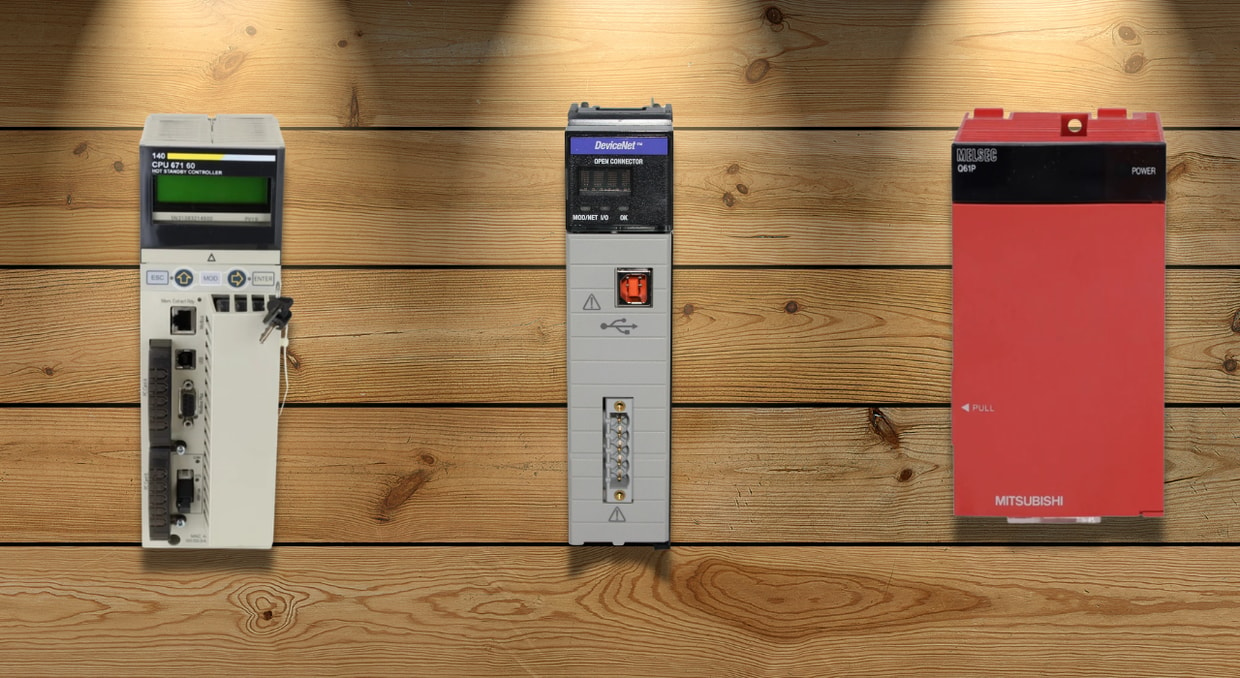
Programmable Logic Controllers play a critical role in today’s industrial automation systems, delivering dependable, real-time, and deterministic control in demanding environments such as semiconductor fabrication, automotive assembly, and chemical processing plants. All PLCs share a common core architecture comprising a power supply, central processing unit (CPU), communication modules, input/output modules, and memory. However, because different PLC manufacturers employ unique design philosophies, the result is substantial variations in PLC hardware, proprietary software, implementation, and ecosystem compatibility. These variations mean that purchasing a specific PLC model is a long-term commitment to a particular programming environment, technological ecosystem, and vendor support. This can significantly affect the integration capabilities, maintenance strategies, future scalability, and available hardware/software migration strategies for a given PLC platform.
Therefore, beyond the PLC hardware, system integrators, plant managers, and automation engineers should also evaluate the core design philosophy of the intended PLC manufacturer before purchasing a given PLC platform. The design philosophies are derived from a combination of strategic priorities, engineering culture, industry focus, and historical market development. Essentially, selecting a PLC manufacturer is a strategic decision that impacts the entire lifecycle of your automation system more profoundly than the PLC hardware itself. It dictates the PLC system architecture, integration capabilities, engineering workflows, maintenance strategies, and long-term scalability.
This article provides an in-depth technical analysis of four industry-leading PLC manufacturers: Siemens, Mitsubishi Electric, Allen-Bradley (Rockwell Automation), and Schneider Electric. It evaluates the design philosophies of these PLC manufacturers in terms of system ruggedness and reliability, scalable & modular architectures, and communication protocols & networking to guide PLC vendor selection for industrial automation.
Key Differentiators in PLC Design Philosophy
System Ruggedness and Reliability
Enhanced ruggedness and dependable performance are the defining characteristics of modern PLC systems. Industrial environments subject controller hardware to continuous operation, excessive vibrations, extreme temperatures, and electrical noise. To achieve high-performance reliability in harsh industrial environments, each PLC manufacturer employs different PLC design strategies.
Siemens
Siemens mostly focuses on long-term system stability and industrial resilience through its SIMATIC PLC portfolio. SIMATIC controllers like the S7-1500 feature advanced electromagnetic compatibility (EMC) protection. Allowing reliable performance in electrically noisy environments such as heavy manufacturing facilities and steel mills. Reliability and security are regarded as integrated issues. Siemens implements security-by-design PLC features that include:
- Hardware based on root-of-trust
- Safe firmware verification
- Secure communication channels
These mechanisms minimize the risk of cyber-attacks and firmware tampering. Siemens also offers durable distributed I/O solutions such as the ET 200 series with IP65/67 protection ratings. Without conventional control cabinets, this equipment can be deployed directly in outdoor environments or on machinery. Durability is enhanced further by the use of industrial connectors and metallic enclosures.
Siemens’ PLC systems are particularly suitable for large-scale infrastructure projects and process industries because of the company’s commitment to global industrial compatibility, as well as its robust, high-performance PLC hardware.
Allen-Bradley
Allen-Bradley PLCs are designed to maximize system uptime and streamline maintenance through modular, robust hardware design, advanced predictive diagnostics, and Automatic Device Configuration (ADC). In ControlLogix systems, many I/O modules support removal and insertion under power, reducing disruption during maintenance. CompactLogix systems, however, should not be described the same way, since controller removal under power is not generally supported. In high-availability settings, this capability significantly minimizes production downtime. Rockwell Automation also focuses heavily on diagnostic visibility. Advanced diagnostic tools provide real-time monitoring of:
- I/O status
- Integrity network
- Module health
- System errors
These diagnostics significantly simplify maintenance and troubleshooting. Another defining feature of Rockwell’s reliability philosophy is long-lasting backward compatibility. Many contemporary controllers maintain compatibility with older networks, such as DeviceNet, ControlNet, and Data Highway Plus (DH+). This strategy safeguards existing investments while enabling the gradual modernization of outdated automation systems.
Mitsubishi Electric
Mitsubishi Electric’s PLC design approach centers on cost efficiency and compactness, enabling reliable performance. The MELSEC IQ-F series is a very small yet robust controller platform capable of handling complex automation functions in space-constrained machinery. Key reliability characteristics of MELSEC PLCs include:
- Rapid instruction execution (≈9.5 ns basic operations)
- Integrated communication channels and data logging via SD cards
- Robust cyber security
- Predictive maintenance and diagnostics
- Industrial-grade MELSEC hardware
- CPU, I/O, and network redundancy for critical control tasks
- Integrated functional safety
Mitsubishi controllers often feature user-friendly displays for diagnostics and basic operations without a programming workstation. While advanced for small machine control systems, Mitsubishi PLCs also fulfill several international industrial certifications, like maritime approvals from entities such as ABS and DNV. This illustrates the platform’s ability to function in demanding industrial settings.
Schneider Electric
Schneider Electric ensures PLC reliability by integrating high-performance automation with energy management. The Modicon PLC family offers advanced controllers, such as the Modicon M580 ePAC, that provide advanced data analytics, real-time diagnostics, and integrated cybersecurity.
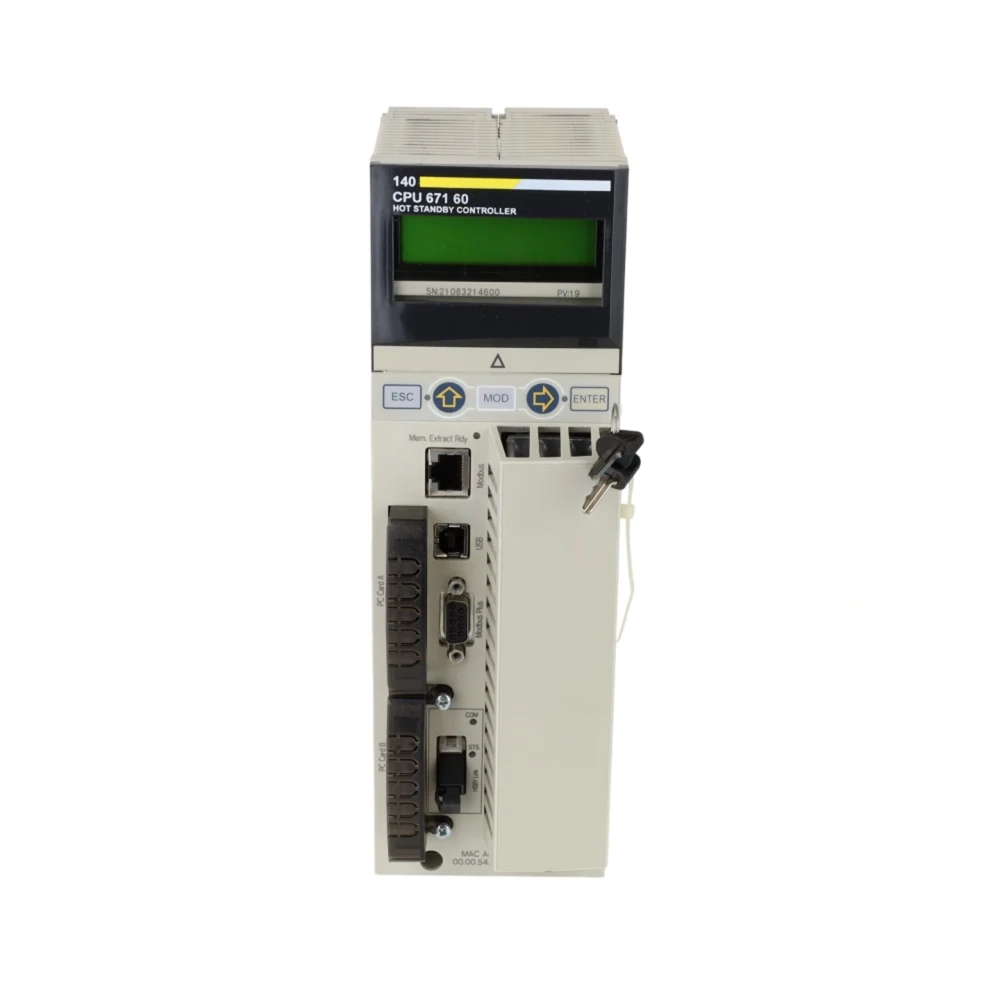
- Certified modules for Safety Integrity Level (SIL)
- Real-time diagnostics and predictive maintenance capabilities
- High availability & redundancy
- Integrated power monitoring
In contrast to traditional automation platforms that treat energy monitoring as an external function, Schneider integrates power monitoring directly into the PLC hardware. This design philosophy highlights Schneider’s broader emphasis on sustainable energy optimization and industrial systems.
Modular and Scalable PLC Architectures
Leading PLC manufacturers differ considerably in their approach to system scalability, with some providing highly modular PLC architectures for high flexibility, while others focus on space-saving, fixed-configuration PLCs.
Siemens: Highly Modular Systems
Siemens is renowned for its highly modular and scalable SIMATIC PLC portfolio. The following high-performance SIMATIC PLCs are fully scalable:
- SIMATIC S7-1500: Suitable for motion control and advanced automation
- SIMATIC S7-1200: Ideal for compact machine automation
- SIMATIC S7-400: For extensive process automation
These controllers work seamlessly with distributed I/O systems such as ET 200SP. This enables system designers to distribute I/O modules across a facility while maintaining centralized control logic. The highly modular design approach is particularly useful for large manufacturing plants where distributed structures and modular expansion are necessary.
Allen-Bradley: Chassis-Based Modularity
For high-end controllers like ControlLogix, Rockwell Automation employs a chassis-based modular design. In this architecture, communication modules, power supply unit, processor, and input/output modules are installed within a common backplane. This configuration allows for:
- Multiple controller units
- Distributed processing functions
- Redundant processors
The CompactLogix family offers a compact alternative optimized for machine automation with communication interfaces and integrated I/O. Rockwell’s chassis-based PLC architecture enables system flexibility and incremental expansion, allowing automation systems to evolve gradually without replacing the entire controller infrastructure.
Mitsubishi: Compact Expansion Architecture
Mitsubishi PLCs emphasize effective expansion within compact systems, delivering seamless scalability for diverse industrial automation applications. The MELSEC system provides modular expansion modules for:
- Safety features
- Analog signals
- Motion regulation
- Digital I/O
These modules enable engineers to enhance functionality without significantly increasing the system footprint. MELSEC PLCs also incorporate networking configuration and motion-control features within a unified software environment, simplifying the entire engineering process.
Schneider Electric: Flexible, Modular PLC Platforms
Schneider Electric’s Modicon M251, M241, and M221 controllers focus on distributed automation systems and OEM machine builders. These controllers enable modular expansion with TM4 and TM3 modules while preserving compact form factors. Schneider’s architecture enables distributed Input/Output placement across networks, allowing engineers to create automation systems that scale from single machines to extensive industrial installations.
Communication Protocols and Networking
Supported industrial communication protocols represent a key aspect of PLC design philosophy.
Siemens: Standards-Driven Networking
Siemens emphasizes international industrial standards, actively promoting and supporting:
- Open networking & automation standards such as PROFIBUS, Modbus TCP, PROFINET, EtherNet/IP, and OPC UA
- Time-Sensitive Networking (TSN)
- IEC 62443 compliant industrial cybersecurity protocols
- IEC 61850-3 compliant power sector and utility standards
- Wireless communication standards like the 5G infrastructure
The PROFINET communication protocol supports isochronous real-time (IRT) and real-time communication modes, promoting synchronized motion control in machine automation robotics. OPC UA support allows for secure data exchange between enterprise platforms and PLC systems, facilitating vertical integration within industrial information systems.
Allen-Bradley: EtherNet/IP Ecosystem
Rockwell Automation relies heavily on EtherNet/IP, utilizing the Common Industrial Protocol (CIP) for safety, information, and application-layer control across its industrial automation portfolio. EtherNet/IP offers numerous benefits, including:
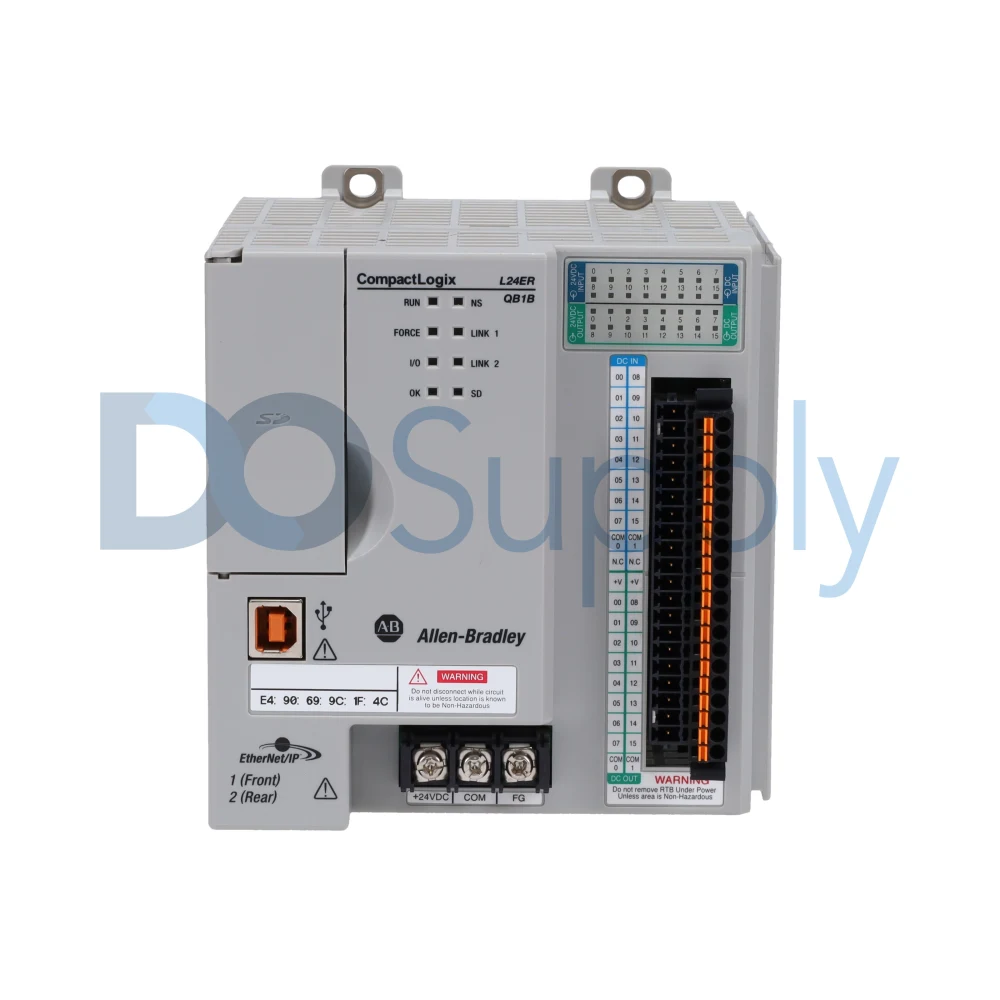
- Object-oriented device models
- Reliable industrial Ethernet communication
- Compatibility with multiple vendor equipment
Modern Allen-Bradley PLCs also incorporate optimized, integrated networking capabilities such as CIP security and CIP motion. These technologies enable safety functions and motion control to be attained over a standard Ethernet network. This simplifies the system design.
Mitsubishi: Hybrid Networking Strategy
Mitsubishi has employed a hybrid networking strategy, resulting in open protocols and proprietary integration. The latest networking platform is CC-Link IE TSN, which combines Time-Sensitive Networking (TSN) with gigabit Ethernet capacity to support reliable communication.
Mitsubishi PLCs also support open communication and networking standards such as:
- MQTT
- OPC UA
- MODBUS/TCP
Supporting these open communication protocols enables secure, high-performance integration of MELSEC PLCs with industrial IoT platforms, enterprise-level applications, and SCADA systems.
Schneider Electric: Open Protocol Interoperability
Schneider Electric emphasizes an open communication framework within its EcoStruxure platform. Modicon controllers typically support:
- Online monitoring interfaces
- CANopen
- Modbus TCP
- Ethernet
The protocols enable Modicon PLCs to connect with a wide range of enterprise applications, energy systems, and industrial devices. This support for open networking standards is the cornerstone of Schneider’s broader strategy to integrate high-performance industrial automation with advanced energy management systems.
Conclusion
Each PLC manufacturer employs a unique PLC design philosophy influenced by technological priorities, industry focus, and historical development. This article highlights the following key patterns:
- Siemens emphasizes large-scale system integration, modularity, and open, international communication standards.
- Allen-Bradley prioritizes long-term scalability and ecosystem integration.
- Mitsubishi emphasizes cost-effective and compact controllers for machine automation.
- Schneider Electric emphasizes integrating industrial automation with environmental sustainability and energy management.
Choosing a PLC platform thus involves more than a hardware decision. The selected PLC manufacturer establishes the technological backbone of an automation ecosystem that may last for decades in industrial facilities. Automation engineers, system integrators, and plant managers should therefore not only evaluate the immediate technical requirements but also long-term considerations, including scalability, integration capabilities, specialized engineering expertise, and vendor support.
In addition, as manufacturing shifts towards Industry 4.0 and cyber-physical systems, PLC manufacturers are continuously evolving their design philosophies to integrate enhanced analytics, cloud connectivity, and edge computing, ensuring that the next generation of PLC systems is highly efficient, reliable, and scalable.
Whether you are deciding what PLC platform to choose for a new project or looking to expand an existing system, we at DO Supply can help. We carry a wide range of ControlLogix, CompactLogix, MELSEC, Modicon, and other controllers, all tested and backed by our two-year warranty. Get in touch with our sales team for pricing, availability, or for more help!
DO Supply Inc. makes no representations as to the completeness, validity, correctness, suitability, or accuracy of any information on this website and will not be liable for any delays, omissions, or errors in this information or any losses, injuries, or damages arising from its display or use. All the information on this website is provided on an "as-is" basis. It is the reader's responsibility to verify their own facts.