Allen-Bradley PanelView terminals from Rockwell Automation are core Human-Machine Interface (HMI) solutions for industrial automation. While ideal for climate-controlled industrial settings, cold storage and outdoor deployments present significant extreme environmental challenges, such as sub-zero temperatures and direct UV & solar radiation. Optimizing PanelView terminals for such extreme environmental conditions requires strategic hardware selection (e.g., robust enclosures such as NEMA 4X-rated enclosures), precise thermal management strategies, and comprehensive preventive maintenance practices. This article explores the operational parameters of PanelView terminals deployed in extreme industrial environments. It presents a comparative analysis of specific PanelView terminal models, practical environmental mitigation strategies, and proactive failure-prevention techniques. Standard PanelView terminals are designed to operate within specific temperature ranges (typically 0°C to...
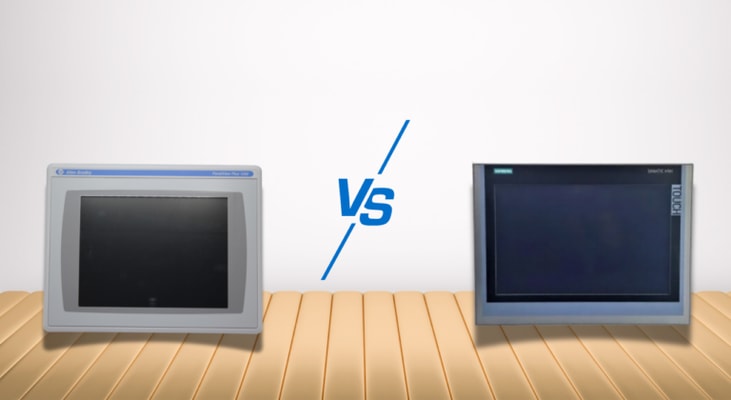
Upgrading your hardware always feels like a special occasion, especially if it’s for something you handle every day. After all, who doesn’t like faster hardware, more refined software, and a more responsive user interface? The reality becomes a little more complicated when the equipment in question is tied directly to production. In industrial automation, replacing hardware is rarely as simple as unplugging one terminal and mounting another in its place. This hesitation is part of the reason you will still see the PanelView Plus 6 in so many facilities, even with the newer PanelView Plus 7 series on the market. This boils down to compatibility concerns, retrofit cost, downtime windows, network architecture, and operator familiarity. In some situations, moving to a Plus 7 terminal can modernize an entire machine interface. In others, it can create more work than value. Before we get into comparing specifications and features, it helps to understand where these terminals are typically...
For industrial automation engineers, the HMI isn’t just a screen—it’s the nerve center of the entire operation. And when you put that center somewhere tough, like a food processing plant, offshore rig, or chemical facility, ordinary commercial displays just don’t cut it. This is where Rockwell Automation’s PanelView family really stands out, specifically the PanelView Plus 7 Performance and ArmorView Plus 7 terminals. You can read spec sheets all day, but it’s more important to know how PanelView terminals survive wild temperature swings, corrosive gases, and brutal washdowns. dLet’s dig into what makes the PanelView excel in harsh, demanding environments, so you know your HMI investment won’t let you down. First off: temperature. Electronics hate extreme heat and cold, and PanelView terminals have to stay stable, even when sealed up tight inside enclosures with bad ventilation. Rockwell spells out exactly what these displays can handle. Most PanelView models—the 6.5-inch, 9-inch...
If you have spent any time reading about automation equipment and how they work, you would come across phrases such as: “Real-time control”, “real-time monitoring”, “operates in real-time”, or “real-time deterministic behavior”. It becomes one of those things that you might be afraid to ask about because it’s thrown around so much that it seems like it’s common knowledge. Alas, we at DO Supply don’t judge and encourage learning opportunities, so let’s get you up to speed on what ‘real-time’ actually means. In the world of industrial control, “real-time” is a more precise engineering term. It means predictable, rather than “fast”. A real-time system isn’t defined by how quickly it responds, but by whether it responds within a guaranteed, bounded window of time, every single time. That guarantee is what engineers call determinism, and it’s the whole reason the phrase gets used so often around PLCs, drives, and industrial networks. To put it in perspective, say a video game you’re...
It is no secret that downtime can be the single leading cause of revenue loss for any factory. In fact, a recent global report from ABB in conjunction with Sapio Research suggests that 44% of industrial leaders report production interruptions by their equipment monthly, 14% of those report stoppages weekly. Every hour that a factory is down, it could be losing anywhere from tens to hundreds of thousands of dollars per hour, depending on SKU value and output expectations. This raises the question of how downtime could become this expensive, what the biggest contributing factors are, and how automation is designed to prevent interruptions. Downtime, often carrying a negative connotation, is when a factory or process halts or significantly reduces operations due to planned maintenance, repairs, or stoppages. Usually, this stems from operator stops, which happen when the operator sees an anomaly and presses that big red STOP button. Other times, the system itself could sense that...
Industrial control panels have relied on discrete pushbuttons, selector switches, and indicator lights for decades, and in many applications, they still get the job done. But as process complexity scales, the demand for real-time visibility, operator guidance, and structured data logging outgrows what a row of pilot lights can deliver. The Allen Bradley PanelView family, spanning PanelView 800 , PanelView Plus 7 , and PanelView 5500 , sits precisely between basic hardwired operator interfaces and full SCADA systems, and understanding where that boundary falls determines whether you are engineering the right solution or over-specifying hardware that adds cost without adding operational value. A conventional hardwired operator station is built from 22mm pushbuttons, selector switches, and pilot lights wired directly to PLC digital I/O cards. Each device consumes one I/O point; a panel with 12 push buttons and 10 indicator lights requires 22 discrete I/O points, associated terminal...
The Allen-Bradley PanelView series plays a key role in modern industrial control systems, facilitating essential communication between machine processes and human operators. Most PanelView technical failures are not due to hardware issues, but rather they arise from design flaws, configuration errors, firmware corruption, and poor network communication links with Programmable Logic Controllers (PLCs). These malfunctions often result in decreased operator efficiency, potential safety risks, and significant system downtime. This article examines common PanelView mistakes that reduce operator efficiency and provides actionable solutions based on Rockwell Automation’s best practices. Communication between the PanelView and the PLC is the backbone of any HMI application. Misconfigurations here are among the most common causes of sluggish screen performance. Use of non-contiguous, scattered tag addressing between the target controller and PanelView HMI. What happens : When HMI address tags...
Downtime on the shop floor isn’t just about stopping the line—it’s a domino effect. One machine stalls, and suddenly you’re dealing with wasted materials, crews standing around, surprise expenses for repairs, and systems that slowly degrade until something finally snaps. When factories lack real-time monitoring, reliable logs, or a robust network of sensors, a lot stays hidden. Usually, people don’t even realize there’s a problem until they’re scrambling to fix a full-blown breakdown. That’s where modern Human-Machine Interfaces (HMIs) come into play. These systems spot problems early, streamline how people and machines interact, and help cut unplanned downtime in a big way. The days when HMIs were just simple screens are over. Today’s HMIs pack in way more power—they tap into the Industrial Internet of Things (IIoT), handle all kinds of communication protocols, sync up with SQL databases, and push out real-time data using RESTful APIs. So these aren’t just fancy displays; they’re the...
In industrial automation, the Human-Machine Interface (HMI) functions as a crucial link between human operators and complex control systems. The selection of an HMI platform is a critical decision with significant implications for operational efficiency, system integration, lifecycle costs, and long-term support. When selecting a suitable Human-Machine Interface (HMI), engineers frequently have to choose between a vendor-specific solution, such as the Allen-Bradley PanelView series, and a hardware-agnostic generic HMI. The Allen-Bradley PanelView HMIs are premier operator interface terminals from Rockwell Automation designed to monitor and control devices that are connected to a controller, as well as display information as needed. They are available in different forms, ranging from small keypads to large, high-performance touchscreen LCDs. They are a key element of the Allen-Bradley Integrated Control Architecture for industrial automation, which allows seamless integration of...
Contemporary industrial automation systems operate in environments characterized by increasingly stringent safety requirements, greater system complexity, a profound reliance on data-driven decision-making, and higher production demands. In this context, the Human-Machine Interface has evolved from a basic visualization endpoint into a critical operational component that directly impacts system efficiency, reliability, and safety. Standard panel-based operator interfaces, including earlier Allen-Bradley PanelView terminals, were designed for isolated machine control; however, they are insufficient for modern data-intensive, distributed industrial processes. Modern HMI designs have significantly transformed from simple push-button emulations and tag displays to intelligent, high-performance graphic terminals. They now integrate human-centered design principles, including human cognitive behavior, enhanced situational awareness, and streamlined operator workflow. By leveraging advanced...
Modern industrial machines may appear mechanical externally, yet internally they operate through an integrated digital control system. Any automation system has three major components: the Programmable Logic Controller (PLC), the CPU, and the Human‑Machine Interface (HMI). For any industrial automation process, understanding how these components work together is essential for anyone involved in automation, manufacturing, or industrial engineering. HMIs help people engage with the equipment by visualizing the entire process; PLCs manage the machine’s logic and operations; and CPUs execute commands that keep everything operational. Each component serves a separate purpose, but its true strength lies in how they exchange information and communicate with one another in real time. PLCs form the core of industrial automation. They are dedicated industrial computers designed to reliably manage machines, production lines, and processes in demanding environments. In contrast to general‑purpose...
The technical and visual interaction between industrial processes and the operators who are working on them is provided by Human Machine Interfaces (HMIs). HMIs are crucial for maintaining productivity and process reliability because they provide real-time data, alerts, help in control, and diagnostics. However, HMIs always face issues that can significantly shorten their service life if they are not protected in harsh industrial environments, such as manufacturing plants, oil and gas facilities, fertilizer plants, mining sites, water-treatment plants, and outdoor installations. Allen‑Bradley PanelView HMIs, commonly used in industrial automation, serve as a solid reference for understanding both the challenges and optimal approaches to HMI safety. PanelView deployments provide valuable insights into how environmental conditions affect HMIs and which design, installation, and maintenance strategies are most effective. This article examines the environmental hazards affecting HMIs...
One of the core designs of any product, whether it be a video game menu, your phone’s operating system, an HMI, or the laptop used to program it, is its User Interface. The UI, by definition, is the space where interactions between humans and machines occur, and is especially important to get right as it’s what stands between you and the task at hand. If executed poorly, this will lead to user frustration, anger, and reduced willingness to use it. After all, would you still use a phone if you had to jump through five menus every time just to unlock it? Of course not. The same human-centric design principle applies to industrial Human-Machine Interfaces as well. So let’s get into what makes an HMI design great and why it matters to the operator using it! A bad HMI UI design is easier to recognize because it stands out much more. This can lead to operator error, misinterpreted information, or downtime if it is severe enough. Some of the more common poor UI choices for HMIs are: Shop for...
Within industrial automation frameworks, HMIs (Human–Machine Interfaces) serve as the essential link between human operators and the control logic executed by PLCs (Programmable Logic Controllers). Although PLCs handle deterministic, real‑time regulation of equipment and processes, HMIs deliver visual displays, operational command, alarm handling, and system diagnostics. Reliable and sturdy HMI–PLC communication isn’t a matter of chance. It demands thoughtful network layout design, prudent protocol selection, effective tag handling, fine‑tuned update intervals, and solid error‑management techniques. This piece examines tested communication suggestions and best‑practice guidelines that automation engineers can use to achieve lasting stability when linking HMIs and PLCs in industrial settings. HMIs act as the operator‑oriented interface of an automation system. They convert intricate control logic and live process data into user‑friendly graphical displays that operators can readily...
In the architecture of modern industrial automation, the common thread that ties everything together is synchronization. This ensures everything operates in real time. The regular and consistent exchange of data among the main control elements, namely Programmable Logic Controllers (PLCs), Human-Machine Interfaces (HMIs), and motor drives, is the nervous system of any automation system. The communication efficiency of the manufacturing, energy, and transport systems determines their impact on intelligence, safety, and efficiency. This article explains the technical nature of this interaction by examining the role of each device, the language they speak, and the physical and logical paths that must be in place for it to work properly. At the center of any control system is the PLC, which is undoubtedly the brain of the operation. These are computer systems that are designed for industrial use. The main task of these devices is to run logic control and deterministic logic control. The...