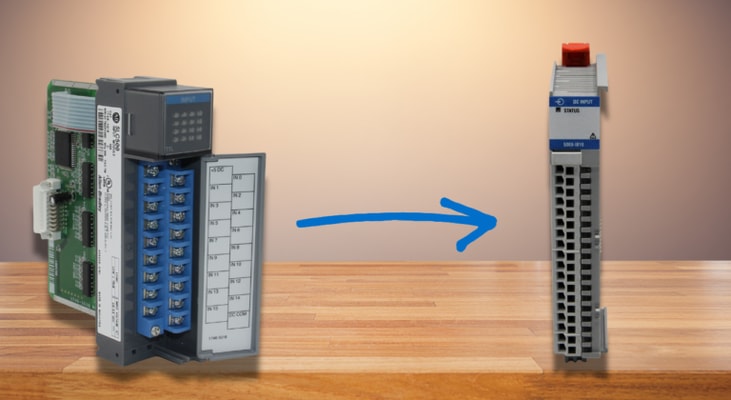
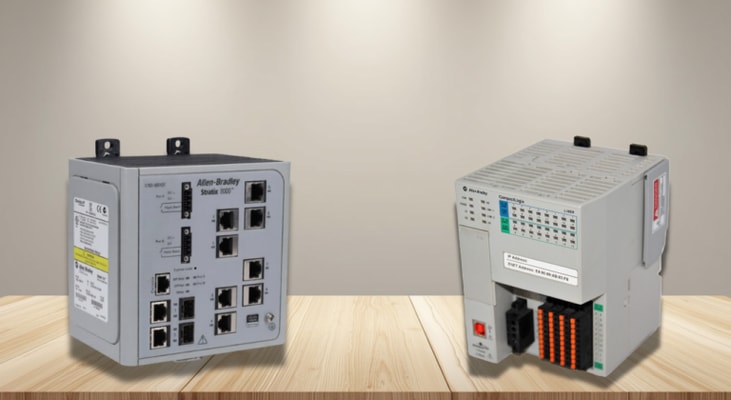
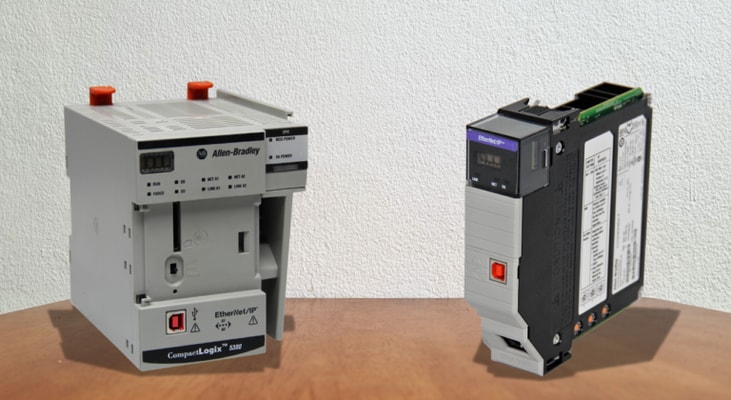
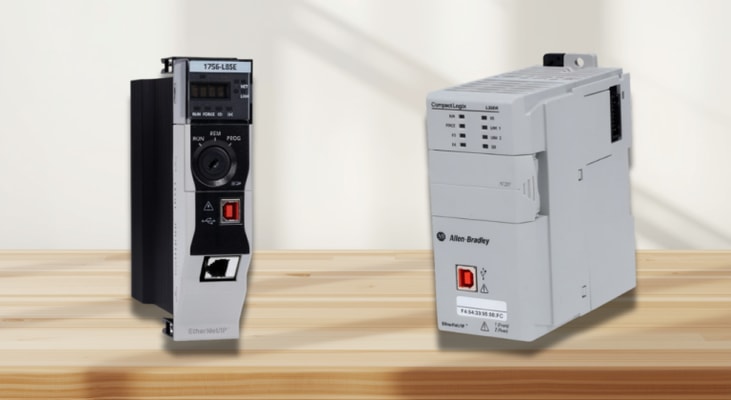
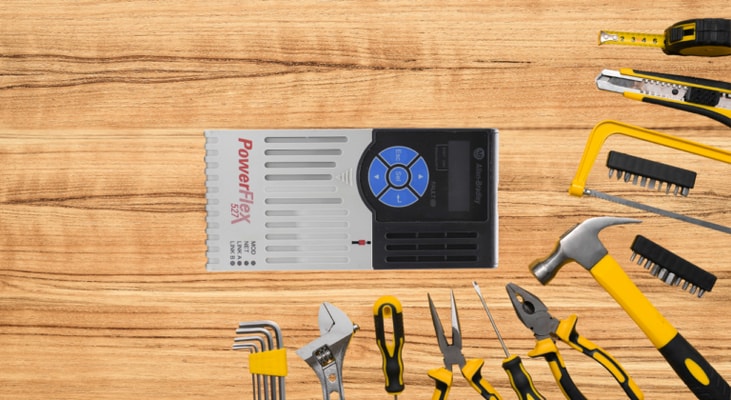
After 35 years of service in industrial automation, Rockwell Automation has officially discontinued the SLC 500 platform . For facilities still running SLC 500 hardware, the question is no longer whether to migrate but how to execute the transition without disrupting production. The recommended migration path leads to the CompactLogix 5380 control system, and understanding both the available tools and the process’s technical realities is essential before any project begins. Here, we will discuss migrating SLC 500 Systems to the CompactLogix 5380 as the latest upgrade. Rockwell’s designation of the CompactLogix 5380 as the SLC 500 successor is grounded in architectural advancements in performance, security, and networking capabilities. The platform is equipped with dual Gigabit Ethernet ports that support fast, reliable I/O and motion control over EtherNet/IP, with motion capability up to 32 axes. Optimized firmware ensures maximum efficiency under demanding industrial conditions...
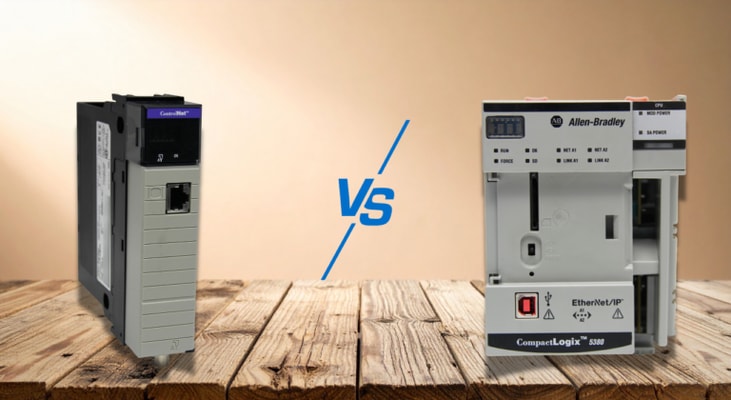
Industrial automation engineers selecting between the Allen-Bradley ControlLogix 5580 and CompactLogix 5380 rarely face a straightforward decision. Both support EtherNet/IP-based motion and safety and carry the Logix that makes them interoperable within Rockwell’s Integrated Architecture. Beneath that shared surface, however, the two platforms diverge in capacity, scalability, environmental tolerance, and application scope. Understanding where that gap actually matters determines whether a system is appropriately specified or quietly undersized. The CompactLogix 5380 was designed for compactness and self-contained machine control. Its architecture assumes a bounded application, a defined axis count, manageable I/O, and a system that runs on a single machine or in a production cell. The ControlLogix 5580 was designed for a different problem: applications that grow, where multiple disciplines coexist in one program, and where the controller serves as the backbone of a plant-wide...
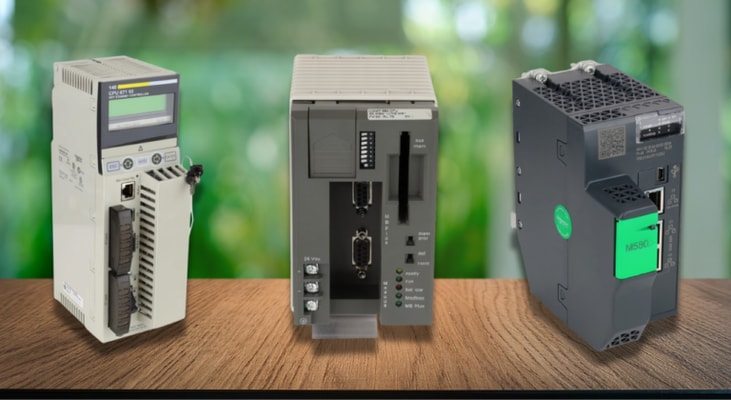
Industrial control systems built on legacy Modicon PLC platforms continue to operate at the core of production, utilities, and process industries worldwide. Systems based on Modicon 984 , Quantum (140 series), Premium (TSX series), and Momentum platforms remain in active service despite approaching or exceeding their intended lifecycle. While these systems are often stable and well-understood, the challenge is no longer purely operational reliability, but rather long-term sustainability under hardware obsolescence, diminishing vendor support, and shrinking spare parts availability. Many of these systems were engineered for deterministic control and robustness, which explains their longevity, but they were not designed for indefinite lifecycle support in modern industrial environments. Join us today as we go over a technical approach to spare parts management, lifecycle risk mitigation, and long-term support planning for aging Modicon PLC systems. Source Modicon M580 PLCs Here A...
If you have spent any time reading about automation equipment and how they work, you would come across phrases such as: “Real-time control”, “real-time monitoring”, “operates in real-time”, or “real-time deterministic behavior”. It becomes one of those things that you might be afraid to ask about because it’s thrown around so much that it seems like it’s common knowledge. Alas, we at DO Supply don’t judge and encourage learning opportunities, so let’s get you up to speed on what ‘real-time’ actually means. In the world of industrial control, “real-time” is a more precise engineering term. It means predictable, rather than “fast”. A real-time system isn’t defined by how quickly it responds, but by whether it responds within a guaranteed, bounded window of time, every single time. That guarantee is what engineers call determinism, and it’s the whole reason the phrase gets used so often around PLCs, drives, and industrial networks. To put it in perspective, say a video game you’re...
Modern industrial facilities do not stop when the network drops. A refinery keeps processing crude oil. A water treatment plant keeps dosing chemicals. A conveyor line keeps moving parts through assembly stages. This stability is not accidental; it is the result of deliberate engineering decisions built into every layer of automation systems, from the controller firmware to the field instrument logic. Communication failure is not an edge case in industrial automation. It is a known, expected condition that every well-designed system must handle without losing process stability, safety state, or data integrity. This article breaks down the exact mechanisms, hardware, and protocol-level details that keep automation systems stable when communication degrades or fails. Industrial environments are electrically hostile. Variable-frequency drives inject high-frequency noise into power lines. High-voltage switchgear generates radiated electromagnetic interference during switching transients...
These days, every industry runs on speed and accuracy. There’s a whole field built around creating and running systems that manage and automate everything, from factories to warehouses. This technology keeps things running smoothly. It cuts down mistakes and helps get more done. If you want to really get what makes this world tick, it starts with the companies that make PLCs—the actual hardware at the center of it all. Then come the engineers who figure out how to use that hardware in real-life situations. PLC Controls sit right at the core of modern automation, and PLC manufacturers have played a huge part in how far we’ve come. PLC Controls is all about designing and running control systems that keep machines, processes, and devices working smoothly on their own. Controls engineers use feedback loops, math, and the latest tech to build systems that hit their targets every time, without much fluctuation. Picture a manufacturing plant—an engineer sets up controls so conveyor belts...
It is no secret that downtime can be the single leading cause of revenue loss for any factory. In fact, a recent global report from ABB in conjunction with Sapio Research suggests that 44% of industrial leaders report production interruptions by their equipment monthly, 14% of those report stoppages weekly. Every hour that a factory is down, it could be losing anywhere from tens to hundreds of thousands of dollars per hour, depending on SKU value and output expectations. This raises the question of how downtime could become this expensive, what the biggest contributing factors are, and how automation is designed to prevent interruptions. Downtime, often carrying a negative connotation, is when a factory or process halts or significantly reduces operations due to planned maintenance, repairs, or stoppages. Usually, this stems from operator stops, which happen when the operator sees an anomaly and presses that big red STOP button. Other times, the system itself could sense that...
In discussions of CPU vs. Processor, every automation engineer has encountered both terms in the same conversation. In PLC documentation, hardware manuals, and system design discussions, they appear side by side, sometimes interchangeably, sometimes with conflicting meanings. For engineers selecting controllers, writing ladder logic, or troubleshooting scan cycle delays, the distinction is very basic. Understanding exactly what a processor chip is, what a CPU module is, and how they relate inside a PLC gives you a clearer model for hardware selection, performance optimization, and fault diagnosis. This is exactly what we will be discussing in this article regarding CPU vs. Processor. In correct PLC hardware terminology, the processor is the physical silicon chip that executes instructions. It is a discrete integrated circuit mounted on the circuit board inside the controller module. This chip fetches each instruction from memory, decodes it, and executes it, one operation at a time...
PLCs are an important part of modern industrial automation. There are a few more common and popular PLC brands that consistently hold the majority of the global market. Some of the best manufacturers in the industry include Siemens, Rockwell Automation (Allen-Bradley), Schneider Electric, Mitsubishi Electric, and Omron. The PLC software market is in very good health and offers many good options for your automation needs. PLCs are rugged computers built for the factory floor, designed to operate machines and processes with extreme reliability. Each PLC runs a continuous loop called a scan cycle: it reads from inputs, executes a user program, and updates outputs. This process repeats thousands of times every second. CPU: the processor that runs the application I/O Modules: connect the system to field devices such as sensors, motors, and valves Memory: stores the control program and runtime data Power Supply: provides stable DC voltage to the system Communication Links: allow the PLC to...
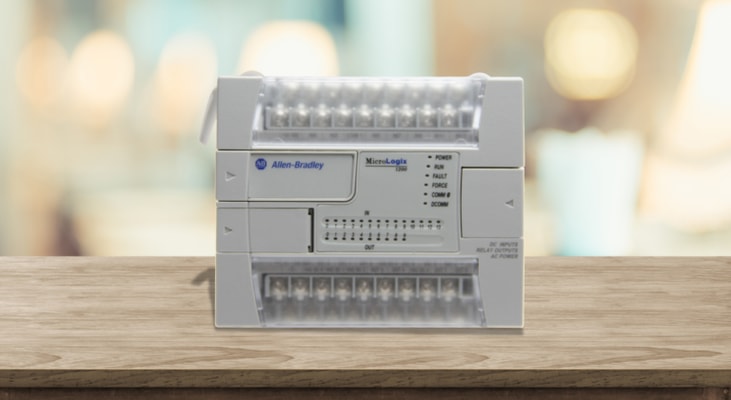
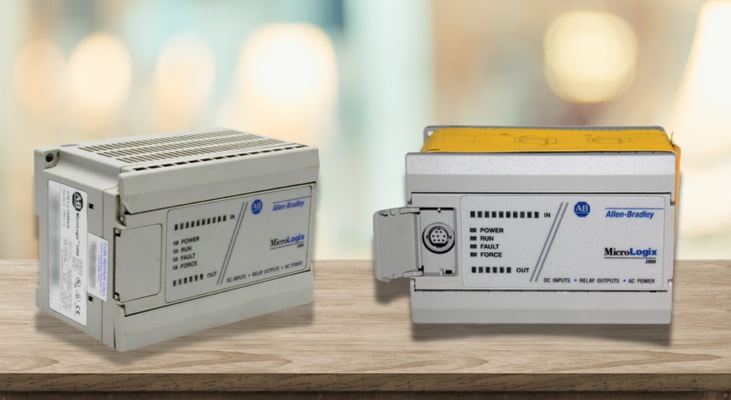
In industrial automation, there are three types of controllers: Those that are replaced because something better came along, those that are swapped out because they finally gave out after years of service, and those that never get replaced at all because nobody could find a good enough reason to mess with what’s working. The MicroLogix 1200 fits right in that last category. These middle-child controllers in the MicroLogix family have been holding down applications for over two decades now, quietly doing their jobs in packaging lines, water treatment plants, material handling systems, and thousands of other installations. These controllers are wired in, commissioned, and essentially forgotten in the best possible way. Rockwell Automation has long since moved on to newer platforms, but in the automation world, “discontinued” and “gone” are two very different things. What made the MicroLogix 1200 popular in the first place is still what keeps it relevant: expandable I/O, a...
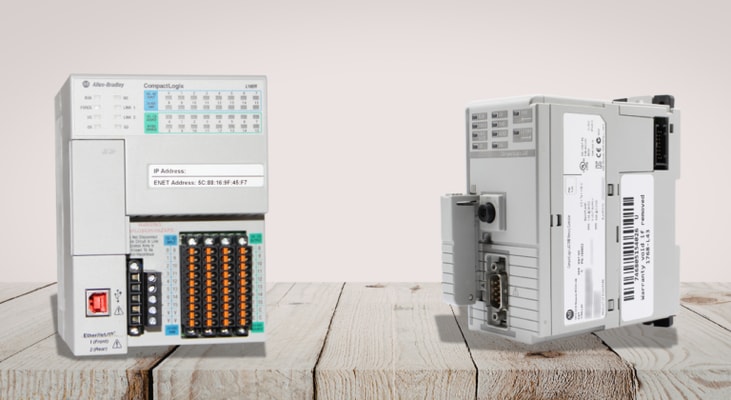
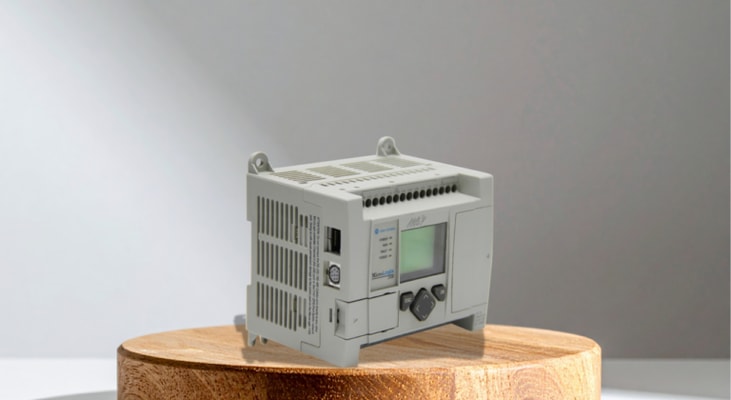
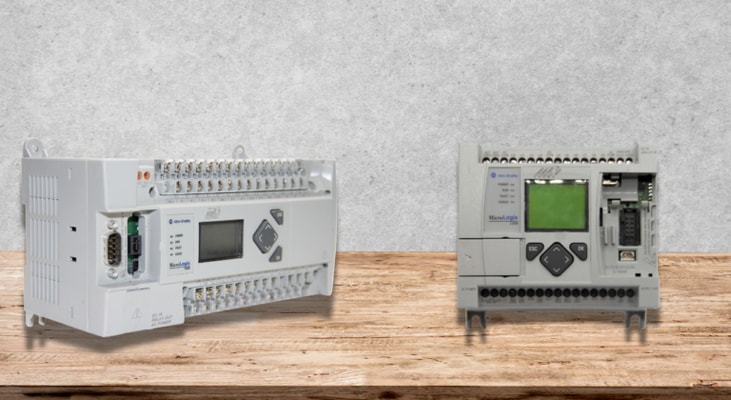
If you’re considering a compact controller for a small to mid-scale automation project, the Allen-Bradley MicroLogix 1100 deserves a close look. While it may be a legacy system, the MicroLogix 1100 still strikes a balance between capability and footprint, giving engineers a robust feature set without the overhead of a larger platform. The Micrologix 1100, at its core, is a fixed I/O programmable controller built around 18 onboard I/O points: 10 digital inputs, 2 analog voltage inputs (0-10V DC), and 6 discrete outputs. What sets it apart from this class of controller is the inclusion of a built-in Ethernet/IP port alongside an isolated RS-232/RS-485 combination port, an onboard LCD display with keypad, a real-time clock, and support for up to four 1762 expansion I/O modules. While the MicroLogix 1100 series has only four controllers, we will go over each one, the expansion I/O lineup, and common applications to help you select the right configuration for your project. As we mentioned...
Programmable Logic Controllers play a critical role in today’s industrial automation systems, delivering dependable, real-time, and deterministic control in demanding environments such as semiconductor fabrication, automotive assembly, and chemical processing plants. All PLCs share a common core architecture comprising a power supply, central processing unit (CPU), communication modules, input/output modules, and memory. However, because different PLC manufacturers employ unique design philosophies, the result is substantial variations in PLC hardware, proprietary software, implementation, and ecosystem compatibility. These variations mean that purchasing a specific PLC model is a long-term commitment to a particular programming environment, technological ecosystem, and vendor support. This can significantly affect the integration capabilities, maintenance strategies, future scalability, and available hardware/software migration strategies for a given PLC platform. Therefore, beyond...
Allen-Bradley is one of the most trusted names in industrial automation worldwide. From manufacturing plants, Building Management Solutions, and oil refineries to water treatment facilities and food processing lines, Allen-Bradley drives and PLCs (Programmable Logic Controllers) power critical infrastructure across virtually every sector of modern industry. Yet even the most reliable industrial systems encounter faults, trip events, and communication errors. When an Allen-Bradley drive trips unexpectedly or a PLC fails to execute logic correctly, production lines can halt within seconds, resulting in lost output and costly downtime. The ability to diagnose and resolve these issues quickly is not just a technical skill; it is an operational necessity. This guide walks through the most common Allen-Bradley drive (focusing on the 525 , 700 , and 750-series ) and PLC (CompactLogix and ControlLogix ) faults encountered in real-world environments. For each issue, you will find an...
The Allen-Bradley MicroLogix 1000 has been around the block for a while, long enough to be a seasoned veteran before some of today’s engineers even start their first internship. Rockwell Automation has since discontinued the line, but if you’ve spent any time in the field, then you know that “discontinued” doesn’t mean gone. In fact, these little fixed I/O controllers are still working in packaging lines, HVAC systems, conveyor controls, and countless other applications where they were originally installed and never gave anyone a reason to rip them out. That being said, there are still several reasons to pick these controllers for your project. Whether you’re sourcing a drop-in replacement for an existing system or maintaining a fleet of legacy machines, this guide is for you. We’ll walk through the part number system, the different I/O configurations, power supply options, and output types so you can confidently select the right MicroLogix 1000 for your application. Source MicroLogix...
If you have ever felt the urge to overbuild a system, whether it be a car, a gaming pc, or on the industrial side of things, OEM systems or shop-mounted automated solutions, don’t worry, because we have all been there. The reality is that building to spec in industrial machines that aren’t likely to see upgrades or changes is okay. Not only will this save time and reduce complexity, but it will also save money, space, and wiring. This is the philosophy that Allen-Bradley used to design its MicroLogix PLC lineup. Sure, the MicroLogix is considered a legacy system, but it is still used in numerous applications today. Today, we will go over where these PLCs fit and why their size may be all you need. Shop for MicroLogix 1100 PLCs Here First on the list is packing machines since they operate on simple, repeatable sequences. Because of the straightforward nature of this control logic, these machines rarely require the processing power or system architecture of a larger PLC platform. A...