Allen Bradley VFDs vs ABB VFDs
What Are VFDs?
The term VFD stands for Variable Frequency Drive. It is a type of motor controller which drives an electric motor by varying the frequency and voltage supplied to that motor. Variable Frequency Drives (VFDs) are also known as AC Drives, Inverters, Variable/Adjustable Speed Drives, Inverters, Variable-Voltage Drives, Microdrives, Frequency Converters, or Variable Frequency Inverters (VFIs).
Frequency, given in Hertz (Hz), is directly related to motor speed in revolutions per minute (RPM). Thus, by adjusting the input frequency the motor speed can be varied accordingly. For example, the higher the supply frequency, the more RPMs the motor will exhibit.
VFDs are best suited for applications in which an electric motor is not required to run at full speed, as they can ramp down the supply voltage and frequency to meet the requirements of the motor’s load. In case there is a change in the application’s motor speed requirements, the VFD can be set to ramp up or turn down the motor speed as needed. In addition to running electric motors at variable speeds, VFDs do provide smooth motor start-ups.
How Does a VFD Work?
In general, a basic Variable Frequency Drive system consists of a logic controller, an AC motor and an operator interface. The VFD is installed between the AC motor and an electrical power supply. Power from the electrical supply is first transmitted into the VFD, which then regulates the voltage being fed to the AC motor. Inside the VFD, the input electrical power is run though a rectifier section that consists of four (4) or six (6) diodes, while in other cases it may include thyristors instead. The rectifier circuit converts the incoming three-phase or single-phase AC power to DC power.
The resulting DC power is then fed into a filter section that consists of large capacitors and/or inductors, which smoothen the DC output by eliminating any AC ripples. Next, the filtered DC power flows into an Inverter section. This section consists of semiconductor switches such as power transistors or Insulated-Gate Bipolar Transistors (IGBTs) like MOSFETs and MOS transistors. In the Inverter, the steady DC voltage is converted into alternating AC voltage with variable frequency. The frequency of the resulting AC voltage is directly proportional to the switching rate of the IGBTs or other power transistors.
This step allows the AC drive to adjust the frequency and the voltage being fed into the electric motor based on your current process demands. Thus, you get to run your AC motors at the speed or with the torque demanded by your application.
Applications of Variable Frequency Drives (VFDs)
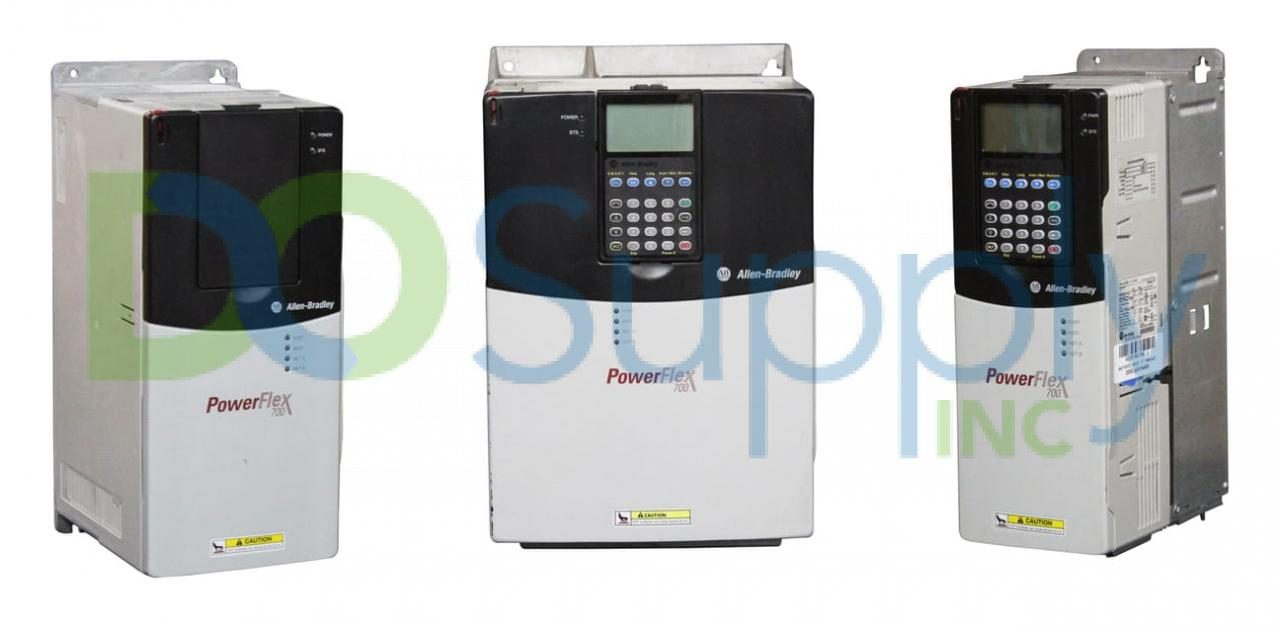
Variable Frequency Drives are widely used in a variety of industrial applications to control the speed of AC motors, conveyor systems, pumps, machine tools, chillers, cooling towers & other applications requiring variable speed and torque.
Here are some of the key applications of VFDs:
A) Conveyor Systems: For speed control in a conveyor system, the VFD is installed with a remote potentiometer which an operator can adjust to manually set the required speed for the conveyor system. In this type of application, the operator manually sets the motor speed with the maximum and minimum frequency values programmed into the VFD drive parameters.
B) Elevators: A VFD is included in an existing elevator control for smoother starting and precise stopping. And being an entirely controlled stop, it’s also a repeatable process.
C) Pump Control: At any given time, a fixed speed centrifugal pump supplies the designed water volume required to satisfy maximum loading conditions. Thus, in all the other conditions where full load water supply is not needed, the pump input energy gets wasted. Hence, a VFD is installed in such a pump system to provide a more economical system, by controlling the circulation speed of the centrifugal pump against the return line temperature. So, the setpoint of the VFD controller in such a case would be the return temperature designed for full load.
D) Screw Press: A screw press is essentially used to minimize the moisture content of a wet mixture. Conventional control of such presses make use of variable mechanical pitch pulleys, where an operator manually sets the speed of the screw press to meet the requirements for a given process. However, any variations in the wetness of the mixture contents would mean that the end-product will have major inconsistencies.
Also, mechanical speed adjustments are unreliable and the speed of the press can change with respect to the position of the adjuster due to wear damages. Hence, a VFD is used to safely start, and smoothly operate the screw press while protecting it against a great degree of wear. In addition, with a VFD, an operator can establish the optimal combination of screw speed and air pressure of the discharge cone.
E) Forced Draught Fans in Boilers: In large industrial boilers, modulating control regulates the boiler output as per the increasing load. Such boilers operate through combustion of air and fuel mixture in a definite proportion. A VFD can be installed in the motor of the forced draft fan, to allow adjusting of the fan speed in relation to the volume of air needed for combustion. This would ensure efficient combustion in the boiler and more precise control of the process.
F) Constant Air Volume (CAV) System: A CAV system supplies a constant amount of air to a given space, so as to control the temperature within that space. The system delivers a sufficient air capacity according to the designed load conditions. When a VFD is installed in the air blowing system, it controls the airflow into the space by regulating the speed of the air blowers in relation to the loading conditions. Thus, the motor of the CAV system will only run at full speed if complete cooling or heating is needed.
G) Cooling Towers: A cooling tower set up is used to chill water and thus increase the efficiency of the condenser connected downstream. When water is flowing fully over the tower, fans are cycled on and off so as to control the water temperature. Including a VFD into the fan system makes it possible to control the speed of the fans. And since the VFD system is capable of comparing the water temperature to the outdoor temperature, the speed of the fans can be adjusted as per the changes in water temperature. This makes the cooling tower system much more efficient.
In summary, some of the reasons why Variable Frequency Drives are widely used in the aforementioned applications include:
- To improve system efficiency and save on energy consumption, hence reducing system costs.
- Reduce mechanical stress and wear of machines to extend their service life.
- Reduce the size of the motor required
- Meet the speed and torque requirements of a given process
- Lower levels of mechanical noise, i.e. from pumps and fans
- Cut off peak-energy consumption to avoid peak-demand price surges
- Improve the safety of operators working in a factory environment
- Perform power conversions in hybridization applications
Allen-Bradley VFDs Overview
Allen-Bradley VFDs are manufactured by Rockwell Automation- an American provider of industrial automation technologies. They include a wide selection of PowerFlex® AC and DC Variable Frequency Drives, which are designed for productivity, flexibility, and ease of use. These VFDs can handle both medium-voltage and low-voltage applications, with a broad range of power ratings. In general, Allen-Bradley VFDs are designed to assist machine builders and system integrators simplify machine design and improve system performance.
ABB VFDs Overview
ABB VFDs, commonly called ABB Variable Speed Drives, are designed, manufactured and sold by the ABB Group- a Swedish-Swiss multinational corporation headquartered in Zürich, Switzerland. ABB Group offers advanced automation technologies for a variety of industries and manufacturing plants.
The ABB VFDs are mainly used to regulate the motor speed and torque of three-phase AC induction motors. They are a globally recognized brand of Variable Frequency Drives due to their stable performance, excellent combination of features, superior overload capacity, low speed with high torque output, a high-performance vector control technology, and good dynamic characteristics. Standard ABB Variable Frequency Drives are easy to install, set up and operate; as they have common fieldbus interfaces, design, debug, specifications, and maintenance processes.
Comparison Between Allen-Bradley VFDs and ABB VFDs
The two leading global manufacturers of Variable Frequency Drives are Rockwell Automation/Allen-Bradley and ABB Group. In this section, we’ll compare the voltage categorization, and specialized applications of the VFD drives provided by two manufacturers.
A) Low-Voltage Variable Frequency AC Drives
Both ABB and Allen-Bradley provide a wide selection of low-voltage AC drives. These drives offer a broad range of power ratings, global voltages, advanced features, multiple control modes, and packaging options. They are designed to keep you connected to your factory operations and ultimately improve your system’s productivity.
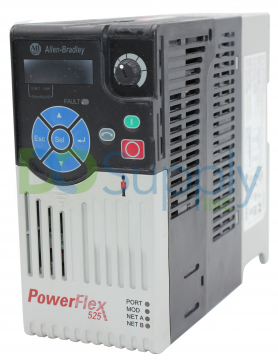
Allen-Bradley low-voltage AC drives are subdivided into two categories, namely PowerFlex® Architecture-Class VFDs and PowerFlex® Compact-Class VFDs.
- PowerFlex® Architecture-Class VFDs: These drives are designed for ease of use, and they provide application-specific parameters and a wide set of control features. They are ideal for general purpose applications that require torque, speed, and/or position control. In addition, they also offer time-saving benefits. The Allen-Bradley Variable Frequency Drives available within the Architecture-Class include: (i) PowerFlex 755TS; (ii) PowerFlex 753 AC Drives; (iii) PowerFlex 755 AC Drives; (iv) PowerFlex 755T; (v) PowerFlex 70 AC Drives; (vi) PowerFlex 700 AC Drives; (vii) PowerFlex 700L AC Drives; (viii) PowerFlex 700S AC Drives.
- PowerFlex® Compact-Class VFDs: These drives deliver simple and cost-effective solutions for applications that require speed control and standalone machine level control or simple system integration. They are also designed for ease of use in a compact package that optimizes application versatility and panel space usage. The VFDs drives available in this class from Allen-Bradley include: (i) PowerFlex® 523 AC Drives; (ii) PowerFlex® 525 AC Drives; (iii) PowerFlex® 527 AC Drives; (iv) PowerFlex® 4M AC Drives;(v) PowerFlex® 4 AC Drives;(vi) PowerFlex® 40 AC Drives; (vii) PowerFlex® 40P AC Drives; (viii) PowerFlex® 400 AC Drives
ABB Group also provides a variety of low-voltage AC drives including:
- ACS55-ABB Drives: These variable frequency AC drives provide a wide range of speed and control features for various low-power applications like treadmills, whirlpool baths, solar trackers, and automatic gates. They have a power rating of 0.18…2.2kW (0.25…3Hp) with single-phase supply voltages ranging between 110…120V and 200…240V (-15% or +10%). Their design allows for faster integration into machines, with flexible mounting options. They also include the DriveConfig kit option, which permits the setting up of the drive even without a power connection. ACS55-ABB drives are available when ready for use in industrial and domestic environments.
- ACS150-ABB Drives: These VFDs are designed for incorporation into a wide variety of industrial machinery including conveyors, fans, pumps, mixers or any fixed speed AC motor requiring variable speed. They provide smooth performance with a broad power range of 0.37…4 kW and functionality. Many of their functionalities are standard such as PID control, EMC filtering and built-in brake chopper. They also include an optional setup tool called FlashDrop kit for quicker and easier configuration of unpowered drives. ACS150-ABB drives are available with both single-phase (200…240V) and three-phase (200…240V/ 380…480V) voltage supplies.
B) Medium-Voltage Variable Frequency AC Drives
Similarly, both ABB group and Rockwell Automation/Allen-Bradley provide medium-voltage AC drives to deliver excellent performance across a broader range of application requirements.
In this category, Allen-Bradley provides PowerFlex® 7000, PowerFlex® 6000, and ArcShield™ PowerFlex® 7000 AC drives.
- PowerFlex® 6000 AC Drives: These drives are designed to allow for flexibility in a variety of industrial applications. They are ideal for new and retrofit applications requiring variable speed motor control from 2.4 kV(Kilovolts) to 11 kV, variable torque, and constant torque control, with a motor current of up to 680 A(Amperes). They are well-suited for variable torque applications such as simple, stand-alone centrifugal pumps and fans. PowerFlex® 6000 VFDs are available in multiple configurations based on application requirements and the motor’s supply voltage.
- PowerFlex® 7000 Drives: These are liquid-cooled or air-cooled Variable Frequency Drives, which are available in a broad range of power ratings from 200…34000 Hp and supply voltages of between 2400… 6600 Volts AC. They are a good fit as general-purpose, stand-alone AC drives that provide control of speed, direction, and torque, as well as starting, and stopping of standard synchronous or asynchronous AC motors.
- ArcShield™ PowerFlex® 7000 Drives: This drive system includes ArcShield™ technology-the very first arc-resistant technology developed for Allen-Bradley medium-voltage AC drives. This arc-resistant system has full regeneration capabilities and it’s certified to meet the most comprehensive arc-resistant set of global standards. It provides arc fault ratings of up to 50 kA (Kilo Amperes) and is compliant with Type 2B accessibility protection standards.
On the contrary, ABB medium-voltage VFDs do not include ArcShield technology like their Allen-Bradley counterparts. The two most common medium-voltage AC drives from ABB Group include:
- ACS 2000 AC drive: This is a leading technology medium-voltage Variable Frequency Drive, which perfectly adapts to an extensive range of standard speed control applications across all industries. The boundless versatility makes the ACS 2000 drives fit perfectly into different operating conditions and industrial environments, including hazardous areas, in all regions of the world. These drives benefit from a simple design and a robust control platform, which ensures reliable operations at all times. Also, they are available in several configurations and drive options, with a wide power rating range of 250 kW up to 3.68 MW. Thus, you can select the most suitable ACS 2000 drive to increase the efficiency of your systems and industrial processes.
- ACS 1000 AC drive: This is a well-proven medium voltage Variable Frequency Drive from ABB Group. It’s ideal for a variety of standard industrial applications regardless of the type of industry. To optimize your industrial processes, you can customize the ACS 1000 drive for specific applications by selecting any of the various available pre-engineered options. Due to their extensive versatility, ACS 1000 drives can function reliably in different industrial environments and operating conditions, even in hazardous areas. They are available with power ratings of 315 kW up to 5 MW. In addition, given their simple design and robust control capabilities, ACS 1000 drives are well-known for their high reliability.
From the above discussion, you can notice that the power ratings of the Allen-Bradley medium-voltage AC drive, especially the PowerFlex® 7000 Drives, are much higher compared to the power ratings of ABB medium-voltage AC drives.
C) Variable Frequency DC Drives
Allen-Bradley provides a full line of variable frequency DC drives, known as the PowerFlex® DC drives. They include PowerFlex® DC field controllers, PowerFlex® DC digital drives, and PowerFlex® DC standalone regulators (SARs). These DC VFDs are designed for DC motor control and retrofit applications of up to 4000 kW (6000 Hp). They are ideal for a wide range of demanding DC applications.
Likewise, ABB Group also offers variable frequency DC drives for use in almost every industrial application, either as part of a cost-effective retrofit or new installation. These drives are based on the latest control technology while providing you with a complete selection of three-phase DC drives with power ratings ranging from 9 kW (12 Hp) to 18 MW (24,000 Hp). They are designed and built for flexibility with multiple I/O and communication options, as well as diverse programmability and built-in control programs. The available variable frequency DC drives from ABB includes DCS 800-A, DCS 550, DCS 800-S, DCT 880, and DCS 880-S.
D) HVAC Variable Frequency Drives
The ABB Group provides AC drives that are specifically tailored for HVAC (Heating, Ventilation, and Air Conditioning) applications. They include:
- ACH550-HVAC Drives: These drives are available in two installation options: (i) Wall-Mounted drive units (ACH550-01 Range), with a power range of 0.75…160 kW (0.5…200 Hp) and three-phase supply voltages from 380…480V (+10% or -15%). (ii) Free-Standing drive units (ACH550-02 Range), with power ratings of 200…355 kW (250…500 Hp) and three-phase supply voltages ranging between 380…480V (+10% or -15%). The ABB ACH550 are intelligent HVAC drives dedicated to producing quality air and saving energy, thereby alleviating most environmental concerns. They provide reputable flexibility, reliability, and all essential HVAC communication protocols. These drives are pre-programmed for specific applications including cooling towers, chillers, and air handling units with pump motors, compressors, and fans.
- ACH580-HVAC Drives: The ACH580-01 range of ABB drives is available with power ratings of 0.75 … 250 kW and three-phase supply voltages ranging between 380V…480V (+10% or -15%). This drive series has set new standards in both reliability and simplicity, ensuring the smooth operation of your HVAC systems. Also, its built-in features significantly reduce on-site commissioning time, while adding value to existing motor control systems by providing easy diagnostics and troubleshooting.
In addition, ACH580 ABB drives are available as wall-mounted or cabinet-built drives, allowing easier integration into your factory facility and power grid connections in different environments. They also include multiple PID control loops that provide state-of-the-art control of processes. Furthermore, ACH580 HVAC drives are available with multi-pump control, control override and motor preheat functionality.
DO Supply Inc. makes no representations as to the completeness, validity, correctness, suitability, or accuracy of any information on this website and will not be liable for any delays, omissions, or errors in this information or any losses, injuries, or damages arising from its display or use. All the information on this website is provided on an "as-is" basis. It is the reader's responsibility to verify their own facts.