Omron PLC vs Allen Bradley PLC
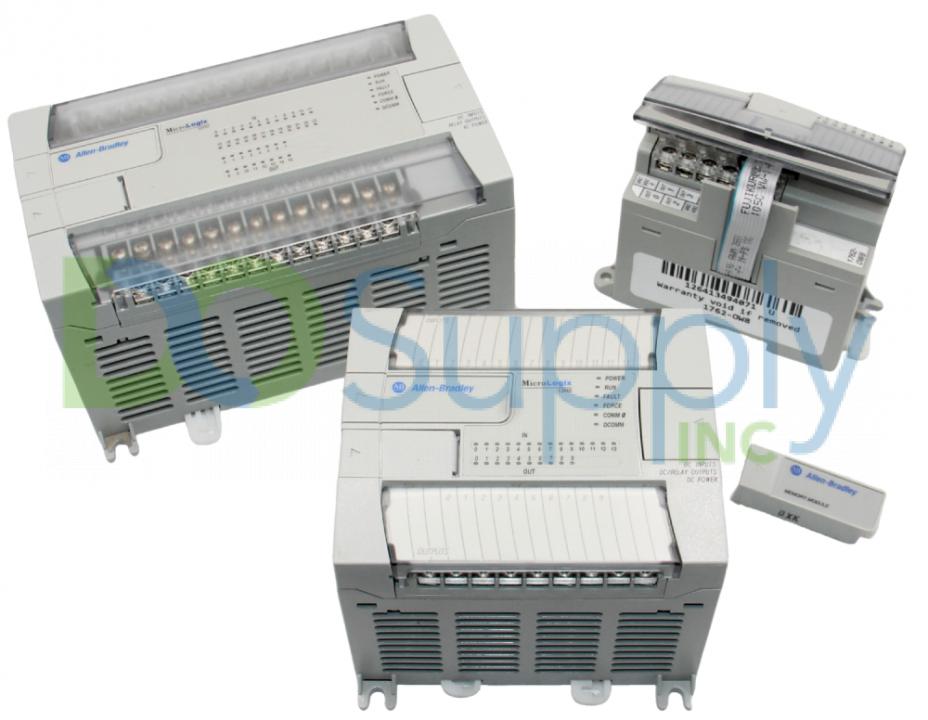
PLCs are programmable controllers that are specially designed for applications in the industry. Before the advent of PLC, the industrial control system was a relay contractor system. However, these relay systems had many disadvantages, such as complicated wiring, longer durations for designing and production, problematic maintenance, fewer functionalities, and a variety of adaptations difficulties.
PLCs use programmable storage for storing the instruction set of logic, timings, counting, and mathematical operations. They act as a controller in the industrial PC, adapted for control or production operations like assembly lines, fault diagnosis, robotic applications, and the ones which required great precision.
There are many industrial component producers who are designing and manufacturing PLCs globally, and because of that, there is intense marketing competition. Two of the big names in this regard are Allen Bradley and Omron. We will be seeing the primary differences between these two giant manufacturers.
Popularity
Allen Bradley handles 42% of the market in North America while Omron only captures 2 to 3%. AB is the most famous PLC manufacturer in America. In 2012, according to a survey in which 50 automation companies were included Allen Bradley came 5th among the most popular and used PLCs in the world. Omron secured 11th position. Now Allen Bradley has captured the second position while Omron is at 5th position.
Cost
The biggest difference between these two PLC manufacturers is cost. Even when we are using it for a small industrial application, the Omron PLC would cost one-tenth of the same functionality AB system. If the cost is the major factor, then the answer is easy, and we should go with Omron. While installing the PLC, we have to consider that the components expenses are only part of the overall expenses, and we also have to factor in many other things such as:
| Factors | Better option |
| Expenses and availability of training | Allen Bradley |
| The duration needed for procuring replacement parts | Omron |
| Products interfacing with other systems and software packages | Allen Bradley |
| License and maintenance expenses | Omron |
| Failsafe | Allen Bradley |
There are many other factors, so we should not rely only on the cost. Many vendors prefer Omron because their functionalities seem alike, and there is a huge difference in the cost. But when we consider the whole system, we have to note that Omron PLCs demand additional coding duration because of the problems in their programming environment. So Omron PLCs’ lower costs are often offset by added engineering expenses.
Applications
Omron’s PLC is mostly machine-oriented, and we have to install them all over the industry, while AB PLCs are process-oriented, and we have a few PLCs that can cover the larger sections of the industry. They provide direct option control support if we deal with high-end motion controls such as servos and want to feed the logic directly in the PLC. If we are in need of programmable smart relays, we can opt for Allen Bradley’s Pico PLC. This can cover almost all the applications which Omron could provide.
Hardware and Variety
There is a wide range of PLCs series for large, small, process, and micro Control Systems manufactured by Allen Bradley, including ControlLogix, CompactLogix, SLCs, and MicroLogix. The smaller systems are modular systems that give us a variety of processors and different options such as storage options, communication needs, redundancy, safety integration, and eco-considerations which can include temperature, conformal coatings, etc. The ControlLogix is the most expensive system of AB, but it repays in its long life, reliability, and large-scale control capability. For upgrading to the latest models of the AB system, the good news is that all the products have backward compatibility and legacy support to ensure migration paths from older models.
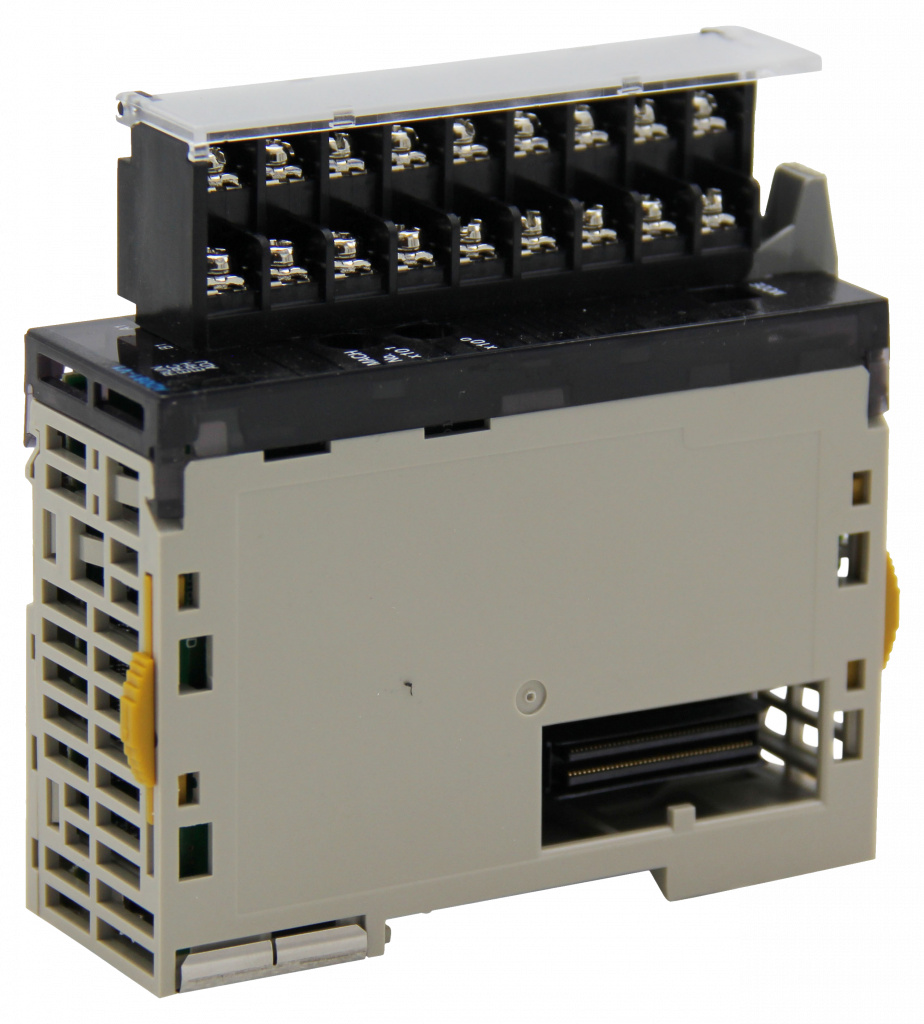
Omron PLCs come with a variety of options to choose from like CJ2M, CP2E, CP1H, CP1L, CS1D, and CJ2M. If we take CJ2M, there are 2500 digital I/O points that are connected to I/O cards in local and remote racks. Every Omron PLC has one or more Ethernet Interface with IP data link functions and all of them support serial communication by adding option boards. This helps devices like motion controllers to interface directly with the system. Many of the PLC systems support the CompoBus/S I/O subsystem which helps in attaining higher speeds and longer distances I/O connections remotely. Omron also has a large scale of PLC options, which includes rack mounts and modular and compact versions. They cost less and offer high performance, flexibility, reliability, and easy integration. They are highly reputed in the manufacturing industry because of their modern controllers, which have the ability of multi-axis control, vision systems, sensors, and safety. Most of Omron’s systems can be integrated easily with the PLC to provide a complete control system.
Performance and User-Friendly Interface
Both manufacturers have their strengths in terms of performance. Both are equally matched in terms of speed, reliability, and effectiveness. So the factors which we have to consider are user-friendliness and integration. Both these factors are present in AB PLCs, and they are known for using these points to their advantage and making their systems an appealing investment for the industry. Even a technician who has less prior experience in PLCs and programming can set up the AB PLC. Debugging the system is also quite effortless and takes lesser time. AB PLCs can also communicate effectively with third-party devices and have the ability to import and export tags from excel to HMI and SCADA databases.
Meanwhile, Omron PLCs are a very cost-efficient choice for low and medium complexity problems. The new CJ2M range of controllers by Omron is specifically engineered to help the users meet their demands of more intelligence of the machine and flexibility in the control system while having the same price edge. These PLCs are used in hundreds of thousands of applications worldwide and have more speeds, storage, and a broader communication facility.
Programming
Programming an Allen Bradley PLC is one of the most desirable skills in industrial automation. It helps in automating and creating the set of instructions to follow and control various devices, but multiple challenges are associated. The good news for Allen Bradley users is that there is a variety of online and offline materials with easy access.
Omron uses CX-Programmer for all their PLC series. There are many features installed in it that help speed up the program and reduce the setup time.
Function Blocks
PLC programming languages are often very difficult and require an expert to operate them. Luckily, we have function blocks that can ease the process for us. In Omron PLCs, we can simply copy /paste the function blocks like when we create a flow sheet, and then they can be connected with the help of a mouse, making the program graphical for a wide range of process control.
Environment
Industries have different and harsh environments, so we have to consider the PLCs which would be better suitable for it. The Public, media, and other NGOs have forced industrial managers to focus on sanitary practices. The potential expenses of fines recall, and bad reputation compels them to take extra steps to ensure consumer wellbeing.
Allen Bradley XT, an extremely environment-friendly PLC, can operate in extremely hot and cold temperatures and the temperature range is -25 degrees Celsius to 70 degrees Celsius. They also pass the additional needs of protection against various types of salt, corrosion, humidity, moisture, and fungus. They meet the Pollution Class standard of G1, G2, and G3. Also, the controller parts of this PLC are separated from each other on the backplane with the help of additional vented faceplate segments, which can give us more streamlined airflow, offers thermal cushion, and help in lowering the requirement of the air conditioning panel. They are most suited for corrosive conditions, like in oil and gas industries, wind turbines, and ship-related applications. They are also very well suited for steel mills where the components are always exposed to high temperatures.
Omron has eighty-plus years of experience as a single source vendor for harsher washdown conditions and special applications. They are very useful in applications like high washing pressure and temperature and chemical applications like fresh produce, meat processing, pharmaceuticals, and dairy processing. Several components, such as E2E and E2A sensors, are placed for working effectively in harsh environments. E2E 4x sensing range prevents unexpected downtime and helps in conditions like dust, water, oil, and gas. E2A has cylindrical brass housing features for water resistance, high vibrations, and protection against temperature changes, and keeps the system immune to high electromagnetic noise. The sensors are of high-grade stainless steel, so they can perform effectively in high pressure and temperature conditions and are proven to have resistance against industrial detergents and disinfectants. Using these systems in our industry guarantees us more OEE, maintenance of code compliance, and lessens the downtime and probability of product recalls.
Support
While for many people, the cost may be the deciding factor. However, technical support and after-sales is also a very vital factor. A company may show us the most extravagant machinery and devices in its catalog. However, if their documentation is not very accurate and human help is also not assured, they may lose many clients.
AB’s support is also the reason they have remained stable and at the top of the market for so long. They have an extensive library, which has all the contents and accurate data about the available products, and their human support is always available for guiding through all the small and big problems that anyone might face.
While Omron may not provide such good quality service as AB, this does not mean that their service is not good. All their human staff is experienced and have a minimum of 12 years of industrial experience. They provide support in multiple languages for ease of use, like English, French, and Spanish. They always have a quick response, and their average waiting time is less than three minutes. Troubleshooting is free of cost for clients during business hours, and additional services are provided too on request. Advanced technical staff is available that handles the problems, which require more than standard attention. This may include coding examples, networking, reviewing applications, program conversion services, and so on. After-hours service is also available for Omron clients, and a product specialist calls within the duration of half an hour to answer the call for further assistance.
While AB service is considered the best, their clients have to pay an extra fee for upgrading and receiving support.
Location
In 1994, the manufacturing of Omron PLCs started in Shanghai, and it was one of the first companies in Japan that entered China and started the industry there. Now, there is a factory in Kusatsu, Ayabe, the Netherlands, and Shanghai. Shanghai’s plant is the largest.
AB PLC plants are all over the world, including Germany, England, Switzerland, Japan, China, Korea, Canada, Mexico, and the United States. There are also multiple plants in North America.
DO Supply Inc. makes no representations as to the completeness, validity, correctness, suitability, or accuracy of any information on this website and will not be liable for any delays, omissions, or errors in this information or any losses, injuries, or damages arising from its display or use. All the information on this website is provided on an "as-is" basis. It is the reader's responsibility to verify their own facts.