Allen-Bradley in Harsh Environments: Building Automation that Lasts
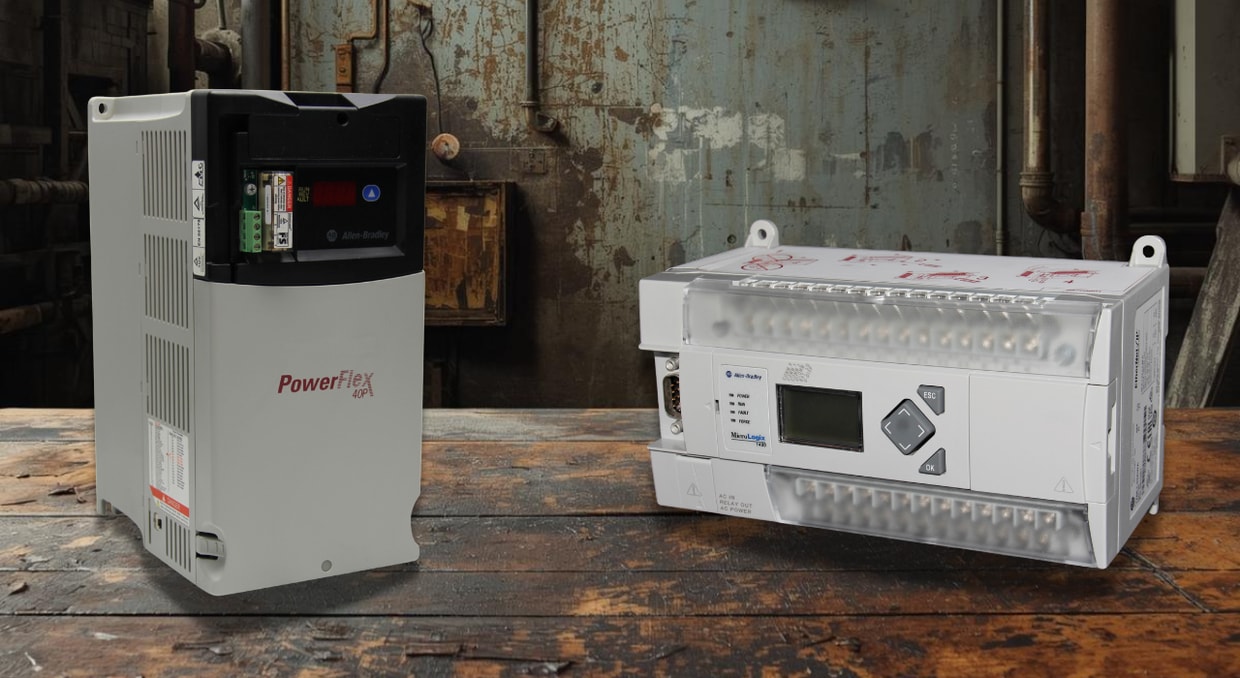
Factories aren’t always clean, calm, or predictable. Some are built beside saltwater ports, where humidity clings to every surface. Others hum deep inside steel plants, where air shimmers with heat and fine metal dust. A few spend their days being blasted with water and cleaning agents strong enough to strip paint. Yet, through all of this, the automation keeps running, or at least, it should.
Allen-Bradley has built a reputation on not only control, but for endurance and reliability. These three key qualities is exactly what you need to have equipment that not only works in harsh environments but also thrives and can withstand what you throw at it. But what exactly constitutes a “harsh environment” and how does Allen-Bradley hardware combat it? Today we will be going over that and more.
What is “Harsh”?
“Harsh” is a relatively broad word. It could describe the feeling of flying down a dirt path in an old sedan, or maybe even the unrelenting sun in a desert. In automation, it describes any condition that threatens the lifespan or reliability of control hardware. Take moisture, for example. It can cause shorts, corrode circuit traces, cause rust, and introduce erratic readings that drive maintenance teams mad. Heat is equally cruel, accelerating component aging and pushing electrolytic capacitors to their limits.
Dust is just as dangerous as it can catch fine powders or metal particles, creating conductive bridges or blocking cooling fans within poorly sealed panels. Then there are chemical vapors that attack plastics and insulation, while vibration works steadily to loosen terminals and connectors over time. Even ultraviolet light plays a role in outdoor setups, breaking down cable sheaths and display covers after years of exposure.
What makes automation equipment truly robust isn’t one single material or coating but a layered design approach. Allen-Bradley’s philosophy has always been to anticipate failure points and eliminate them long before installation. It’s why their controllers and drives not only boast certifications but careful engineering that considers what happens after ten summers on a loading dock or a decade of thermal cycling in a kiln.
Built for the Elements
When it comes to protecting hardware from more rigorous environments, the team at Allen-Bradley had to come up with not only strong materials but thoughtful engineering that anticipates abuse. They had come up with several solutions based on use case, such as:
Conformal Coatings
A conformal coating is a thin polymer layer applied to circuit boards that acts like invisible armor. When moisture or condensation forms, it can’t creep between components and short them out. Instead, it beads and evaporates harmlessly. Allen-Bradley’s conformal coatings are specifically selected for chemical resistance, often using silicone or acrylic formulas rated to withstand solvents, humidity, and even salt fog.
Enclosure Design
Another way Allen-Bradley innovates with protection is by designing their enclosures with proper IP and NEMA ratings, taking a “sealed” enclosure up a notch. An IP66 enclosure, for instance, can handle powerful water jets, while an IP69K enclosure can survive the kind of high-pressure washdowns common in food and beverage plants. NEMA 4X enclosures go further, protecting against corrosion and outdoor weathering, which is present in refineries and coastal facilities.
Sealed Connectors and Gaskets
These complement the rated enclosures as the weak point to any system is its opening, which so happens to be where you route cables or wires. Allen-Bradley’s connectors often use compression fittings, double O-rings, or molded seals that prevent water and dust ingress even after years of expansion and contraction from temperature swings. For example, in PowerFlex drives and Stratix switches, the backplane and I/O connections are often recessed or shielded to minimize exposure to airborne debris.
Material Selection
Material selection is one of the top considerations when designing a product. Stainless steel housings, corrosion-resistant plating, and UV-stable polymers ensure that what looks rugged on day one still looks (and performs) rugged after ten years. Allen-Bradley even considers paint chemistry for harsh environments.
Thermal Management
Harsh environments aren’t only salt and chemicals, but could also be intense temperatures. Allen-Bradley drives use heat sinks and intelligent fan control to draw heat away from sensitive components, while maintaining efficiency. Certain PowerFlex models, such as the PowerFlex 525, are designed for ambient temperatures up to 158°F (70°C), using coated circuit boards and high-temperature capacitors to keep running where other drives derate or shut down.
Corrosive and Marine Environments
If you live within the salt belt of the US, you understand just how damaging salt is to the frame of your car. This effect is also pronounced in marine environments, like offshore rigs, shipyards, and coastal refineries. Salt isn’t only present in the water but also in the air. It can be carried by the wind and settle inside control cabinets, eating away at contacts and circuit traces over time.
At the circuit level, conformal coatings protect against sulfur and chlorine gas, which are two of the main culprits in wastewater and marine air. These coatings seal exposed metal on PCBs, preventing the electrochemical reactions that lead to crystal growth and failure. At the housing level, IP54 or higher-rated enclosures (NEMA 12 or 4X) are the standard recommendation, with welded steel or 316 stainless preferred for structural integrity and corrosion resistance.
Even cooling systems are part of the defense strategy. According to Rockwell’s corrosion mitigation guide, sealed air conditioners or heat exchangers prevent corrosive gas infiltration while maintaining safe humidity levels, which is critical for stopping condensation-driven corrosion.
Tire and Rubber Environments
Tire manufacturing and rubber making are pretty nasty processes. They create aggressive atmospheres filled with sulfur compounds, chlorine, and carbon black (the fine particulates from rubber). These gases and particles get everywhere that isn’t sealed, and when combined with heat, humidity, and high airflow needs, they can wreak havoc on electronic components. The result: even well-protected control components can corrode prematurely if mitigation isn’t aggressive and multi-layered.
Allen-Bradley had developed Extra Tough (XT) variants of drives and control products to withstand these environments better. The XT models combine conformal coatings with additional design changes to resist corrosion over more extended deployments. Allen-Bradley also claims that in a field deployment, a large tire manufacturer went from having corrosion-based failures every 16-18 months to having failure rates drop significantly over the years of use when switching to XT drives.
Another point in the failure mitigation strategy is air purification and filtration. Even the cleanest enclosures can be compromised when you open the door or during maintenance. Tire plants often use gas scrubbing filters, sorbent cartridges, or absorption media inside control cabinets to neutralize sulfur or chlorine gas intrusion. Using a small amount of clean, filtered, positive-pressure air inside the cabinet helps keep contaminants out.
Final Thoughts
Allen-Bradley automation equipment proves time and again to be robust enough for hard factory use and beyond the comforts of controlled environments. With options like conformal coatings, specialized enclosure materials, and sealed connectors, you can bet that your hardened Allen-Bradley will survive the test of time in even the most rigorous environments.
If you find that your current hardware lacks the strength to withstand your harsh automation environment, then stop by our store. We sell all kinds of hardened Allen-Bradley equipment, from PowerFlex drives to ControlLogix PLCs, ready to be shipped to your doorstep the same day and backed by our 2-year warranty! We also have a blog here that goes over AC drives specifically in harsh environments.
DO Supply Inc. makes no representations as to the completeness, validity, correctness, suitability, or accuracy of any information on this website and will not be liable for any delays, omissions, or errors in this information or any losses, injuries, or damages arising from its display or use. All the information on this website is provided on an "as-is" basis. It is the reader's responsibility to verify their own facts.