The Role of CNC Machine Parts in Smart Automation with Allen Bradley Kinetix
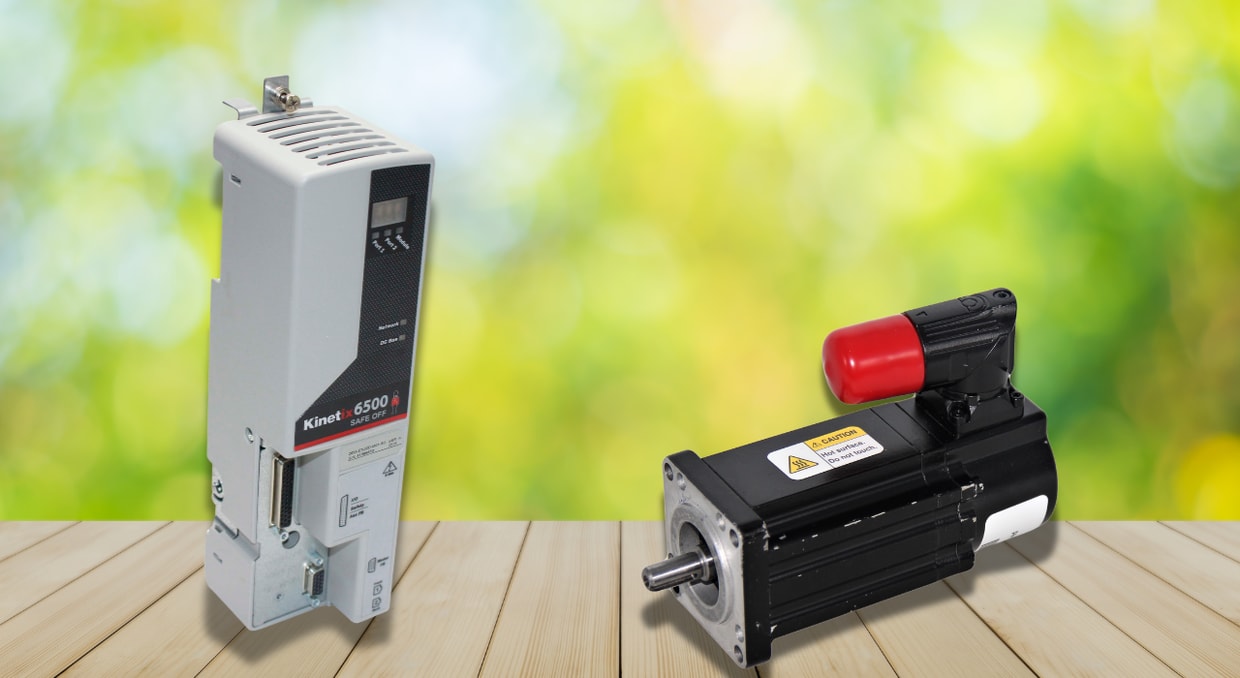
Modern manufacturing has reached a point where traditional CNC machine parts are no longer evaluated in isolation. Their performance is now inseparable from the motion control systems that command them. The Allen-Bradley Kinetix series represents one of the most advanced servo drive platforms deployed in CNC-integrated environments today. Understanding how individual CNC machine parts interact with Kinetix servo drives, amplifiers, and integrated motion controllers is essential for engineers designing high-throughput, deterministic automation systems. This article examines that interaction in a technical sequence: from mechanical axis components to closed-loop drive architecture, from feedback resolution to EtherNet/IP-based command propagation.
Foundational CNC Machine Parts and Their Functional Classification
Before mapping CNC machine parts to a Kinetix-driven architecture, it is necessary to categorize them. CNC machine parts fall into three primary subsystems: mechanical transmission components, actuation elements, and feedback and sensing assemblies.
Mechanical transmission components include ball screws, linear guideways, rack-and-pinion assemblies, and spindle bearing cartridges. These convert rotary servo output into linear or rotational tool motion. Precision-ground ball screws with C3 or C5 lead accuracy grades are standard in CNC machining centers; their lead error and backlash characteristics directly influence the position loop tuning parameters within the Kinetix servo drive firmware.
Actuation elements, servo motors, spindle motors, and torque motors are the electromechanical interfaces between drive output and mechanical load. When paired with the Kinetix 5700 or Kinetix 5500 drives, rotary servo motors such as the Allen-Bradley MPL and MPS series are sized to match reflected inertia ratios, typically targeting a load-to-motor inertia ratio below 10:1 for rigid CNC axis applications.
Feedback and sensing assemblies, encompassing linear encoders, rotary encoders, resolvers, and linear scales, provide the position and velocity data that the Kinetix drive’s motion controller uses to close the servo loop. High-resolution feedback, such as 23-bit absolute encoders, is supported natively by the Kinetix 5700 dual-axis drive’s feedback interface, enabling sub-micron positioning resolution on precision CNC machine parts.
Allen-Bradley Kinetix Architecture Overview
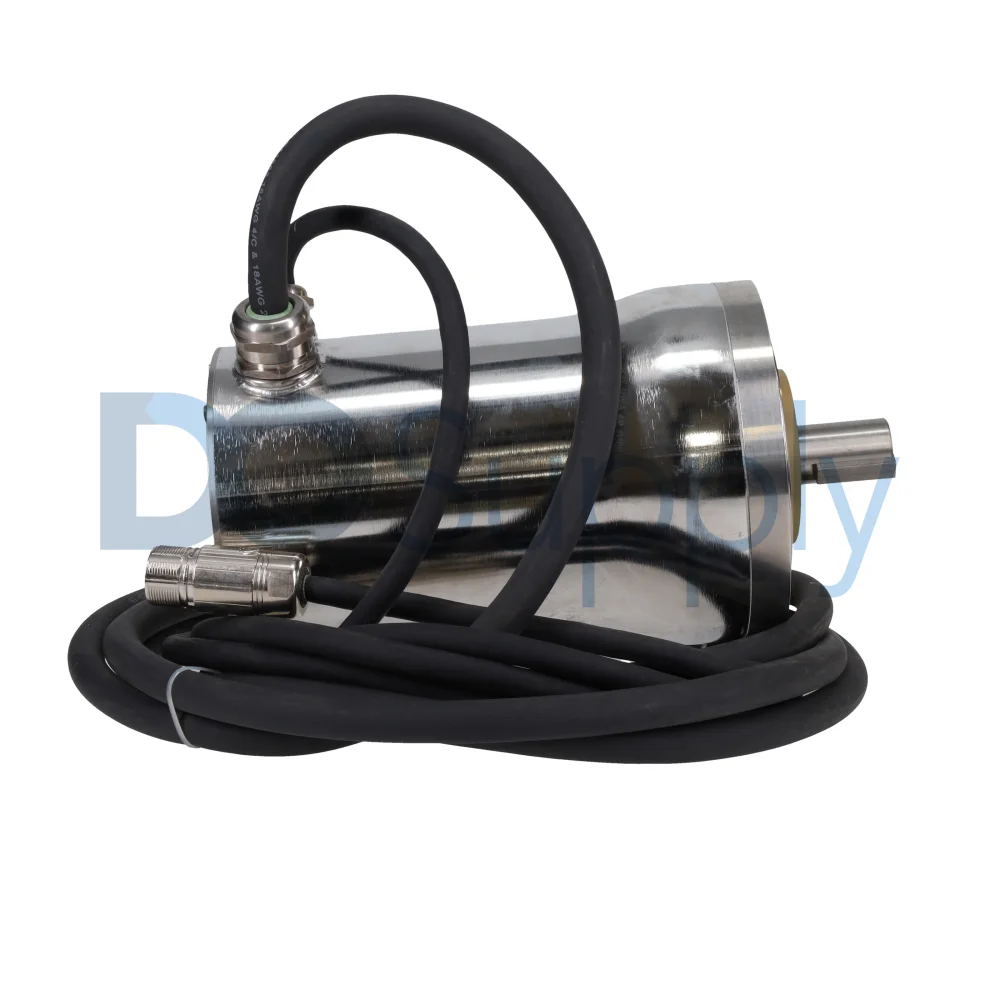
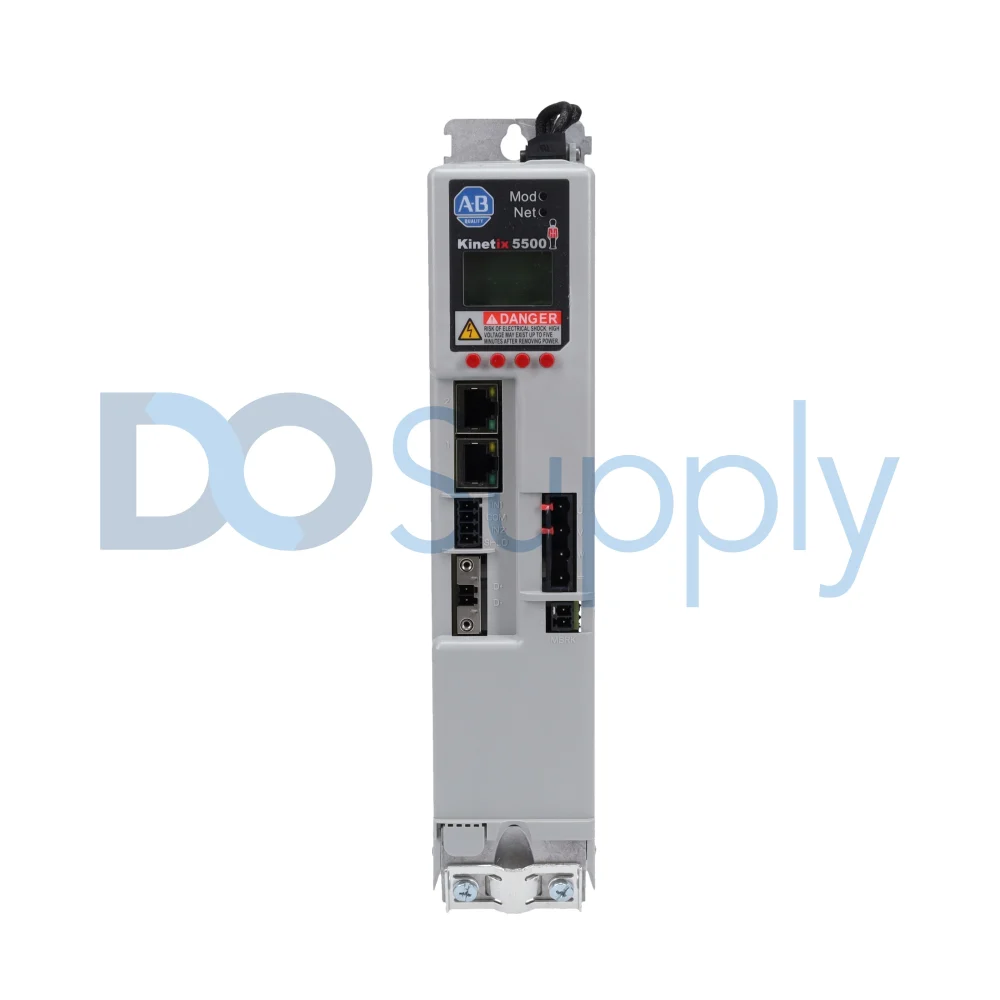
The Kinetix product family spans several drive platforms, each suited to specific CNC automation topologies:
- Kinetix 5700: A DC bus-sharing, multi-axis servo drive system designed for high-axis-count CNC machining centers. Supports iTRAK, linear motor, and rotary servo configurations. Communicates via Integrated Motion on EtherNet/IP (IME).
- Kinetix 5500: A single-axis or multi-axis drive that supports CIP Motion. Commonly used in retrofit CNC applications where legacy CNC machine parts must interface with modern servo intelligence.
- Kinetix 6500: A modular legacy drive suited to heavy-duty milling and turning centers with large spindle loads. We have a deeper dive on the Kinetix 6500 in this article here.
- Kinetix 350: Compact, single-axis drive for smaller CNC machine parts configurations such as engravers, laser positioners, and toolchangers.
All Kinetix drives operate within Rockwell’s Logix control ecosystem, integrating directly with Allen-Bradley ControlLogix or CompactLogix PACs via EtherNet/IP. The CIP Motion (Common Industrial Protocol Motion) standard handles time-synchronized axis command and status exchange at configurable Requested Packet Intervals (RPIs) as low as 250 microseconds, which is critical for synchronizing multi-axis CNC interpolation.
Ball Screws and Linear Axes: Interfacing Mechanical Compliance with Drive Tuning
The ball screw is arguably the most mechanically critical of all CNC machine parts. Its dynamic behavior, including axial stiffness, preload, lead accuracy, and thermal expansion, must be accurately modeled within the Kinetix motion controller’s axis configuration.
Within the Logix motion architecture, each physical axis driven by a Kinetix drive is represented as an Axis Object (AXIS_CIP_DRIVE). Parameters such as Travel per Motor Revolution (TPMR), Backlash Compensation, and Friction Compensation are configured to the ball screw’s mechanical specification sheet. For a 10mm lead ball screw driven by an MPL-B430P motor with a 23-bit encoder (8,388,608 counts/rev), the system achieves a theoretical position resolution of approximately 1.19 nanometers per count, before accounting for mechanical compliance.
The Kinetix drive’s Adaptive Tuning features (available in firmware 9.xx+) dynamically adjust proportional position gain (Kp), velocity feed-forward, and velocity loop bandwidth to compensate for varying cutting loads imposed on the ball screw. This is particularly relevant during heavy interpolated milling passes where the axial load fluctuates rapidly, inducing compliance-driven position error.
Spindle Drives and Kinetix Integration
The spindle is among the most power-demanding CNC machine parts, requiring independent speed control across a wide RPM range and precise torque management during threading and rigid tapping cycles. In Kinetix-integrated CNC architectures, spindle motors are driven either via dedicated Kinetix 6500 drives or through orientation mode on Kinetix 5700 modules when coordinated C-axis functionality is required.
For rigid tapping operations, the Kinetix spindle axis must be synchronized with the Z-axis feed drive in real-time. The synchronization tolerance between the spindle encoder position and the Z-axis linear position must be maintained within the programmed pitch tolerance, typically ±0.005mm for M6 threads in aluminum at 3,000 RPM. This is achieved through CIP Motion coordinated axis groups defined in the Logix controller’s motion task. When electronic camming is used, MCCP calculates the cam profile, and MAPC or MATC uses that profile to synchronize the slave axis with the master axis. Spindle bearing cartridges, precision CNC machine parts manufactured to P4 or P2 ABEC tolerances, must operate within the thermal and radial load ratings specified during axis commissioning. Excessive bearing preload manifests as increased motor current, as detected by the Kinetix drive’s Torque Reference Output diagnostic tag.
Linear Encoders and Closed-Loop Position Feedback
Position feedback fidelity defines the achievable contouring accuracy of the entire CNC system. While motor-mounted rotary encoders provide velocity feedback at the drive level, linear encoders mounted directly to the machine carriage provide true closed-loop position feedback, eliminating ball screw lead error from the servo loop, a topology known as full-closed loop or dual-loop control.
The Kinetix 5700 natively supports a dual-loop configuration through its Secondary Feedback interface, accepting encoder signals from external linear scales (Heidenhain, Renishaw, Fagor) via the Single-Ended TTL or Sine/Cosine 1 Vpp interface on the drive’s Auxiliary Feedback (AF) connector. In a dual-feedback setup, Motor Feedback is assigned to the primary encoder port and Load Feedback is assigned to the auxiliary port. The drive’s position loop then closes on Load Feedback while velocity estimation uses Motor Feedback, combining resolution with bandwidth.
For high-precision CNC machine parts such as precision boring heads or micromachining spindles, linear encoder resolutions of 0.001mm (1-micron) to 0.0001mm (100nm) are typical, interpolated to even finer resolution by the encoder interpolation electronics before entering the Kinetix feedback interface.
Tool Changer Mechanisms and Auxiliary CNC Machine Parts Control
Automatic Tool Changers (ATC) are a class of CNC machine parts that require coordinated motion sequencing rather than continuous-path control. The ATC carousel, arm actuator, and tool clamp/unclamp cylinder must be sequenced in strict kinematic order, with position and state verification at each step.
In a Kinetix-integrated CNC panel, ATC servo axes (typically carousel index motors) are configured as position axes using the MAM (Motion Axis Move) instruction block in Logix. Tool position indexing uses a modulo position configured on the axis object, enabling the shortest-path rotation algorithm to be executed natively within the CIP Motion command.
Pneumatic clamp/unclamp cylinders, while not servo-driven, are coordinated with the Kinetix axis motion through Motion State Output (MSO) tags and motion-synchronized output cam functions, ensuring the spindle’s draw-bar releases only when Z-axis velocity has reached zero, and the spindle orientation axis has locked to within ±0.1°.
Predictive Maintenance Integration Through Kinetix Diagnostics
Smart automation demands that CNC machine parts monitoring extend beyond basic limit switches and alarm states. The Kinetix 5700 platform exposes an extensive diagnostic data set via EtherNet/IP implicit and explicit messaging, enabling real-time condition monitoring of mechanical CNC machine parts through drive-level electrical signatures.
Key diagnostic parameters available as AXIS_CIP_DRIVE tags in Logix include:
- Motor Current (MotorCurrentRMS): Sustained elevation indicates bearing wear, contamination, or ballscrew preload loss.
- Velocity Error (VelocityError): Spike patterns correlate with ballscrew backlash growth or coupling failure.
- Torque Saturation (TorqueSaturationLevel): Persistent saturation indicates mechanical overload or lubrication failure in guideways.
- Encoder Status (MotorFeedbackLoss): Single-bit fault tag providing immediate detection of encoder cable failure, a critical CNC machine parts failure mode.
These diagnostic values can be collected over time for trend analysis and threshold-based maintenance alerts. When that data is incorporated into a broader edge or plant-level analytics strategy, it can also support earlier detection of wear patterns in high-use CNC machine parts such as ball screws and spindle bearings.
Final Thoughts
In conclusion, the evolution of CNC machine parts from passive mechanical components to active, monitored nodes within an Allen-Bradley Kinetix ecosystem represents a fundamental shift in how precision manufacturing systems are designed, commissioned, and maintained. Every element, ball screw, spindle bearing, linear encoder, ATC servo arm, now contributes diagnostic, positional, and load data that the Kinetix drive platform actively consumes to maintain optimal servo performance. Through CIP Motion synchronization, dual-loop feedback architectures, adaptive tuning algorithms, and real-time diagnostic tag exposure over EtherNet/IP, the Kinetix platform transforms discrete CNC machine parts into an integrated, intelligent motion system capable of meeting the deterministic demands of Industry 4.0 manufacturing environments.
From Kinetix 5700 and 5500 servo drives to MPL and MPS series motors, we at DO Supply carry the Allen-Bradley motion control hardware that keeps your CNC machines running at peak performance. We also offer expert repair services for Kinetix drives and servo motors, so if your diagnostic tags are pointing to a component issue, we can help you get back up and running fast. All of the products we ship are tested and backed by our two-year warranty. So give our sales team a call to discuss your motion needs.
DO Supply Inc. makes no representations as to the completeness, validity, correctness, suitability, or accuracy of any information on this website and will not be liable for any delays, omissions, or errors in this information or any losses, injuries, or damages arising from its display or use. All the information on this website is provided on an "as-is" basis. It is the reader's responsibility to verify their own facts.