Hidden Costs of Not Using an AC Drive
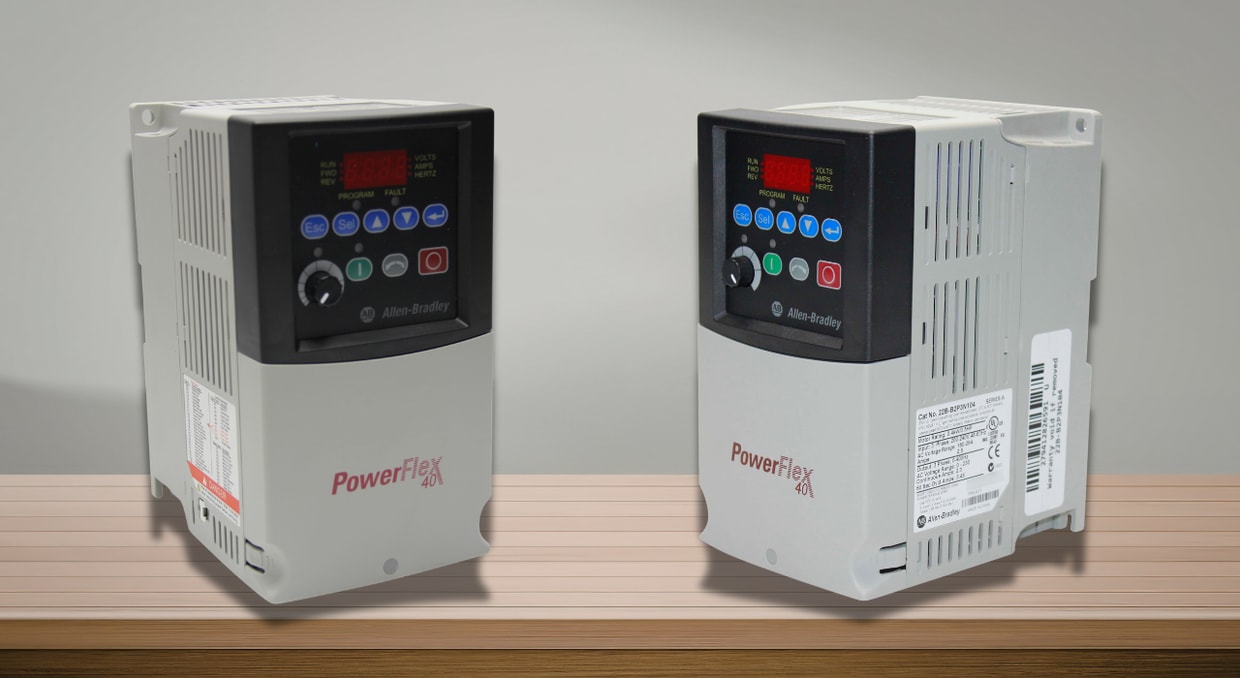
It’s no secret that AC drives, particularly variable frequency drives, have been efficiency and productivity boosters for automation facilities. Manufacturers boast about how their drives can pay for themselves with the money you save with reduced energy costs, while also reducing mechanical wear throughout the system
For those who want to stick to their guns and continue using their conventional motor controller until it breaks, there is a cost to waiting. AC drives are effective because they address many of the inherent inefficiencies and mechanical stresses associated with controlling motor speed using fixed-speed equipment. Without one, a facility may be paying a hidden tax through wasted energy, increased maintenance, reduced process control, and premature equipment wear.
The Upfront Cost of an AC Drive Can Be Misleading
One of the biggest arguments against installing an AC drive is often the initial cost of the system. One may argue that an AC drive may be more difficult to install, and if done improperly, could lead to even more unexpected costs. For this reason, we wrote an article here covering the finer details of installing AC drives and what to avoid.
A conventional starter, contactor, or across-the-line motor control setup is usually cheaper to purchase and simpler to install. After all, if the motor only needs to turn on and off, spending the extra cash on an AC drive might seem like a waste.
The shortsightedness of this comparison only looks at getting the motor turning, not what happens after. It doesn’t account for how much energy the motor will consume, how much stress each aggressive startup adds to the system, or how expensive future process changes may become. This lower upfront price begins to lose its advantage when the system depends on throttling valves, dampers, mechanical brakes, or repeated maintenance to control a motor that only knows how to put the pedal to the metal.
The Cost of Full-Speed Operation
When driving a car, you don’t take off from every green light by slamming the pedal down, then pump the brake as hard as you can when you need to stop. Not only is this horrible for your car’s fuel economy, but the stress on both the driver and the car from the rapid acceleration and deceleration can accumulate to the point where the check engine light comes on.
This concept is a lot like motor control. With an across-the-line starter, the motor is either at full speed or stopped. While this may be acceptable for equipment with a constant load, it becomes wasteful when the amount of work required changes throughout the day. A fan may not always need maximum airflow, and a pump may not always need to deliver its full rated flow. Running either one at full speed means the facility continues paying for maximum output, even when the process only requires a fraction of it.
Usually, fixed-speed systems are compensated with dampers, throttling valves, bypass lines, or other mechanical restrictions. Sure, these methods can reduce the amount of air or liquid reaching the process, but they don’t necessarily reduce the motor’s energy consumption proportionally. The motor and driven equipment are still working to produce output that is then restricted or redirected.
Systems that start directly across the line also experience high starting current and a sudden application of torque. The motor may be designed to withstand this, but belts, couplings, bearings, gearboxes, and the rest of the driven system must still absorb the abrupt acceleration. Over time, this repeated stress can contribute to vibration, belt wear, loose couplings, seal damage, and other maintenance problems. If these warning signs are not caught early, the eventual repair bill may also include the much higher cost of unplanned downtime.
Why Variable Speed Matters
An AC Drive approaches the problem differently by reducing the motor’s speed to match the actual demand, reducing the need for any mechanical compensation. This can be especially effective with centrifugal pumps and fans because their power requirements fall sharply as speed decreases. Under ideal affinity-law conditions, flow changes in proportion to speed, while power changes approximately with speed cubed. For example, reducing speed to 80% can theoretically lower the required power to about 51% of full-speed power. Actual savings will depend on the equipment, system curve, operating point, drive efficiency, and how much of the load is static rather than friction-based.
An AC drive can also gradually accelerate and decelerate the motor instead of applying full voltage and torque all at once. This limits starting current and reduces the mechanical shock transferred into the load. However, if a facility only needs smoother starting and stopping without speed control during operation, a soft starter may provide the necessary protection at a lower cost.
The cost of full-speed operation might not stand out over a single electric bill, but after hundreds or even thousands of operating hours of producing more work than the system needs, it may add up quickly.
The Cost of Power Factor
Power Factor (PF) is the ratio of real power (W) to apparent power (VA). Real power, measured in watts, is the portion of electrical power that performs useful work or is dissipated as heat and other losses. Apparent power is the combination of real power and reactive power. Reactive power is a measure of power that oscillates between the source and the load, which does not produce meaningful work. Depending on the utility and service agreement with power companies, a facility might also incur demand or power-factor penalties if its system power factor is too low.
That said, an AC motor doesn’t convert all the power it receives into useful mechanical work. Induction motors require reactive power to establish their magnetic fields, especially when lightly loaded, which often results in a low power factor. Poor power factor does not necessarily make the motor consume more real energy to perform the same work. However, the additional current must still pass through conductors, transformers, switchgear, and other distribution equipment. That can increase resistive losses, consume electrical-system capacity, contribute to voltage drop, and leave less room for additional loads.
An AC drive helps improve the power factor, as a typical drive has a PF of 0.96, while the utility company requirement may be 0.9. However, a conventional six-pulse drive also draws non-sinusoidal input current, creating harmonics that lower its true power factor. If you would like to learn more, we have an article on harmonics here as well!
When an AC Drive May Not Be Necessary
Despite their advantages, an AC drive is not a silver bullet for all systems or the right choice for every motor. Sometimes that conventional starter may still be more practical when the motor always runs at one speed, operates near full load, or starts infrequently. In these cases, the potential energy and maintenance savings may not be enough to justify the added cost and complexity of a drive.
Sometimes the better option is a soft starter, particularly when the motor only needs a smoother start or stop and will run at full speed during normal operation. A soft starter can reduce starting current and mechanical shock without the added cost and complexity of continuous variable-speed control. However, it will not provide the same operating-speed control or variable-speed energy savings as an AC drive.
Final Thoughts
Keeping a conventional motor controller may come with some secret costs over time, as we discovered. From poor power factor to increased maintenance on system components, these costs do add up, especially when unplanned downtime is involved. While an AC drive is not the right solution for every motor, it can substantially improve efficiency, process control, and mechanical reliability in systems that require variable speed or controlled acceleration and deceleration.
If your system can benefit from an AC drive or a soft starter, let us at DO Supply be your one-stop solution for all things automation. We carry AC drives from companies you trust, such as Allen-Bradley with its PowerFlex series and Mitsubishi with its FREQROL line. If you are unsure that an AC drive is the solution you’re looking for, why not give our customer support team a call? We can help you find a match for your system. As always, thank you for reading.
DO Supply Inc. makes no representations as to the completeness, validity, correctness, suitability, or accuracy of any information on this website and will not be liable for any delays, omissions, or errors in this information or any losses, injuries, or damages arising from its display or use. All the information on this website is provided on an "as-is" basis. It is the reader's responsibility to verify their own facts.