The SMC Dialog Plus: Still Viable or Too Obsolete?
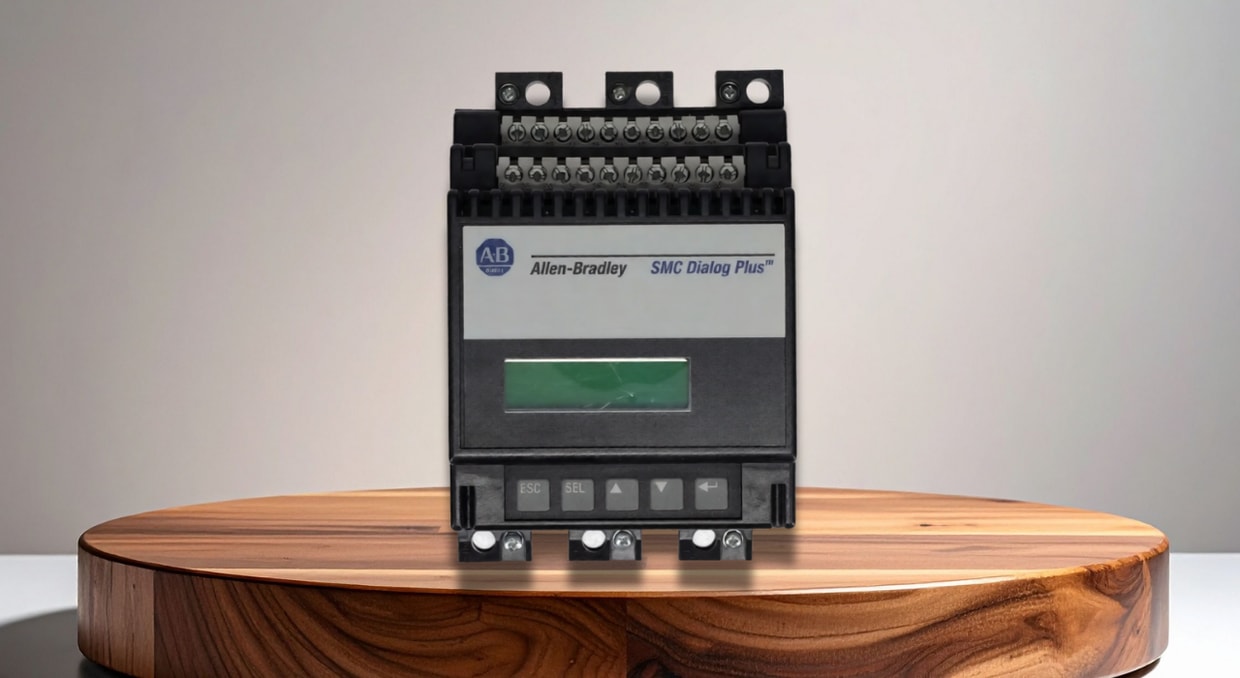
Automation equipment gets phased out all the time. We see it with PLCs, drives, and everything in between. However, obsolescence doesn’t mean the equipment is unusable or should be replaced immediately. This is the case for the SMC Dialog Plus soft starter family. Discontinued in 2014 as Rockwell phased out the mature product family, the successor to this soft starter family is the SMC-3, SMC Flex, or the SMC-50. The question is now whether the SMC Dialog Plus is still worth using or if its newer replacements are a better buy.
Why Choose a Legacy Soft Starter?
There are many reasons why someone would want a legacy product over a newer offering. Sometimes it’s just easier to get the same product you know will be reliable and work for your system. Other times the cost of upgrading might not be worth the potential productivity increase of a newer system. Often, a facility needs a direct replacement as soon as possible when their old one breaks. There is no time to fit, program, and upgrade to newer hardware when every minute of downtime bleeds money.
This alone makes for a compelling argument for the SMC Dialog Plus. If you know it works and it’s perfectly fit for the job, then why change it?
Why it Might be a Good Idea to Replace it
Unit and parts availability are very good reasons to replace an obsolete product. As equipment gets older, the pool of replacements dries up, and finding exact replacements can become difficult or even expensive. So, while the SMC Dialog Plus does have a fairly active secondary market, Rockwell Automation is no longer producing new starters or supporting the product as an active family.
This means that a facility will have to become increasingly dependent on used, refurbished, or new old stock equipment to keep their system running. Finding a general replacement may not be difficult, but finding the same current rating, voltage configuration, or control option several years from now could be another story.
What the SMC Dialog Plus Brings to the Table
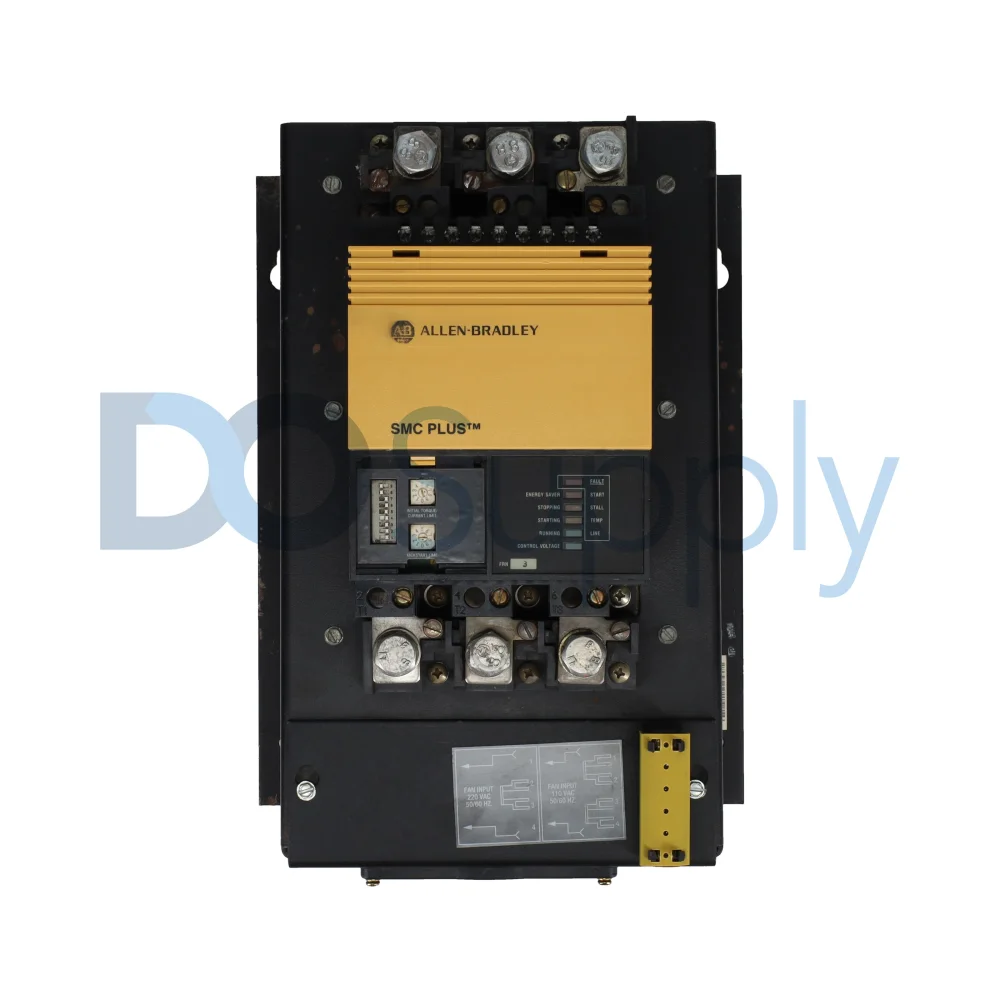
Despite being obsolete, the SMC Dialog Plus packs quite a punch in both raw power and feature sets. Rockwell offered the family for 200 to 600 VAC systems, with open-controller ratings ranging from 24 to 1,000 amps. Depending on the model, control power could be 100 to 240 VAC or 24 VAC/DC. The Dialog Plus is also a fully solid-state starter, meaning there is unfortunately no integrated bypass contactor, although an external bypass can be added.
Starting Modes and Control Options
The SMC Dialog Plus comes with many different core starting modes, such as Soft Start with selectable Kickstart, Current Limit Start, Dual Ramp Start, and Full Voltage Start. Soft Start allows initial torque to be programmed from 0 to 90% of locked-rotor torque with a ramp time of up to 30 seconds, while Current Limit Start can restrict starting current from 50 to 600% of motor full-load current. Dual Ramp also provides two separate starting profiles for changing load conditions.
On top of these starting profiles, Rockwell offered several optional control packages, with only one being able to be installed onto a standard unit:
- Soft Stop: Adjustable 0–60 second voltage ramp-down
- Pump Control: Controlled acceleration and deceleration for centrifugal pumps
- Preset Slow Speed: 7% or 15% forward speed and 10% or 20% reverse speed
- SMB Smart Motor Braking: Electrical braking without external braking resistors or speed sensors
- Accu-Stop: Combines braking with preset slow-speed positioning
- Slow Speed with Braking: Slow-speed positioning combined with controlled braking
Protection, Monitoring, and Communication
Along with its core starting and stopping features, the SMC Dialog Plus comes with a few more tricks up its sleeve, like electronic motor overload protection with selectable Class 10, 15, 20, or 30 trip curves. It also protects against:
- Jams
- Stalls
- Underload
- Overvoltage
- Undervoltage
- Phase reversal
- Voltage unbalance
- Excessive starts per hour
- Controller overtemperature
For your monitoring needs, the SMC Dialog Plus can display three-phase current and voltage, kW, kWh, power factor, elapsed operating time, and motor thermal capacity usage. Programming is done conveniently through a five-button keypad and LCD.
Communication is the SMC Dialog Plus’s strong suit and is where it got the Dialog portion of its name, for its ability to “dialog” with various network protocols. A standard SCANport interface allows compatible communication modules to connect the controller to Remote I/O, DeviceNet, and RS-232/422/485 DF1 networks.
How it Stacks Up Against Other SMC Starters
As we mentioned before, the SMC Dialog Plus is currently a legacy device with the SMC-3, SMC Flex, and SMC-50 designed to be its successors. In terms of features and compatibility, the SMC Dialog Plus sits in a weird spot between the three.
Compared to the SMC-3
While the SMC-3 is newer than the SMC Dialog Plus, it’s actually the most basic starter of the four. Rockwell wanted to design a starter that provides true three-phase control, an integral bypass, overload protection, and motor and system diagnostics in a much more compact package. The SMC-3 family is rated from 3 to 480A with five modes of operation:
- Soft Start
- Current Limit Start
- Selectable Kickstart
- Coast-to-rest
- Soft Stop
In comparison to the SMC-3, the SMC Dialog Plus is considerably more feature-packed in several areas. It provides built-in metering, keypad and LCD programming, SCANport communications, and a much broader collection of optional application controls. However, the SMC-3 does have one major hardware advantage in the form of its internal bypass, something the fully solid-state Dialog Plus does not have.
Choosing the SMC-3 will get you a newer starter, but will cost you functionality, especially when it comes to communication. The SMC-3 also does not have any factory-installed communication module options.
More Like the SMC Flex
Head-to-head, the SMC Flex is much closer to what the SMC Dialog Plus was designed to be. Rather than stripping things back to the essentials, the Flex maintains the idea of a programmable, feature-heavy soft starter. It is available from 5 to 1,250 amps, supports nine start and stop modes plus three slow-speed modes, includes electronic overload protection, an internal bypass contactor, a backlit LCD, and optional communications. Pump and braking control options are also available.
This makes the Flex feel more like an evolution of the Dialog Plus rather than a completely different class of starter. While both will bring an operator more control over a basic soft starter, the Flex comes with the added benefit of a newer architecture and an internal bypass. There are still areas where the old Dialog Plus holds up surprisingly well. It already provided amps, volts, kW, kWh, power factor, elapsed time, and motor thermal-capacity metering, along with programmable protection and communication capabilities.
Surpassed by the SMC-50
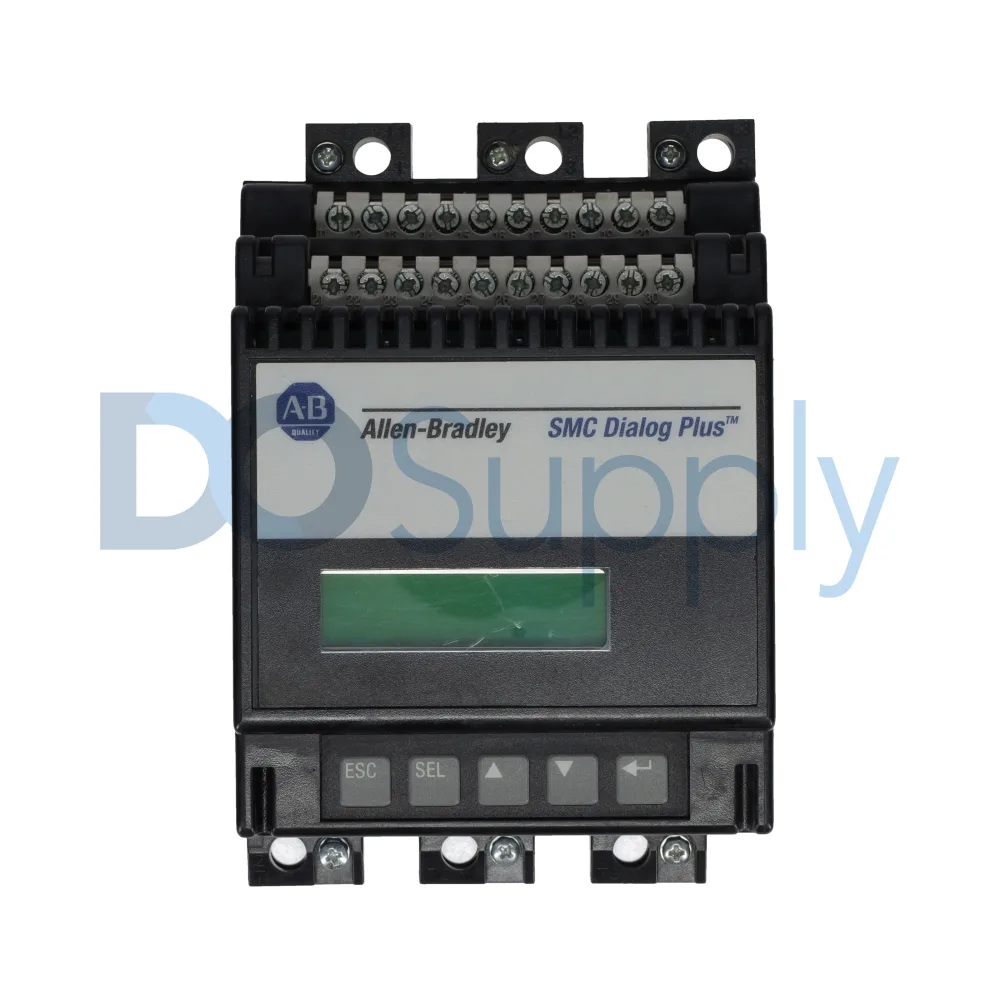
The SMC-50 is the heavy hitter of the four, topping the Dialog Plus with more capabilities. Right off the bat, the SMC-50 has 17 start and stop modes, three slow speed modes, three hardware expansion ports, advanced monitoring and protection, and optional communications. Not only that, but it comes in either a fully solid-state line that covers 90 to 520 amps, or with an internal bypass that covers 108 to 480 amps.
When choosing the SMC-50, you also get more control methods that aren’t available on the SMC Dialog Plus. For instance, sensorless motor-control algorithms allow the SMC-50 to provide torque and speed control for applications such as centrifugal pumps and high-inertia loads, as well as linear acceleration and smoother pump starting and stopping.
The SMC-50 stands as a capable soft-starter that is pushing the boundaries with its advanced control features. However, this doesn’t necessarily make it the best replacement for the SMC Dialog Plus. If an existing Dialog Plus is only being used for soft starting, current limiting, overload protection, and some basic monitoring, much of the SMC-50’s capability may never be used.
Final Thoughts
The SMC Dialog Plus, while a legacy starter, still provides a feature-rich soft starter with capable communication options. With a robust set of starting and stopping options, communication capabilities, and device protections, it’s easy to see why the Dialog Plus has stuck around. With new SMC options available, it still holds its own against the SMC-3 and even goes toe-to-toe with the SMC Flex. Though it does fall short when compared to the SMC-50.
Overall, the SMC Dialog Plus does come with its drawbacks, and upgrading to the newer SMC platform does give users different avenues to pick from. The SMC-3 can simplify the system, the SMC Flex most closely matches the Dialog Plus’s original role, and the SMC-50 makes the most sense when the goal is to upgrade rather than replace.
For those looking for a replacement SMC Dialog Plus, or considering upgrading to a newer platform, we at DO Supply have you covered. Stop by our site and browse our selection of SMC soft starters, or even give our team a call if you’d like more help deciding what would be best for your system. We stand by our products and offer a two-year warranty so you can have that peace of mind when shopping with us. If you’d like to learn more about the SMC Dialog Plus, we have an article here covering common mistakes and how to avoid them.
DO Supply Inc. makes no representations as to the completeness, validity, correctness, suitability, or accuracy of any information on this website and will not be liable for any delays, omissions, or errors in this information or any losses, injuries, or damages arising from its display or use. All the information on this website is provided on an "as-is" basis. It is the reader's responsibility to verify their own facts.