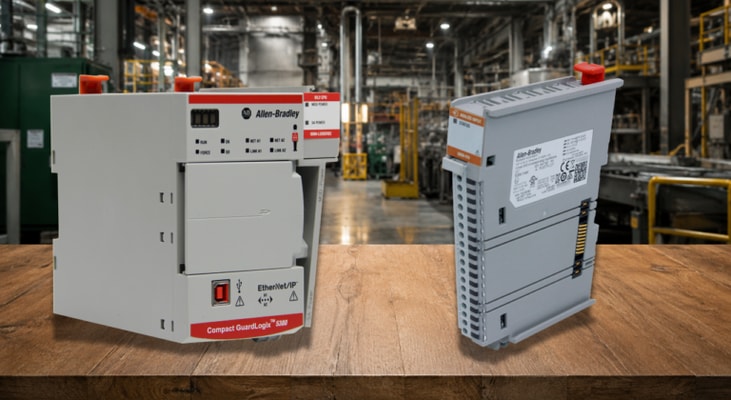
Although a PLC installed on a vibrating conveyor frame in a steel mill and a PLC sitting in a climate-controlled control room can belong to the same product family, the technical choices made for each installation are very different. Compared to traditional factory automation, industrial control systems utilized in hazardous or toxic industrial environments need to have far more robust designs and better environmental ratings. Corrosive vapors, conductive dust, explosive gases, excessive humidity, loud electrical noise, and extremely high or low temperatures can all be found in these settings. Buying a more costly processor is not the only option when designing a PLC system for these circumstances. Conformal coating, vibration mounting, thermal management, enclosure selection, EMI shielding, and hazardous area classification are all systems engineering tasks that must be completed at different stages of the design process. Understanding the particular environmental stresses the PLC...
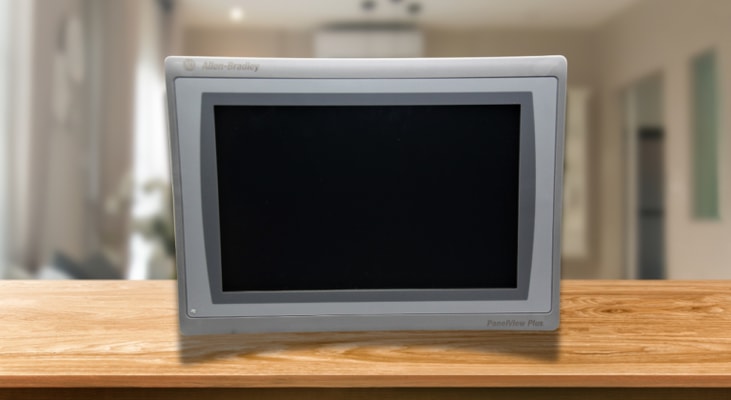
Modern mobile machinery and modular skid systems rely on Human Machine Interface (HMI) devices for real-time visibility, reliability, and durability in rugged operating environments. Rockwell Automation PanelView operator interfaces are designed for machine-level monitoring, control, diagnostics, and visualization. When properly mounted and protected, PanelView terminals can be used on portable industrial equipment, mobile skids, and machine-mounted control stations where operators need local visibility into machine status, alarms, diagnostics, and process conditions. This allows operators to quickly understand machine status and respond to faults and process changes. PanelView Plus 7 Standard terminals are designed for easy programming and integrate with Rockwell Automation architectures. These interfaces dynamically visualize operating information, making them suitable for systems that require quick operation and troubleshooting. The PanelView Plus 7 Standard series is intended for...
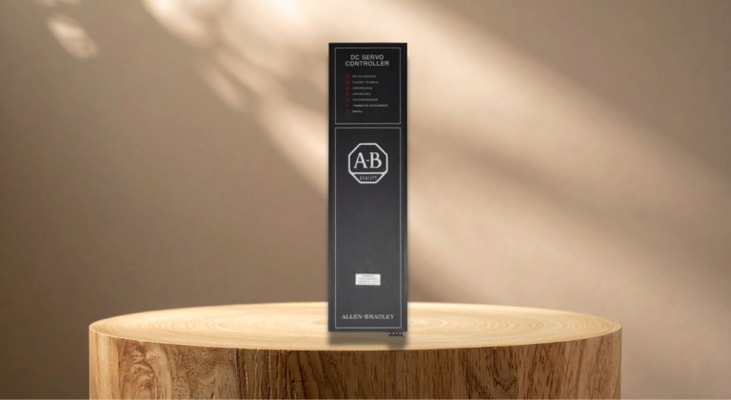
Safety is the foundation of hazard-free and reliable industrial applications. DC drives operate at hazardous current and voltage levels to regulate the field current and armature voltage, thereby precisely controlling motor speed, torque, and direction. Therefore, strict adherence to established electrical safety protocols such as proper grounding, isolation, and Lockout/Tagout (LOTO) procedures, as well as compliance with IEC 61800-5-1 standards, is essential in DC drive systems. It helps isolate dangerous voltages and minimize arc flash hazards, protecting both personnel and machinery from catastrophic electrical faults. This article provides a detailed technical analysis of the essential safety considerations for designing, operating, and maintaining DC drive systems. A DC drive system is an electronic motor controller designed to regulate the torque, speed, and rotational direction of a DC motor. It achieves this by actively modulating the current and voltage applied to the...
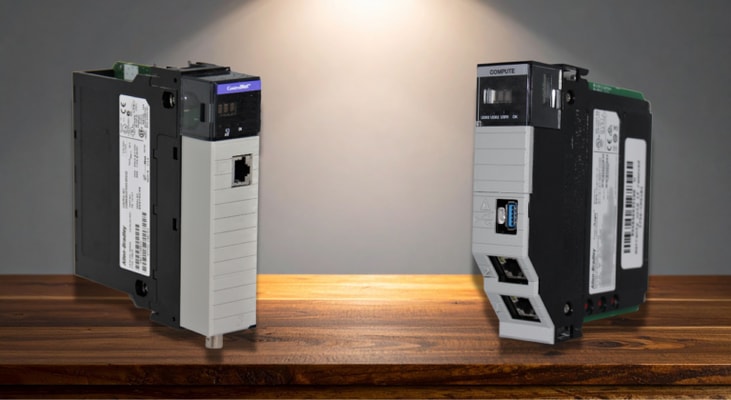
A new installation is not the same as a retrofit project. The selection logic for a ControlLogix processor must take into consideration elements that are absent from a greenfield project, and the risks and constraints are different. A processor must fit into a panel sized for a PLC-5 or SLC 500 chassis, communicate with devices never intended for EtherNet/IP, coexist with existing wiring, and be maintainable by a team that has worked on RSLogix 500 for years. A predetermined set of technical criteria must be followed to make the proper choice. That approach is covered from the start in this article. The first task on any ControlLogix retrofit is documenting the full scale of the legacy system, not just the I/O count, but everything the existing controller manages. A practical first pass is to group the 5580 processors by memory class: 1756-L81E for smaller systems, 1756-L82E or 1756-L83E for moderate retrofits, and 1756-L84E or 1756-L85E for larger PLC-5 migrations, high tag counts...
To the untrained eye, wiring a motor to an AC drive, more commonly known as a variable frequency drive, may seem like a simple job of plugging the motor in and routing the wiring to make it look clean. The length of the wires might not even be a concern, because in an ideal world with ideal resistance, it wouldn’t. The problem is that we live in a less-than-ideal world, and the rules of physics are nonnegotiable. Whether it’s traces on a PCB or wires during a motor install, the longer the connection point, the higher the resistance, heat buildup, and voltage drop. This matters more than you might expect when it comes to installing AC drives. Before getting into it, if you would like to familiarize yourself with how an AC drive works, check out this article here ! The inherent design of an AC drive is to output fast voltage pulses rather than a clean sine wave. Each time the AC drive switches, a voltage pulse travels down the motor cable to the motor. With a shorter cable, the pulse...
Choosing the right PLC is one of the most important decisions in an automation or infrastructure project. A well-designed PLC can help minimize commissioning time, reduce stability problems during long-term operation, and lower maintenance costs. In energy-intensive applications, PLCs do more than handle basic logic. They may also support energy optimization, multi-VFD coordination, system monitoring, and long-term lifecycle reliability. The system requirements should drive the PLC selection, not the brand name alone. Start by determining how many I/O points the application requires. A small machine may only need a few dozen I/O points, while a tunnel, pump station, or utility system may require hundreds or thousands across ventilation, drainage, lighting, monitoring, and safety-related equipment. In larger systems, distributed I/O, expansion capacity, remote communication, and reliable backplane or network performance become major selection factors. For applications tied into utility...
The question of whether to replace the row of pushbuttons and selector switches on the HMI eventually arises on practically every classic machine or control panel. One touchscreen rather than twenty separate devices seems like a straightforward surface-level alternative. The engineering response is far more complex. The way the operator interface is wired, how PLC logic processes inputs, how data is logged, and how alerts are displayed are some of the key changes. Everything else that comes into contact with the hardwired safety circuit must remain unchanged. The difference between a clean migration and one that results in unexplained PLC logic rewrites, or safety compliance problems mid-commissioning, is to formally distinguish between these two groups before the project begins. Before discussing what changes, it helps to be precise about what a pushbutton panel is doing at the wire level. Each pushbutton, start, stop, jog, and mode select wires a physical contact directly to a PLC...
Conveyor systems serve as crucial circulatory networks in warehouses, airports, mining operations, food processing plants, and manufacturing industries. Well-designed conveyors drastically reduce manual material handling while improving operational efficiency and ensuring consistent output quality. Allen-Bradley PowerFlex drives are essential components of modern conveyor systems, whose performance relies heavily on precise control of the connected motors. PowerFlex drives utilize advanced control modes, including Sensorless Vector Control (SVC), Volts/Hertz (V/Hz), and TotalFORCE technology (available on the PowerFlex 755T series), to deliver high-precision regulation of motor speed and torque. This highly precise motor control enables smooth acceleration and deceleration of conveyor systems, significantly reducing wear and tear on conveyor belts, gearboxes, and bearings by minimizing mechanical shock. Selecting the correct PowerFlex drive helps minimize system downtime, enhance...
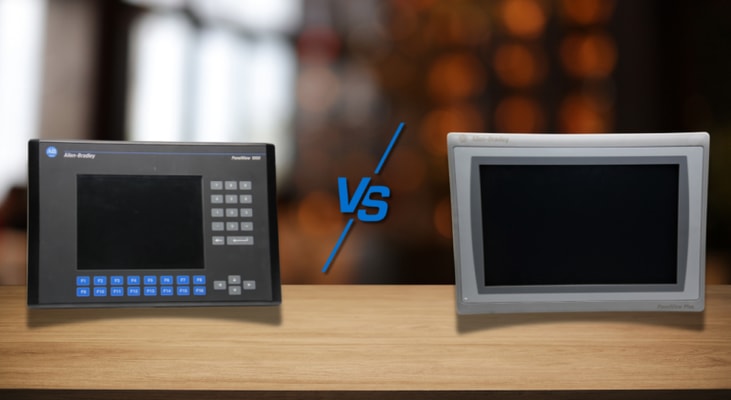
Choosing the right PanelView HMI is no easy task; it’s not just about the screen size or the communication protocol. A major choice is whether a PanelView terminal will be equipped with a keypad, a touchscreen, or both. PanelView models with a keypad enable a variety of functions under harsh operating conditions that touchscreen interfaces cannot. By understanding the true costs and benefits of these input methods, engineers, operators, and maintenance personnel can select the most appropriate PanelView solution for their application. Modern PanelView families vary widely in the input options available. PanelView 5310 and 5510 terminals use touchscreen input, while PanelView 800 and legacy PanelView Plus 6 models include keypad, touchscreen, or keypad/touchscreen options depending on the model. PanelView Plus 7 Standard terminals are primarily touchscreen-based. The choice of interface affects the operator’s efficiency, navigation speed, maintenance requirements, system reliability...
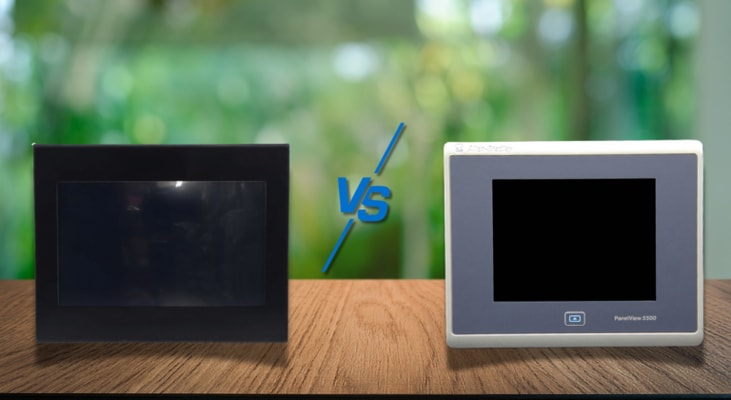
A graphic terminal remains an invaluable asset within most automated systems. It gives operators a practical way to see what a machine is doing, respond to alarms, adjust process values, and keep production moving without needing to dig through the control cabinet every time something changes. Of course, the effectiveness of the terminal varies depending on factors such as screen size, graphic design, responsiveness, and so on. Because of this, it can get a bit overwhelming trying to spec the perfect HMI for your setup. Today, we’re here to narrow down your search with two popular offerings on the market: The Mitsubishi GOT2000 series and the Allen-Bradley PanelView 5500 series. Both of which are built for a serious industrial environment, yet lean into their own strengths that we will go over to help you make a more informed decision. Before diving into the comparisons, it’s best to go over what each HMI’s family is trying to accomplish. While the Mitsubishi GOT2000 and the...
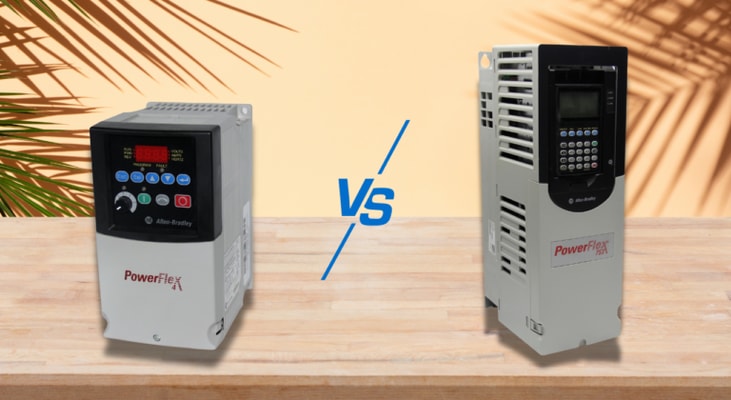
The PowerFlex product family from Rockwell Automation spans one of the broadest drive portfolios in industrial automation. Engineering the right selection from within that portfolio requires understanding precisely where Rockwell draws the line between its compact and full-size (architecture-class) drive categories, and what technical capabilities exist on each side of that line. PowerFlex drives are broadly categorized into compact-class and architecture-class: compact drives are smaller, cost-effective units for simpler applications, while architecture-class drives are high-performance, feature-rich units for demanding industrial requirements. Here, we will discuss some parameters for comparing the two types of drives. Source PowerFlex 755 Drives Here Rockwell Automation organizes the PowerFlex family into three tiers: compact (component-class), standard, and architecture-class. The compact tier encompasses the PowerFlex 4 , 40 , 523 , 525 , and 527 series. The architecture-class...
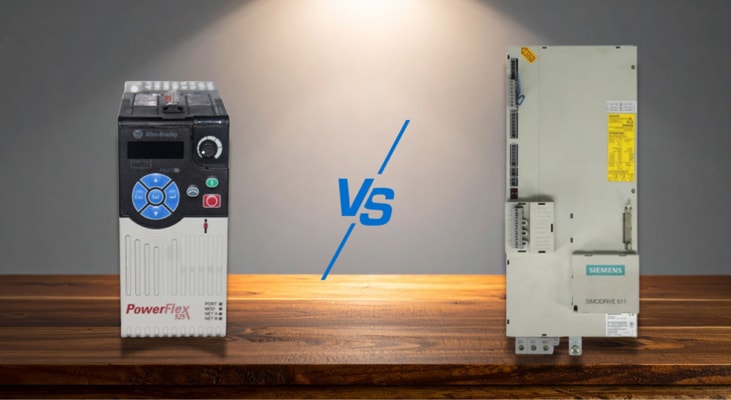
An AC drive is basically a device that lets you control how fast and how hard an AC motor runs. It does so by changing the frequency and voltage of the power supplied to the motor. And knowing the difference between a general-purpose AC Drive and a high-performance AC Drive really matters if you’re into modern industrial automation. General-purpose VFDs are widely used because they handle most industrial tasks. But there are times when you need something more powerful and precise; that’s where high-performance drives step in. If you’re an engineer or have to make purchasing decisions, you need to know how these two stack up before you spend a dime. Shop for Allen-Bradley PowerFlex 525 Drives Here A general-purpose AC Drive is designed to suit a wide range of settings, including factories, businesses, and full-scale industrial environments. They’re flexible, so people tend to use them almost everywhere. Maybe you work somewhere that needs a motor control system that’s ready to scale up...
DC motor systems remain deeply embedded in industrial infrastructure. Steel rolling mills, paper machines, mine hoists, crane drives, and extruders continue to operate on DC drives, where their precise torque-speed controllability justifies retention. Yet these systems carry a well-documented efficiency liability: energy losses distributed across electrical, magnetic, mechanical, and power conversion pathways that compound significantly at partial load. Regardless of the application, even small reductions in DC motor losses can yield significant gains in overall process efficiency, motor life, and cost-effectiveness. Understanding each loss mechanism at the parameter level and matching it to a specific DC drive mitigation strategy is the foundation of any credible energy optimization program in a DC-driven facility. Armature copper loss is the dominant electrical loss in any DC motor system. These losses are proportional to the square of armature current and are expressed as Ia²Ra...
Allen-Bradley CompactLogix and ControlLogix controller platforms play a key role in modern industrial automation. ControlLogix controllers are configurable for safety, standard, Logix SIS, and redundancy applications, facilitating faster system performance, high I/O capacity, enhanced productivity, and improved security for enterprise-level and large-scale automation systems. CompactLogix platforms offer the same core processing capabilities as ControlLogix platforms, but for cost-sensitive, mid-range, or standalone automation applications — often at a fraction of the total ControlLogix investment. Selecting the correct Allen-Bradley controller between the ControlLogix and CompactLogix platforms requires balancing cost, I/O capacity, performance, complexity, and scalability to avoid oversized control panels, redundant programming complexity, and inflated hardware costs. This article explains the technical differences between the two platforms and provides a clear selection criterion...
Mechanical wear in motor-driven systems is inevitable. It usually stems from repeated stress events, such as hard, abrupt stops, frequent cycling, or sudden load changes. These events can be reduced with motor control to minimize wear and tear on your system. This is where AC drives, or variable frequency drives (VFDs), come into play. They are installed for superior motor control, allowing the user to adjust voltage, frequency, torque, and speed to allow for a more efficient system. Learning how to properly do so will pay dividends in a smoother-running system. Direct-on-line (DOL) motor starts are the primary initiator of premature mechanical wear in industrial systems. When a three-phase induction motor is energized without drive control, inrush current reaches 600–800% of full-load rated current within the first 100–200 milliseconds. The resulting electromagnetic torque spike can reach 150–300% of rated torque and is transmitted instantaneously through the shaft, coupling, and...