Spare Parts and Long-Term Support Strategies for Aging Modicon PLCs
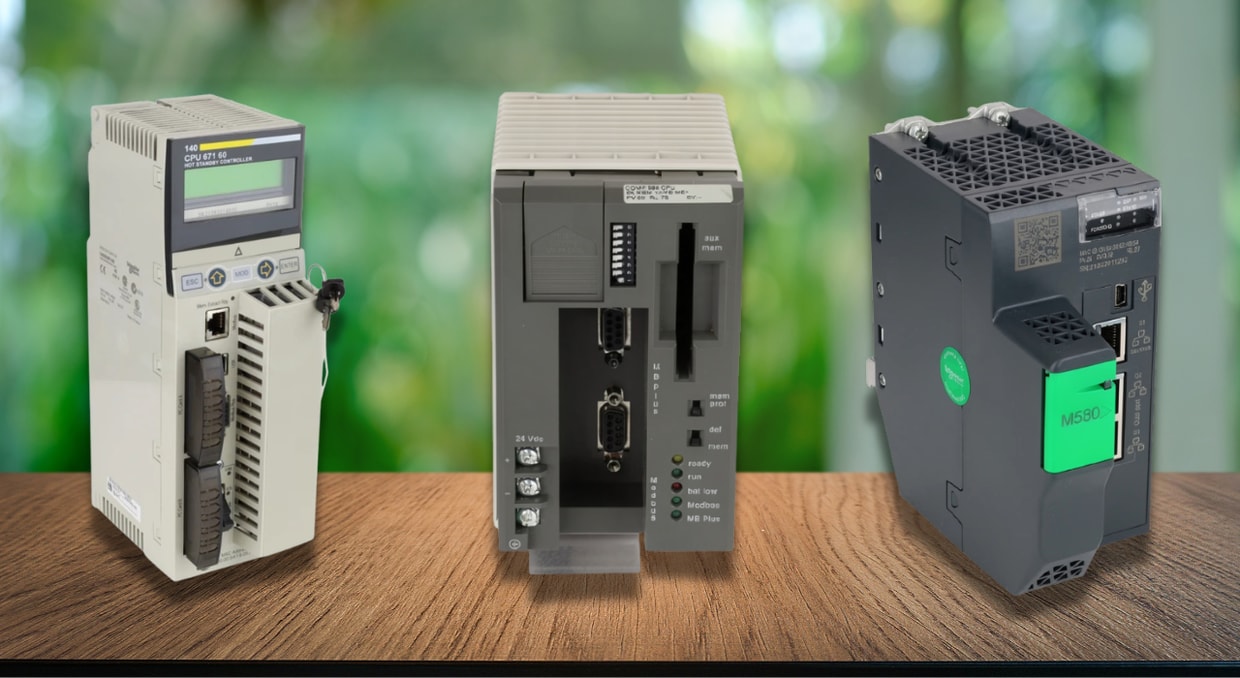
Industrial control systems built on legacy Modicon PLC platforms continue to operate at the core of production, utilities, and process industries worldwide. Systems based on Modicon 984, Quantum (140 series), Premium (TSX series), and Momentum platforms remain in active service despite approaching or exceeding their intended lifecycle.
While these systems are often stable and well-understood, the challenge is no longer purely operational reliability, but rather long-term sustainability under hardware obsolescence, diminishing vendor support, and shrinking spare parts availability. Many of these systems were engineered for deterministic control and robustness, which explains their longevity, but they were not designed for indefinite lifecycle support in modern industrial environments.
Join us today as we go over a technical approach to spare parts management, lifecycle risk mitigation, and long-term support planning for aging Modicon PLC systems.
Installed Base Reality of Legacy Modicon PLC Platforms
A significant installed base of legacy Modicon PLCs remains operational across industries such as oil and gas, water and wastewater treatment, power generation, and discrete manufacturing. Commonly deployed systems include Modicon 984 and Compact 984 controllers, Quantum 140 series systems such as the 140CPU65150 and 140CPU67160, Premium TSX platforms with TSX P57 processors, and Momentum 170 series distributed I/O systems.
These systems have often been in continuous operation for 15 to 25 years, in some cases longer. Their reliability is well proven, and plant personnel are deeply familiar with their operation and maintenance. However, age-related degradation of electronic components, combined with the obsolescence of supporting hardware and software ecosystems, introduces a new class of risk.
In many facilities, these PLCs are embedded in critical infrastructure, with limited opportunities for shutdown, making immediate replacement impractical. As a result, organizations must manage aging systems in place while planning for eventual transition.
Schneider Electric Lifecycle Status and Obsolescence Planning
Lifecycle status is a key factor in determining supportability. Schneider Electric defines product lifecycle stages, including Active, Active Mature, End of Sale, and End of Life. Most Modicon Quantum and Premium products have transitioned to End of Sale status, while earlier platforms, such as the 984 series and Modbus Plus communication hardware, are fully discontinued.
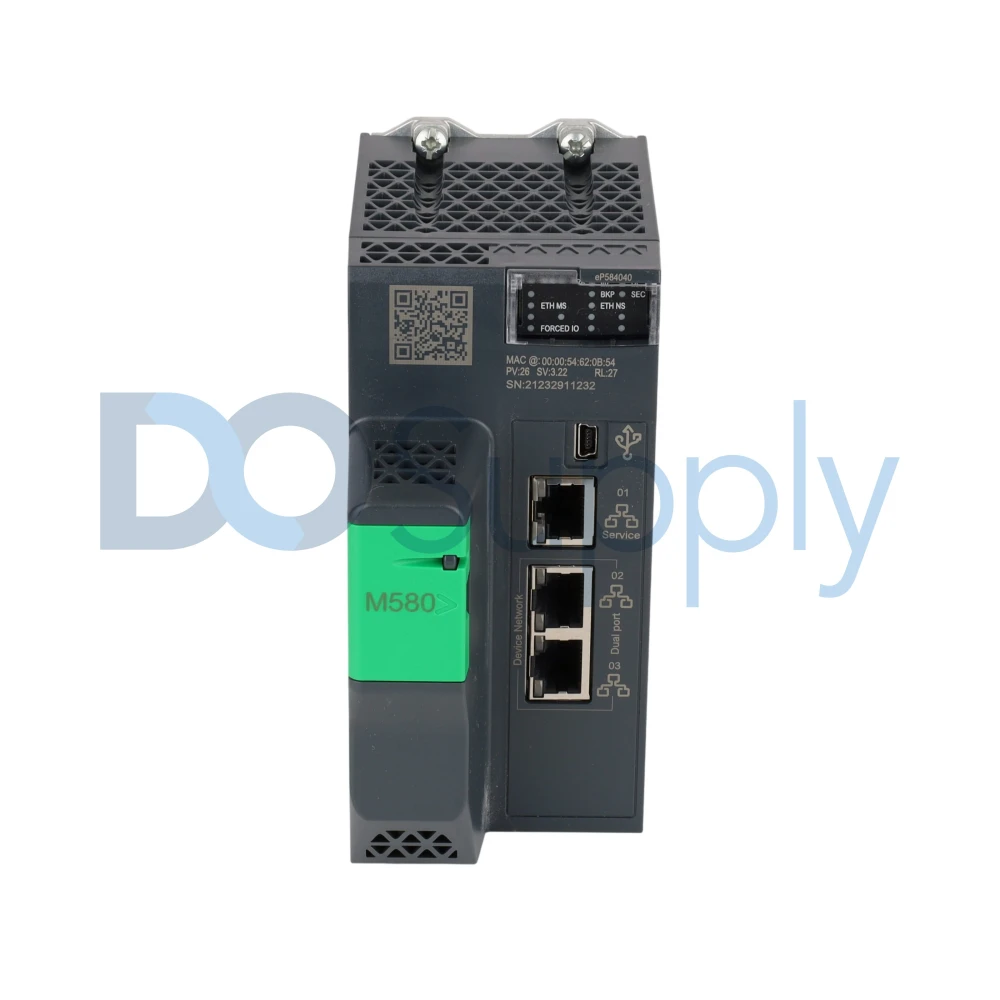
For example, Quantum CPUs such as the 140CPU65150 are no longer manufactured, and support is limited. Premium systems have similarly reached the end of their commercial lifecycle. Schneider Electric has positioned the Modicon M580 platform, including models such as BMEP582040 and BMEH584040, as the long-term replacement.
Understanding the lifecycle status enables organizations to prioritize systems by urgency. Equipment in End of Life status requires immediate attention, while End of Sale systems still allow a limited time for structured planning.
Risk Assessment of Aging Modicon Systems in Industrial Environments
Effective risk management requires a detailed understanding of system vulnerabilities. Risk factors include the probability of hardware failure, spare part availability, repair lead times, and process criticality.
A system operating with a single CPU and no available spare represents a high-risk configuration. For instance, a Quantum controller using a 140CPU67160 paired with a single 140NOE77101 Ethernet module creates multiple single points of failure. If either component fails, the entire control system may be rendered inoperable.
Environmental factors also play a significant role. Elevated temperatures, humidity, and electrical interference accelerate component degradation, particularly in analog modules and power supplies. Facilities must evaluate both intrinsic hardware risks and external environmental conditions when assessing system reliability.
Critical Spare Parts Strategy for Modicon Quantum and Premium PLCs
A structured spare parts strategy is essential for maintaining operational continuity. Components should be prioritized based on their impact on system availability and the difficulty of replacement.
For Quantum systems, critical spares include CPU modules such as 140CPU65150 and 140CPU67160, power supplies such as 140CPS11420 and 140CPS52400, and communication modules including 140NOE77101 Ethernet interfaces and 140CRP31200 remote I/O head modules. Premium systems require equivalent attention for TSX P57 processors, TSX PSY power supplies, and TSX ETY Ethernet modules.
Spare parts should be standardized wherever possible to simplify inventory management. In addition, all stored spares should be maintained in controlled environmental conditions and periodically tested to confirm operational readiness.
CPU Module Obsolescence and Replacement Challenges
CPU modules are the most critical and difficult components to replace in aging PLC systems. These modules are no longer in production, and their availability depends entirely on secondary market sources.
Challenges include firmware compatibility, memory limitations, and differences in supported instruction sets. For example, a replacement 140CPU65150 may have firmware incompatible with an existing application developed in an older version of Concept software.
To mitigate these risks, facilities must maintain detailed records of CPU firmware versions and programming environments. Where possible, spare CPUs should be pre-tested with actual application code to ensure compatibility before deployment.
Power Supply and Backplane Failure Modes in Legacy PLC Racks
Power supplies are among the most common failure points in aging PLC systems. Modules such as 140CPS11420 rely on internal electrolytic capacitors that degrade over time, particularly under continuous load conditions. Failure can occur without warning and result in a complete system shutdown.
Backplane failures, particularly in Quantum 140XBP series racks, are less frequent but can be more difficult to diagnose. Issues such as connector wear, oxidation, and mechanical stress can lead to intermittent communication failures between modules.
Preventive maintenance should include thermal imaging, voltage monitoring, and periodic inspection of physical connections. Maintaining spare racks and power supplies is essential for minimizing downtime.
Communication Modules and Network Obsolescence (Modbus Plus, Ethernet, RIO)
Communication infrastructure is a critical component of control system architecture. Legacy systems often rely on technologies such as Modbus Plus, implemented through SA85 and BP85 cards, which are now fully obsolete.
Modern Quantum systems use Ethernet modules, such as 140NOE77101, and remote I/O communication modules, such as 140CRP31200. Failure of these modules can isolate entire I/O networks, effectively disabling control over large portions of the plant.
In addition to hardware obsolescence, older communication protocols present cybersecurity risks due to a lack of encryption and authentication mechanisms. Maintaining spare communication modules and planning for network modernization are essential components of long-term support.
I/O Module Reliability: Analog vs Digital Failure Characteristics
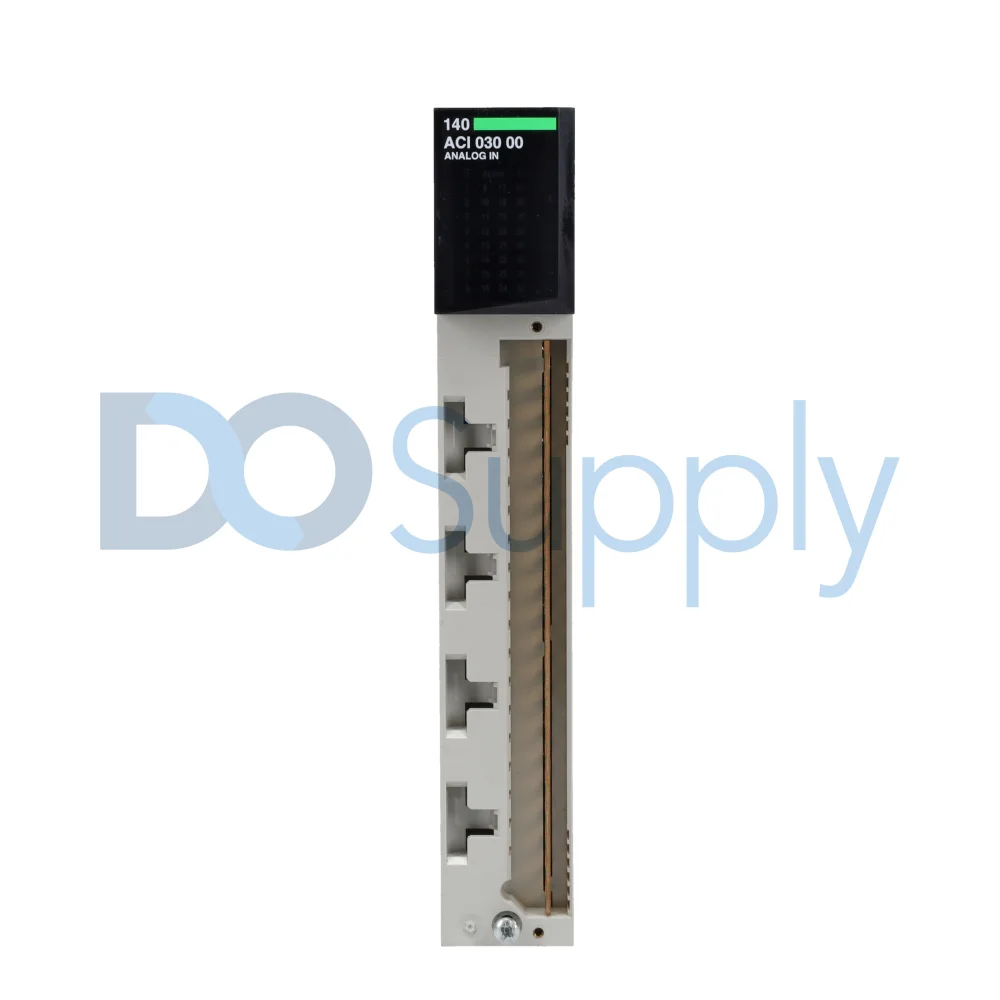
I/O modules exhibit different reliability characteristics depending on their function. Analog modules such as 140ACI03000 and 140ACO02000 are more sensitive to environmental conditions and electrical disturbances. Issues such as ground loops, signal surges, and wiring faults can lead to premature failure.
Digital modules such as 140DDI35300 and 140DDO35300 are generally more robust but are not immune to failure. Output modules, particularly those driving inductive loads, can experience wear over time.
A balanced spare parts strategy should reflect these differences, with greater emphasis placed on analog modules and high-use digital modules. Regular testing and validation of spare I/O modules are recommended.
Secondary Market Procurement: OEM, NOS, and Refurbished Hardware Risks
With OEM supply channels no longer available for many Modicon products, organizations must rely on secondary market procurement. This includes both new-old-stock and refurbished components.
New-old-stock modules are preferred due to their unused condition, but they are increasingly rare. Refurbished modules must be carefully evaluated, as quality varies significantly between vendors. Reputable suppliers perform comprehensive testing and provide warranties, while lower-quality vendors may offer minimal validation.
Procurement processes should include technical verification, documentation review, and incoming inspection. Where possible, components should be tested in a controlled environment before deployment to live systems.
Firmware Compatibility, Unity Pro, and Legacy Toolchains
Maintaining access to programming tools and firmware environments is critical for long-term support. Compatibility issues can arise when replacing hardware or modifying existing programs. Projects developed in older environments may require conversion before they can be used with newer tools.
To address this, organizations should maintain virtualized environments containing all necessary software, drivers, and configuration tools. These environments should be backed up regularly and tested to ensure continued functionality.
Migration Strategies: Transitioning from Quantum and Premium to M580 Architecture
While spare parts management can extend the life of legacy systems, it is not a permanent solution. A structured migration strategy is essential for long-term sustainability.
The Modicon M580 platform, including CPUs such as BMEP582040 and BMEH584040, provides a modern, Ethernet-based architecture with improved performance, cybersecurity, and lifecycle support. Migration can often be performed in phases, allowing reuse of existing I/O infrastructure in certain configurations.
Hybrid approaches, where M580 controllers communicate with existing Quantum RIO networks, enable a gradual transition while minimizing operational disruption. A risk-based migration roadmap ensures that the most critical systems are prioritized.
Final Thoughts
In conclusion, aging Modicon PLC systems can continue to operate reliably beyond their intended lifetimes, but only with a proactive, technically disciplined approach. Spare parts management, secondary market procurement, firmware preservation, and migration planning must all be addressed simultaneously. Organizations that delay action face increasing risks, including rising costs, reduced availability of critical components, and the potential for catastrophic failure. If you would like to dive into why downtime can be so expensive, we have an article here for you!
For facilities still relying on Modicon 984, Quantum, Premium, or Momentum hardware, the goal is to avoid letting a single obsolete CPU, power supply, or other component halt your entire process, rather than just keeping them alive. A practical support plan starts with knowing which components are critical, which spares are actually tested, and which systems need a migration path before failure forces the issue.
We at DO Supply help facilities source and replace aging Modicon PLC components, including legacy CPUs, power supplies, communication modules, I/O cards, and more. Whether you need a tested spare for a Quantum system, support for an older Premium platform, or replacement parts to keep a migration plan on schedule, our team can help you reduce downtime risk while keeping your control system supported for the road ahead.
DO Supply Inc. makes no representations as to the completeness, validity, correctness, suitability, or accuracy of any information on this website and will not be liable for any delays, omissions, or errors in this information or any losses, injuries, or damages arising from its display or use. All the information on this website is provided on an "as-is" basis. It is the reader's responsibility to verify their own facts.