If you have spent any time reading about automation equipment and how they work, you would come across phrases such as: “Real-time control”, “real-time monitoring”, “operates in real-time”, or “real-time deterministic behavior”. It becomes one of those things that you might be afraid to ask about because it’s thrown around so much that it seems like it’s common knowledge. Alas, we at DO Supply don’t judge and encourage learning opportunities, so let’s get you up to speed on what ‘real-time’ actually means. In the world of industrial control, “real-time” is a more precise engineering term. It means predictable, rather than “fast”. A real-time system isn’t defined by how quickly it responds, but by whether it responds within a guaranteed, bounded window of time, every single time. That guarantee is what engineers call determinism, and it’s the whole reason the phrase gets used so often around PLCs, drives, and industrial networks. To put it in perspective, say a video game you’re...
Industrial automation is evolving rapidly, with many modern factories using AC motors paired with variable-frequency drives to maximize energy efficiency and reduce maintenance costs. While it may seem that DC drives are an obsolete technology and no longer useful, that’s far from the truth. Despite the dominance of AC drives, DC drives remain a critical, high-performance technology in modern industrial automation, offering specialized functionality and exceptional high-torque control that AC drives struggle to match. For engineers and plant managers, knowing when to leverage DC drives —instead of defaulting to AC drives — can yield optimal system performance and significant cost efficiencies. This article explores key application scenarios of DC drives, providing industry examples and practical insights that demonstrate why DC drives remain a valuable technology in modern industrial automation. Legacy equipment in many industrial facilities, such as textile plants, steel mills...
Modern industrial facilities do not stop when the network drops. A refinery keeps processing crude oil. A water treatment plant keeps dosing chemicals. A conveyor line keeps moving parts through assembly stages. This stability is not accidental; it is the result of deliberate engineering decisions built into every layer of automation systems, from the controller firmware to the field instrument logic. Communication failure is not an edge case in industrial automation. It is a known, expected condition that every well-designed system must handle without losing process stability, safety state, or data integrity. This article breaks down the exact mechanisms, hardware, and protocol-level details that keep automation systems stable when communication degrades or fails. Industrial environments are electrically hostile. Variable-frequency drives inject high-frequency noise into power lines. High-voltage switchgear generates radiated electromagnetic interference during switching transients...
These days, every industry runs on speed and accuracy. There’s a whole field built around creating and running systems that manage and automate everything, from factories to warehouses. This technology keeps things running smoothly. It cuts down mistakes and helps get more done. If you want to really get what makes this world tick, it starts with the companies that make PLCs—the actual hardware at the center of it all. Then come the engineers who figure out how to use that hardware in real-life situations. PLC Controls sit right at the core of modern automation, and PLC manufacturers have played a huge part in how far we’ve come. PLC Controls is all about designing and running control systems that keep machines, processes, and devices working smoothly on their own. Controls engineers use feedback loops, math, and the latest tech to build systems that hit their targets every time, without much fluctuation. Picture a manufacturing plant—an engineer sets up controls so conveyor belts...
It is no secret that downtime can be the single leading cause of revenue loss for any factory. In fact, a recent global report from ABB in conjunction with Sapio Research suggests that 44% of industrial leaders report production interruptions by their equipment monthly, 14% of those report stoppages weekly. Every hour that a factory is down, it could be losing anywhere from tens to hundreds of thousands of dollars per hour, depending on SKU value and output expectations. This raises the question of how downtime could become this expensive, what the biggest contributing factors are, and how automation is designed to prevent interruptions. Downtime, often carrying a negative connotation, is when a factory or process halts or significantly reduces operations due to planned maintenance, repairs, or stoppages. Usually, this stems from operator stops, which happen when the operator sees an anomaly and presses that big red STOP button. Other times, the system itself could sense that...
In discussions of CPU vs. Processor, every automation engineer has encountered both terms in the same conversation. In PLC documentation, hardware manuals, and system design discussions, they appear side by side, sometimes interchangeably, sometimes with conflicting meanings. For engineers selecting controllers, writing ladder logic, or troubleshooting scan cycle delays, the distinction is very basic. Understanding exactly what a processor chip is, what a CPU module is, and how they relate inside a PLC gives you a clearer model for hardware selection, performance optimization, and fault diagnosis. This is exactly what we will be discussing in this article regarding CPU vs. Processor. In correct PLC hardware terminology, the processor is the physical silicon chip that executes instructions. It is a discrete integrated circuit mounted on the circuit board inside the controller module. This chip fetches each instruction from memory, decodes it, and executes it, one operation at a time...
PLCs are an important part of modern industrial automation. There are a few more common and popular PLC brands that consistently hold the majority of the global market. Some of the best manufacturers in the industry include Siemens, Rockwell Automation (Allen-Bradley), Schneider Electric, Mitsubishi Electric, and Omron. The PLC software market is in very good health and offers many good options for your automation needs. PLCs are rugged computers built for the factory floor, designed to operate machines and processes with extreme reliability. Each PLC runs a continuous loop called a scan cycle: it reads from inputs, executes a user program, and updates outputs. This process repeats thousands of times every second. CPU: the processor that runs the application I/O Modules: connect the system to field devices such as sensors, motors, and valves Memory: stores the control program and runtime data Power Supply: provides stable DC voltage to the system Communication Links: allow the PLC to...
Industrial control panels have relied on discrete pushbuttons, selector switches, and indicator lights for decades, and in many applications, they still get the job done. But as process complexity scales, the demand for real-time visibility, operator guidance, and structured data logging outgrows what a row of pilot lights can deliver. The Allen Bradley PanelView family, spanning PanelView 800 , PanelView Plus 7 , and PanelView 5500 , sits precisely between basic hardwired operator interfaces and full SCADA systems, and understanding where that boundary falls determines whether you are engineering the right solution or over-specifying hardware that adds cost without adding operational value. A conventional hardwired operator station is built from 22mm pushbuttons, selector switches, and pilot lights wired directly to PLC digital I/O cards. Each device consumes one I/O point; a panel with 12 push buttons and 10 indicator lights requires 22 discrete I/O points, associated terminal...
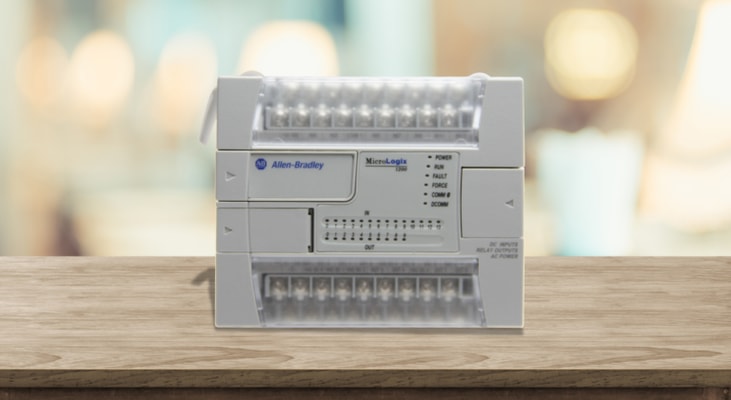
In industrial automation, there are three types of controllers: Those that are replaced because something better came along, those that are swapped out because they finally gave out after years of service, and those that never get replaced at all because nobody could find a good enough reason to mess with what’s working. The MicroLogix 1200 fits right in that last category. These middle-child controllers in the MicroLogix family have been holding down applications for over two decades now, quietly doing their jobs in packaging lines, water treatment plants, material handling systems, and thousands of other installations. These controllers are wired in, commissioned, and essentially forgotten in the best possible way. Rockwell Automation has long since moved on to newer platforms, but in the automation world, “discontinued” and “gone” are two very different things. What made the MicroLogix 1200 popular in the first place is still what keeps it relevant: expandable I/O, a...
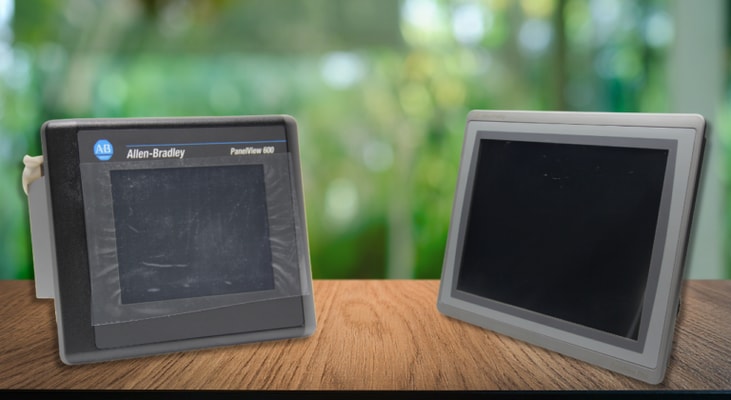
The Allen-Bradley PanelView series plays a key role in modern industrial control systems, facilitating essential communication between machine processes and human operators. Most PanelView technical failures are not due to hardware issues, but rather they arise from design flaws, configuration errors, firmware corruption, and poor network communication links with Programmable Logic Controllers (PLCs). These malfunctions often result in decreased operator efficiency, potential safety risks, and significant system downtime. This article examines common PanelView mistakes that reduce operator efficiency and provides actionable solutions based on Rockwell Automation’s best practices. Communication between the PanelView and the PLC is the backbone of any HMI application. Misconfigurations here are among the most common causes of sluggish screen performance. Use of non-contiguous, scattered tag addressing between the target controller and PanelView HMI. What happens : When HMI address tags...
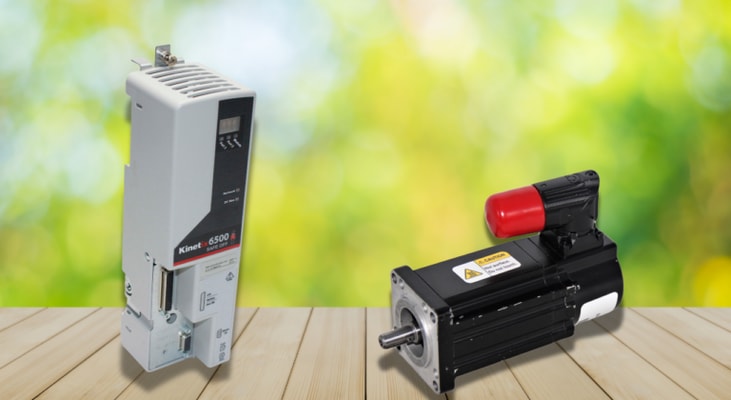
Modern manufacturing has reached a point where traditional CNC machine parts are no longer evaluated in isolation. Their performance is now inseparable from the motion control systems that command them. The Allen-Bradley Kinetix series represents one of the most advanced servo drive platforms deployed in CNC-integrated environments today. Understanding how individual CNC machine parts interact with Kinetix servo drives, amplifiers, and integrated motion controllers is essential for engineers designing high-throughput, deterministic automation systems. This article examines that interaction in a technical sequence: from mechanical axis components to closed-loop drive architecture, from feedback resolution to EtherNet/IP-based command propagation. Before mapping CNC machine parts to a Kinetix-driven architecture, it is necessary to categorize them. CNC machine parts fall into three primary subsystems: mechanical transmission components, actuation elements, and feedback and sensing...
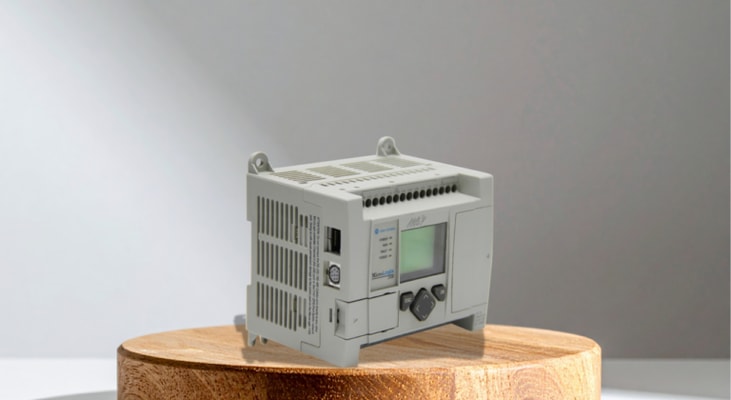
If you’re considering a compact controller for a small to mid-scale automation project, the Allen-Bradley MicroLogix 1100 deserves a close look. While it may be a legacy system, the MicroLogix 1100 still strikes a balance between capability and footprint, giving engineers a robust feature set without the overhead of a larger platform. The Micrologix 1100, at its core, is a fixed I/O programmable controller built around 18 onboard I/O points: 10 digital inputs, 2 analog voltage inputs (0-10V DC), and 6 discrete outputs. What sets it apart from this class of controller is the inclusion of a built-in Ethernet/IP port alongside an isolated RS-232/RS-485 combination port, an onboard LCD display with keypad, a real-time clock, and support for up to four 1762 expansion I/O modules. While the MicroLogix 1100 series has only four controllers, we will go over each one, the expansion I/O lineup, and common applications to help you select the right configuration for your project. As we mentioned...
Programmable Logic Controllers play a critical role in today’s industrial automation systems, delivering dependable, real-time, and deterministic control in demanding environments such as semiconductor fabrication, automotive assembly, and chemical processing plants. All PLCs share a common core architecture comprising a power supply, central processing unit (CPU), communication modules, input/output modules, and memory. However, because different PLC manufacturers employ unique design philosophies, the result is substantial variations in PLC hardware, proprietary software, implementation, and ecosystem compatibility. These variations mean that purchasing a specific PLC model is a long-term commitment to a particular programming environment, technological ecosystem, and vendor support. This can significantly affect the integration capabilities, maintenance strategies, future scalability, and available hardware/software migration strategies for a given PLC platform. Therefore, beyond...
Allen-Bradley is one of the most trusted names in industrial automation worldwide. From manufacturing plants, Building Management Solutions, and oil refineries to water treatment facilities and food processing lines, Allen-Bradley drives and PLCs (Programmable Logic Controllers) power critical infrastructure across virtually every sector of modern industry. Yet even the most reliable industrial systems encounter faults, trip events, and communication errors. When an Allen-Bradley drive trips unexpectedly or a PLC fails to execute logic correctly, production lines can halt within seconds, resulting in lost output and costly downtime. The ability to diagnose and resolve these issues quickly is not just a technical skill; it is an operational necessity. This guide walks through the most common Allen-Bradley drive (focusing on the 525 , 700 , and 750-series ) and PLC (CompactLogix and ControlLogix ) faults encountered in real-world environments. For each issue, you will find an...
Downtime on the shop floor isn’t just about stopping the line—it’s a domino effect. One machine stalls, and suddenly you’re dealing with wasted materials, crews standing around, surprise expenses for repairs, and systems that slowly degrade until something finally snaps. When factories lack real-time monitoring, reliable logs, or a robust network of sensors, a lot stays hidden. Usually, people don’t even realize there’s a problem until they’re scrambling to fix a full-blown breakdown. That’s where modern Human-Machine Interfaces (HMIs) come into play. These systems spot problems early, streamline how people and machines interact, and help cut unplanned downtime in a big way. The days when HMIs were just simple screens are over. Today’s HMIs pack in way more power—they tap into the Industrial Internet of Things (IIoT), handle all kinds of communication protocols, sync up with SQL databases, and push out real-time data using RESTful APIs. So these aren’t just fancy displays; they’re the...