AC VS DC DRIVES
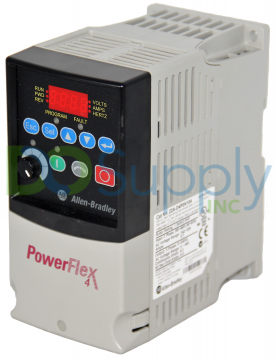
Industries globally understand the importance of electric drives in ensuring efficient control of motor outputs. And with the constant developments and innovations springing up in the industrial automation field, the need for alternating current (AC) and direct current (DC) drives have continued to grow in leaps. Both AC and DC drives are indispensable to the regulation of control signals. However, there are notable differences between the two drives. This article focuses on these differences in terms of benefits, composition, operation, capability, cost, and usability.
The AC Drive and its Benefits
The AC drive is used to control motor speed through the conversion of direct current (DC) to alternating current (AC). This drive involves such components as an inverter unit, DC circuit, rectifier unit, etc. It has helped increase productivity and innovation in the electronics industry.
AC drives operate only with motors whose speeds are controlled by switching frequency from the electrical supply to the motor. In essence, AC drives ease the process control, reduce system stress, and help save energy.
The DC Drive and its Benefits
To control the speed of a DC motor, the DC drive is needed. Thus, a DC drive is the speed control system of a DC motor. It typically works by supplying the necessary voltage amount and converting alternating current (AC) into direct current (DC). However, DC-to-DC converters are present in portable devices such as mobile phones, laptops, etc., which are primarily powered by batteries.
The DC drive has been recognized as highly efficient, operator-friendly, and dependable. It is very effective in handling machines such as elevators, cranes and hoists, crushers, spindle drivers, and paper production machines. Components of a DC drive include firing circuits, a speed regulation unit, a rectifier bridge, and a field supply unit.
Comparing the AC Drive and the DC Drive
· Technological Build-up: The DC drive is designed to enable easy control of its power circuits and speed control mechanisms. The converse is true of the AC drive, whose designs are complex. Despite this, AC drives come with reliably rugged designs that require less frequent maintenance. Also, because AC drives do not contain commutation, they come out less bulky and less heavy.
· Operation: Generally, the operation of AC drives is accompanied by significant noise, unlike the DC drive, whose process is less noisy. The DC drive can be connected directly to its applicable batteries. However, AC drives do not support the inclusion of some components and circuits. Also, DC drives need a transformation voltage higher than 100V to function.
· Performance Capability: In terms of performance, the AC and the DC drives have their comparative lines. The AC drive, for instance, has no upper limit for speed and can reach up to 10000 RPM, whereas the maximum reach for the DC is 2500 RPM. AC drives can attain the speed regulation of 1% while also offering a high dynamic response rate, but the opposite is the case with the DC drive, which cannot achieve 1% speed regulation. Moreover, the AC drive functions without issues in a wet and corrosive environment; though, the DC drive cannot because it can produce sparks quickly. Lastly, the DC drive produces high starting torques whose speeds can be adjusted more efficiently while the AC drive does not, making DC drives the perfect fit for heavy-load applications such as wiper systems, conveyor systems, etc.
· Cost and Usability: AC drives are more expensive than DC drives. This is mainly because the former is built with both inverter and converter. On the other hand, AC drives are more reliable and durable than DC drives in terms of usability. Moreover, AC drives have a higher compatibility range and can be used in more areas than DC drives.
In conclusion, each AC and DC drive has its unique features and performs different functions, as discussed above. Also, it is impossible to use one of the drives where the other is required. So, ensure you choose the correct drive based on your automation needs.
DO Supply Inc. makes no representations as to the completeness, validity, correctness, suitability, or accuracy of any information on this website and will not be liable for any delays, omissions, or errors in this information or any losses, injuries, or damages arising from its display or use. All the information on this website is provided on an "as-is" basis. It is the reader's responsibility to verify their own facts.