The Secret Features in Modern Smart Motor Controllers You’re Probably Not Using
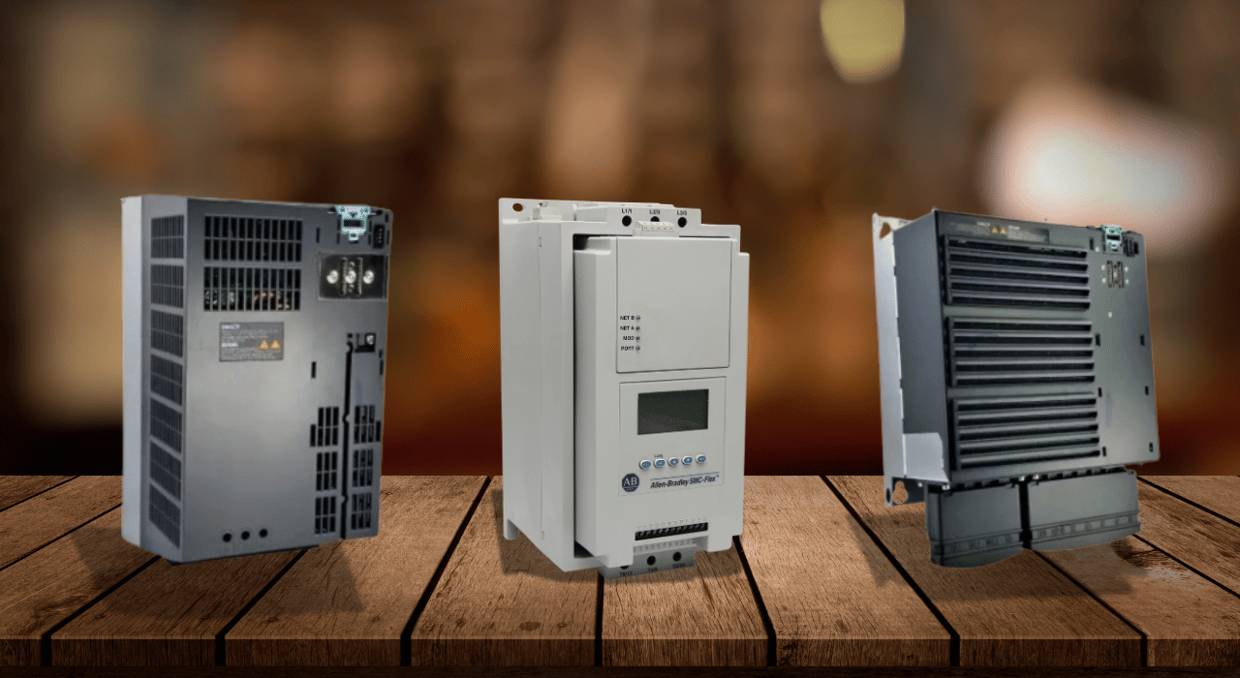
Smart motor controllers (SMCs) are advanced, microprocessor-based soft starters designed to manage and protect AC motors in a variety of industrial applications. They offer a wide array of advanced functionalities beyond solely starting and stopping motors efficiently. These functionalities include comprehensive monitoring, precise speed control, integrated diagnostics, communication and networking capabilities, and advanced motor protection. Prominent smart motor controller brands include Allen-Bradley (from Rockwell Automation), Mitsubishi Electric, Siemens, ABB, Honeywell, Schneider Electric, and Eaton.
Modes of Operation
SMC controllers use diverse operating modes to precisely control motor starting & stopping characteristics, speed, and torque. Common modes of operation include Current Limit Start, Soft Start, Soft Stop, Full Voltage Start, and Selectable Kickstart, alongside specialized control options such as Dual Ramp Start, Preset Slow Speed, Accu-Stop, Smart Motor Braking, Pump Control, and Slow Speed with Braking.
Smart motor controllers designed to control three-phase motors use six SCRs (Silicon-Controlled Rectifiers), two SCRs per phase, to adjust the conduction period and regulate the input voltage to the connected motor during start-up, operation, and stopping. After the motor is started and up to speed, the SMC controller applies full input voltage to the motor. At this stage, SMC units with AC1-rated internal bypass contacts bridge the SCRs. This helps reduce heat generation & dissipation and allows a more compact SMC design for applications with space limitations.
The Secret Features in Modern Smart Motor Controllers You’re Probably Not Using
Modern smart motor controllers include a variety of hidden features that can be used to provide optimal motor control, enhanced energy efficiency, reduced mechanical stress, better motor performance, and improved reliability. These secret features include:
Solid-State Power Structure
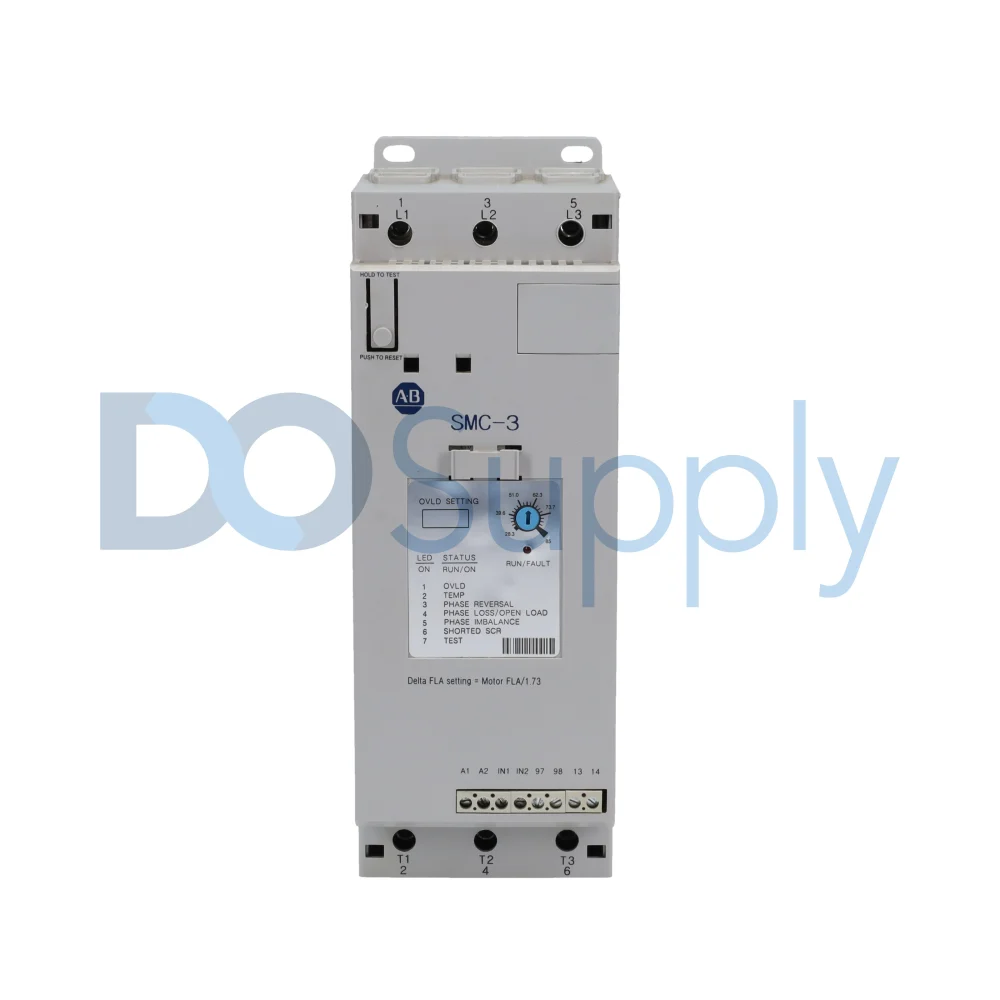
Various smart motor controller models, like the Allen-Bradley SMC-3, SMC-50, SMC Dialog Plus, and SMC Flex controllers, include a solid-state power structure instead of traditional electromechanical relays and contacts. In solid-state power units, the semiconductor components (like SCRs, IGBTs, or MOSFETs) are always fitted in the current-switching circuit. This enhances robustness for more aggressive duty cycles (e.g., handling shock-type loads) and harsher environments.
Solid-state power structures offer compact design, faster response times and switching speeds, precision control, energy efficiency, enhanced reliability and longevity, and silent operation. Solid-state-based smart motor controllers are ideal for extreme industrial environments and applications with higher SCCR (Short-Circuit Current Rating) and operations per hour.
Internal Bypass Contacts
Some smart motor controllers have built-in bypass contacts in their power structure. Once the connected motor achieves full speed, the SMC controller can automatically close this bypass, routing current around the silicon-controlled rectifiers (SCRs) or thyristors. By slowly increasing the motor’s voltage and current, these SMC controllers reduce mechanical and electrical stress during startup, extending the motor’s service life and lowering maintenance costs. Furthermore, the built-in bypass mechanism allows the motor to run at full voltage once the operating speed is attained, conserving energy and improving overall efficiency.
The Allen-Bradley SMC-50 motor controller includes an integral bypass power structure, which offers the option of selecting between an internal bypass contactor or a fully solid-state configuration. With the internal bypass option, the controller’s SCR bridge is bypassed by the contactor once the motor attains full speed. Similarly, Schneider Electric’s Altistart ATS22 smart motor controller also features a built-in shorting contactor at the end of the motor starting contactor.
Electronic Overload Protection
Electronic motor overload protection is a critical safety feature in smart motor controllers, designed to safeguard motors from damage caused by excessive current. This protection system continuously monitors the motor’s current and compares it against predefined thresholds. When the measured current exceeds these set limits, the controller initiates precautionary measures, signaling a potential overload condition. A key advantage of electronic overload protection lies in its precision and adjustability. Unlike traditional thermal relays that rely on stationary bimetallic strips, electronic overload protection employs real-time current profiling and I²t algorithms to model motor thermal capacity more accurately. These settings can be tailored to specific motor characteristics and operational requirements, enhancing the accuracy of motor protection.
For example, the ABB PSTX smart motor controller includes an Electronic Overload (EOL) function that trips if excessive motor current persists beyond a set time. Schneider Electric’s ATV930 VFD monitors motor current harmonics to differentiate between harmless startups and genuine overloads, reducing nuisance overload-related trips. By minimizing unnecessary trips and ensuring timely intervention during genuine overload events, electronic overload protection helps reduce unplanned downtime and maintenance costs, thereby improving the overall reliability and efficiency of motor systems with SMC controllers.
Application Scalability
Most modern smart motor controllers are designed to handle an extensive variety of motor control needs, offering increased application flexibility and scalability. Flexible and scalable SMC controller designs feature the following:
- Heavy-duty and normal power ratings
- Expandable sensor and I/O capabilities
- Hardware expansion ports that accept optional analog and digital I/O expansion modules along with protection modules (e.g., current feedback, PTC [Positive Temperature Coefficient], Ground Fault modules).
- Support for both complex and simple motion profiles, allowing application flexibility
- Network integration capabilities
- A variety of control modes
- Scalable thermal ratings
- Expansion ports for optional communication modules
- Process scalability and optimization
- Integrated functions
Advanced Motion Control
Modern smart motor controllers offer far more than just basic speed control. Advanced motion features, such as position control, interpolation, and synchronized movement, allow for high-precision, multi-axis applications. The modern MELSEC iQ R motion modules explicitly list support for position control, interpolation (linear/circular/helical), synchronous (cam) control, high-speed oscillation, S-curve profiles, etc. in their specifications. MELSEC MX controllers combine sequence (PLC), motion, and network control on a single platform, utilizing iQ-R modules to scale up to hundreds of axes of motion (up to 256 in the MX-R series). This means that a single MELSEC MX motor controller can handle complicated multi-axis interpolations and synchronized motions (with S-curve profiling) across a large drive system.
In addition, various Allen-Bradley smart motor controllers integrate a variety of motion control capabilities including coordinated velocity, torque, and position control across multiple axes of motion. For instance, the PowerFlex 755T variable frequency drives deliver superior motion control through precise adaptive control of motor torque, velocity, and position.
Energy Saver Features
Many present-day smart motor controllers embed automatic energy optimization algorithms that dynamically adjust input voltage-to-frequency ratios during partial motor loads. These controllers include an “eco mode” or flux optimizer that reduces motor excitation when the torque output demand is low. For instance, the Allen-Bradley SMC-2, SMC Plus, and SMC Dialog smart controllers include a specialized energy-saving mode. The mode is activated when the connected motor is turned off or idling to minimize power consumption, significantly improving overall efficiency. Also, the Siemens SINAMICS variable-speed motor controllers incorporate features like auto motor identification and automatic flux adaptation (essentially an eco-mode) that maximize energy efficiency in connected motors.
Predictive Maintenance Functions
Smart motor controllers are increasingly incorporating internal sensors and advanced analytics that predict common failure modes before they occur. For example, the Allen-Bradley PowerFlex AC drives with TotalFORCE technology constantly monitor operating parameters, like motor voltage, current, temperature, and fan speed, and issue alarms in case of any abnormalities. The technology enables the AC drives to model the service life of the motor’s cooling fan by tracking the fan’s speed reduction (an early sign of bearing wear) and ambient temperature. The drives then warn the user if the fan is ~80% through its expected lifespan.
Similarly, other smart motor controllers estimate the lifespan of the power components of connected AC motors and notify operators of impending issues. The controllers provide real-time diagnostics (such as fault logs, run hours, and thermal stress levels) and even remaining life estimates for critical motor components, enabling predictive maintenance scheduling. Essentially, detailed fault logging and performance data help in the accurate detection and tracking of motor anomalies, improving system health and reducing maintenance.
Various Siemens and Allen-Bradley SMC controllers include state-of-the-art data logging and reporting features, such as inbuilt error and event storage capabilities via SD (Secure Digital) card slots. They can therefore report subtle motor component’s performance patterns (such as bearing vibration) through supported communication networks like EtherNet/IP, ControlNet, and DeviceNet.
Integrated Communication Capabilities
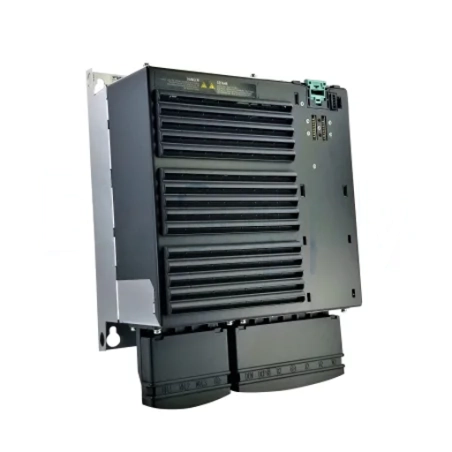
Almost every smart motor controller has built-in industrial network interfaces for monitoring and control purposes. For example, Siemens SINAMICS G120 motor drives support PROFINET, EtherNet/IP, and Modbus TCP/IP out of the box, whereas Allen-Bradley SMC controllers also support EtherNet/IP, Modbus TCP, DeviceNet, and other industrial communication protocols.
Generally, modern smart motor controllers can inherently support multiple communication protocols, including PROFIBUS, EtherCAT, CANopen, BACnet, EtherNet/IP, and OPC UA. This built-in connectivity allows operators to monitor motor conditions in real time and integrate different SMC controllers into factory IIoT (Industrial Internet of Things) systems. Such integrated communication also plays an important role in industrial automation, leading to improved system flexibility, dependability, and operating efficiency.
Enhanced Cyber Security
As smart motor controllers become more connected through networking and digitalization, cybersecurity is now a built-in consideration in many models due to more exposure to cyber threats and attacks. Today’s smart motor controllers incorporate features like user authentication, secure protocols, and tamper detection, and are built to meet industry standards. Notably, Rockwell Automation announced IEC 62443-4-2 certification for its Allen-Bradley PowerFlex 755T (low-voltage) and PowerFlex 6000T (medium-voltage) AC drives. ABB has achieved SL1 certification for the ACS880 motor drives, demonstrating its commitment to cybersecurity and making it easier to build secure and high-performing systems.
Practically, this means that the aforementioned motor drives can support encrypted Ethernet/IP (CIPsec), embedded firewalls, and secure software update channels. Older AC drives lacked all of this; using the new security features (e.g., strong passwords, disabling unused ports, and firmware upgrades) is critical for protecting current motor control systems.
Regenerative Braking
Some smart motor controllers support regenerative motor braking, whereby the energy regenerated during motor braking is returned to the incoming power supply line instead of being dissipated as heat. For example, the ABB ACS880 regenerative drive includes an integrated active supply unit and an LCL line filter, which allows the braking energy of the connected motor to be returned to the drive’s power supply for redistribution to the line voltage network.
Remote Access and Control
Building on their network interfaces, many smart motor controllers can now support remote monitoring and even remote control via cloud or built-in VPN (Virtual Private Network) platforms. Secure remote access to connected motors enables troubleshooting without the need for site visits. For example, Danfoss offers the DrivePro remote monitoring feature, in which each drive’s performance and fault parameters are continuously uploaded to a cloud platform that provides alerts and analytics to engineers anywhere. With such a feature, users can respond to motor or drive issues quickly, even if they are off-site.
ABB also offers a similar solution known as Ability Condition Monitoring for its drives. The feature provides a web portal where one can view drive status, receive automated alarms, and even have ABB specialists assist remotely. In practice, using remote features allows operators to adjust parameters, download logs, or reboot a motor/controller from a control room or field tablet, providing a significant advantage for distributed or critical systems.
At DO Supply, we carry hundreds of different drives with unique and distinguishing features. We hoped that this article helped guide you to a drive with the features you need or even unlock some new capability from drives you already own. If it hasn’t and you are still looking for something specific, give us a call, and we can help you find the right drive with the right features. We also have an article here on how to boost efficiency with Allen Bradley drives.
DO Supply Inc. makes no representations as to the completeness, validity, correctness, suitability, or accuracy of any information on this website and will not be liable for any delays, omissions, or errors in this information or any losses, injuries, or damages arising from its display or use. All the information on this website is provided on an "as-is" basis. It is the reader's responsibility to verify their own facts.