DO Supply is a global automation parts reseller focused on hard-to-find and obsolete industrial automation
products. Based out of Raleigh, NC, we service customers worldwide, providing excellent customer and sales
support, as well as offering our top-of-the-line warranty on all parts sold.
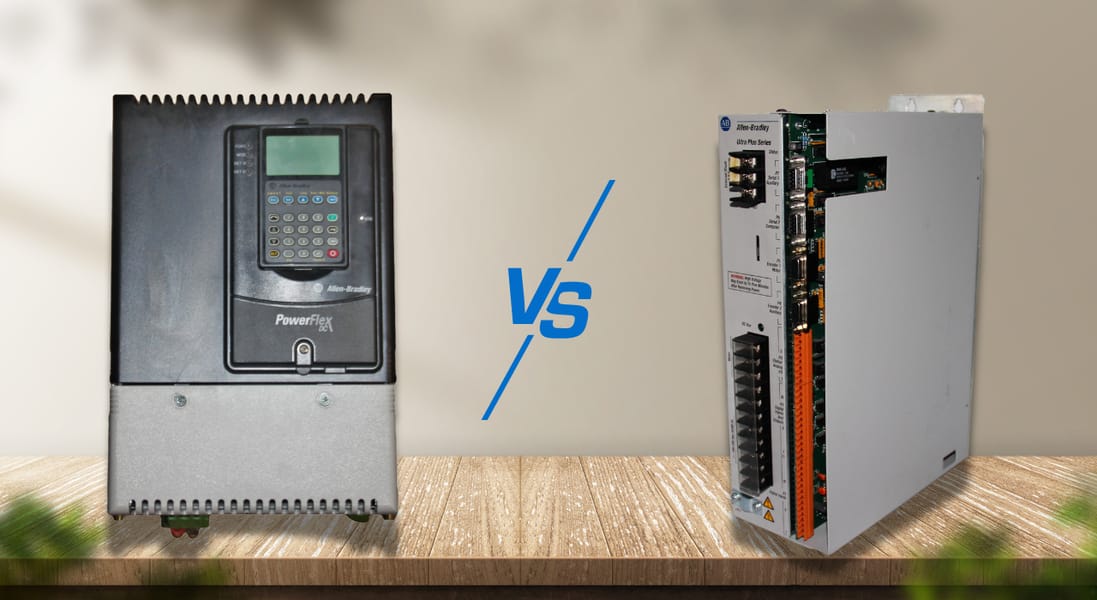
DC drives and servo drives are two distinct types of motor control devices. DC drives are commonly used for steady-speed and torque control, while servo drives are designed for precise, responsive control of position, speed, and torque. If you want to really get what sets them apart, you have to dig into how they work, what motors they run, and the sorts of things they’re actually used for. A DC drive converts incoming AC power into DC, ensuring the motor receives the correct voltage and current. In many cases, the controller and drive are combined, so commands and motor output go hand in hand. Inside, it all comes down to how the drive handles AC. Many traditional DC drives use SCR-based rectifier circuits to convert incoming AC power into a controlled DC output for the motor armature. Smaller drives may use single-phase rectifier designs, while larger industrial DC drives often use three-phase, six-pulse SCR bridges for smoother and higher-power DC output. This is why you will see...
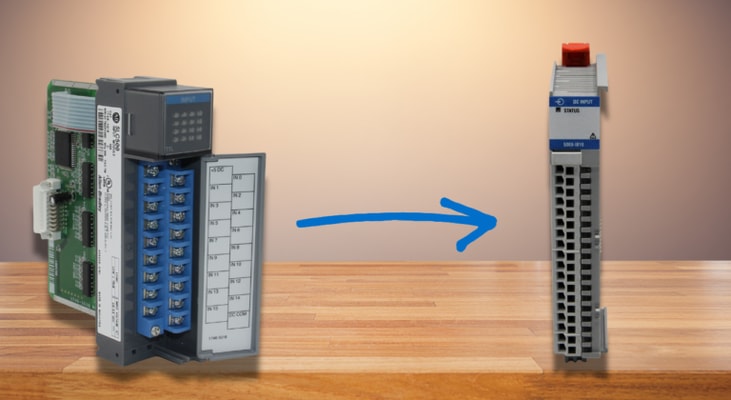
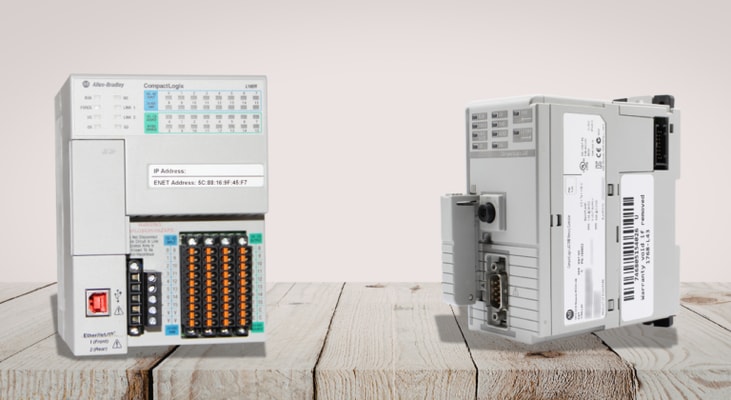
After 35 years of service in industrial automation, Rockwell Automation has officially discontinued the SLC 500 platform . For facilities still running SLC 500 hardware, the question is no longer whether to migrate but how to execute the transition without disrupting production. The recommended migration path leads to the CompactLogix 5380 control system, and understanding both the available tools and the process’s technical realities is essential before any project begins. Here, we will discuss migrating SLC 500 Systems to the CompactLogix 5380 as the latest upgrade. Rockwell’s designation of the CompactLogix 5380 as the SLC 500 successor is grounded in architectural advancements in performance, security, and networking capabilities. The platform is equipped with dual Gigabit Ethernet ports that support fast, reliable I/O and motion control over EtherNet/IP, with motion capability up to 32 axes. Optimized firmware ensures maximum efficiency under demanding industrial conditions...
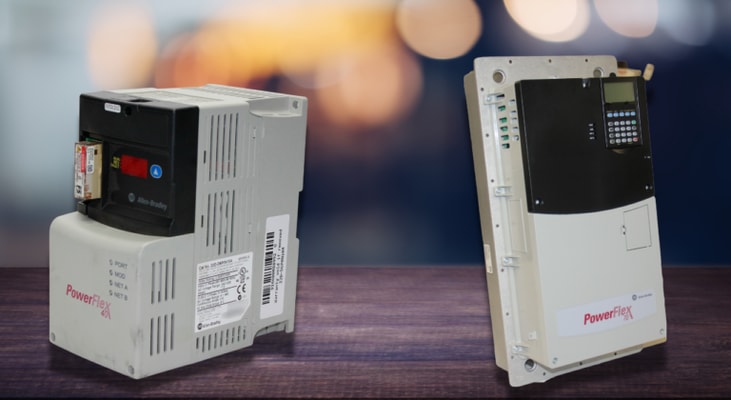
Selecting a Variable Frequency Drive for a harsh environment application is not simply a matter of matching horsepower and voltage. Ambient temperature, particulate contamination, corrosive atmospheres, moisture exposure, hazardous area classification, and physical installation constraints all impose requirements that eliminate drives from consideration before a single control parameter is evaluated. The Allen-Bradley PowerFlex family spans a wide range of drive architectures, enclosure ratings, and environmental specifications. Understanding which PowerFlex variant is engineered for a given harsh environment determines whether the installation delivers a decade of reliable service or becomes a recurring maintenance liability. A harsh environment for a VFD is any installation condition that exceeds the standard assumptions of a clean, temperature-controlled indoor panel: Ambient temperatures above 40°C or below 0°C Relative humidity approaching saturation Airborne conductive or...
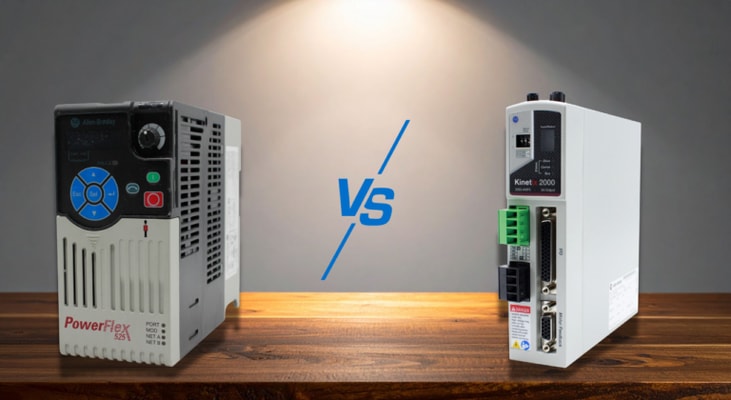
In today’s industrial automation, selecting the most appropriate motion control technology is critical for achieving high system performance, with servo and AC drives leading as the top choices. While they both control electric motors, they operate on distinct principles designed for different industrial applications. AC drives are optimized for energy-efficient, variable-speed, open-loop, or simple closed-loop control of speed and torque. On the other hand, servo drives are engineered for fast response times and high-precision, closed-loop dynamic positioning. Therefore, system engineers need to select a motor control technology that precisely matches the specific requirements of a given application. This article explores the unique operating principles, key strengths, and specific limitations of AC and servo drive technologies to guide your selection process. AC drives, commonly known as Variable Frequency Drives (VFDs), are electronic devices that regulate the torque and speed of...
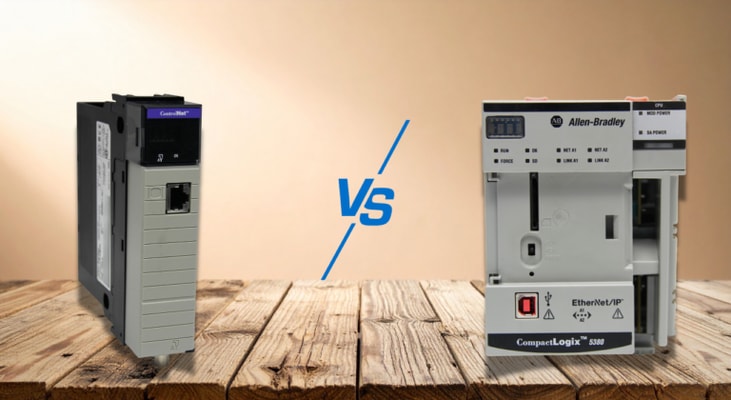
Industrial automation engineers selecting between the Allen-Bradley ControlLogix 5580 and CompactLogix 5380 rarely face a straightforward decision. Both support EtherNet/IP-based motion and safety and carry the Logix that makes them interoperable within Rockwell’s Integrated Architecture. Beneath that shared surface, however, the two platforms diverge in capacity, scalability, environmental tolerance, and application scope. Understanding where that gap actually matters determines whether a system is appropriately specified or quietly undersized. The CompactLogix 5380 was designed for compactness and self-contained machine control. Its architecture assumes a bounded application, a defined axis count, manageable I/O, and a system that runs on a single machine or in a production cell. The ControlLogix 5580 was designed for a different problem: applications that grow, where multiple disciplines coexist in one program, and where the controller serves as the backbone of a plant-wide...
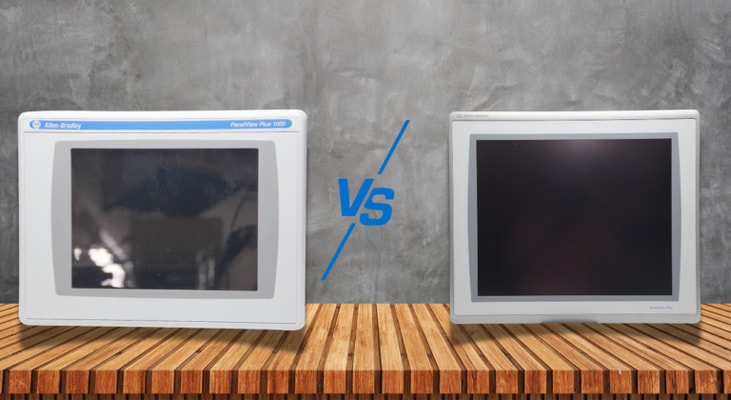
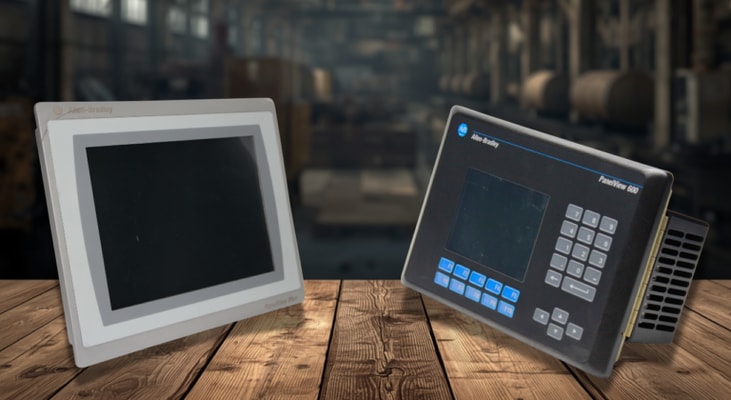
Upgrading your hardware always feels like a special occasion, especially if it’s for something you handle every day. After all, who doesn’t like faster hardware, more refined software, and a more responsive user interface? The reality becomes a little more complicated when the equipment in question is tied directly to production. In industrial automation, replacing hardware is rarely as simple as unplugging one terminal and mounting another in its place. This hesitation is part of the reason you will still see the PanelView Plus 6 in so many facilities, even with the newer PanelView Plus 7 series on the market. This boils down to compatibility concerns, retrofit cost, downtime windows, network architecture, and operator familiarity. In some situations, moving to a Plus 7 terminal can modernize an entire machine interface. In others, it can create more work than value. Before we get into comparing specifications and features, it helps to understand where these terminals are typically...
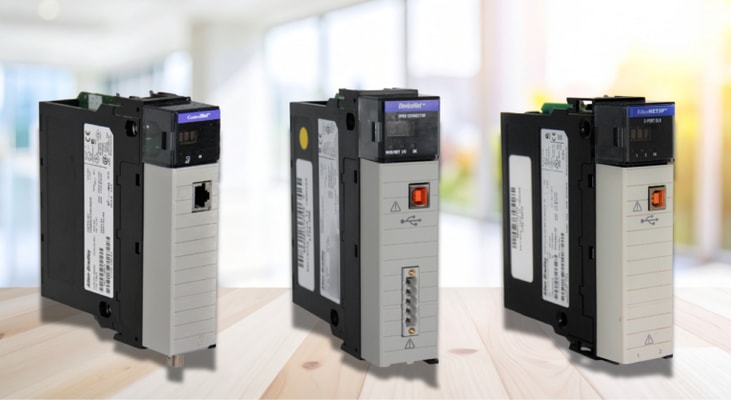
Industrial automation systems depend on PLCs exchanging data reliably and on time. When communication delays enter that chain, whether between PLCs and an HMI, between controllers on a network, or between PLCs and field devices, the consequences extend well beyond a sluggish screen update. In process-critical environments, even a few milliseconds of unexpected latency can cascade into equipment damage, unsafe states, or production loss. Delays in PLCs communication originate from multiple layers of the system. At the physical layer, cable quality, termination integrity, and media type set the baseline. At the network layer, excessive node counts, improper topology, and bandwidth saturation introduce queuing delays. At the application layer, message scheduling, packet fragmentation, and polling intervals determine how frequently data is actually refreshed. Order CompactLogix PLCs Today In EtherNet/IP-based systems, the dominant protocol on Allen-Bradley ControlLogix and CompactLogix...
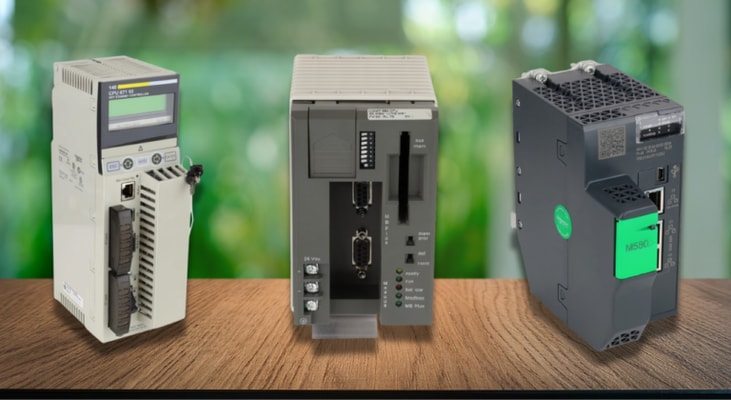
Industrial control systems built on legacy Modicon PLC platforms continue to operate at the core of production, utilities, and process industries worldwide. Systems based on Modicon 984 , Quantum (140 series), Premium (TSX series), and Momentum platforms remain in active service despite approaching or exceeding their intended lifecycle. While these systems are often stable and well-understood, the challenge is no longer purely operational reliability, but rather long-term sustainability under hardware obsolescence, diminishing vendor support, and shrinking spare parts availability. Many of these systems were engineered for deterministic control and robustness, which explains their longevity, but they were not designed for indefinite lifecycle support in modern industrial environments. Join us today as we go over a technical approach to spare parts management, lifecycle risk mitigation, and long-term support planning for aging Modicon PLC systems. Source Modicon M580 PLCs Here A...
If you have spent any time reading about automation equipment and how they work, you would come across phrases such as: “Real-time control”, “real-time monitoring”, “operates in real-time”, or “real-time deterministic behavior”. It becomes one of those things that you might be afraid to ask about because it’s thrown around so much that it seems like it’s common knowledge. Alas, we at DO Supply don’t judge and encourage learning opportunities, so let’s get you up to speed on what ‘real-time’ actually means. In the world of industrial control, “real-time” is a more precise engineering term. It means predictable, rather than “fast”. A real-time system isn’t defined by how quickly it responds, but by whether it responds within a guaranteed, bounded window of time, every single time. That guarantee is what engineers call determinism, and it’s the whole reason the phrase gets used so often around PLCs, drives, and industrial networks. To put it in perspective, say a video game you’re...
Modern industrial facilities do not stop when the network drops. A refinery keeps processing crude oil. A water treatment plant keeps dosing chemicals. A conveyor line keeps moving parts through assembly stages. This stability is not accidental; it is the result of deliberate engineering decisions built into every layer of automation systems, from the controller firmware to the field instrument logic. Communication failure is not an edge case in industrial automation. It is a known, expected condition that every well-designed system must handle without losing process stability, safety state, or data integrity. This article breaks down the exact mechanisms, hardware, and protocol-level details that keep automation systems stable when communication degrades or fails. Industrial environments are electrically hostile. Variable-frequency drives inject high-frequency noise into power lines. High-voltage switchgear generates radiated electromagnetic interference during switching transients...
For industrial automation engineers, the HMI isn’t just a screen—it’s the nerve center of the entire operation. And when you put that center somewhere tough, like a food processing plant, offshore rig, or chemical facility, ordinary commercial displays just don’t cut it. This is where Rockwell Automation’s PanelView family really stands out, specifically the PanelView Plus 7 Performance and ArmorView Plus 7 terminals. You can read spec sheets all day, but it’s more important to know how PanelView terminals survive wild temperature swings, corrosive gases, and brutal washdowns. dLet’s dig into what makes the PanelView excel in harsh, demanding environments, so you know your HMI investment won’t let you down. First off: temperature. Electronics hate extreme heat and cold, and PanelView terminals have to stay stable, even when sealed up tight inside enclosures with bad ventilation. Rockwell spells out exactly what these displays can handle. Most PanelView models—the 6.5-inch, 9-inch...
It is no secret that downtime can be the single leading cause of revenue loss for any factory. In fact, a recent global report from ABB in conjunction with Sapio Research suggests that 44% of industrial leaders report production interruptions by their equipment monthly, 14% of those report stoppages weekly. Every hour that a factory is down, it could be losing anywhere from tens to hundreds of thousands of dollars per hour, depending on SKU value and output expectations. This raises the question of how downtime could become this expensive, what the biggest contributing factors are, and how automation is designed to prevent interruptions. Downtime, often carrying a negative connotation, is when a factory or process halts or significantly reduces operations due to planned maintenance, repairs, or stoppages. Usually, this stems from operator stops, which happen when the operator sees an anomaly and presses that big red STOP button. Other times, the system itself could sense that...
Industrial control panels have relied on discrete pushbuttons, selector switches, and indicator lights for decades, and in many applications, they still get the job done. But as process complexity scales, the demand for real-time visibility, operator guidance, and structured data logging outgrows what a row of pilot lights can deliver. The Allen Bradley PanelView family, spanning PanelView 800 , PanelView Plus 7 , and PanelView 5500 , sits precisely between basic hardwired operator interfaces and full SCADA systems, and understanding where that boundary falls determines whether you are engineering the right solution or over-specifying hardware that adds cost without adding operational value. A conventional hardwired operator station is built from 22mm pushbuttons, selector switches, and pilot lights wired directly to PLC digital I/O cards. Each device consumes one I/O point; a panel with 12 push buttons and 10 indicator lights requires 22 discrete I/O points, associated terminal...
Programmable Logic Controllers continue to be the backbone of present-day industrial automation, providing deterministic, scalable, and reliable control across diverse sectors, such as chemical processing, oil & gas, pharmaceuticals, manufacturing, and water/waste treatment facilities. Originally designed to replace hard-wired relay logic systems, PLC technology has advanced into sophisticated embedded control platforms capable of handling advanced computational tasks, real-time data analytics, network communications, and predictive diagnostics. In response to the demands of digital transformation, industry 4.0 integration, and smart manufacturing, PLC manufacturers are continually developing robust PLCs with increased processing power, built-in safety options, advanced networking protocols, and integrated cybersecurity. In essence, modern PLC hardware continues to bridge the gap between industrial-grade robustness and advanced computing, taking on complex, data-intensive automation...
PLCs are the main part of industrial automation systems, providing the real‑time control required for manufacturing, process systems, infrastructure networks, and different building management systems. PLCs help in managing the automation ecosystems. Nowadays, the leading PLC brands do more than just supply simple hardware; they build full‑scale ecosystems encompassing software, communication protocols, add‑on input/output modules, cloud services, engineering software, different partner networks, and digital platforms that enhance performance, connectivity, and lifecycle value. In this technical overview, we investigate how top PLC brands create ecosystems surrounding their controllers. We analyze the functions of hardware modularity, programming platforms, communication protocols, digital twins, edge and cloud integration, cybersecurity, analytics, partner initiatives, and deployment assistance demonstrating how ecosystems facilitate scalability, optimization, and future‑proofing in...
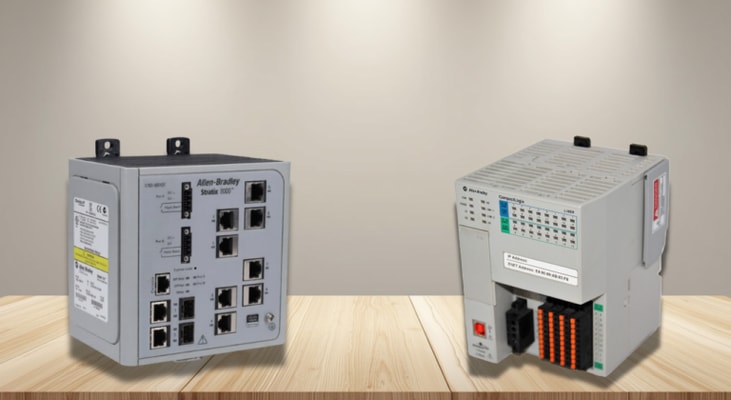
When it comes to industrial networking, the hardware has to be built for a completely different world than that of commercial equipment. Take temperature ranges as a good example: industrial devices must operate between -40°C and +85°C, while commercial units are typically rated only from 0°C to 45°C. Physical environment matters just as much, with ingress protection ratings indicating how well a device can withstand dust, moisture, and oily conditions. If the hardware is going anywhere near active machinery, vibration resistance deserves careful attention, too, since it can cause real problems over time if it’s overlooked. This guide walks through the key hardware categories, including switches, gateways, and media converters, to help you make confident, informed decisions for your application. Industrial switches form the backbone of industrial networks for most plant floors. They connect controllers, drives, sensors, HMI, and supervisory systems while maintaining the deterministic...