Smart Conveyor Systems in Industrial Automation: Where Machines Glide and Groove
In the vast landscape of industrial automation, conveyor systems have always stood out as fundamental building blocks. Over the decades, they’ve transformed from simple mechanical belts to sophisticated systems driven by the latest technological advances. These aren’t just machines but symphonies of synchronized movement, precision, and efficiency. In this exploration, we’ll journey from the traditional conveyors we’ve known to the smart systems reshaping the industry. Whether you’re an engineer, a technician, or just a curious mind, come along as we delve into the world where machines don’t just move—they glide and groove.
Traditional Conveyor Systems
Conveyor systems have been a staple in industries across the world for over a century. Their primary function has always been simple—transporting goods from one location to another. However, their designs and methodologies have varied widely, depending on the specific requirements of the industry they served. Let’s trace back to some of these traditional titans:
Belt Conveyors: The Classics
Long before the digital era, belt conveyors marked the dawn of automation. With a continuous loop of material, typically made of rubber or strong fabric, they’re designed to move objects without the need for human intervention. Positioned between two pulleys, the belt’s motion drives the transfer of goods, making them ideal for transporting bulk materials over short to medium distances. Industries such as mining, agriculture, and even food processing have relied on these stalwarts for efficient material handling.
Roller Conveyors: Rolling the Hard Way
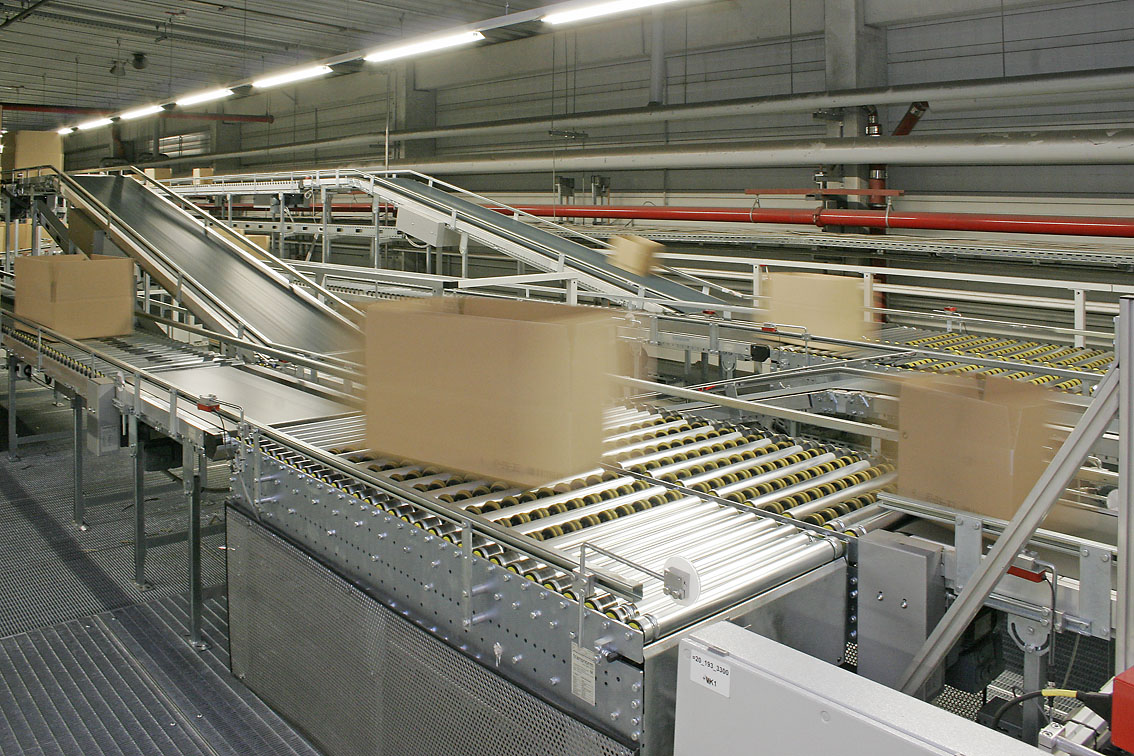
Imagine a stage full of rollers, ready to glide items across with a gentle push. Roller conveyors are primarily gravity-driven systems, utilizing a series of rollers to support and move items. They’re especially suited for heavy or large items like crates or pallets. There are powered versions too, giving that extra oomph when needed. Warehouses and assembly lines find these systems particularly helpful, offering both manual and automated transfer options.
Chain Conveyors: Gripping the Scene
Chain conveyors, as the name suggests, utilize a chain or multiple chains to transport products. These systems offer excellent grip, making them suitable for moving products up inclines or through tough environments where slippage is a concern. From cans in a beverage industry to car parts in an assembly line, these conveyors ensure a firm hold throughout the transport process.
Bucket and Vertical Conveyors: Lifting Spirits and Products
Not all conveyor paths are horizontal. When there’s a need to move materials vertically or across significant heights, bucket and vertical conveyors come into play. Bucket conveyors use a series of attached buckets to pick up, transport, and drop off materials. Think of grain elevators in the agriculture sector. Vertical conveyors, on the other hand, utilize platforms or carriers to elevate products, making them instrumental in multistory facilities or sites with limited floor space.
The Heartbeat: Mechanisms Driving Modern Conveyors
Beyond the visible belts and rollers, modern conveyor systems house a plethora of advanced components that ensure their efficient and precise operation. This section is dedicated to shedding light on these unsung heroes that form the heart and soul of the conveyors.
Motors & Drives: The Pulse of the Operation
It all begins with power, and for conveyors, the power source is the motor. Paired with drives that regulate speed and torque, motors enable conveyors to move at desired velocities. The emergence of variable frequency drives (VFDs) has been a boon, allowing for speed adjustments in real-time, optimizing energy consumption, and ensuring smoother starts and stops. This adaptability ensures that the conveyor’s speed can be tweaked based on the load, leading to operational efficiencies and longer equipment life.
Sensors: The Eyes and Ears
In the bustling environment of a factory or warehouse, there’s a need for vigilance. Sensors provide this vigilance. From detecting the presence or absence of an object to assessing its dimensions, sensors play a pivotal role. Modern conveyor systems employ a variety of sensors:
- Proximity Sensors: Detect the presence of an object without any physical contact.
- Photoelectric Sensors: Use beams of light to identify the location, presence, or absence of items.
- Vision Systems: More advanced setups that can inspect, identify, and even guide robotic systems for pick and place operations.
These sensory devices relay critical data to control systems, ensuring that operations are glitch-free.
Control Modules: The Brain Behind the Scenes
With power and sensory input, there needs to be a control center—a brain, if you will—that makes sense of it all. Enter control modules. These sophisticated computing units interpret data from sensors, make decisions, and relay commands back to the machinery. Many modern conveyors integrate with Programmable Logic Controllers (PLCs) or Distributed Control Systems (DCS), allowing for complex logic operations, sequencing, and even remote control.
Integrating with Industrial Automation (IA)
The brilliance of modern conveyor systems isn’t just in their standalone operations but in their ability to seamlessly integrate with broader Industrial Automation frameworks. This integration amplifies efficiency, precision, and real-time decision-making. Let’s explore the mechanics of this integration.
Communication Protocols: Machines Talking Shop
For any system to work in harmony with another, they need to speak the same language, or in technical terms, use the same communication protocol. Industrial automation systems, including conveyors, utilize standardized protocols such as Modbus, PROFIBUS, or Ethernet/IP. These protocols ensure that conveyors can relay and receive data from other machines or central control units, making them a part of a cohesive, responsive system.
Automated Sorting: Saying Goodbye to Manual Diverting
One of the marvels of IA integration is automated sorting. Gone are the days when items on conveyors needed to be manually segregated. Modern conveyor systems can automatically divert items to designated paths or destinations with sensors detecting product types or reading barcodes. Think of it as a well-orchestrated ballet where every package knows its exit cue.
Remote Monitoring: From Anywhere, At Any Time
The digital age has blessed us with the power of remote operations. With conveyors integrated into larger IA frameworks, operators and supervisors can monitor system performance, identify bottlenecks, or even troubleshoot issues from remote locations. All they need is a device with access to the conveyor’s control interface. This capability not only enhances flexibility but also reduces downtime, ensuring that conveyor operations are smooth and consistent.
PLCs and Smart Conveyors: A Dance of Precision
At its heart, a PLC is more than just an industrial computer; it’s the brainpower behind most modern automated systems. Built robustly to withstand challenging industrial environments, it interprets inputs (like sensor data) and outputs commands to actuators, motors, and other machinery. While there are numerous PLC brands and models, some have gained significant traction in the industry due to their reliability and versatility.
- Siemens: A big player in the automation realm, Siemens offers PLCs like the SIMATIC S7-1200 for basic applications and the SIMATIC S7-1500 for more complex tasks. Known for their advanced diagnostics and integration capabilities, Siemens PLCs are often found in high-end conveyor setups, especially in the automotive and electronics industries.
- Allen-Bradley (Rockwell Automation): Another heavyweight, Allen-Bradley’s CompactLogix and ControlLogix series are favorites in the North American market. With a user-friendly interface and a broad range of modules, they find applications in sectors ranging from food and beverage to pharmaceuticals.
- Mitsubishi: Their FX Series PLCs are compact but pack a punch, popularly employed in small to medium-sized conveyor systems. Known for their durability and cost-effectiveness, you might find them in assembly lines or packaging plants.
- Schneider Electric: With the Modicon series, Schneider Electric has catered to a wide variety of industrial applications. Their adaptability makes them a preferred choice for modular conveyor systems that require scalability.
PLC-Conveyor Integration in Action: Real-world Examples
Let’s look at some practical scenarios:
- Automotive Assembly: Consider a car manufacturing plant using the Siemens SIMATIC S7-1500. As different car parts move on the conveyor, sensors detect each part’s type and position. The PLC then instructs robotic arms to pick and place these parts with pinpoint accuracy, ensuring flawless assembly.
- Food Packaging: In a food processing facility, an Allen-Bradley CompactLogix PLC could manage a conveyor system sorting different food items. If a sensor detects a damaged product, the PLC instantly commands a diverter to remove it from the line.
- Electronics Testing: Imagine an electronics factory where PCBs (Printed Circuit Boards) are conveyed for testing. Using a Mitsubishi FX Series PLC, the conveyor can pause at testing stations, allow for automated testing, and then segregate the PCBs based on test results.
The Undeniable Advantages
Beyond the flexibility and real-time operations previously discussed, integrating specific PLC models with conveyors often brings about benefits like:
- Ease of Integration: Brands like Siemens and Allen-Bradley offer integrated software suites, making the programming and diagnostics of conveyor operations a smoother affair.
- Global Support: Established PLC brands provide worldwide support, ensuring that even if a conveyor system is relocated or replicated in another part of the world, its expertise is readily available.
- Advanced Features: Higher-end PLCs come with features like integrated safety, advanced data logging, and cloud connectivity, enabling smarter and safer conveyor operations.
The Future of Conveyor Systems: Beyond the Horizon
As the demands of industries evolve, so too must the tools and systems that drive them. Conveyor systems are no exception. We’re already witnessing the early stages of next-gen conveyor technology, fueled by advancements in robotics, AI, and materials science.
Modular and Scalable Designs
The future calls for flexibility. Companies are keen on systems that can adapt to changing production needs without complete overhauls. Enter modular conveyor designs. These are akin to building blocks, where sections can be added, removed, or reconfigured with minimal downtime. This design approach ensures that as a company’s needs grow or change, the conveyor system can evolve in tandem.
The Rise of Collaborative Robots (Cobots)
No longer confined to cages or isolated sections of the factory, robots are stepping out and working alongside humans. Cobots, designed to interact safely with human workers, are finding their place in conveyor systems. Imagine a setup where a Cobot assists a human worker in sorting or packaging tasks, all while being integrated into the conveyor’s operation. It’s not just about automation; it’s about augmenting human capabilities.
Advanced Materials and Energy Efficiency
The conveyor belts of tomorrow might not even look like “belts.” Research is ongoing into materials that reduce friction, resist wear and tear, and can even self-repair minor damages. Furthermore, energy efficiency is a growing concern. The future might see conveyor systems powered by renewable sources or designed to recover and reuse energy, drastically reducing their carbon footprint.
AI-Powered Predictive Maintenance
The combination of sensors, advanced analytics, and artificial intelligence can lead to a paradigm shift in maintenance strategies. Instead of reactive maintenance (fixing things when they break), or even scheduled maintenance, we’re moving towards predictive maintenance. Here, AI algorithms analyze data from the conveyor’s sensors to predict when a component might fail or require servicing. This approach minimizes unplanned downtime and optimizes the lifespan of the conveyor’s parts.
Augmented Reality (AR) for Troubleshooting and Training
Imagine an engineer wearing AR glasses while inspecting a conveyor system. The glasses overlay critical information about each component, guide the engineer through troubleshooting steps, or even offer virtual hands-on training for new recruits. AR can revolutionize how we interact with, maintain, and learn about conveyor systems.
Final Thoughts
The journey of conveyor systems, from rudimentary belts simply moving objects from point A to B, to today’s sophisticated, interconnected marvels, reflects the evolution of industry itself. They’re not just pieces of machinery; they symbolize the continuous drive for efficiency, innovation, and adaptability in the face of ever-shifting demands and technological advancements.
We’ve traveled through the intricacies of different conveyor types, understood their place within the broader sphere of industrial automation, and unraveled the precision dance they perform with PLCs. And as we’ve glimpsed into the future, it’s clear that the potential for further innovation is vast. Tomorrow’s conveyor systems will be smarter, more adaptable, and more integrated than ever before.
For engineers and technicians reading this, the message is clear: while the principles of conveyance remain consistent, the tools and technologies are ever-evolving. Embracing these changes, understanding the emerging technologies, and foreseeing their implications will not only keep professionals at the top of their game but also ensure industries remain competitive and sustainable.
In the end, conveyor systems, in all their complexity and sophistication, serve a simple purpose: to keep the wheels of industry turning, smoothly and efficiently. And as they evolve, they’ll continue to be at the heart of manufacturing and production, silently orchestrating the symphony of progress.
DO Supply Inc. makes no representations as to the completeness, validity, correctness, suitability, or accuracy of any information on this website and will not be liable for any delays, omissions, or errors in this information or any losses, injuries, or damages arising from its display or use. All the information on this website is provided on an "as-is" basis. It is the reader's responsibility to verify their own facts.