The Evolution of PLCs: From Relays to Advanced Control Systems
PLC development represents a revolutionary leap from simple relay-based systems to the most cutting-edge control technology. PLCs, which simplified operations through digital programming, were first used in industrial automation in the 1960s to replace complicated relay panels. These devices underwent substantial evolution over several decades, embracing breakthroughs such as microprocessors, larger memory capacity, and communication protocols. PLCs are now the foundation of complex control systems, providing real-time monitoring, data analysis, and remote access while easily connecting with the Industrial Internet of Things (IoT). This development shows how far technology has come and how important PLCs are in streamlining industrial processes and promoting smart production.
Technological Advancements:
A major technical advancement may be seen in developing control mechanisms ranging from relays to sophisticated control systems. Every stage of this development has used cutting-edge technology to satisfy the growing needs of industrial automation and control.
Industrial automation at the beginning of the 20th century mostly depended on relays, electromechanical switches powered by electricity. Each relay could open or close a circuit, enabling simple control functions like turning machines on or off. This was primitive technology. For example, relay-based systems were typical for assembly line control in early car production facilities. However, because of their physical makeup, configuration and alterations required much human effort, limiting their flexibility and scalability.
When PLCs were originally introduced in the 1960s, a major shift occurred. These gadgets, first created for the automotive sector (General Motors, etc.), used programmable digital controllers instead of intricate relay systems. Solid-state technology, which provided more dependable and adaptable control than mechanical relays, was employed by early PLCs. They could easily perform increasingly complicated jobs, and programming modifications needed reprogramming—often in a ladder-logic format—instead of actual rewiring. This technical advancement reduced downtime and simplified procedures.
Modern PLCs were made possible by developments in microprocessor technology in the latter half of the 20th century. These PLCs had improved processing capabilities and were quicker, more compact, and more efficient. They provided more connectivity possibilities, such as interfacing with computer networks, and included a variety of programming languages. The integration of PLCs in contemporary bottling factories serves as an illustration. Compared to their predecessors, these machines are far more precise and efficient in controlling and monitoring every part of the process, from bottle filling to packing.
Industrial automation has been transformed by combining PLCs with cutting-edge technologies like artificial intelligence (AI), the Internet of Things (IoT), and cloud computing. These systems provide remote monitoring, real-time data analytics, and predictive maintenance. For instance, when combined with cloud computing, predictive maintenance in industrial facilities is made possible by Siemens’ Simatic S7-1500 PLCs, greatly decreasing downtime and increasing productivity.
Programming Advancements:
With relay-based systems, traditional programming was first nonexistent. Configuration was similar to manual programming in that it included physically manipulating connections. The wire architecture itself served as the only “programming language.” For example, the programming procedure in early telephone exchanges was the hand swapping of wires. Although simple, this approach significantly limited complexity and adaptability, making it unsuitable for advanced tasks.
This method was transformed with the introduction of the first PLCs. Software-based setups replaced physical wire as the programming method. The programming language used by early PLCs was called ladder logic, and it looked a lot like the relay logic diagrams that electricians are acquainted with. For individuals accustomed to relay systems, this made the transfer easier. Reprogramming the PLC simplified the process of switching to a different car model on automotive assembly lines, which is a big improvement over the time-consuming relay system rewiring.
Modern PLCs support a wider range of programming languages due to technological advancements. They featured ladder logic in addition to sequential function charts, function block diagrams (which graphically depicted functions), and structured text (akin to Pascal or C). These languages were more complicated and versatile, making them suitable for various industrial applications. One prominent usage is in the complicated automation systems seen in manufacturing facilities; structured text is used to write complex control algorithms, while function blocks and ladder logic are employed for simpler control tasks.
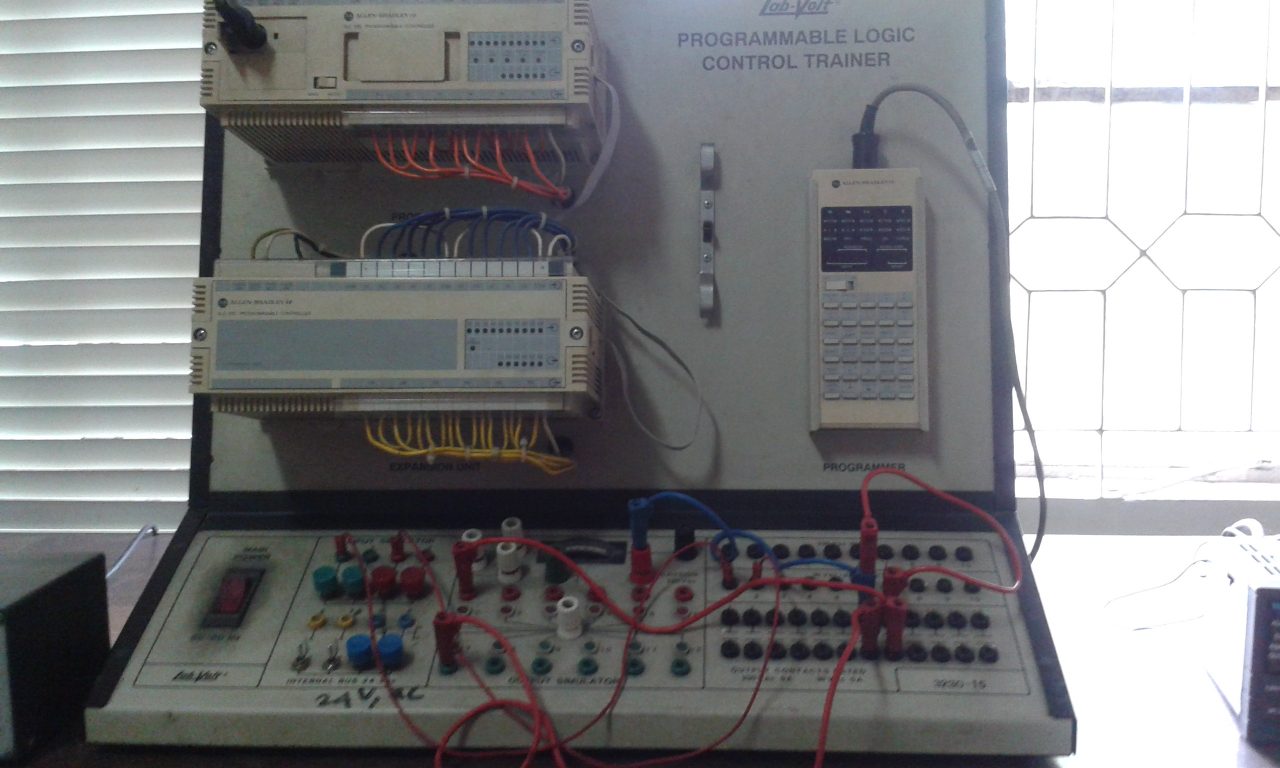
Traditional PLC programming languages and more complex software paradigms are combined in today’s sophisticated control systems. They frequently use high-level languages like Python and C++, particularly when interfacing with AI and IoT technologies. These systems also make use of cloud-based technology and data analytics, necessitating programming abilities similar to those in data science and IT. One example is smart grid technology, which requires a sophisticated fusion of several programming languages for maximum performance. Sophisticated control systems use complex algorithms to regulate and distribute renewable energy effectively.
Functionalities and Operational Advancement:
Regarding relays, basic on/off switching, or opening and shutting electrical circuits, was their main purpose. This function was essential for jobs like turning on or off machinery. These systems were essentially binary processes, which left little room for complexity or customization. Relays were also less flexible to the changing requirements of industrial operations as they required physical rewiring to alter their configurations.
Early PLCs could do more complex tasks, including counting, timing, sequential control, and simple arithmetic calculations. This breakthrough was crucial for sectors such as automotive production, where PLCs were utilized to automate assembly line processes, including welding and part installation. A significant improvement in flexibility and efficiency was made possible by PLCs’ capacity to be physically rewired for different jobs, enabling faster response to shifting production demands.
Modern PLCs significantly broadened the range of functions and processes. These systems included multi-axis motion control, sophisticated control algorithms, extensive data processing, and seamless integration with other digital systems. Modern PLCs manage complex operations efficiently and accurately, playing a crucial role in high-speed packing and precision production. Their improved memory and processing capabilities made it possible to handle increasingly complicated applications and improved interaction with other industrial systems, which resulted in more organized and effective operations.
Advanced control systems, the most recent development iteration, combine conventional PLC features with state-of-the-art innovations like cloud computing, Cloud native technology and SCADA integration. Predictive maintenance, real-time data analytics, and remote monitoring and control are just a few of the features that these systems offer. Their use in smart grid management, where they balance loads, anticipate repair requirements for network components, and optimize energy distribution from several sources, is an instructive example. These systems, which are the epitome of control technology, optimize operations in intricately linked settings by their capacity to learn, adapt, and make decisions independently.
Processing Speed Advancements:
Processing speed in the relay period was mostly limited by the mechanical design of the devices. As an electromechanical switch, a relay requires observable time to open or shut a contact. Despite being measured in milliseconds, this delay was noteworthy when considering intricate activities involving several relays. For example, the speed at which relays could flip set the limit on the amount of time that could pass between signals in early automated traffic light systems. Relay-based systems were not appropriate for applications demanding quick or complicated decision-making because of this mechanical constraint.
Processing speed significantly increased with the advent of the first PLCs. Because PLCs are based on solid-state technology, they can execute commands far more quickly than relays due to their mechanical action. Their speedy processing of hundreds of instructions per second greatly expanded the applications’ potential. The application of PLCs in manufacturing facilities’ conveyor systems serves as an example. Early PLCs increased throughput and efficiency by controlling the speed and synchronization of many conveyor belts. They did this by processing inputs and executing control logic far quicker than a relay-based system could.
With the development of microprocessor technology, modern PLCs have reached even higher processing speed breakthroughs. These PLCs make real-time control and decision-making in intricate industrial settings possible, which can handle hundreds to millions of commands per second. High-speed bottling facilities provide one example. Here, precise scheduling and coordination of all operations—from manufacturing to labelling and packaging—are managed by contemporary PLCs, guaranteeing error-free and fast output.
The pace at which modern, sophisticated control systems process information surpasses that of conventional PLCs. These systems can manage massive amounts of data from several sources at once, enabling real-time analytics and decision-making. They frequently combine edge computing with cloud processing. For instance, sophisticated control systems handle data from numerous sensors and inputs for energy distribution, traffic control, and environmental monitoring in smart city infrastructure. Unthinkable with previous technology, this high-speed computing enables adaptive, real-time reactions to shifting urban dynamics.
Size and Display Advancements:
Systems that relied on relays were noticeably big and complicated. Although the size of each relay varied, they were usually a few cubic inches. On the other hand, these systems may take up whole rooms in more complicated applications. Relay panels, for example, that are used in substations to manage and route energy, might cover several hundred square feet in the power distribution industry. These devices’ displays were rudimentary, frequently consisting of rows of indicator lights that offered scant interactivity or data.
The earliest PLCs led to a significant reduction in control system size. Even though they were still large by today’s standards, these early PLCs were far smaller than their relay-based counterparts. They created a far more compact and controllable device by combining the functions of several relays into one. A pioneering use case is the automobile sector, where assembly line management was achieved with PLCs. Control systems that had previously taken up whole rooms might now fit in a single cabinet thanks to the size decrease. With basic alphanumeric displays offering fundamental details regarding system status and diagnostics, display technology is also advanced.
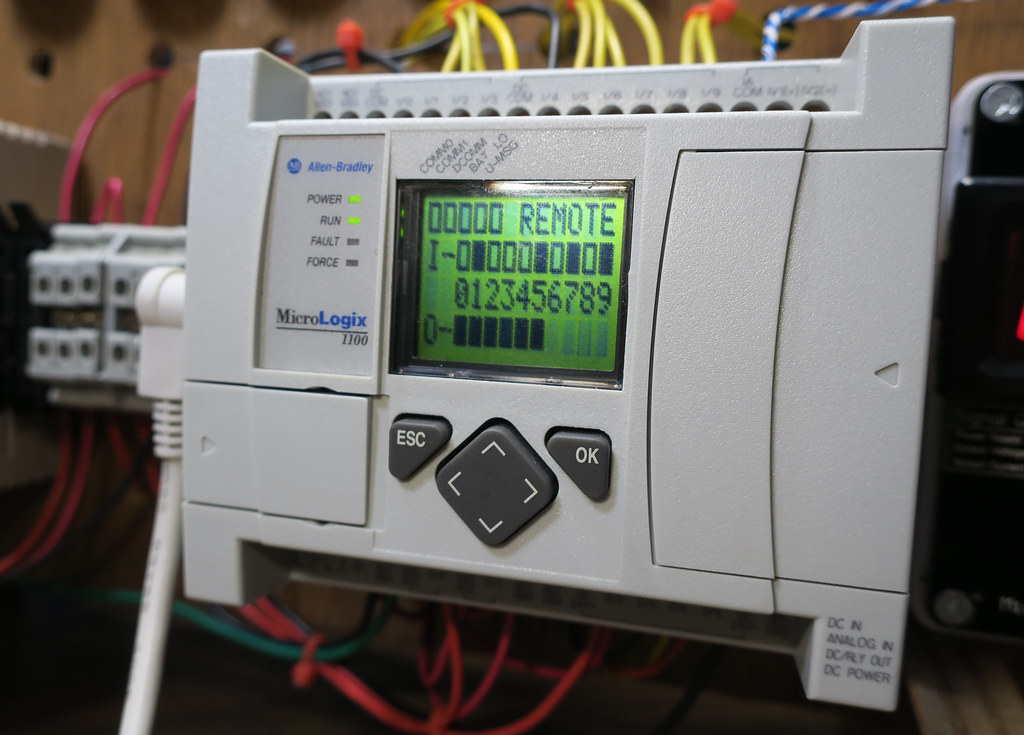
Further improvements in size reduction and display capabilities were made possible by modern PLCs. They are much smaller; simple versions frequently fit into a tiny container of a few cubic inches. Regarding display, contemporary PLCs have touch panels and LCD screens that can be larger or smaller from inches to feet, depending on the application. These interactive display PLCs are used in the food and beverage sector to monitor and manage production lines while giving operators access to real-time, comprehensive data on the manufacturing process.
The latest cutting-edge control systems represent the pinnacle of display technology and miniaturization. Often, these systems include control features in components as tiny as portable gadgets. The requirement for physical space is often reduced by using cloud-based interfaces in place of or in addition to hardware controllers. High-resolution, multi-touch screens—which may be rather large—are among the display technologies that offer intricate interactions and visualizations. For example, in precision agriculture, sophisticated control systems use these displays to give farmers detailed information on crop health, soil conditions, and environmental elements. This information enables farmers to regulate and manage agricultural processes precisely.
Maintenance and Scalable Advancements:
When control systems were centred on relays, maintenance required a lot of work. Because mechanical relays included moving components, they were prone to wear and tear and needed to be replaced regularly. For example, the wide range of relays in the railway signalling industry required continuous maintenance and monitoring to guarantee the effective and safe passage of trains. Another issue was scalability; changing or adding relay systems frequently required significant physical and electrical modifications, which added time and expense to the process.
Maintenance and scalability were significantly improved with the introduction of early PLCs. PLCs required less maintenance than relays since they had fewer moving components. Software updates and sporadic hardware inspections were the major areas of concern. As opposed to relay-based systems, early PLCs in the context of water treatment facilities made control process simplification simpler, facilitating easier expansions and alterations. Scalability was improved since adding or changing functionalities with only minor software changes was frequently possible rather than requiring significant hardware reconfiguration.
Modern PLCs improved scalability and greatly decreased maintenance requirements. Because of their self-diagnostic features, these PLCs could notify operators of any problems before they got out of hand. Contemporary PLCs manage complex logistical processes in automated warehouses. Because of its scalability, adding extra conveyor belts or sorting systems is simple, and they can easily adjust to changing operating demands with little to no physical change. Regular software updates and system inspections are usually all that maintenance entails; compared to earlier systems, this is far less labour-intensive.
Advanced control systems are the ultimate in high scalability and minimal maintenance. These systems can anticipate maintenance requirements and minimize downtime by utilizing AI and IoT technology. For example, sophisticated control systems oversee energy distribution, traffic lighting, and security in smart city infrastructure. With new sensors and software upgrades, they may be expanded to meet the expanding requirements of urban areas without requiring significant redesigns. Remote diagnostics and updates are frequently used in maintenance, which reduces the requirement for in-person interventions.
Closing Thoughts:
In conclusion, industrial automation has been completely transformed by the progression of Programmable Logic Controllers (PLCs) from relay-based systems to sophisticated control technologies. PLCs took the role of electromechanical relays starting in the 1960s. This was followed by advances in microprocessor technology, solid-state technology, and digital programming. Through this process, they were able to handle complex algorithms and multi-axis motion control in addition to basic on/off switching. From physical wire manipulation to complex software-based configurations, programming progressed to higher-level languages like Python and C++, showcasing systems like ladder logic. AI and IoT-enabled modern PLCs provide remote monitoring, predictive maintenance, and real-time analytics for a wide range of applications. Today’s PLCs are more efficient and compact due to advancements in display technology, processing speed, and size reduction. Improvements in scalability and maintenance, such as self-diagnostic capabilities, cut down on downtime and boost flexibility. PLCs have essentially been vital in transforming industrial environments by promoting intelligence, adaptability, and efficiency. The progression of industrial control from relay-based simplicity to state-of-the-art technology is a prime example of the industry’s unwavering quest for innovation and optimization.
DO Supply Inc. makes no representations as to the completeness, validity, correctness, suitability, or accuracy of any information on this website and will not be liable for any delays, omissions, or errors in this information or any losses, injuries, or damages arising from its display or use. All the information on this website is provided on an "as-is" basis. It is the reader's responsibility to verify their own facts.