1336 Plus II vs. Modern Drives: Should You Keep or Replace?
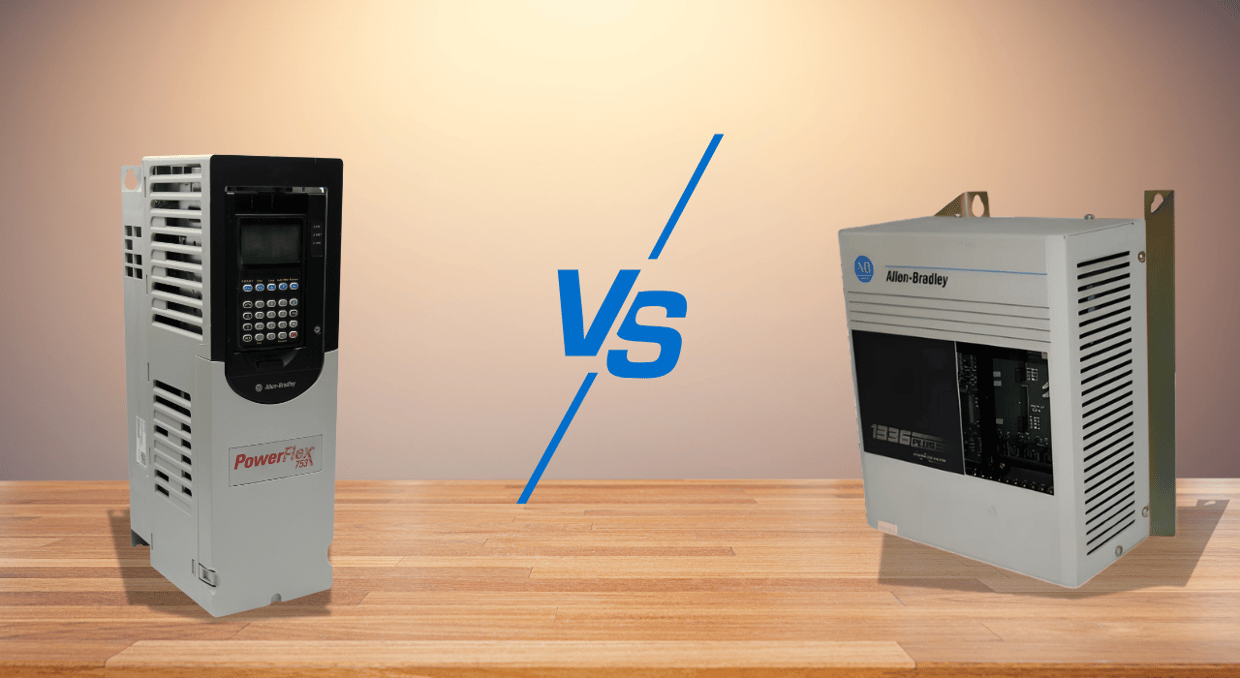
As time goes on, the drives that were originally new and modern soon become outdated and obsolete. New safety standards are being rolled out, different communication protocols have proven to be much more effective, and better software and hardware technology are ushering in a new era of smart factories. The question then becomes whether it is worth upgrading to a new, modern system, trying to retrofit modern equipment, or sticking with the old and keeping it running for as long as possible. Such could be the case for the 1336 Plus II. Today, we would like to provide some thought-provoking insight into a tough question that may need to be answered sooner rather than later: Should you keep or replace your 1336 Plus II system?
Why You Might Want to Keep the 1336 Plus II
When a factory decides to keep its 1336 Plus II drives, it’s usually not because it doesn’t know what a modern drive can offer but because its current system works in a way that’s tough (or expensive) to replace. However, there is usually a bit more to it than that.
Proven Reliability Over Time
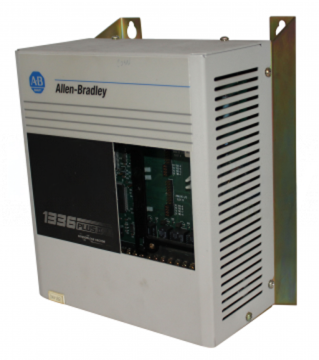
The 1336 Plus II drives were built in an era when industrial equipment prioritized over engineering, thus sealing their name as reliable and respectable drives. With proper installation and routine maintenance, these drives run for years without skipping a beat.
In many facilities, the 1336 Plus II has already survived power surges, production mishaps, heat cycles, and dust buildup, and it keeps going. It’s not uncommon to find units that have been spinning motors since the ’90s, accumulating more runtime than any technician on the floor. At that point, the drive becomes less of a “risk factor” and more of a proven cornerstone of the system’s stability.
Cost of Retrofitting
One of the biggest hurdles to replacing a 1336 is that these drives are usually tied to PLC-5, SLC 500, or other legacy Rockwell controllers that would need to be replaced or reprogrammed as well. These systems use DeviceNet, ControlNet, or analog control while newer drives default to EtherNet/IP. Sure, you could use communication cards to support these protocols, but that further adds to the replacement cost.
Then you need to account for new mounting hardware, enclosure ventilation, rewiring, motor tuning, programming, and more, on top of scheduled downtime and training technicians for the newer architecture. It can get very pricey very quickly.
Third-Party Repair Availability
Sure, there haven’t been any new 1336s produced in over 20 years, but that hasn’t stopped shops from learning how to repair them efficiently and professionally. This includes us at DO Supply with a 2-year warranty to go on top of our work. Shameless plug for our services aside, these drives have been kept alive and healthy from expert repair techs and spares that have been waiting to see the light of day. So even if there’s a couple struggling to keep up in your factory, you can always call us and we can get them back to their full potential, or even replace them with a newer one.
Why You May Want to Replace the 1336 Plus II
Just as there are reasons to keep the drive, there are just as many reasons to part with it. Regulations change throughout the year, and features like Safe Torque Off are becoming a necessity rather than a luxury. Dealing with obsolete drives could also prove to be quite a challenge in itself. So while we aren’t trying to convince you to upgrade, we would just like to point out some reasons you might want to consider doing so.
Lack of Built-in Safety Features
While it isn’t exactly our place to talk about safety features, as that’s a job for certified personnel, it is worth mentioning that the 1336 Plus II has no native safety integration. Meeting modern safety standards often requires equipment to support features like Safe Torque Off, Safe Speed Monitoring, and Category 3 / 4 safety ratings, none of which are available natively with the 1336 PLUS II. You would need external relays, hardwired e-stops, or safety PLC Logic just to meet the minimum. In contrast, a PowerFlex 753 or 755 comes with STO, and additional safety modules could be added easily.
The Drive is Obsolete
While this hasn’t been news since 2010, the 1336 PLUS II and its support from Rockwell are obsolete. While this doesn’t mean that there are other vendors, such as ourselves, who offer repair and replacement services, it does mean that downtime could be significant if there are no spares to use to swap or use temporarily while the drive gets repaired. There are also no new firmware updates, but it isn’t too big of an issue for legacy systems doing the same process.
Not So Smart Compared to Modern Drives
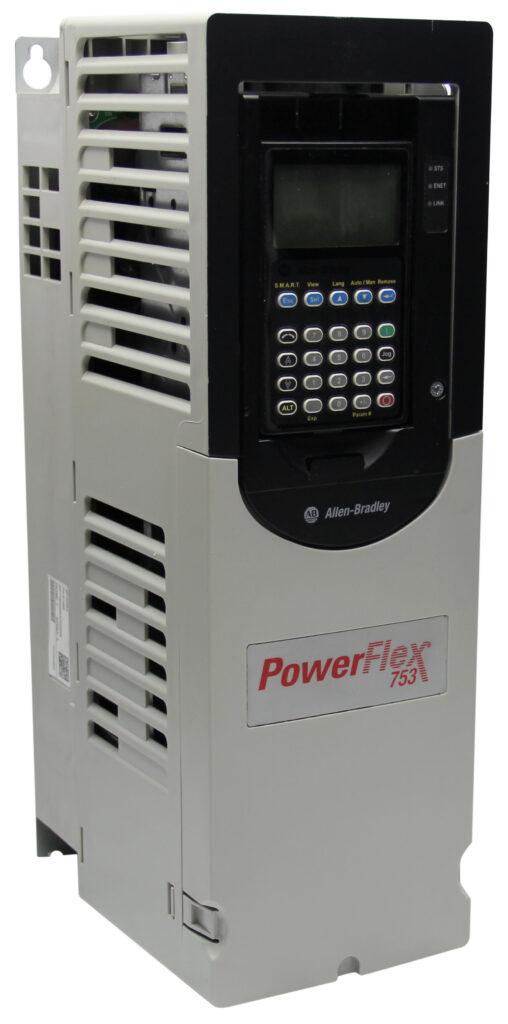
Compared to drives like the PowerFlex 750 series, the 1336 seems blind in comparison, let alone to the 755TS. You will miss out on features that truly modernize a factory, such as:
- Real-Time Load Monitoring: The 1336 PLUS II doesn’t measure or infer load torque like newer systems. It won’t alert you of a clogged filter, jammed gearbox, or conveyor that’s gradually seizing. All it can do is trigger an overcurrent or stall fault.
- Predictive Maintenance: A modern PowerFlex drive could log faults and events with time stamps, alert operators when predefined thresholds are exceeded, or even predict how much longer a component can run before it would need to be replaced. The 1336 PLUS II cannot do either of those.
- Adaptive Tuning and Auto Compensation: Newer drives can adapt as the load moves, while the 1336 PLUS II will only retune manually. A modern drive can use adaptive tuning to adjust control loop gains as conditions shift, bus observer to respond to fluctuations in input voltages, and sense if belt changes or friction builds up. All of which could help an operator prepare for maintenance and scheduled downtime.
Are You Ready to Modernize Your Facility?
Sure, this is an obvious question, but it’s an important one. Modernizing a factory has many different layers to it, from the new equipment, modifying cabinet space, rewiring, reprogramming, training the technicians on the new software, and so much more. Having a plan to change your old 1336 Plus II when it no longer spins your motor will save hours of time and make the swap easier. It helps to have an accurate wiring schematic with labeled wires, saved and stored profiles, and manuals on standby. Knowing which drives to migrate to is also half the battle. We recommend the PowerFlex 753, 755, or 525 as a replacement. We also have a hardware comparison for the 1336 drives here.
We at DO Supply are here to help find replacement drives, fix old 1336s, or replace them with inventory. Making the change to a modern system doesn’t need to be daunting and can be extremely rewarding when it’s done. Give us a call today or shoot us an email. We are happy to help!
DO Supply Inc. makes no representations as to the completeness, validity, correctness, suitability, or accuracy of any information on this website and will not be liable for any delays, omissions, or errors in this information or any losses, injuries, or damages arising from its display or use. All the information on this website is provided on an "as-is" basis. It is the reader's responsibility to verify their own facts.